Studio 58 and Rafael’s Vision for a New Tattoo Experience in Highland Park

By: Bridget Mulroy

Every tattoo tells a story, but behind every tattoo studio is a story of its own. For Studio 58, that story begins thousands of miles from Highland Park, New Jersey, with two young immigrants who arrived in the United States carrying ambition, creativity, and a belief in what hard work could accomplish.

“We’re Rafael and Oriana,” they say simply, introducing themselves not as business owners first, but as partners who “came to the United States with a dream: to grow as people, build financial freedom, and create something we could truly be proud of.”

That dream has steadily evolved into Studio 58, a boutique tattoo studio preparing for its grand opening this September at 314 Raritan Avenue in Highland Park, New Jersey.

Although the official opening date will be announced through Studio 58’s social media channels, interest is beginning to grow. For Rafael, the studio represents more than the launch of a new business.

“Our Grand Opening is getting closer,” he says. “We’re incredibly excited to finally share everything we’ve been working on. It’s more than opening a tattoo shop. It’s the beginning of a community and a space we’ve dreamed about for a long time.”

That sense of purpose is reflected in the way Rafael and Oriana describe Studio 58.

While Rafael serves as the lead tattoo artist, his role extends beyond creating body art. Together with Oriana, each element of the studio has been designed to reflect their shared vision.

“Every decision we make is intentional,” they explain. “Studio 58 is a reflection of both of us, our creativity, our values, and our belief that getting tattooed should feel just as special as the artwork itself.”

That philosophy is part of what they hope will distinguish Studio 58 from more traditional tattoo environments. Rather than simply providing a place where tattoos are performed, Rafael and Oriana have focused on shaping the full client experience.

“Our goal is to elevate the tattoo experience,” Rafael explains. “Studio 58 is a high-end tattoo studio where people can feel comfortable, safe, and inspired.”

The emphasis, he says, goes beyond aesthetics.

“We care about the way people feel when they walk through our doors. We want to create an environment with clean vibes, happy energy, and a smooth process from beginning to end.”

It is a simple concept, but it is rooted in a deeper belief that clients should feel supported throughout the process.

“For us,” Rafael says, “it’s about changing the standard. People shouldn’t have to choose between incredible artwork and an amazing experience. They deserve both.”

That commitment is reflected not only in the studio’s atmosphere but also in Rafael’s artistic approach. Specializing in Black & Grey and Realism, he has built his reputation on detailed tattoos that are individually designed for each client.

“Every tattoo deserves patience, precision, and attention to detail,” he says, “because it’s something that will stay with someone forever.”

Appointments with Rafael are already available as Studio 58 prepares for its official opening, allowing clients to experience the studio from its earliest chapter while the couple continues building what they describe as their “dream team.”

Their long-term vision reaches beyond one artist or one specialty. Studio 58 plans to welcome tattooists with diverse styles and techniques, creating an environment where clients can be paired with an artist suited to their ideas.

The studio also intends to host guest artists, an initiative Rafael says reflects the same opportunities he and Oriana found after bringing their talents to America.

The couple is also committed to supporting future artists. Studio 58 plans to accept apprenticeship applications from individuals who are serious about learning the craft.

“We believe tattooing should be taught with patience, discipline, and respect,” Rafael says, emphasizing that technical ability is only one part of becoming a tattoo artist.

Those same values extend to client education and safety. Studio 58 places emphasis on proper hygiene, sterile equipment, consultations, and aftercare education.

“Getting a tattoo is a lifelong investment,” Rafael notes. “Choosing the right artist matters.”

He encourages clients to seek artists who prioritize cleanliness, professionalism, and open communication, adding that “aftercare is just as important as the tattoo itself.”

As September approaches, Studio 58’s grand opening represents more than the arrival of another tattoo studio in Central New Jersey. It marks the result of sacrifice, persistence, and shared belief by two people working to build something lasting, not only through the artwork they create, but through the community they hope to foster around it.

Reflecting on the journey, Rafael returns to the vision that first inspired Studio 58.

“Studio 58 is much bigger than a tattoo shop for us,” he says. “It’s proof that hard work, consistency, and believing in your vision can take you further than you ever imagined. We came to this country with big dreams, and today we’re building something that represents not only our passion for tattooing, but also the values we live by: respect, creativity, quality, and community. We want everyone who walks through our doors to leave with an incredible tattoo, but more importantly, with an experience they’ll never forget.”

Why Hiring an Architect First May Be the Important Decision in a New York City Apartment Renovation

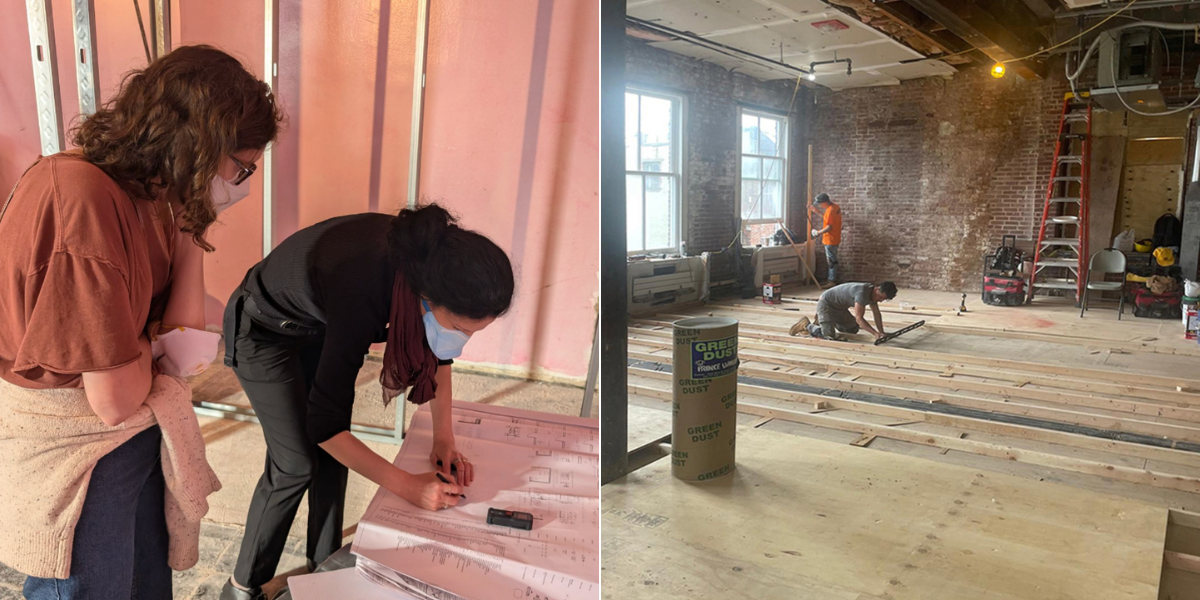
For many New York City homeowners, the excitement of renovating an apartment begins with inspiration boards, contractor referrals, and dreams of transforming an outdated space into a modern home. Yet industry professionals say one of the most common and costly mistakes happens before a single wall is opened: hiring a contractor before hiring an architect.

That decision can set off a chain reaction of inaccurate budgets, unrealistic expectations, project delays, and costly redesigns. In a city where buildings often date back decades, or even centuries, and where renovation projects must comply with an extensive web of building codes, administrative regulations, and co-op or condominium requirements, proper planning is far more than a formality. It is the foundation of a successful renovation.

Photo Courtesy: Lenka Ilic Architecture D.P.C.

Apartment Renovation NYC, a specialized department of Lenka Ilic Architecture D.P.C., was created to help educate property owners about navigating New York City’s uniquely complex renovation landscape. Rather than focusing solely on design aesthetics, the initiative aims to give homeowners practical guidance that can help them avoid expensive mistakes before construction begins.

One recurring issue seen throughout the industry is that many homeowners approach a builder first, often signing a construction agreement before architectural plans have even been prepared. While this may seem like a faster path toward starting a project, it frequently has the opposite effect.

Photo Courtesy: Lenka Ilic Architecture D.P.C.

Without professionally prepared architectural drawings and a clearly defined scope of work, early contractor estimates are often based on assumptions rather than finalized project requirements. As design decisions evolve or building conditions are uncovered, those estimates can quickly change, leading to unexpected costs and schedule disruptions. In many cases, layouts promised during initial discussions must be significantly revised once building codes, structural limitations, or building management requirements are taken into account.

The result can leave homeowners feeling locked into agreements that no longer reflect either their budget or their renovation goals.

The challenges become even more significant because New York City’s housing stock presents obstacles unlike almost anywhere else in the country. Hidden plumbing conditions, aging electrical systems, structural limitations, landmark requirements, fire safety regulations, and evolving building codes all require careful coordination before construction begins. Even experienced contractors can encounter unexpected complications if the project has not first been thoroughly evaluated from an architectural perspective.

Another issue drawing increasing attention within the renovation industry involves the marketing of so-called “design-build” residential renovation services.

Many construction firms advertise themselves as providing both architectural design and construction under one company for residential apartment renovations. However, New York’s professional licensing framework places important legal boundaries around how architectural services may be offered. Professional design services must be provided through properly authorized design professional entities rather than through general contracting companies. Understanding these distinctions is important for homeowners evaluating firms and comparing renovation proposals.

Apartment Renovation NYC has published educational resources explaining how residential project delivery works in New York City, including guidance on recognizing misleading advertising and understanding when certain project delivery methods may or may not apply. The organization’s goal is not to create confusion, but rather to give homeowners enough information to ask informed questions before committing to a renovation contract.

Architects also serve as an important advocate throughout the bidding process. With complete drawings and detailed specifications already prepared, multiple contractors can provide bids based on the same information, allowing homeowners to make more meaningful comparisons. Instead of comparing estimates built on different assumptions, owners are evaluating proposals for the same defined scope of work.

This approach creates greater transparency, improves pricing accuracy, and establishes clearer expectations before construction begins. It also helps reduce the likelihood of disputes arising from misunderstandings over what work was or was not included in an original estimate.

For homeowners preparing to renovate, professionals recommend following a straightforward sequence that helps reduce risk throughout the process:

  • Retain an architect.
  • Confirm the renovation’s feasibility with the architect.
  • Develop complete architectural drawings and a detailed scope of work.
  • Solicit comparable contractor bids with architectural oversight.
  • Review the construction agreement alongside the architect before signing.
  • Begin construction only after these steps have been completed.

While no renovation is entirely free from surprises, careful preparation significantly improves the likelihood of a project staying on schedule, remaining within budget, and achieving the homeowner’s intended vision.

As renovation activity continues across New York City’s residential market, education is becoming just as valuable as craftsmanship. Homeowners who understand the planning process before selecting a contractor are often better positioned to avoid unnecessary financial setbacks and construction delays.

For those considering an apartment renovation, resources available through Apartment Renovation NYC offer detailed guidance on renovation planning, construction sequencing, common project challenges, and the legal framework surrounding residential renovations in New York City. By placing architectural planning at the beginning of the process instead of the middle, homeowners can make more informed decisions and build their projects on a stronger foundation from day one.

How Accident Lawyers Guide Injury Victims Through Legal Claims

New York sees a high number of motor vehicle accidents each year, and the trend remains a serious concern for residents across the state. According to a TRIP national transportation research report, traffic fatalities in New York increased 15 percent from 2018 to 2023, rising from 964 to 1,111 deaths statewide. In New York City alone, over 38,100 collisions were reported in 2023, resulting in 259 deaths and thousands of injuries. On average, three New Yorkers die every day due to traffic-related crashes, and fatal and serious crashes across the state caused an estimated $135.4 billion in societal harm in 2023.

After an injury, the body is not the only concern. Pain, swelling, sleep disruption, limited movement, medical bills, and missed pay can collide at once. Experienced accident lawyers serving New York help injured people place each fact in order, protect legal rights, and pursue payment tied to real losses. Their role begins with careful listening, then moves through proof, deadlines, negotiation, and court preparation when settlement talks fail.

Early Case Review

The first review should connect the event, injury pattern, and available insurance. In New York, fault rules, treatment gaps, job records, and coverage limits can affect recovery. Lawyers often examine reports, photographs, witness accounts, and clinical notes before explaining likely obstacles, practical options, and the evidence needed for a stronger claim.

Preserving Evidence

Useful proof can disappear quickly. A lawyer may request surveillance footage, incident logs, vehicle data, inspection records, or maintenance files before routine deletion. Clients are often asked to keep discharge papers, therapy notes, receipts, photographs, and a brief symptom journal. Early preservation matters because fresh records can clarify pain progression, mobility limits, and how the injury changed daily function.

Explaining Deadlines

Legal deadlines can be unforgiving. A missed filing date may close the door before anyone reviews the facts. Lawyers track court limits, notice requirements, insurance reporting periods, and agency paperwork. Claims involving public entities, workplace injuries, or several carriers may carry shorter windows. In New York, for example, the general statute of limitations for most personal injury cases is three years from the date of the accident, though exceptions may apply. Careful calendar control keeps the case active and reduces avoidable disputes over procedure.

Medical Proof

Medical records translate symptoms into proof. Lawyers review diagnoses, imaging results, surgical notes, prescriptions, therapy plans, and physician restrictions. They may also seek opinions from treating doctors, vocational specialists, or economists when long-term harm is disputed. Clear clinical documentation can show why pain, weakness, nerve symptoms, or reduced range of motion interferes with work and ordinary household tasks.

Calculating Losses

A fair claim looks beyond the emergency room bill. Lawyers assess unpaid wages, reduced earning capacity, transportation costs, assistive devices, home care, medication, rehabilitation, and future treatment. They also evaluate pain, emotional strain, and loss of normal activities. That full review helps prevent rushed settlements that ignore lasting symptoms or delayed complications.

Dealing With Insurers

Insurance companies often ask for statements, medical authorizations, employment records, or broad releases. Lawyers manage those contacts and narrow requests that reach past the claim. They answer low offers with records, wage proof, and reasoned damage analysis. This protection matters because injured people may feel pressure to settle before their prognosis and care needs are clear.

Building Liability

A claim must show how another person, business, driver, property owner, or contractor caused harm. Lawyers compare witness accounts, safety rules, traffic laws, inspection histories, worksite practices, and property conditions. When facts conflict, experts may explain mechanics, visibility, building standards, or injury causation. Strong liability proof shifts the discussion from blame to accountability.

Settlement Strategy

Most injury cases resolve before trial, yet settlement value depends on preparation. Lawyers gather records, measure damages, identify weak points, and explain probable outcomes. They may prepare demand letters, attend conferences, or participate in mediation. A sound strategy balances timing with fairness, since early payment may miss future surgery, therapy, or wage loss.

Court Preparation

When negotiation stalls, litigation gives the claim a formal path. Lawyers draft pleadings, exchange documents, question witnesses, respond to motions, and organize exhibits. Court preparation can also improve settlement talks because insurers see a case supported by admissible proof. Even without trial, disciplined preparation shows readiness to prove injury, fault, and damages.

Client Communication

Injured clients need clear updates, not legal noise. Lawyers explain choices, risks, delays, and likely timelines in plain language. Good communication also helps people avoid avoidable mistakes, including missed appointments, incomplete forms, recorded statements, or careless social media posts. With steady guidance, clients can give more attention to healing, work limits, and family needs.

Turning a Difficult Situation Into an Organized Claim

Accident lawyers guide injury victims by turning scattered problems into an organized legal claim. They preserve proof, monitor deadlines, review medical records, calculate losses, speak with insurers, and prepare for court when needed. The work is practical, legal, and deeply personal. With careful guidance, injured people can avoid costly mistakes, make informed decisions, and seek fair compensation for harm affecting health, income, and home life.

Disclaimer: This article is for general informational purposes only and does not constitute legal advice. Every case is different, and prior results do not guarantee a similar outcome. If you have a legal question, consult a licensed attorney in your jurisdiction.

When Institutions Fail in Peter’s Tales from Eden

Most fantasy debuts announce their ambitions loudly: a chosen one, a coming war, a map at the front of the book. Tales from Eden takes the opposite route. It is a collection of sixteen linked stories set in a single, unglamorous city, and its ambitions only become visible once you notice what all sixteen stories have in common: nobody in this book is choosing between good and evil. They are choosing between bad options, in a place built to produce exactly that kind of choice.

That place is Eden itself, and it is the book’s real subject. The setting is a postwar city where an uneasy peace between several peoples holds, barely, while the institutions meant to keep it functioning have quietly stopped trying. Policing is thin. Credit is unavailable to anyone who actually needs it. Into that gap steps whoever is willing to do the job the state won’t, and the book’s moral weather follows from there. This is not a story about weak people making weak choices. It is a study of what a city does to people when it hands them impossible math and then blames them for the answer.

A Shopkeeper’s Arithmetic

The opening story, centered on the spice trader Dospiro Saratos, sets the terms early. Dospiro is not written as a cautionary tale or a fool. He is skilled at his trade and genuinely devoted to his family, and he is watching both slip away from him at once. When he borrows from the city’s dominant loan shark and accepts a poison commission as part of the price, the narrative refuses to frame it as a fall from grace. It reads instead like a spreadsheet: the one path that seems to avoid total ruin.

What the story understands, and what elevates it past a simple morality tale, is that Dospiro’s pride isn’t a flaw so much as a strategy that has quietly stopped paying off. He cannot ask his brother for help, because that would mean admitting the shop failed and that the life he built his family around was a miscalculation from the start. Pride, here, is not vanity. It is the last wall standing between a man and a truth he can’t afford to look at directly.

The story’s best single image is a small one: a spill of salt on the floor that Dospiro considers scooping up before deciding things aren’t quite that dire yet. Nothing is explained. Nothing needs to be. In one gesture, the reader gets the state of the household finances, the man’s remaining dignity, and exactly how far he still has left to fall.

The Logic of the Lowdowns

If Dospiro is the book’s clearest case study in personal compromise, Al the Bastard is its clearest case study in structural compromise. He runs the Lowdowns, Eden’s poorest district, as its de facto government, and the book is careful never to let him off the hook: he is cold, calculating, and unsentimental about the people he uses. But the story’s real argument isn’t about Al’s character. It’s about the vacancy he’s filling.

Al lends money because the banks have decided the poor aren’t worth the risk. He keeps a rough order because the city’s security forces have decided the district isn’t worth patrolling. Put a functioning government in Eden and Al becomes a footnote, a small-time enforcer with a bad reputation. As it stands, he’s closer to a civic institution than a criminal one, and the book never states this outright. It simply builds a city where there’s no other honest conclusion to reach.

A subplot involving an imprisoned shapeshifter pushes this same logic further. Freed after decades of being used as a weapon by the wizard who caged it, the creature’s first act is to plan that wizard’s death, and the story is careful to frame this as consequence rather than villainy. There’s no rage in it. Just the flat efficiency of something finally acting in its own interest after years of not being permitted to.

Two Women Holding the Line

The book’s two most quietly demanding roles both belong to women doing the unglamorous work of keeping things from collapsing entirely while the men around them make worse and worse decisions. Zara Saratos takes on outside work, feeds her children, and keeps food on the table for a husband who resents her for doing it, not as a martyr, but because the situation leaves her no better option and she simply gets on with it.

Santah Fey, who manages Al’s business interests and shares his household, gets a subtler treatment still. She’s never framed as someone waiting to be rescued; she has her own read on her circumstances and her own reasons for staying in them. When she’s finally offered a clean exit total freedom, no strings her hesitation isn’t confusion. It’s the specific vertigo of someone who has spent years mastering a cage and now has to figure out who she is without its walls.

Both characters are handled with a rare kind of respect: the book never treats endurance as a lesser form of courage.

Where the Book Strains a Little

Not everything lands with equal weight. A handful of the sixteen stories, particularly two in the back third, lean on the same structural trick (a character makes a compromised choice, the narration withholds judgment, a small physical detail carries the emotional freight) enough times that the device starts to show through the floorboards. Readers moving through the collection in one sitting may feel the pattern before the book intends them to. It doesn’t undo the effect, but it does dull it slightly by the final third.

The Case for Reading It

None of that undercuts the book’s central accomplishment. Tales from Eden is less interested in spectacle than in consequence, and it trusts its readers to sit with the discomfort of watching decent people do compromised things for legible reasons. The failing shop, the loan with a poison attached, a freed prisoner’s plan for revenge, a pixie’s hesitation at the door of her own freedom, each of these carries more weight than the anthology format usually allows for, because the book has done the patient work of earning it. It is, structural repetition aside, a genuinely strong debut, and a city worth returning to.

Mount Fuji’s Overtourism Challenge: Struggles on Japan’s Iconic Peak

Mount Fuji’s popularity continues to create a difficult balancing act for Japan. As visitors from around the world arrive to climb the country’s iconic peak, authorities are introducing restrictions designed to manage congestion, improve safety, and protect the mountain’s environment.

The challenge is no longer simply about attracting tourists. It is about managing the pressure created when large numbers of people converge on a fragile natural and cultural landmark within a relatively short climbing season.

For 2026, authorities have maintained a series of measures intended to control access and reduce dangerous crowding. On the popular Yoshida Trail, the official Mount Fuji climbing website lists a daily limit of 4,000 climbers, a 4,000-yen hiking fee, and restrictions on entry between 2 p.m. and 3 a.m. for climbers who are not staying in mountain huts. :contentReference[oaicite:0]{index=0}

Key Takeaways

  • Mount Fuji’s popularity has created concerns about overcrowding, safety, and environmental pressure.
  • The Yoshida Trail has a daily limit of 4,000 climbers, alongside a hiking fee and overnight entry restrictions.
  • Authorities are using reservations, access controls, and transportation measures to manage visitor flows.
  • Other routes on the Shizuoka side also operate under climbing restrictions during the 2026 season.
  • The challenge facing Japan is finding a balance between tourism demand and the long-term preservation of Mount Fuji.

Overtourism Meets a Limited Climbing Season

Mount Fuji is not open for unrestricted summit climbing throughout the year. The official 2026 climbing season runs from early July through September, with opening dates varying by route. The Yoshida and Subashiri trails opened July 1, while the Fujinomiya and Gotemba routes opened July 10. Outside the designated climbing season, summit trails are closed because of severe weather, limited facilities, and increased safety risks. :contentReference[oaicite:1]{index=1}

That limited window concentrates demand. The official climbing information notes that late July through late August is typically a particularly busy period, with weekends and holidays drawing especially large crowds. :contentReference[oaicite:2]{index=2}

The result is a tourism challenge with a distinctive structure: visitors are drawn to one of Japan’s most recognizable destinations, but many of them arrive during the same few weeks when climbing conditions are suitable.

Why Authorities Are Tightening Access

Japan’s response has increasingly focused on managing the flow of people rather than simply encouraging more visitors.

On the Yoshida Trail, authorities have used a combination of advance reservations, a daily climber limit, and a gate closure during overnight hours. The restrictions are intended in part to address congestion near the summit and the risks associated with “bullet climbs,” in which visitors attempt to reach the summit overnight without staying at a mountain hut. The official climbing website links the practice to concerns including altitude sickness and hypothermia. :contentReference[oaicite:3]{index=3}

The approach reflects a broader shift in how destinations are responding to overtourism. Instead of treating visitor numbers as an unlimited economic opportunity, authorities are increasingly trying to determine how many people a destination can accommodate safely without undermining the experience or damaging the environment.

The Pressure Extends Beyond the Summit

Overtourism is not limited to the trail itself. Popular mountain destinations must also manage transportation, parking, waste, sanitation, emergency response, and the impact of visitors on surrounding communities.

On the Shizuoka side of Mount Fuji, authorities have also introduced climbing restrictions and private-vehicle controls on access routes. The official Mount Fuji climbing site says vehicle restrictions are intended to improve visitor safety and comfort while helping protect the environment. :contentReference[oaicite:4]{index=4}

These measures demonstrate that managing Mount Fuji requires more than controlling the number of people reaching the summit. The entire visitor system—from roads and parking areas to trails and mountain facilities—must accommodate the tourism demand.

Protecting a Cultural and Natural Landmark

Mount Fuji’s importance extends beyond tourism. The mountain is a defining symbol of Japan and a UNESCO World Heritage cultural site, making preservation a central part of the debate over visitor management.

The official climbing authorities have explicitly connected climbing restrictions with both safety and the preservation of Mount Fuji as a World Heritage site. That creates a complicated policy question: tourism generates economic benefits for local communities and businesses, but excessive visitor pressure can undermine the very landscape that attracts people in the first place. :contentReference[oaicite:5]{index=5}

For local communities, the goal is therefore unlikely to be eliminating tourism. Instead, the challenge is making tourism more manageable. Spreading visitors across routes and dates, encouraging advance planning, restricting vehicles in sensitive areas, and limiting access during periods of extreme congestion can all help reduce pressure.

Can Japan Find the Right Balance?

Mount Fuji illustrates a problem facing popular destinations around the world. Tourism can support local economies and provide visitors with meaningful cultural experiences, but uncontrolled growth can create congestion, environmental damage, and safety problems.

The measures introduced for the 2026 climbing season suggest that Japan is moving toward a more managed model of tourism at Mount Fuji. The focus is shifting from maximizing access to controlling the conditions under which visitors can experience the mountain.

That balance will remain difficult. Demand for Mount Fuji is unlikely to disappear, and the mountain’s global appeal is part of its cultural and economic value. But the long-term success of tourism may depend on ensuring that visitors can continue to experience the peak without overwhelming the environment and communities around it.

Mount Fuji’s overtourism challenge ultimately presents a broader question for Japan: how can a country welcome the world while ensuring that its most recognizable landmarks remain protected for the generations that follow?


FAQs

Why is Mount Fuji facing overtourism concerns?

Mount Fuji attracts large numbers of domestic and international visitors, particularly during its short summer climbing season. Concentrated visitor demand can contribute to congestion, safety concerns, and pressure on the mountain’s facilities and surrounding infrastructure.

How many people can climb the Yoshida Trail each day?

The 2026 rules set a daily limit of 4,000 climbers on the Yoshida Trail, excluding people staying at mountain huts. :contentReference[oaicite:6]{index=6}

How much is the Mount Fuji hiking fee?

The hiking fee for the Yoshida Trail is 4,000 yen per person per trip under the 2026 regulations. Shizuoka’s routes also have a 4,000-yen hiking fee under the prefecture’s 2026 climbing restrictions. :contentReference[oaicite:7]{index=7}

When is the Mount Fuji climbing season?

The 2026 climbing season generally runs from July through September 10, although opening dates vary by trail. Outside the designated climbing season, summit trails are closed because of dangerous conditions and limited safety infrastructure. :contentReference[oaicite:8]{index=8}

What is Japan doing to manage Mount Fuji overtourism?

Measures include climber limits, hiking fees, advance registration, nighttime access restrictions, private-vehicle controls, and efforts to distribute visitors more effectively across routes and dates.