Netalico Is Preparing Shopify Brands For Customers That Arrive As Software

The next customer to buy from an online store may not be a person at all. Shopping assistants built into ChatGPT and other AI tools can now research products, compare options, and in a growing number of cases complete the purchase on a shopper’s behalf. For the brands that sell online, that changes a basic assumption behind every storefront: the visitor reading the page is no longer always human.

Netalico, an ecommerce agency that has specialized in Shopify since 2013, has spent the past two years rebuilding its playbook around that shift. The firm now operates as an agentic commerce agency alongside its core development work, preparing merchant storefronts for a world where AI agents read catalogs, evaluate merchants, and move through checkout with instructions from the humans they serve.

From NASA Systems To Storefront Machinery

The company’s direction owes a lot to the background of founder Mark Lewis, an engineer whose early career included enterprise systems work at NASA before he turned to ecommerce. Lewis still operates as a fractional ecommerce CTO for several larger brands, and that engineering-first orientation shows up in how his agency approached the AI question: rather than publish opinions about where commerce is heading, the team built instruments to measure it.

The first was an internal probe that tests which brands the major AI assistants actually name and cite when shoppers ask for recommendations. The second became public: a free scorecard that fetches any store and grades, from A to F, how well AI agents can read its products, trust its data, and complete a purchase. Merchants use it the way they once used site-speed graders, and it frequently delivers uncomfortable news. Most stores, Netalico has found, fail at least one of the tests that matter: product data that machines can parse, crawler access for AI systems, content that renders without JavaScript tricks, and brand facts that stay consistent everywhere the models look.

“Merchants spent twenty years optimizing for a shopper with a mouse and ten seconds of patience,” Lewis says. “The new visitor reads every word, checks your data against the rest of the web, and never gets tired. Stores that are legible to machines are going to compound an advantage that others will struggle to catch.”

Two Protocols, One Preparation

Behind the shift sit competing technical standards. OpenAI has published a protocol that lets merchants sell directly inside ChatGPT conversations, while a broader effort backed by Google and Shopify aims to make any catalog readable and purchasable by any agent. Which standard wins matters less than most merchants think, in Netalico’s view, because the preparation is nearly identical either way: structured product data, open and deliberate crawler policy, machine-readable brand information, and checkout flows that automated buyers can traverse.

That preparation overlaps almost completely with a discipline the agency was already practicing: generative engine optimization, the work of earning brand citations inside AI-generated answers. The same structured data and consistent facts that help a store get recommended by an assistant also help an agent buy from it, which is why Netalico folds both into one program as a Shopify AI SEO agency rather than selling them as separate futures.

An Unusual Shape For An Agency

Netalico itself runs against several industry norms. The company, a Shopify Partner since 2016 that today holds Shopify Plus Premier Partner status, the most selective tier of Shopify’s partner program, keeps its entire team of Shopify developers in-house with nothing offshored. Development is AI-accelerated, with senior engineers directing the tools and controlling quality, an approach the firm credits for compressing build and migration timelines across hundreds of Shopify projects.

Its client roster leans toward mid-market and enterprise DTC brands in the $2M-$50M GMV range, including Big Green Egg, the ceramic grill maker whose Shopify Plus migration and ongoing support Netalico handles, along with names like Vinyl Me Please and HydraPak. The same team that builds a store stays on it after launch, on retainers that run $2,700-$10,000 per month with the average client near $4,500, while project builds span $25,000-$250,000 and up. Hubs in New York and Los Angeles anchor a team working with merchants across the US and Canada.

That continuity, the firm argues, matters more in the AI era than it did before. Agent readiness is not a one-time project but a property a store either maintains or loses, the same way site speed decays without attention. A team that carries a storefront from build through every subsequent season is positioned to keep the machine-facing layer current as the protocols themselves evolve.

What Comes Next

Lewis is careful not to overclaim on timing. Human shoppers still complete the overwhelming majority of purchases, and the protocols are young. But he draws a line between uncertainty about the calendar and uncertainty about the direction.

“Nobody can tell you the quarter when agent-driven orders become a meaningful share of revenue,” he says. “What you can know today is whether an agent that shows up to your store can do its job. Fixing that costs a fraction of what merchants spent on replatforming waves of the past, and everything it requires, cleaner data, faster pages, consistent facts, makes the store better for humans in the meantime.”

For a company that started more than a decade before AI assistants could hold a conversation, the bet is consistent with its history: commerce keeps changing shape, and the merchants who win are the ones whose infrastructure is ready slightly before the customers arrive. Netalico’s business is making sure that this time, when the customer arrives as software, the store is ready to sell to it.
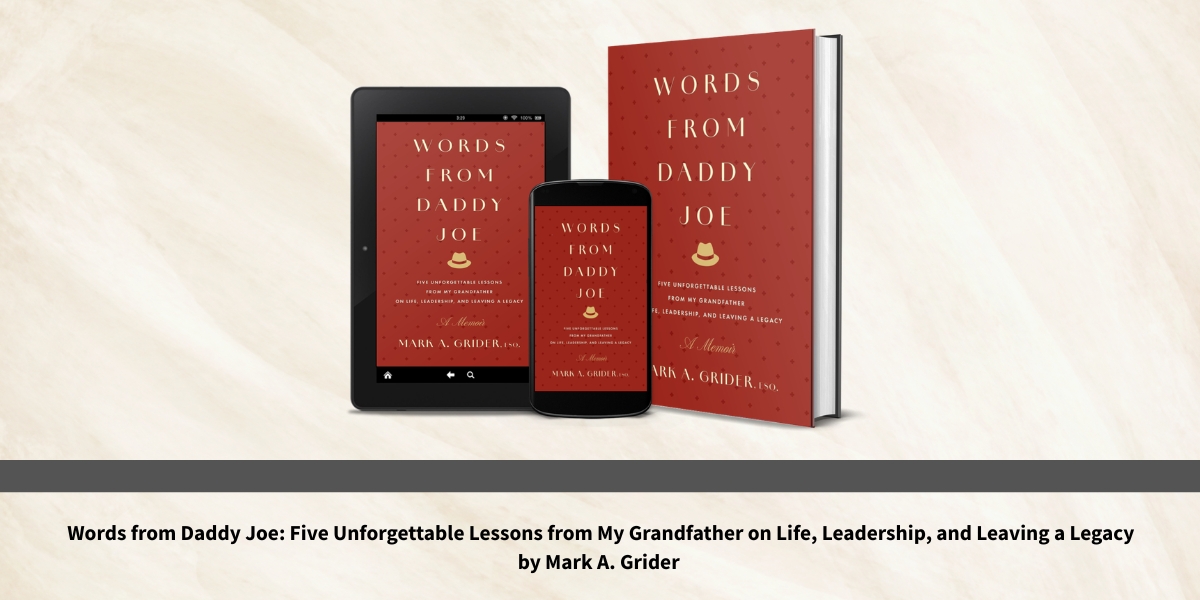

Daddy Joe Never Worked in Washington, but He Taught Mark A. Grider What Leadership Can Mean

By: Oliver Kraus

There is something quietly subversive about a book written by a Washington, D.C. lawyer with a career spanning the Department of Justice, both chambers of Congress, and senior roles in federal agencies, whose central argument is that one of the most important leadership educations he ever received came from a southern reverend who never held public office and never needed to. Mark A. Grider is not making that argument to be humble or to perform a kind of folksy authenticity that contrasts with his résumé. He appears to be making it because he genuinely believes it, and the stories he offers across these pages make that belief understandable.

Daddy Joe, born Reverend Joseph Albert Henry, lived from April 1915 to June 2005, and the span of that life, 90 years of character, community leadership, and investment in the people around him, gives this book much of its gravity. Grider is not writing about a perfect man or a famous one. He is writing about a man whose influence was felt where influence often matters most: in the people who watched him live and carried what they saw into their own lives and choices.

That the man who watched most carefully went on to serve at high levels of American public life and chose to write this book rather than a memoir centered on his own accomplishments says something important about what Grider believes is worth preserving.

The five lessons Daddy Joe embodied, and that Grider unpacks with both personal tenderness and professional precision, are the kind that sound straightforward until someone tries to live them consistently under pressure. Values-based leadership is not a principle a person adopts only when it is convenient. It is a practice built over time through choices that can sometimes be costly, and Grider is honest about that cost without being heavy about it.

The lesson on forgiveness, drawn from a personal family experience that could easily have become a wound rather than a source of understanding, is one of the book’s most quietly affecting sections and may stay with many readers.

Grider writes with the authority of someone who has operated at high levels for a long time and the warmth of someone writing about a man he clearly misses. That combination produces a reading experience that feels both instructive and intimate, like being welcomed into a meaningful conversation rather than lectured at from a distance.

The book is addressed particularly to young people in the formative decade between 16 and 26, but it may also speak to anyone who has been leading long enough to wonder whether the foundations they built their career on were the right ones.

Words from Daddy Joe is the kind of book that invites readers to reconsider what legacy actually means. Not only titles, accomplishments, or institutions that carry a name, but the specific people who carry something of how a person lived into the choices they make long after that person is gone. Daddy Joe understood that, and Grider has written a book that honors the man who taught it to him.

If the idea that the most powerful leadership education often comes from the quietest and most unlikely sources resonates with something you already believe, Words from Daddy Joe by Mark A. Grider will confirm it beautifully. Head over to Amazon and get your copy today.

Director, Writer, and Production Leader, Nishita Chand Builds a Multifaceted Career in Independent Film

By: F. J

Filmmaker Nishita Chand has established herself as a Screenwriter, Director, producer, and production leader through multiple original short film productions and festival-recognised projects. Chand has built a body of work that reflects both a distinct creative voice and a strong command of on-set production.

A Filmography Rooted In Original Storytelling

Chand has written, directed, and produced 7 short films, including The Price of a Decision, Dark Relations, Illusion of Hidden Realities, The Wrong Take, Attraction Drawn to Distraction (later retitled Parallels), The Condition, Snooze, and Skyfall (adaptation). Her work has provided A 2025 graduate of the New York Film Academy, Chand’s work has provided opportunities to gain experience across multiple stages of production while continuing to develop her skills as a storyteller and filmmaker.

Festival Recognition For Narrative Filmmaking

Director, Writer, and Production Leader, Nishita Chand Builds a Multifaceted Career in Independent Film Body Image

Photo Courtesy: Nishita Chand

On April 7, 2026, Chand’s narrative short Parallels, originally titled Attraction Drawn to Distraction, received an Official Selection from Indie Film Los Angeles. Following its selection, the film was screened on May 5, 2026, and premiered before a live audience in Los Angeles. Chand attended the premiere, representing and marking her first narrative student short film to the audience. The film drew an enthusiastic response from those in attendance, with fellow filmmakers and audience members responding with applause and positive feedback.

Indie Film Los Angeles also recognised a second short from Chand that same month. Her film Snooze received an Official Selection from the festival on April 11, 2026, marking the second of her projects to be recognised by Indie Film Los Angeles within a matter of days. While Snooze was not included in the festival’s screening program, its selection added to Chand’s growing list of festival recognitions and underscored the consistency of her work as a director.

Festival And Screenwriting Recognition For The Price Of A Decision

Director, Writer, and Production Leader, Nishita Chand Builds a Multifaceted Career in Independent Film

Photo Courtesy: Nishita Chand

In addition to directing and producing film projects, Chand has also received recognition for her work as a screenwriter, as The Price of a Decision has earned recognition both as a script and as a finished film. Chand’s screenplay, The Price of a Decision, was named an Official Nominee at the Urbanite Arts and Film Festival on June 6, 2026.

The completed film was separately recognized, receiving an Official Selection from First Time Filmmakers Festival (Volume 7) and screening with Filmmakers NYC, a New York-based filmmaker community event. The nomination added to her growing list of professional accomplishments and demonstrated her involvement in both the written and visual aspects of filmmaking. Through her work as a writer and director, Chand continues to develop projects that explore character-driven narratives and dramatic storytelling.

Leadership On Award-Recognized Productions

Beyond her own directorial projects, Chand has served in production leadership positions on independent film productions, working as an Assistant Director on 8 short films. One of which is Love Is Stronger Than Hate, directed by Yoey Garfield, earned multiple distinctions, including at the Follow Your Heart Film Festival, as well as Official Selections at the Long Island International Film Festival and the North Film Festival.

As Assistant Director, Chand led the set with department heads. Chand has taken on across her assistant directing work more broadly, often stepping in as the second-in-command on set, just after the director, while still contributing creative input of her own.

Among her assistant directing credits is The Adventure of a Married Couple, a SAG-affiliated production directed by Apar Pokhrel and produced by feature film producer Jack Huppert, with cinematography by Noah Fowler. Chand served as Assistant Director on the project, adding a SAG production to her growing list of on-set leadership credits.

Expanding Into Feature-Length Work

Chand is also serving as Assistant Director on a documentary feature called The Yakthungs of New York directed by Nepali filmmaker Suraj Subba Nalbo. The project marks Chand’s transition into feature-length production, building on the production leadership experience she developed on shorter independent films and extending her on-set role to a feature-length format.


Disclaimer: The second image is from a motion picture and depicts smoking as part of a fictional scene. The inclusion of this image is for editorial and informational purposes only and does not constitute an endorsement, promotion, or encouragement of smoking or tobacco use.

Rachel Elle Believes Fashion Should Mean Something, and I Couldn’t Agree More

By: Bridget Mulroy

I walked into my conversation with Rachel Elle expecting to interview a celebrity stylist about what’s trending for Summer 2026. Instead, I found myself talking with someone who sees fashion as something far more personal than seasonal colors or viral silhouettes. By the time we wrapped up, I realized Rachel isn’t simply predicting where style is headed. She’s quietly helping shape a future where clothing means something again.

In an age of endless online shopping, overnight trends, and wardrobes that seem to change by the week, Rachel’s perspective felt surprisingly refreshing. She isn’t chasing what’s next for the sake of staying relevant. She’s creating pieces with intention, and encouraging others to do the same.

When I asked what has been keeping her busiest this season, she laughed before admitting that summer is always beautifully chaotic.

Summer time is always the craziest time with just endless events, parties, weddings, etc., and everyone is just always in a good mood and wants to dress up! So I find myself just constantly making a look last minute for an event.

Anyone who’s looked at a calendar full of weddings or celebrations can probably relate. But Rachel pointed out something that feels especially true this year. People aren’t simply buying clothes anymore. They’re searching for something that feels unique to them.

I think right now, as consumers, we have so many options that we’re all looking for something that just has that extra special touch.

That idea stayed with me throughout our conversation. The phrase “extra special touch” seemed to define everything Rachel creates. Whether she’s designing for clients or styling herself, she’s chasing individuality instead of perfection.

Naturally, I had to ask about trends. After all, someone immersed in fashion every day has a front-row seat to what’s coming and what’s quietly disappearing.

Rachel explained that she’s seeing polyester gradually give way to natural fibers, not because one is inherently better than the other, but because timeless materials continue to earn their place in people’s wardrobes. As for silhouettes, she smiled while rattling off a few favorites.

The drop-waist dresses are everywhere, and the bubble hem is becoming a thing again! But I specifically am loving the bubble hem shorts.

Then came the detail that made me smile.

I personally can’t get enough of tie details, whether it’s bows, waist ties, or fastening a garment closed with a tie closure. I’ve just been craving having something to tie!

It was such an honest answer. Not calculated. Not overly polished. Just someone genuinely excited by design.

One of my favorite parts of our conversation was hearing Rachel talk about Project Runway and designer Joseph McRae. The two originally crossed paths while showing their collections at Charleston Fashion Week before eventually finding themselves reunited years later in New York.

What Rachel didn’t know at first was that they had both auditioned for Project Runway during the same season.

I was thrilled because he has such a unique point of view and I totally admire his editorial style.

As someone who frequently visits Mood Fabrics, she admitted she often gets the inside scoop from friends who work there. Yet what stood out wasn’t her excitement about television. It was her contentment with where her own career has taken her.

Being on Project Runway would surely be another iconic thing to add to my list, but to be honest, I already have such a fulfilling career and creative projects that currently bring me a lot of joy.

That confidence is rare. She doesn’t seem driven by validation. She’s driven by creativity.

If there was one moment that perfectly captured who Rachel is, it was when she told me about making flower girl dresses for her nieces.

Buying dresses would have been easier. Faster. Probably cheaper.

But that’s never been the point.

It just made the whole moment more special knowing that I made the dresses specially for the girls, and there was just so much more connection behind it as compared to just pulling something off a rack.

Listening to her describe the experience, I realized she wasn’t just talking about dresses. She was talking about memories.

It’s also why she believes fashion is beginning to shift away from disposable shopping.

I think we’re getting tired of the overabundance of cheap basic pieces, and we all crave something a little more special and a little more unique.

That sentiment feels increasingly relevant. People want fewer pieces they’ll actually remember wearing instead of closets full of clothes they barely notice.

Of course, with the FIFA World Cup generating excitement around the globe, I couldn’t resist asking what she planned to wear.

Her answer couldn’t have been more Rachel.

I stopped in to Mood Fabrics for inspiration and happened to find some perfect fabric, so I will be hustling to make myself a fun dress for the event.

While many of us would immediately start shopping online, Rachel starts with fabric and imagination.

Before we wrapped up, I asked how she approaches dressing for several major events happening back-to-back. She explained that everything starts with understanding the occasion before thinking about colors, fabrics, accessories, and whether one of her archived creations can be reimagined into something fresh.

It reminded me that while we often admire the finished look, we rarely appreciate everything that happens before the outfit ever reaches the hanger.

When our conversation ended, I found myself thinking less about trends and more about intention. Rachel Lichtenwalner reminded me that great style isn’t about owning the newest thing. It’s about creating something that feels authentic, memorable, and unmistakably your own.

If Summer 2026 is teaching us anything, it’s that fashion may finally be slowing down just enough for craftsmanship, personality, and meaningful design to take center stage again.

Daniel Krynzel and Big Balls Brotherhood: Your Future Is Built by the Conversations You Have Every Day

Most people believe their future is shaped by life’s biggest decisions. They remember the company they started, the city they moved to, the person they married, or the investment they made, assuming those defining moments determined the direction of everything that followed. Daniel Krynzel believes those milestones certainly matter, but they are rarely where the future is actually built. Long before our lives change in visible ways, they begin changing through something far quieter: the conversations we participate in every single day.

Conversations are often dismissed as simple exchanges of information, yet they quietly shape far more than what we know. They influence what we believe is possible, what we expect from ourselves, what we normalize, what we tolerate, and ultimately who we become. Most people never intentionally choose those conversations. They inherit them from workplaces, social circles, news feeds, family dynamics, and the environments surrounding them. Over time, those repeated conversations begin creating an invisible blueprint that guides the decisions, habits, and beliefs shaping their future.

That process is so gradual that it is almost impossible to notice while it is happening. Few people wake up one morning and decide to lower their expectations, become less courageous, dream smaller, or settle for less than they once imagined. Those changes rarely happen through one dramatic decision. They happen one conversation at a time. Without realizing it, people begin adapting to the expectations surrounding them until those expectations become part of their identity.

The Conversations That Quietly Create Identity

Human beings are remarkably adaptable. Yet the same ability that allows people to flourish also makes them deeply influenced by the environments they consistently inhabit.

Every repeated conversation answers questions we rarely ask out loud. What kind of person am I becoming? What is considered normal? What does success look like? How should I respond when life becomes difficult? What should I expect from myself? Those answers are seldom formed in isolation. They emerge through the people we listen to, the ideas we repeatedly encounter, and the conversations we participate in day after day.

Over time, conversations become beliefs. Beliefs influence decisions. Decisions become habits. Habits shape identity. Identity eventually determines the trajectory of a person’s life.

That realization fundamentally changed how Daniel Krynzel thinks about growth.

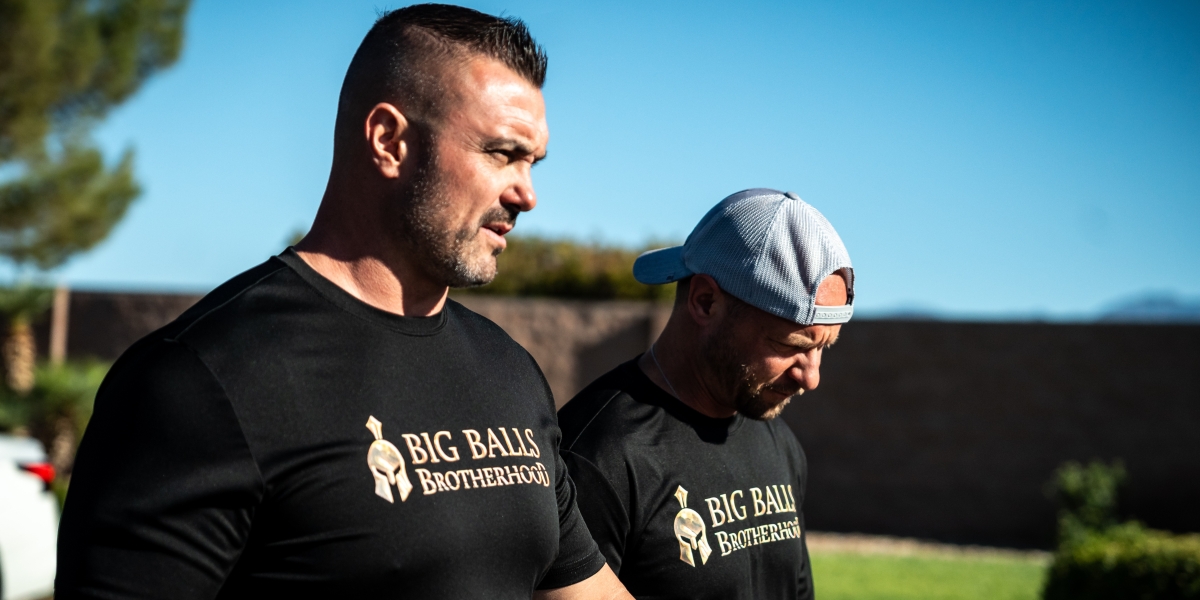
Photo Courtesy: Big Balls Brotherhood

Designing Better Conversations

Krynzel believes meaningful transformation rarely begins by simply consuming more information. Most ambitious people already know they should exercise, lead more effectively, communicate better, take calculated risks, strengthen their relationships, and follow through on their commitments. Information is rarely the missing ingredient.

The greater challenge is creating an environment where the conversations surrounding a person consistently reinforce those behaviors until they become natural.

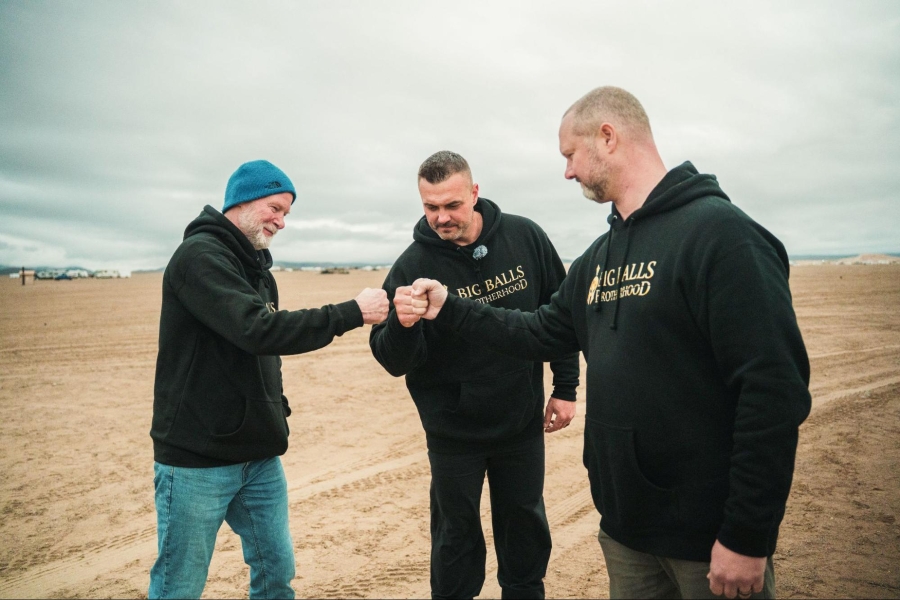
That philosophy became one of the foundational principles behind Big Balls Brotherhood. Rather than creating another networking organization or traditional accountability group, Krynzel intentionally designed an environment where every meaningful interaction moves members toward becoming stronger leaders, husbands, fathers, entrepreneurs, and men. The goal is not simply to inspire someone for a weekend. It is to intentionally influence the conversations that quietly shape identity every day.

That is why every morning begins with Daily Inspired. Before emails, headlines, meetings, unexpected problems, and outside pressures compete for a man’s attention, members intentionally have a different conversation with themselves. They focus on gratitude before frustration. Vision before distraction. Purpose before urgency. Long-term direction before short-term reaction. Krynzel believes the first conversation of the day often influences every conversation that follows.

Gamified accountability extends that philosophy beyond the morning routine. Rather than allowing internal conversations to revolve around broken promises or unfinished commitments, members consistently reinforce a different narrative through measurable progress, follow-through, recognition, and momentum. The objective is not merely completing tasks. It is gradually replacing the identity of someone who hopes to change with the identity of someone who consistently keeps promises to himself.

Brotherhood strengthens that process even further. Entrepreneurs, business owners, and leaders often spend their days surrounded by employees, clients, responsibilities, and decisions, yet many quietly lack relationships that consistently challenge them to grow. Inside Big Balls Brotherhood, conversations revolve around ownership, courage, execution, vision, and possibility. Those conversations gradually raise expectations because every man in the room is committed to becoming more than he was yesterday.

Quarterly live events transform those conversations into unforgettable experiences. Through challenge, competition, shared victories, and moments that push men beyond familiar comfort zones, members create powerful reference points that permanently reshape what they believe they are capable of accomplishing. Those experiences continue influencing conversations long after the event ends because they replace uncertainty with personal evidence. A man no longer wonders whether he can become more. He has already experienced what becomes possible when he steps beyond the limitations he once accepted.

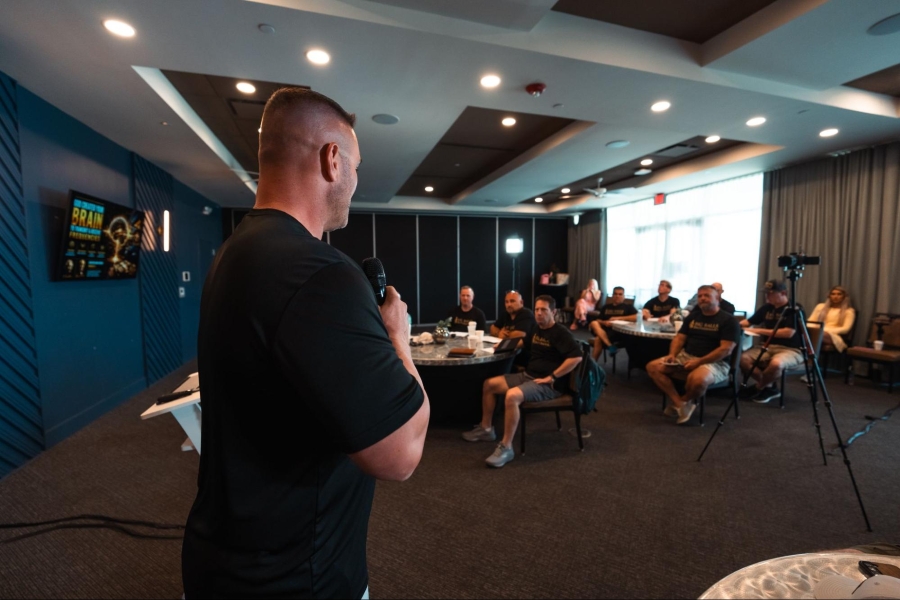
Photo Courtesy: Big Balls Brotherhood

Choosing the Voices That Shape Your Future

Perhaps the greatest lesson behind Krynzel’s philosophy is that every person is already being shaped by conversations. The only question is whether those conversations are happening by default or by design.

Most people carefully choose financial investments, career opportunities, neighborhoods, schools, and business strategies. Far fewer intentionally choose the conversational environments that influence their thinking every single day. Yet those invisible influences often determine how they respond to every opportunity, challenge, relationship, and decision that follows.

That is why Big Balls Brotherhood is ultimately much more than a community. It is an intentionally designed environment where conversations consistently reinforce courage instead of fear, ownership instead of excuses, vision instead of distraction, and growth instead of comfort. Krynzel believes changing a man’s future rarely begins with one extraordinary decision. More often, it begins by changing the voices he listens to, the people he surrounds himself with, and the conversations that quietly become the foundation of his identity.

Long before your future becomes visible in your achievements, your relationships, or your success, it first becomes audible in the conversations that shape your thinking every day. Choose those conversations wisely, because while they may feel ordinary in the moment, they are quietly introducing you to the person you will become.

Hope for Depression Research Foundation Launches Eighth Annual “Week of Hope” Ahead of the Annual Race of Hope

Over 70 Local Businesses Join in a Village-Wide Campaign to Raise Mental Health Awareness

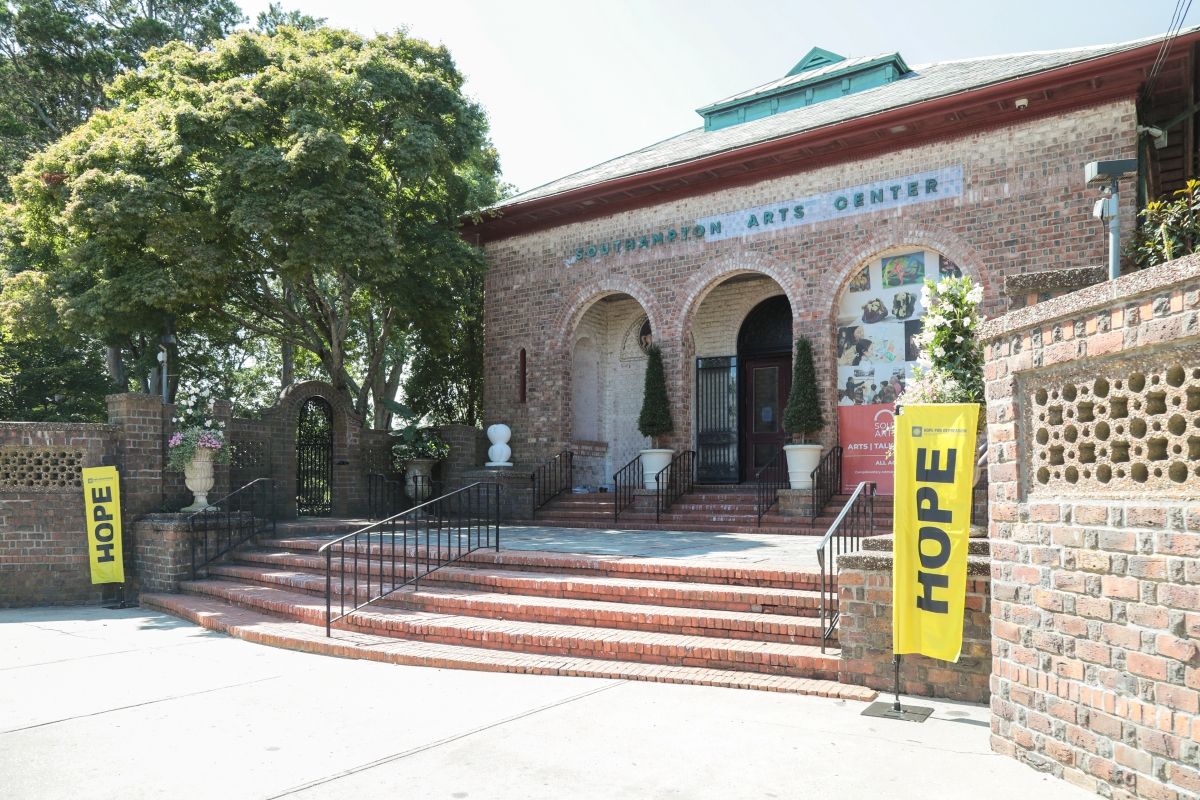
Today, July 23, the Hope for Depression Research Foundation (HDRF) kicks off its eighth annual Week of Hope summer tradition in Southampton to raise mental health awareness.

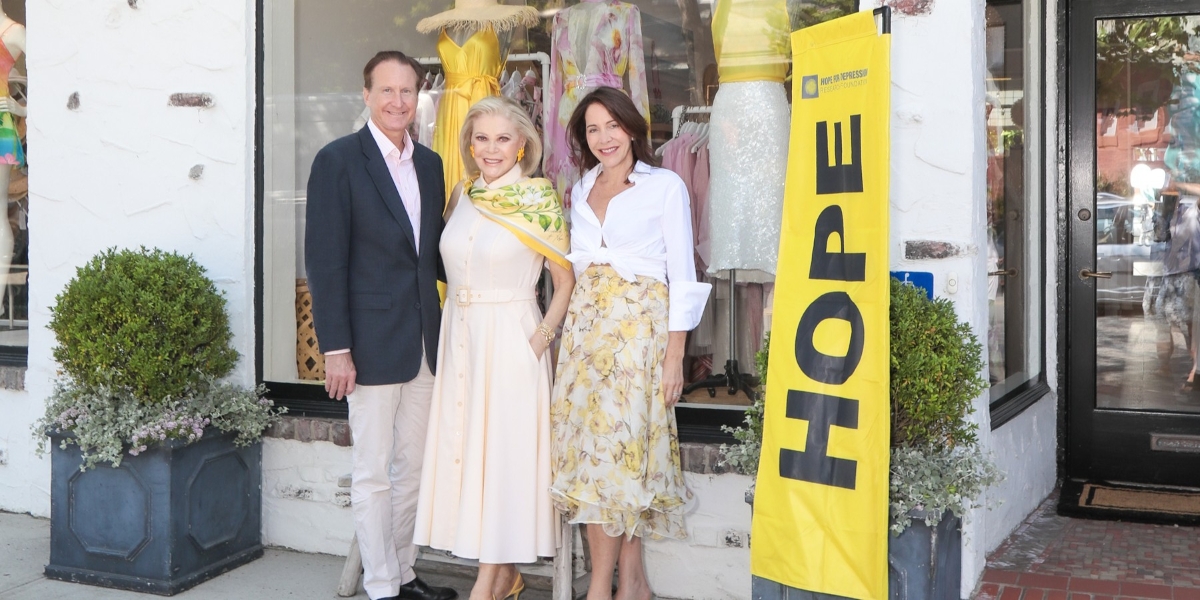
Throughout the week, businesses across Southampton place bright yellow flags outside their entrances, creating a unified visual display that reflects their support for mental health awareness and open discussion. The week culminates with the 11th Annual Race of Hope to Defeat Depression on Sunday, August 2, in Southampton.

Over 70 businesses are part of the Week of Hope, including Asprey London, Dolce Vita, Jennifer Miller Jewelry, Johnny Was, Love Binetti, Paul Stuart and Sage & Madison.

HDRF Founder and Chair Audrey Gruss and Mayor of Southampton Village William Manger Jr. will place the first flag in front of the Michelle Farmer store (10 A Jobs Lane, Southampton) at 10 am.

“We are thrilled to celebrate our eighth annual Week of Hope in Southampton, culminating with the 11th anniversary of the Race of Hope,” said Gruss. “Each summer, our Southampton community comes together to raise awareness for mental health and support HDRF’s advanced research into new and better treatments for depression and anxiety. Their unwavering support continues to inspire us.”

In addition to displaying the HOPE flags, participating stores will offer HDRF handouts with updated information about depression in the United States and guidance on identifying its signs and symptoms.

Photo Courtesy: Eric Striffler

The Week of Hope began in 2018 to serve as the lead-up to HDRF’s signature summer event, the Race of Hope 5K to Defeat Depression. The Week closes with the 11th Southampton Race of Hope on Sunday, August 2 at 8:30 AM around Lake Agawam. The Race attracts over 1,000 participants from the tri-state area and beyond to unite as a community and raise mental health awareness and fund depression research.

This year’s celebrity Grand Marshal will be announced shortly and will be joined by Gruss as Co-Grand Marshals of the Race of Hope.

100% of revenues from the Race go to groundbreaking research into the root causes of depression in the brain and new and better treatments. To sign up or learn more, visit the Southampton Race of Hope website.

The Week of Hope, in conjunction with the Race of Hope, has helped to raise millions for advanced depression research. The Race is supported by residents including Janna Bullock, Alan Glatt, Jamee and Peter Gregory, Mai Hallingby Harrison, Kim Heirston, Tania Higgins, Natasha Jeffries, Sharon and John Loeb, Jr., Anne Nordeman, Kathy Prounis, Hilary Geary Ross, and Lis Waterman.

Week of Hope participating business owners to date include: 27 Hampton Salon, A-Tout-Age, Aloof Icon, Asprey London, ba&sh, bean2tween, Breezin Up, Casa Cabana, Coco Cabana, Collette Home, Colorpop Workshop, Contessa Gallery, Corwin’s Jewelers, Dazzelle, Dolce Vita, Dopo Argento, El Verano, Faherty Southampton, Fivestory Southampton, Flying Point Surf, Fowler’s Garden Center, Golden Pear Café, Greyson Clothiers, Gubbins Running Ahead, Halsey House & Garden, Hampton Arrow Cleaners, Heart of the Hamptons, Herrick Hardware, Hildreth’s, Hildreth’s Children’s Department, House of Olita, Jennifer Miller Jewelry, Johnny Was, Juice Press, Le Bilboquet, Love Binetti, Luxury Fashion Group, Main Street Optics, Michelle Farmer Collaborate, Morphew World, Nest Seekers, Ornare Hamptons, Paul Stuart, Pelletreau Silver Shop, Rogers Mansion & Open-Air Museum Complex, Rogers Memorial Library, Roller Rabbit Southampton, Ruby and Jenna, Sage & Madison, Saltwater, Sea Green Designs, Sean’s Place, SFERRA, Shari’s Place, Shinnecock Lobster Factory, Shippy’s, Shoe-Inn, Southampton Arts Center, Southampton Inn, Southampton Publick House, Stevenson’s Toys and Games, Sunrise to Sunset Surf Sport, Tenet, Tennis East, The 1708 House, The Fudge Company, Therapy Life&Style, Topiaire Baby, Topiaire Candy Shop, Topiaire Flower Shop, Tremble, V. Elisabeth, Village Cheese Shoppe and WmNY Rugs.

Disclaimer: This article is for informational and awareness purposes only. It is not intended to provide medical advice, diagnosis, or treatment. Anyone experiencing symptoms of depression, anxiety, or another mental health condition should consult a qualified healthcare professional.

The Breakfast I Didn’t Realize I Was Missing

By: Bridget Mulroy

I’ve often wondered whether you can miss something so gradually that you don’t even notice it’s gone.

When I first moved from Ireland to New York, I expected to miss the obvious things. Family. Friends. The rain that somehow feels different at home. The Atlantic breeze. Hearing voices that sounded like mine without having to search for them.

What I didn’t expect was to spend years missing breakfast.

Not breakfast in the American sense. I’ve grown to love bagels and good coffee, and I won’t pretend I haven’t become partial to pancakes every now and then. But every so often, usually on a quiet Saturday morning when there’s nowhere in particular to be, I’d find myself thinking about home.

Not in a dramatic way.

Just little things.

The kettle whistling before anyone else in the house was awake.

The smell of rashers hitting a hot frying pan.

Someone insisting the black pudding needed another minute while someone else was already stealing sausages off the plate.

The newspaper spread across the kitchen table, even though nobody was really reading it.

Those mornings never felt important at the time.

Looking back now, I realize they were everything.

As we say at home, Ní bhíonn aon tintéán mar do thintéán féin, there’s no hearth like your own.

I understand that saying far better now than I ever did growing up.

Living in New York and New Jersey has given me a wonderful life. I’ve built friendships, discovered neighborhoods I love, and found pieces of Ireland tucked away where I least expected them. There are Irish pubs where the Guinness is poured properly. Shops where you can occasionally find Tayto or Club Orange if you’re lucky.

But putting together a proper Irish breakfast has always felt like a scavenger hunt.

One shop had decent sausages.

Another had something resembling rashers.

Black pudding might appear around St Patrick’s Day, only to disappear again before you’d had the chance to buy a second packet.

It was always nearly right.

Nearly.

If you’ve ever left Ireland, you’ll know exactly what I mean.

Then one evening, over a pint, another Irish friend asked if I’d ever heard of Irish Breakfast Box.

I hadn’t.

He simply smiled and said, “Trust me.”

Those two words have rarely served me better.

The story behind Irish Breakfast Box immediately appealed to me because it felt so familiar. It wasn’t created in a boardroom or dreamed up by people trying to sell nostalgia. It came from two Irish men, Niall Boyle and Noel Kerin, who know exactly what it’s like to build a life abroad while carrying Ireland with you.

Many New Yorkers already know them as the owners of The Blasket Pub, where they’ve spent years creating the sort of welcome Irish pubs have always been famous for. You can feel that same spirit running through Irish Breakfast Box. It doesn’t feel like a company.

It feels like something built by people who genuinely understand why breakfast matters.

That became obvious the moment I started reading about how they source everything.

They work alongside an Irish butcher with more than thirty years of experience, blending traditional Irish seasonings into the meats here in the United States. It’s such a thoughtful solution. Rather than compromising on flavor or pretending “close enough” is good enough, they’ve recreated the taste many of us grew up with.

You notice it immediately.

There’s a confidence to the food.

Nothing is trying too hard.

It simply tastes familiar.

Ordering was almost suspiciously easy. You choose the breakfast box that suits the number of people you’re feeding or how many breakfasts you’d like to make. Whether you’re after the full Irish experience, an Ulster Fry, breakfast meats, breakfast rolls or one of their gift boxes, everything feels carefully considered rather than overwhelming.

Then came delivery day.

I don’t know why I expected it to feel ordinary.

It wasn’t.

The box itself arrived beautifully packed, insulated with ice packs and organized with obvious care. Every item had its place. Fresh vegetables were nestled alongside the meats, everything frozen exactly as it should be.

I actually laughed when I unpacked the eggs.

Shipping eggs across America without breaking them feels like a minor miracle, yet there they were, perfectly intact.

Only afterward did I learn they deliberately ship every Wednesday so everything arrives fresh for the weekend.

Of course they do.

That’s exactly when Irish people want a proper fry.

It isn’t just clever logistics.

It’s understanding your customers because you are your customers.

Opening the box felt strangely emotional.

There was Barry’s Tea.

Brennan’s bread.

Proper butter.

Beautiful rashers.

Traditional bangers.

Black pudding.

White pudding.

Mushrooms.

Tomatoes.

Beans.

One familiar ingredient after another.

For a few moments I wasn’t unpacking groceries.

I was unpacking memories.

Then I put the kettle on.

The frying pan warmed.

The first rasher began to sizzle.

And something happened that I wasn’t expecting.

The smell filled the kitchen.

Not almost.

Not close.

Exactly.

It caught me completely off guard.

I closed my eyes for a second, and I could have been standing back home, listening to someone asking whether I’d put enough tea in the pot while another voice reminded me not to burn the sausages.

It’s remarkable how powerful scent can be.

You don’t simply remember home.

You feel it.

Breakfast tasted exactly as I’d hoped.

The sausages had that unmistakable seasoning I’d spent years trying to find.

The rashers were beautifully familiar.

The puddings were rich without being heavy.

Everything belonged on the plate together.

Even the tea somehow tasted better because everything else around it was right.

Sláinte, good health.

I quietly said it to myself before taking another sip.

What impressed me just as much as the food was the warmth behind the business itself.

Every interaction felt unmistakably Irish.

Friendly.

Helpful.

Never rushed.

Questions were answered like conversations rather than customer service inquiries.

That matters.

Hospitality has never simply been about serving food.

It’s about making people feel welcome.

Irish Breakfast Box manages to do that long before breakfast ever reaches the frying pan.

Their own words capture the idea beautifully:

“At Irish Breakfast Box, we believe that every morning should start with a taste of Ireland, and our curated boxes bring the heartwarming flavors of Irish breakfast to homes across the country.”

After spending a Saturday morning with one of their boxes, I don’t hear that as advertising.

I hear two Irish lads talking about something they genuinely care about.

Perhaps that’s why the experience stayed with me long after breakfast was over.

The plates were cleared.

The kettle had boiled more than once.

The conversation had drifted from football to family to holidays we’d like to take one day.

Without really noticing, we’d recreated the sort of Saturday morning I’d grown up with.

That’s what surprised me most.

Irish Breakfast Box doesn’t simply deliver breakfast ingredients.

It creates the excuse to slow down.

To invite people over.

To put another pot of tea on.

To linger around the table a little longer than planned.

To remember that some of life’s happiest moments have always happened in kitchens.

Céad míle fáilte, a hundred thousand welcomes.

That’s what arrived on my doorstep.

Not simply a carefully packed box of beautifully prepared Irish food.

But a small piece of home that somehow traveled more than three thousand miles without losing an ounce of its heart.

And, if you’ll excuse me, there’s one last slice of Brennan’s waiting to be toasted.

Irish Breakfast Box Website

Irish Breakfast Box Instagram

The Blasket Pub

Meet Niall and Noel – Navigating New York

NYC Upper East Side Legionnaires’ Disease Outbreak Reaches 84 Cases and Five Deaths as City Declares Source Eliminated

Five people have died and 84 have tested positive for Legionnaires’ disease in an Upper East Side outbreak that began in early July 2026, making it the deadliest Legionella cluster in New York City since the 2015 South Bronx crisis. City health officials now say no new cases have been reported since July 15, and the source of exposure has likely been removed through aggressive testing and disinfection of cooling towers across three Manhattan ZIP codes.

Key Takeaways

  • The NYC Health Department has confirmed 84 Legionnaires’ disease cases and five deaths in the Upper East Side outbreak, first identified on July 2, 2026.
  • No new cases have been reported since July 15, and health officials believe the source of bacterial exposure has been eliminated.
  • Of 183 cooling towers tested at 160 buildings, 51 cooling towers at 50 buildings returned culture positive results for live Legionella bacteria.
  • The outbreak spans the Carnegie Hill and Yorkville neighborhoods in ZIP codes 10028, 10128, and 10075.
  • New York City’s cooling tower law, Local Law 159, took effect just two months before the outbreak was detected, raising questions about enforcement timelines.
  • The 2025 Central Harlem outbreak killed seven people and infected more than 100, and prompted the legislative overhaul that Local Law 159 represents.

How Did The Upper East Side Outbreak Unfold?

The New York City Health Department launched its investigation on July 2 after identifying just two confirmed cases of Legionnaires’ disease in the Carnegie Hill and Yorkville neighborhoods. That early detection, Health Commissioner Dr. Alister F. Martin emphasized, set the pace for the city’s response. Rather than waiting for three cases in a tight geographic area, the standard threshold that historically triggered city investigations, the Mamdani administration moved on two.

Case counts climbed rapidly through the first two weeks of July. Daily new diagnoses peaked around July 7 before declining sharply. The first death was confirmed on July 18, followed by three additional deaths on successive days and a fifth on July 22. Of the 84 total cases, 59 patients required hospitalization but have since been discharged, eight remained hospitalized as of July 23, and 13 did not need hospital care. No new symptoms have been reported in more than 10 days.

What Did The Testing Effort Reveal About The Scale Of Contamination?

The investigation covered a single square mile stretching from approximately East 74th Street to East 97th Street. Within that zone, city inspectors tested 183 cooling towers at 160 buildings for Legionella bacteria. Initial PCR screening flagged 77 cooling towers at 75 buildings. Confirmatory culture testing, which detects live bacteria rather than just genetic material, narrowed the positive results to 51 cooling towers at 50 buildings. All culture positive towers have been cleaned and disinfected.

Health officials stressed that a culture positive result confirms the presence of live Legionella but does not necessarily identify that specific tower as the source of patient infections. DNA sequencing, which compares bacterial strains found in towers to strains collected from patients, could take several more weeks. The process of matching a specific tower to the outbreak will determine whether any building owners were out of compliance with city maintenance laws and face enforcement action.

Why Does The Timing Of Local Law 159 Matter?

New York City’s cooling tower regulations have been evolving for a decade. Local Law 77 of 2015, passed after the South Bronx outbreak that killed 16 people and sickened more than 130, established the city’s first mandatory registration, inspection, and testing framework for cooling towers. That law required quarterly Legionella testing at 90 day intervals.

A decade of Local Law 77 produced mixed results. The 2025 Central Harlem outbreak, which killed seven and infected more than 100, exposed persistent compliance gaps. In response, the City Council passed Local Law 159 in November 2025, tripling the testing frequency to once every 31 days, adding a mandatory summer hyperhalogenation requirement, doubling fines for violations, and requiring electronic reporting of tower startup and shutdown dates. Local Law 159 took effect on May 7, 2026, roughly eight weeks before the Upper East Side cluster was detected.

The proximity of those dates raises a structural question: whether building owners in the affected ZIP codes had enough time to bring their cooling tower maintenance into full compliance before peak summer temperatures created the conditions most favorable for Legionella growth. Health Commissioner Martin told reporters at a July 8 town hall that it was “too early to tell if this new law is taking effect.”

What Does The Outbreak’s Trajectory Mean For Residents?

The Health Department has maintained throughout the outbreak that Legionnaires’ disease is not related to building plumbing systems. Residents in the affected ZIP codes can safely drink tap water, bathe, shower, cook, and use home air conditioning. The disease is not contagious between people. It spreads only when someone inhales aerosolized water droplets containing live Legionella bacteria, typically from commercial cooling towers.

Individuals who visited, worked in, or lived in ZIP codes 10028, 10128, or 10075 since late June and are experiencing fever, cough, muscle aches, or difficulty breathing should contact a healthcare provider. The disease is treatable with antibiotics when diagnosed early, but the fatality rate rises in patients over 50, people who smoke, and those with weakened immune systems or chronic lung conditions.


FAQs

What Is Legionnaires’ Disease And How Is It Contracted?

Legionnaires’ disease is a severe form of pneumonia caused by Legionella bacteria. People contract the illness by breathing in fine water droplets (mist or vapor) containing the bacteria, which commonly grow in warm water inside commercial cooling towers, hot tubs, and large plumbing systems. The disease is not spread from person to person and is not caused by drinking water.

Has The NYC Health Department Identified The Specific Source Of The Upper East Side Outbreak?

Not yet. While 51 cooling towers at 50 buildings have tested culture positive for live Legionella bacteria, identifying which tower or towers actually caused the outbreak requires DNA sequencing to match bacterial strains from towers to those collected from patients. Health officials said that process could take several more weeks.

Are Residents In The Affected ZIP Codes Still At Risk?

The Health Department says risk has decreased substantially. No new cases have been reported since July 15, and all culture positive cooling towers have been cleaned and disinfected. However, anyone who spent time in ZIP codes 10028, 10128, or 10075 since late June and develops symptoms within 14 days of exposure should seek medical attention promptly.

How Does This Outbreak Compare To Previous Legionnaires’ Clusters In New York City?

The 2026 Upper East Side outbreak, with 84 cases and five deaths, is the city’s deadliest Legionella event since the 2015 South Bronx cluster, which killed 16 and infected more than 130. The 2025 Central Harlem outbreak produced more than 100 cases and seven deaths. The current outbreak involved testing more than three times the number of cooling towers investigated during the Harlem cluster.

What Laws Regulate Cooling Tower Maintenance In New York City?

Local Law 77 of 2015 established mandatory registration, quarterly testing, and inspection requirements for all cooling towers in the city. Local Law 159 of 2025, which took effect May 7, 2026, strengthened those standards by requiring monthly Legionella testing, summer hyperhalogenation, electronic reporting, and doubled civil penalties for noncompliant building owners.

New York City’s third major Legionnaires’ outbreak in two years has eliminated the source but not yet answered the enforcement question that matters: whether the laws written to prevent exactly this kind of crisis were followed by the building owners whose towers tested positive for the bacteria that killed five people.

Xinyi Huang, Bridging Continents Through the Universal Language of Music

By: Dr. Yuting Zhou

From Budapest to Carnegie Hall: A Journey of Artistic Excellence

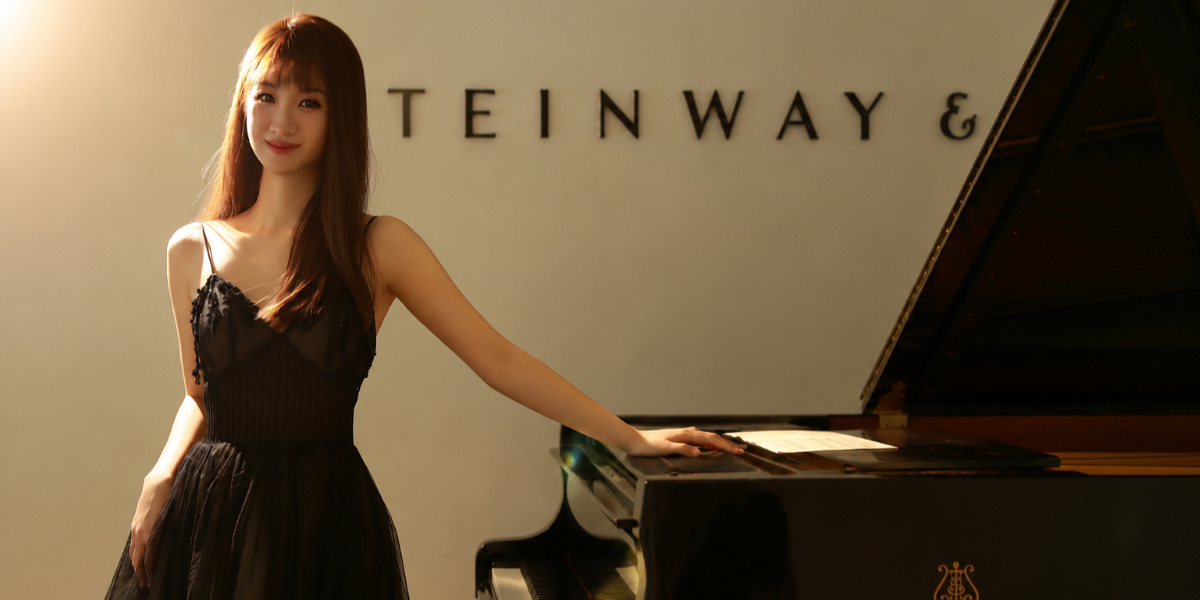
From the historic halls of Budapest’s Liszt Ferenc Academy of Music to the world-renowned stage of Carnegie Hall in New York, Xinyi Huang, a concert pianist and musician, continues to shape her artistic journey through dedication, cultural exchange, and a profound connection to classical music.

With an artistic presence spanning Europe, the Americas, and Asia, she has developed a distinctive musical voice that combines technical refinement, intellectual depth, emotional expression, and a compelling stage presence. Through her interpretations of the classical repertoire, she seeks to create meaningful connections between composers, performers, and audiences, allowing music to transcend cultural and geographical boundaries.

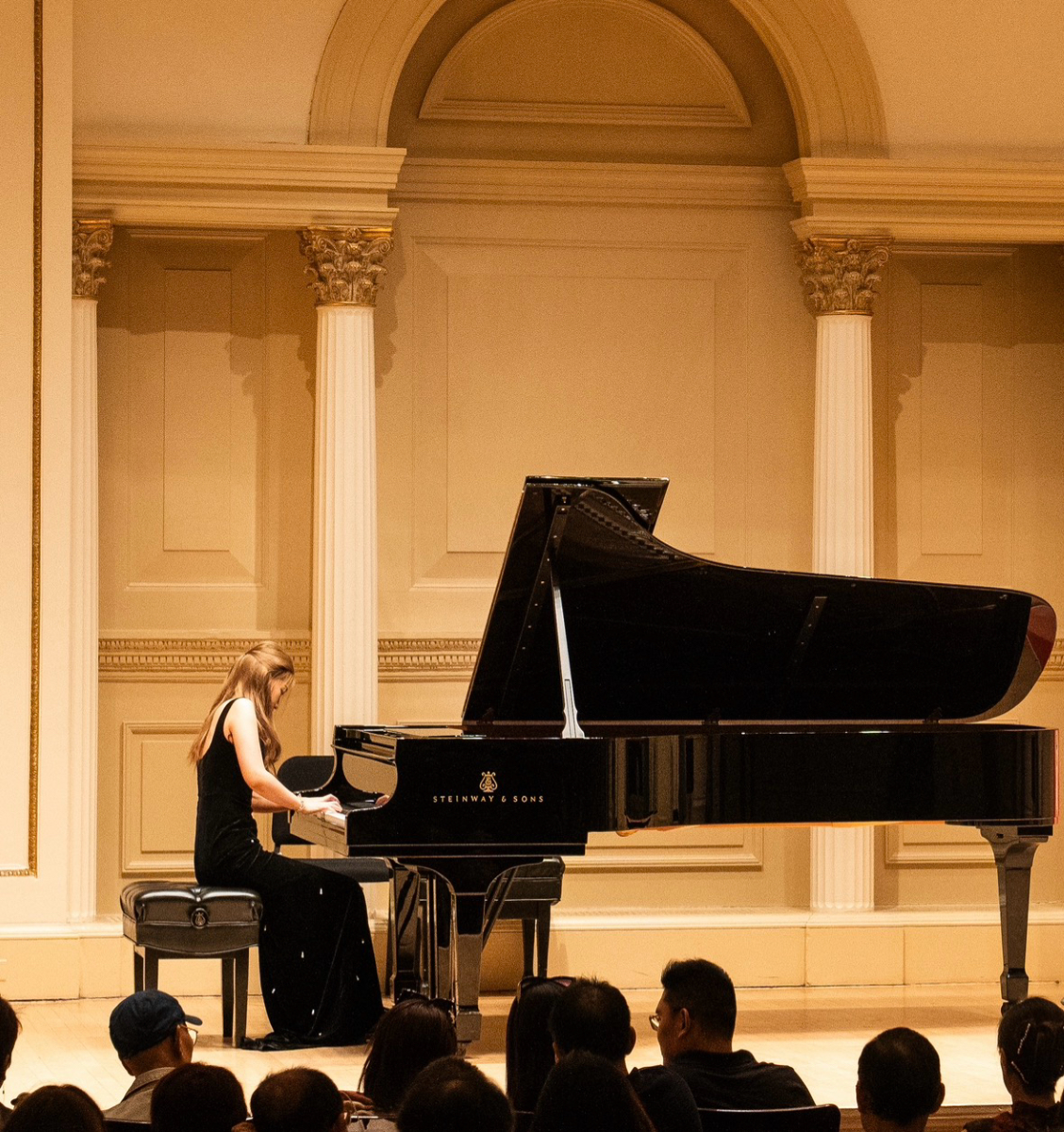
Photo Courtesy: Carnegie Hall

In June 2026, Xinyi Huang achieved a significant milestone in her musical journey with her invited debut at Carnegie Hall in New York, one of the world’s most celebrated concert venues. This achievement highlighted her refined artistry, expressive sensitivity, and deep connection with the music she performs.

Developing a Distinctive Musical Voice

Beginning her piano studies at the age of four, Xinyi developed a profound connection with music from an early age. Through years of musical exploration and artistic refinement, she has cultivated a distinctive musical voice characterized by expressive depth, refined interpretation, and compelling stage presence.

Her training includes studies at the Liszt Ferenc Academy of Music in Budapest, one of Europe’s most historically significant and internationally respected institutions for classical music education. This experience deepened her connection with the European classical tradition, broadened her artistic perspective, and contributed to the continued development of her musical expression.

Throughout her development as a pianist, Xinyi has received guidance from internationally recognized concert pianists and distinguished educators. These long-term mentorship experiences have enriched her understanding of musical interpretation, stylistic authenticity, and artistic expression.

International Recognition and Artistic Exchange

Xinyi has taken part in international piano competitions held in the United States, China, Hong Kong, South Korea, and other regions. This experience reflects her technical development, musical maturity, and continued growth as a musician.

She has also taken part in international festivals and programs across Europe, Asia, and the Americas. Among these, she has been invited to participate in Bay PianoFest and the San Francisco International Piano Competition, as well as the “Chopin in Cyprus” International Piano Festival and Concerto Competition.

These opportunities reflect recognition of her musical development and potential by established musicians and educators from diverse cultural backgrounds.

Beyond her formal studies, her musical perspective has also been enriched through guidance from distinguished musicians and educators representing diverse musical traditions and performance schools, as well as through cross-cultural artistic exchanges. These experiences have expanded her interpretive understanding, deepened her appreciation of different piano traditions, and contributed to the development of her individual artistic voice.

A Musician Connecting Cultures Through Music

Xinyi’s international performing experiences have brought her to significant musical settings, including Carnegie Hall in New York, as well as artistic appearances in the Grand Hall and Solti Hall of the Liszt Ferenc Academy of Music in Budapest, Chongqing Grand Theater in China, and other cultural and musical venues across Europe and Asia.

Beyond solo performances, she has engaged in collaborative projects with instrumentalists, vocalists, chamber ensembles, and symphony orchestras, expanding her artistic versatility and deepening her understanding of musical communication.

Drawing inspiration from diverse piano traditions, she continues to explore the expressive possibilities of classical music while developing her own distinctive artistic voice and connecting audiences across cultures through music.

Recognized through academic and cultural exchange programs, she has received both the Chinese Government Scholarship and the Stipendium Hungaricum Scholarship in recognition of her artistic achievements and academic excellence.

For her, music is more than performance. It is a universal language that connects people and cultures. Guided by her belief that “Music is the language of the soul,” she continues to explore new expressive possibilities and share the timeless beauty of classical music with audiences worldwide.

About Xinyi Huang

Xinyi Huang is a concert pianist and musician whose artistry combines technical refinement, expressive depth, and a profound connection to classical music. Her journey encompasses studies at the Liszt Ferenc Academy of Music in Budapest and international performance experiences, including her invited debut at Carnegie Hall in New York. Through her exploration and dedication to music, she continues to develop a distinctive artistic voice shaped by diverse piano traditions and a commitment to connecting cultures through music.

Media Contact

For press inquiries, interview requests, and performance engagements:

E-mail: xinyihuang.music@gmail.com

Instagram: @xinyihuangmusician

Authored by Dr. Yuting Zhou

Dr. Yuting Zhou is a pianist, scholar, translator, and music critic whose work examines performance through a critical lens.

The Survival Guide That Every Frequent Flyer Needed Someone to Write and Brandon Blewett Finally Did

By: Andrew Carter

There is something almost meditative about the Monday morning airport, if you are the kind of person who has done it enough times to have moved past the stress and into a state of alert anthropological observation. Brandon C. Blewett reached that state somewhere in his first few years of consulting-mandated weekly travel, and he spent the rest of his decade in professional services cataloguing what he found there with the sharp, affectionate, slightly incredulous eye of someone who genuinely cannot believe that the same behaviors keep appearing with such reliable consistency across every airport in America. How to Avoid Strangers on Airplanes is the result of that catalogue, and it is the most entertaining business book you are likely to read this year and possibly several years on either side of this one.

Reading it feels like being seated next to the most observant and most amusing person on your flight, the one who notices everything and can describe it with enough precision that you both laugh and immediately understand something true that you could not quite have articulated on your own. Blewett’s voice has the quality of really good stand-up comedy, the kind where the jokes are funny precisely because they are accurate, where the laughter and the recognition arrive simultaneously, and where you find yourself wanting to read passages aloud to whoever is sitting near you, which, if you are reading this on an airplane, does create a certain irony given the book’s stated purpose.

The Six Habits of Highly Annoying Travelers are the book’s most beloved contribution, and they earn that affection completely. The Gate Lice, the overhead bin abusers, the full catalogue of people who make shared space worse for everyone around them, are rendered with a specificity that makes each type feel like a documentary subject rather than a comic invention. And Blewett’s consistent move, taking each traveler type and unpacking what the same behavior looks like in a professional context, is executed with enough grace that it never feels like a stretch. These are the same people making the same choices in the office that they make in the boarding area, and once Blewett has shown you that connection, you cannot stop seeing it.

His practical career wisdom, built from a genuine decade of professional services consulting and refined through his current role in corporate development, is delivered with the same economy and wit that characterizes the whole book. There are no long frameworks, no elaborate models, no five-step processes that require a companion workbook. There are sharp, honest observations about leadership and resilience and professional behavior, offered with the confidence of someone who has tested them against real conditions rather than constructed them for a book.

How to Avoid Strangers on Airplanes is the book to give anyone who spends too much time in airports, anyone who works with people who behave as if they have never heard of shared resources, and anyone who wants their professional development delivered with enough wit that they actually finish the book rather than leaving it on the nightstand with a bookmark permanently stuck at chapter three. Blewett has written something genuinely wonderful, and it deserves to be in every carry-on bag in every departure lounge in America.

If you want the most entertaining business book of the year and the most unexpectedly useful career guide currently available in the same compact volume that fits perfectly in a carry-on bag, How to Avoid Strangers on Airplanes by Brandon C. Blewett is on Amazon, and it is absolutely worth every page. Pick up your copy today and prepare to laugh, recognize yourself and your colleagues in ways that are both uncomfortable and clarifying, and arrive at your destination with a considerably sharper understanding of what professional success actually requires from the people pursuing it.