Zebras Explore the Cost of Choosing Humanity Over Convention

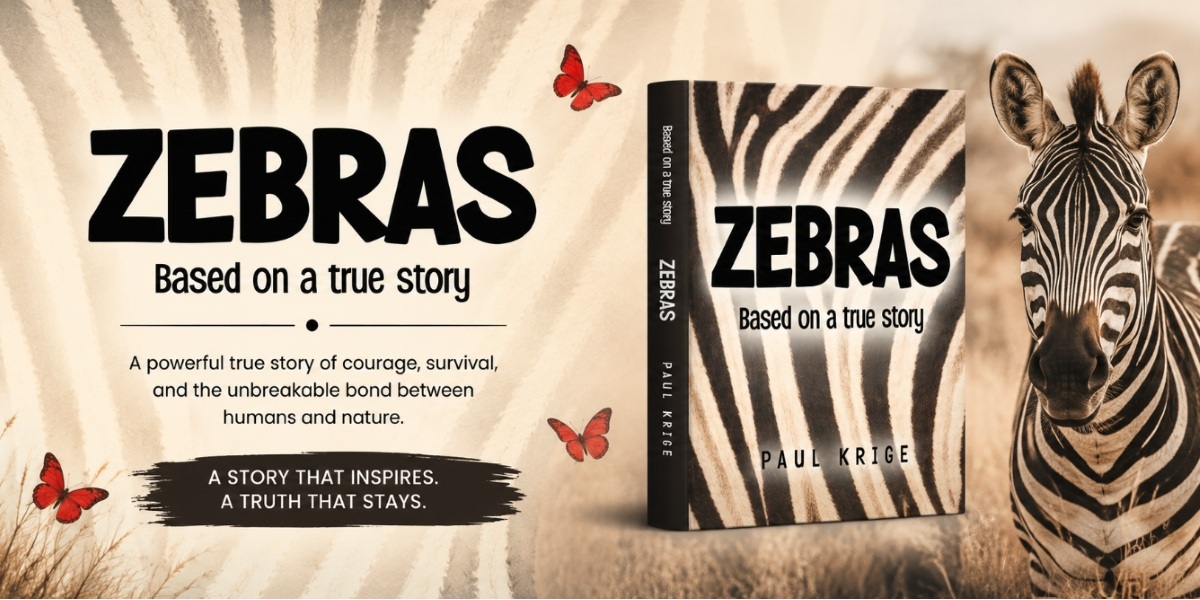
History often remembers political movements through speeches, headlines, and legislation. Far less attention is given to the ordinary people whose daily choices quietly challenged injustice long before history acknowledged their courage. Named after the young soccer team whose journey becomes one of its defining threads, Zebras by Paul Krige follows a group of characters whose lives intersect through football, music, and friendship, revealing how everyday choices can become acts of quiet resistance.

Although presented through the character of Kyle, the book is largely rooted in Paul Krige’s own experiences during apartheid-era South Africa. Many of the people, places, and events readers encounter are based on real individuals and firsthand experiences, offering an unusually personal perspective on a defining period in the nation’s history.

At first glance, the novel appears to celebrate the energy of South Africa’s music industry during one of its most turbulent eras. Beneath the excitement of recording sessions, ambitious artists, and creative freedom lies a thoughtful examination of identity, conscience, and belonging. The result is a narrative that asks an enduring question: What happens when personal integrity conflicts with the rules society demands people accept?

Beyond the World Inherited

Kyle enters the story as a talented young music executive eager to build a career. His enthusiasm is unmistakable, but his greatest education happens far beyond office walls.

Working alongside black musicians introduces him to lives shaped by barriers he was never expected to question. Every recording session, every township visit, and every conversation broadens his understanding of a country divided by law but connected by shared humanity. Music becomes more than entertainment; it becomes common ground where language, culture, and race lose much of their authority.

Those township visits carry particular significance because they are inspired by the author’s own experiences alongside Benny Nchabeleng, whose friendship opened doors into communities that many white South Africans never saw. Witnessing protests, police violence, and everyday life firsthand gave Krige an understanding that challenged the official narratives of the time and ultimately shaped the story readers encounter today.

Rather than presenting Kyle as a flawless hero, the novel allows him to mature gradually. His changing perspective feels earned because it grows from observation, friendship, and lived experience instead of convenient revelation.

Creativity as an Act of Defiance

The music business depicted in Zebras is lively, unpredictable, and filled with unforgettable personalities. Producers, performers, executives, and dreamers create an atmosphere rich with humor, ambition, and creative chaos.

Many of these colorful personalities are inspired by the real people who worked at Sunshine Music, where creativity often flourished despite political tension and corporate absurdity. Their larger-than-life personalities bring warmth and humor to a story that never loses sight of the realities happening beyond the studio walls.

This colourful environment exists beneath the shadow of apartheid. Recording studios become rare spaces where collaboration succeeds despite the divisions enforced outside their doors. Every successful recording carries quiet significance because it affirms talent over prejudice.

The story also reflects Krige’s own experiences promoting black musicians and DJing at the Easy By Night nightclub, where he earned the nickname “Concolo”. Those experiences reinforce the book’s authenticity while illustrating how music created connections that politics sought to prevent.

Friendship That Challenges Every Assumption

Among the novel’s greatest strengths are the relationships Kyle develops with people whose experiences differ dramatically from his own. These friendships are neither sentimental nor symbolic. They are built on trust, humor, loyalty, and mutual respect.

His bond with Benny stands at the emotional center of the story. Based on the real Benny Nchabeleng, this friendship extends far beyond professional collaboration. Benny becomes a guide, protector, and brother figure whose courage and generosity expose Kyle to a South Africa hidden behind segregation, ultimately changing the course of his life.

Equally important is the story of the young soccer team known as Zebras. Their determination culminates in an unforgettable curtain-raiser match that inspires an entire stadium to unite behind them. More than a sporting achievement, their journey demonstrates the book’s central belief that prejudice is learned, while compassion and fairness often come naturally to children.

The supporting cast further enriches the narrative, creating a community whose imperfections make them feel unmistakably authentic. Their conversations, disagreements, and shared ambitions give the novel emotional warmth without diminishing the seriousness of its historical backdrop.

Story Built on Memory

Rather than fictionalising history, Paul Krige preserves many of the extraordinary moments he personally witnessed, allowing readers to experience apartheid not only as a political system but as something that shaped everyday relationships, careers, neighborhoods, and lives. The book reaches beyond its South African setting because its questions remain relevant wherever societies struggle with division, inequality, or fear of difference.

Paul Krige combines lived experience with engaging storytelling, offering readers an account that feels both intimate and expansive. Rather than presenting history as distant or static, the novel reveals it as something shaped by ordinary people making difficult decisions one day at a time.

Takeaway

Zebras ultimately suggests that meaningful change rarely begins with grand declarations. It begins when individuals choose curiosity over prejudice, compassion over comfort, and shared purpose over separation. Whether expressed through music, lifelong friendships, or a youth soccer team that united thousands of spectators, the story reminds readers that ordinary people, especially young people, often become the first to imagine a more hopeful future. That message gives this novel lasting significance, reminding readers that history is often redirected by people who simply decide to stand beside one another when it matters most.

PK Former Managing Director Universal Music Australia Owner difrnt Music PAULKRIGE.COM | paulkrige@hotmail.com


Jingyi Yang Rethinks Textile Through Migration, Biomaterials, and Space

Textiles are often understood as objects we wear or fabrics we touch. For New York-based artist Jingyi Yang, however, textiles function differently: they become environments that shape movement, preserve cultural memory, and invite people to reconsider their relationship with space.

Working across digital jacquard weaving, knitting, biomaterials, laser cutting, and sculptural installation, Yang’s interdisciplinary practice explores how contemporary textiles can extend beyond material production to become immersive experiences. She brings them together to examine migration, ecology, and the ways cultural knowledge continues to evolve across generations.

Originally from Inner Mongolia, China, Yang draws upon the region’s nomadic cultural traditions. Patterns, scripts, and material histories become points of departure for installations. Growing up in Baotou, a city shaped by both grassland heritage and rapid industrialization, she became interested in the coexistence of mobility and permanence, tradition and modernization. These experiences continue to inform her artistic research. In her work, textile becomes less a surface than a spatial language.

This approach culminated in Threads of Distance, her 2025 MFA thesis at Parsons School of Design in New York. Inspired by anthropologist Edward T. Hall’s theory of proxemics, the installation explored how nomadic and sedentary cultures understand interpersonal space differently. Through digital jacquard weaving, knitting, algae & kombucha-based biomaterials, and laser-cut components, Yang constructed an environment where viewers navigated shifting relationships between the body and cultural memories. The work translated cultural experience into spatial experience. Combining handcrafted processes with digital technologies and biofabricated materials, the installation proposed textiles as living systems capable of carrying memory while adapting to new environments.

Photo Courtesy: Zoran Zhou (Detail from Threads of Distance (2025), combining algae- and kombucha-based biomaterials with Shima-Seiki Knitting.)

Her work has also gained increasing international visibility. In June 2026, Yang participated in the 7th TexpoArt International Triennial of Textile Art in Iași, Romania, one of Eastern Europe’s long-running international textile exhibitions. Her practice has been featured by Artist Talk Magazine, AATONAU, and Divide Magazine, each recognizing different aspects of her interdisciplinary approach. Artist Talk Magazine described her work as transforming textile into “a language capable of recording time, space, and cultural memory,” while AATONAU highlighted her ability to weave together migration, identity, and material experimentation. Together, these independent perspectives point to a practice that continues to expand the possibilities of contemporary textile art across cultural and disciplinary boundaries.

Through this interdisciplinary approach, Yang continues to redefine the possibilities of textile art, demonstrating that fabric can be a medium through which people experience connection, transformation, and belonging.

A Greek Doctor Who Grew Up on Homer Wrote the Brain Science Book That Finally Explains Why Your Career Feels the Way It Does

By: Gunther Woods

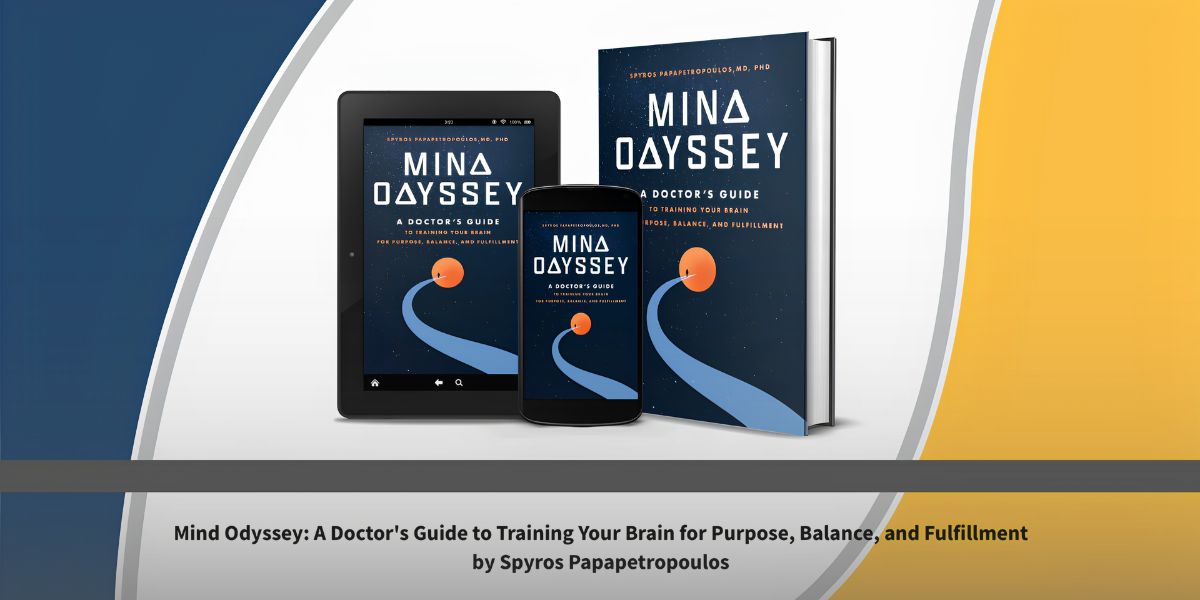
There is something fitting about the fact that a neurologist born in Athens, shaped by Greek heritage and the stories that civilization has been telling about human journeys since the eighth century BC, would eventually write a book that uses the Odyssey to explain how the brain navigates the professional challenges of modern life. Dr. Spyros Papapetropoulos did not reach for Homer because the metaphor was available and elegant. He reached for it because he recognized, through decades of research into brain disorders and years of observing both exemplary and toxic workplace cultures, that what Odysseus was working through on his journey home is structurally identical to what every serious professional is working through in the course of a career that actually means something to them.

Reading this book produces a specific and welcome sensation of being understood before being instructed. Papapetropoulos writes about burnout, indecision, and the particular exhaustion of professional success that doesn’t satisfy with the empathy of someone who has seen these experiences up close, both in patients and in colleagues and in himself, and has spent real time thinking about what the brain is actually doing when these things happen. That clinical and personal grounding gives the book a quality of genuine insight rather than the borrowed wisdom that characterizes so much professional development writing, and it makes the practical guidance he offers feel considerably more trustworthy than advice that hasn’t been tested against the actual complexity of real careers under real pressure.

The three-part framework he builds, purpose as the navigational north star, balance as the emotional and cognitive infrastructure that keeps the journey sustainable, fulfillment as the naturally arising outcome when the first two are genuinely aligned, is both scientifically grounded and intuitively satisfying in the way that good frameworks always are. You recognize the structure before you have finished reading the first section because it maps onto something you have already been living, and that recognition is immediately followed by the more useful recognition of where your own version of the journey has been going off track and why.

The distinction Papapetropoulos draws between dopamine-driven happiness and endorphin-fueled fulfillment is the intellectual heart of the book and its most lasting contribution to how you think about what you are actually pursuing when you pursue a successful career. Dopamine happiness is real, but it is brief, and it is always demanding more, which is why so many people arrive at versions of success they worked very hard for and find themselves immediately looking for the next thing rather than savoring what they built. Fulfillment, as Papapetropoulos describes it, is something different in its neurological structure and in its relationship to time, more durable, more self-sustaining, and more available to people who understand how to build toward it rather than simply hope for it.

Mind Odyssey is the book for anyone who has enough self-awareness to know that the career they have been building and the life they actually want to be living are not quite the same thing, and who is ready to use what science actually knows about the brain to close that gap with intention and clarity. Papapetropoulos has written something genuinely useful and genuinely human, and that combination is rarer than it should be.

If the gap between the career you have been building and the life you actually want to be living has been quietly bothering you and you want the neuroscience to close it with real intention, Mind Odyssey by Dr. Spyros Papapetropoulos is exactly the guide you need. Head over to Amazon and get your copy today. Your own odyssey toward purpose, balance, and fulfillment starts right here.

How One Photograph Led Yifan (Ivan) Zhuo Back to Bosnia and Onto a New York Screen

A bullet-scarred wall stood beside the apartment where Yifan (Ivan) Zhuo and his family were staying in Mostar, southern Bosnia, during a vacation in 2024. By then, the damage was no longer unusual to him. He had spent several days seeing abandoned buildings and reminders of a war that had ended nearly three decades earlier.

This wall, though, was different. A rectangular opening revealed another layer of crumbling brickwork behind it, creating, in Zhuo’s view, a frame within a frame. With wild grass pushing through the ruins, Zhuo raised his camera.

Photo Courtesy: Ivan Zhuo (Ivan Zhuo’s award-winning picture, Gift of War.)

The photograph, later titled The Gift of War, went on to receive a National Silver Medal in the 2025 Scholastic Art & Writing Awards. It also became the first visible chapter of a project that would eventually take Zhuo back to Bosnia, into historical research, and toward his first documentary screening taking place in New York.

Zhuo, a 17-year-old student and filmmaker from Ontario, first encountered the wars of the former Yugoslavia in middle school. Their complexity stayed with him. In high school, he read more widely and watched The Death of Yugoslavia, a detailed documentary about the region, before traveling to Bosnia and Serbia during his freshman summer.

He arrived as a young street photographer accustomed to walking through Toronto and observing whatever caught his attention. In Sarajevo, he found history present in ordinary surroundings. There were war-damaged walls, sprawling graveyards, striking memorials, and abandoned remnants of the city’s 1984 Winter Olympics. What affected him most were not always the places marked on a map, but the traces he encountered unexpectedly.

Still, his first trip remained largely visual. He visited museums and historical sites, took photographs, and returned to Canada with a growing sense that he had only seen the surface.

“I was still an outsider,” Zhuo recalled. “I never spoke to the locals, really. I still didn’t know what it was like to live there.”

That realization stayed with him. “I felt my story with Bosnia wasn’t yet finished,” he said.

Zhuo responded first with research, writing a 14,000-word paper that drew on more than 60 primary and secondary sources to examine Slobodan Milošević’s political opportunism during the Yugoslav wars. Then, by the following summer, he decided to return to Bosnia, this time with a different purpose.

“I didn’t want to go back as a traveler again,” he said.

The second visit became the foundation for Seeds of a Scarred Land: Voices of Bosnia’s Post-War Generation, Zhuo’s directorial debut. The documentary turns away from reconstructing the war itself and focuses instead on people living with its legacy. Through five interviewees from three cities and three ethnicities, the film considers how memory, identity, and division continue to shape lives long after the fighting has stopped.

For Zhuo, the move from photography to filmmaking required more than changing equipment. It meant learning how to approach strangers, conduct interviews, follow unexpected answers, and resist imposing a predetermined argument.

His first interview was rigid. Nervous about missing something, he moved through his questions one by one. But through later conversations, he had grown to calm his nerves and learned to listen more closely, resulting in more personal and raw exchanges.

“At the end of the day, it’s better if we make it a conversation,” he said.

Zhuo took on most of the production himself, despite having no previous experience making a documentary of this scale. He arranged interviews, filmed them, and shot the surrounding landscapes and cities. Friends with filmmaking experience called the undertaking unthinkable, given Zhuo’s lack of filmmaking training and the hurdles he would inevitably face while shooting in a foreign country. He had doubts during the planning stage, but eventually decided, as he put it, “I might as well just try and do it.”

The larger challenge arrived after filming. Zhuo returned with more than 10 hours of material, including interviews that ranged from 40 minutes to an hour. His original plan divided the film into clear thematic chapters, but the footage resisted that structure.

As he reviewed the interviews, Zhuo realized that the film had to follow what people had actually told him, not the answers he had expected. With limited external guidance on editing tools and narrative flow, he began weaving the participants’ voices together. The finished documentary became markedly different from the one he had imagined before arriving in Bosnia.

The film’s title reflects the story it seeks to tell. To Zhuo, the “scarred land” is Bosnia, marked by the eruption of a violent ethnic conflict that has divided the land today across ethnic fault lines. The “seeds” are the younger people growing within it, carrying inherited histories while imagining futures of their own.

Seeds of a Scarred Land is now an official selection of the 2026 TRIFEST International Youth Film Festival in Hudson, New York, screening from July 24 to 26, followed by a moderated Q&A. The festival’s documentary jury includes Emmy Award-winning director Tony Gerber and two-time Pulitzer Prize-winning playwright Lynn Nottage.

The New York screening marks an important step for Zhuo, but the film’s path began with a less public realization: a photograph could preserve the physical evidence of war, but it could not tell him how people continued to live with it.

“The real impact of war is on people,” he said. Returning to Bosnia taught him that recording those lives begins not with having the right conclusion, but with learning how to ask, wait, and listen.

College Student Brings a Fresh Perspective to YA Superhero Fiction

By: Frank Baraldini

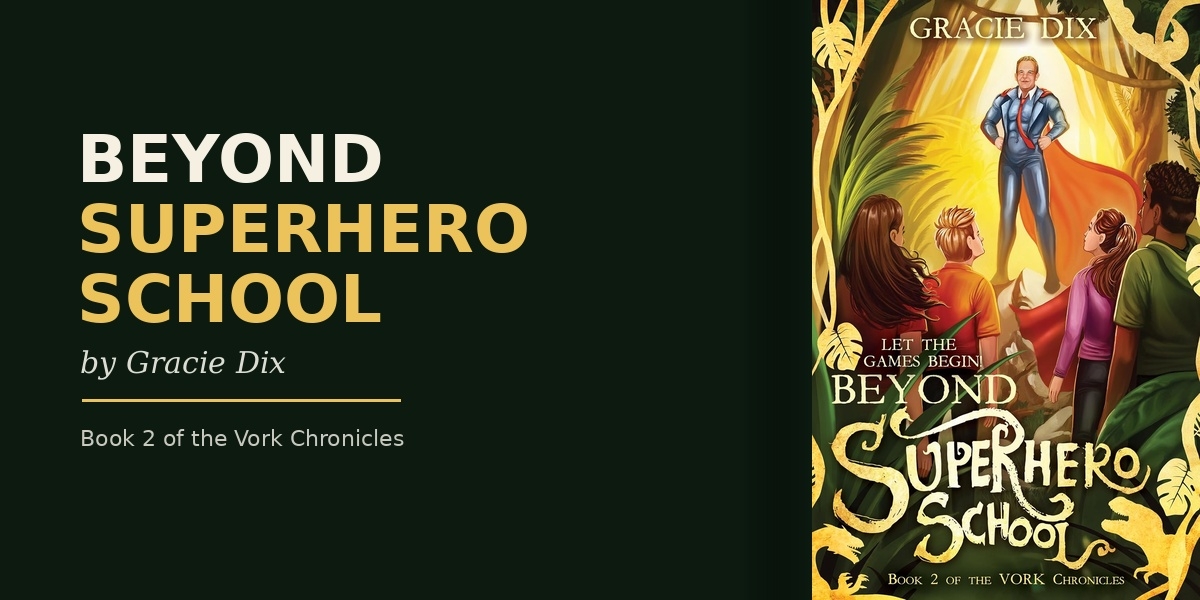
There is something genuinely exciting about encountering a young writer who has already developed the specific craft instincts that most authors spend decades trying to acquire: the understanding that the most interesting thing about a superhero story is never the superpowers but always the person underneath them, and that the most effective way to reveal character is to put people under pressure so specific and so public that hiding becomes impossible. Gracie Dix is a college student and an award-winning author who has been creating stories since she could hold a pencil, and Beyond Superhero School: Let the Games Begin is the second installment in her VORK Chronicles series and the book that announces her as one of the most promising voices currently working in young adult fiction.

Reading this book produces the particular physical experience of genuine page-turning urgency that the best YA adventure fiction generates at its most effective. Dix takes Team HOPE, her group of teenage superheroes still adjusting to life after leaving Superhero School, and thrusts them into the most exposing possible environment: a live television game show called Unleash Your Wild Side, where their powers, their fears, and their deepest doubts are suddenly on display for the entire world to watch and judge. That setting is a stroke of genuine narrative intelligence. The game show format creates a pressure cooker that makes every character flaw visible and every moment of genuine connection more meaningful, because both are happening under the most unforgiving possible spotlight.

What gives the book its emotional depth alongside its considerable action momentum is the way Dix uses the game show crucible to explore something genuinely true about young people navigating the gap between who they are and who they are trying to become. The challenges Team HOPE faces in the Environmental Dome and in the mental arena of confronting their most extreme fears are not just plot mechanics. They are character revelations, moments where the reader learns things about each member of the team that the characters themselves have been carrying privately, and where the bonds between them are tested in ways that friendship at a comfortable distance never quite demands. That emotional intelligence, combined with the escalating tension of VORK’s behind-the-scenes manipulation, gives the book a moral and dramatic weight that purely action-focused superhero fiction rarely achieves.

The introduction of demonic influence into the narrative moves the story into genuinely darker territory without losing the warmth and humor that make the characters so engaging to spend time with. Dix handles that tonal balance with a skill that belies her age, knowing when to let the comedy breathe and when to let the darkness close in, and never allowing either to feel like a concession to the other. The villain VORK’s employment of the most evil demon of all to manipulate Team HOPE from behind the scenes gives the conflict a cosmic dimension that elevates the stakes beyond the immediate competition and into something that feels genuinely threatening rather than conveniently resolved.

The themes Dix weaves through the VORK Chronicles, embracing your differences, discovering inner strength, learning that unique abilities and diverse backgrounds create something greater than any individual could produce alone, are ones that resonate far beyond the YA demographic and that she handles with the sincerity and the specificity of someone who genuinely believes in them rather than simply deploying them as genre convention. Beyond Superhero School is a book that will matter to the young readers who encounter it at exactly the right moment in their own lives, and it will stay with them in the way that the best YA fiction always does, longer and more meaningfully than they expected when they first picked it up.

If you are looking for a YA superhero adventure that puts its characters under genuine pressure, reveals what they are truly made of, and wraps all of that in action-packed storytelling that keeps you turning pages well past when you meant to stop, Beyond Superhero School: Let the Games Begin by Gracie Dix is exactly the book you need. Grab your copy on Amazon today and join Team HOPE on the most thrilling and most dangerous game show any teenage superhero has ever been invited to play.

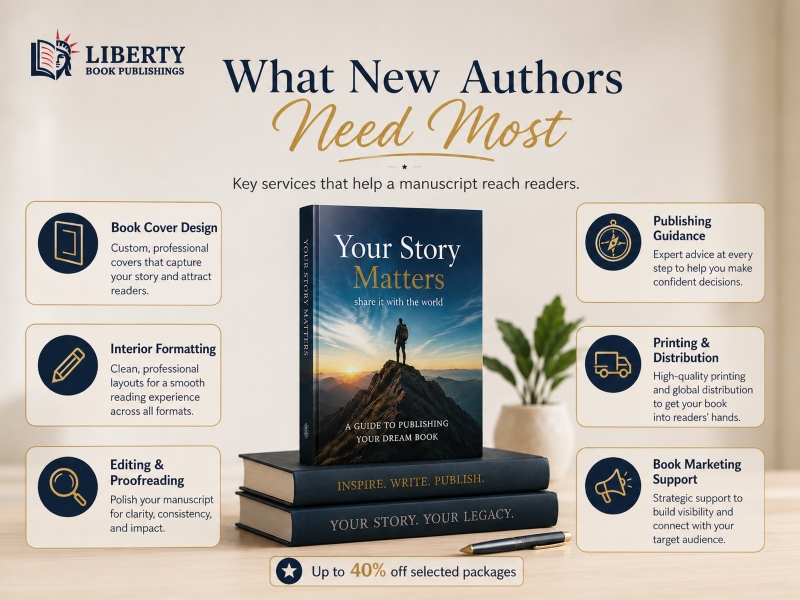
Liberty Book Publishings Launches “Publish Your Dream” Campaign, Offering Up to 40% Off Book Design and Publishing Services

The limited-time campaign is designed to help aspiring and independent authors move forward with professional book design, publishing, editing, and marketing support.

ATLANTA, GA, July 17, 2026. Liberty Book Publishings has announced the launch of its new “Publish Your Dream” campaign, which offers authors up to 40% off selected book design and publishing packages for a limited period.

The campaign was created to support new and aspiring authors who have a story to share but may feel unsure about the publishing process, professional presentation, or cost of bringing a book to market.

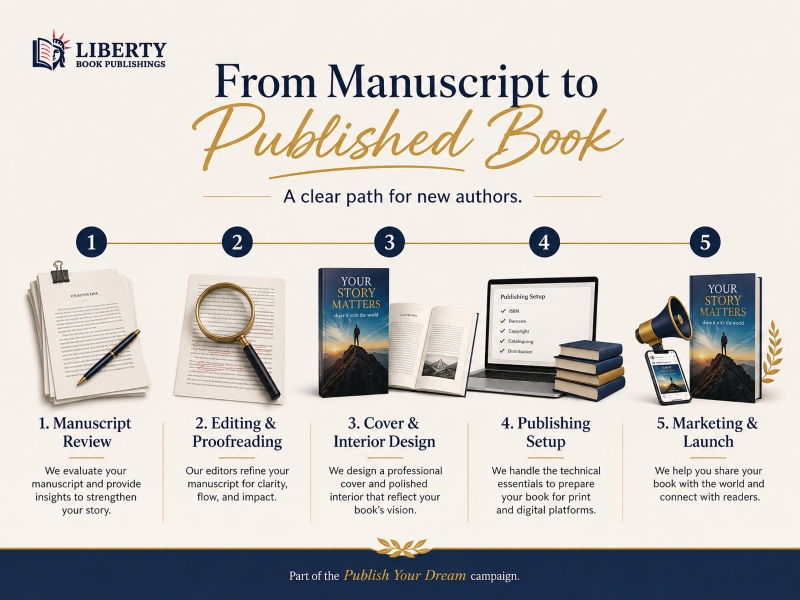
Through the campaign, eligible authors can receive savings on selected service packages that may include book cover design, interior formatting, editing, publishing assistance, and book marketing support.

For many writers, completing a manuscript is only the beginning. Preparing a book for publication requires careful editing, professional design, proper formatting, and a clear publishing plan. The company helps authors understand each stage and move through the process with greater clarity and confidence.

“Many talented writers hold onto their manuscripts because publishing can feel confusing or out of reach,” said a spokesperson for Liberty Book Publishings. “The Publish Your Dream campaign allows new authors to receive professional support while saving on selected publishing packages. Our goal is to help more writers take that important next step and share their work with readers.”

Liberty Book Publishings works with aspiring, first-time, and independent authors across a variety of genres. Its services are designed to support writers at different stages, whether they have a completed manuscript, an early draft, or simply an idea they want to develop into a book.

Photo Courtesy: Liberty Book Publishings

Professional Support From Manuscript to Publication

Authors participating in the campaign may receive support with:

• Book cover design

• Interior book formatting

• Editing and proofreading

• Book publishing assistance

• Author branding

• Book marketing services

• Guidance throughout the publishing process

Each project begins with a discussion about the author’s manuscript, goals, audience, and publishing needs. This allows the team to recommend a suitable service package rather than offering the same publishing plan to every writer.

The company believes that authors should remain involved in decisions affecting their books. Writers are kept informed throughout the process and have opportunities to review important elements such as editing, design, formatting, and final presentation.

Making Professional Publishing More Accessible

The “Publish Your Dream” campaign reflects the company’s focus on making professional book publishing services more accessible to writers who are ready to move forward.

By offering up to 40% off selected packages, the company aims to reduce one of the common barriers faced by new authors while still providing the professional support needed to prepare a book for publication.

The offer applies only to selected packages. Details about eligibility, available services, and suitable publishing options can be found by contacting the company directly.

Photo Courtesy: Liberty Book Publishings

About Liberty Book Publishings

Liberty Book Publishings is a book design and publishing company that helps aspiring and independent authors develop, prepare, publish, and promote their books. The company offers book writing, editing, cover design, interior formatting, publishing, and book marketing services. Its team works closely with authors to make the publishing process easier to understand while helping each book receive a professional presentation.

Media Contact

Liberty Book Publishings

Website: www.libertybookpublishings.com

Email: info@libertybookpublishings.com

Phone: +1 (706) 928-9263

Offer applies to selected packages only. Additional terms and eligibility requirements may apply.

Exploring the Mystery of Shooting Stars: Where Do They Land?

Shooting stars, also known as meteors, are a fascinating phenomenon that has captivated humans for centuries. These streaks of light that briefly illuminate the night sky are actually small pieces of space debris burning up as they enter Earth’s atmosphere. But where do shooting stars land once they burn up? Let’s delve into the science behind shooting stars and explore where they end up.

What Causes Shooting Stars?

Before we can understand where shooting stars land, it’s essential to understand what causes them in the first place. Shooting stars are actually tiny particles, ranging in size from grains of sand to small rocks, that enter Earth’s atmosphere at high speeds. These particles are usually debris left behind by comets or asteroids as they orbit the sun. When they collide with Earth’s atmosphere, they experience friction, which causes them to heat up and create the bright streaks of light we see as shooting stars.

Burning Up in the Atmosphere

As shooting stars streak across the sky, they are actually burning up due to the intense heat generated by atmospheric friction. Most shooting stars disintegrate completely before they reach the ground, leaving behind only a trail of dust and gas that quickly dissipates. The process of burning up in the atmosphere is what creates the spectacular light show that we associate with shooting stars.

Rare Meteorite Landings

While most shooting stars burn up completely in the atmosphere, some larger fragments manage to survive the journey and land on Earth’s surface. These surviving fragments are known as meteorites and can range in size from small pebbles to large boulders. Meteorite landings are relatively rare, with only a handful of confirmed cases occurring each year. When meteorites do land, they often create impact craters and can cause damage to buildings and infrastructure, depending on their size and composition.

Where Do Meteorites Land?

Meteorites can land anywhere on Earth’s surface, but they are most likely to be found in remote, uninhabited areas such as deserts, forests, and the ocean floor. This is because these areas are less densely populated and therefore have a lower chance of being observed when a meteorite lands. Additionally, meteorites are more likely to survive the impact if they land on soft, sandy terrain rather than hard, rocky surfaces.

Impact Craters

In some cases, meteorite landings can create impact craters, which are circular depressions in the Earth’s surface caused by the force of the impact. Impact craters can range in size from a few meters to hundreds of kilometers across, depending on the size and speed of the meteorite. Some well-known impact craters include Meteor Crater in Arizona, USA, and Chicxulub Crater in Mexico, which is believed to be the site of the asteroid impact that caused the extinction of the dinosaurs.

Studying Meteorites

Meteorites are of great interest to scientists because they provide valuable insights into the early solar system and the processes that formed the planets. By studying the composition and structure of meteorites, scientists can learn more about the materials that existed in the early solar nebula and the conditions that prevailed during the formation of the planets. Meteorites can also contain clues about the presence of organic molecules and the possibility of life beyond Earth.

Meteorite Recovery

Finding and recovering meteorites can be a challenging task due to their small size and the vastness of Earth’s surface. However, dedicated meteorite hunters and scientists use a variety of methods to locate and retrieve meteorites, including ground-based searches, satellite imagery, and meteorite tracking networks. Once a meteorite is found, it is carefully collected, documented, and analyzed to determine its origin, composition, and potential scientific value.

Cultural Significance

Throughout history, shooting stars and meteorites have held a special significance in cultures around the world. From ancient myths and legends to modern-day superstitions, these cosmic events have inspired awe and wonder in people of all ages. In many cultures, meteorites were revered as sacred objects or believed to possess mystical powers. Today, meteorites are prized by collectors and scientists alike for their scientific and cultural significance.

A Cosmic Wonder

Shooting stars, or meteors, are a spectacular and awe-inspiring sight that has fascinated humans for centuries. While most shooting stars burn up in Earth’s atmosphere, some larger fragments survive the journey and land on the planet’s surface as meteorites. These rare cosmic visitors provide valuable insights into the early solar system and the processes that shaped the planets. Whether they create impact craters or simply vanish into thin air, shooting stars continue to captivate our imaginations and remind us of the vastness and beauty of the universe.

Ready on the Day

By: Olivia Grant

The World Cup final was played at MetLife Stadium on Sunday afternoon, Spain against Argentina, in front of 82,500 people, in a stadium FIFA had settled on more than two years earlier.

Very little of the preparation had anything to do with soccer. Transit agencies spent months modeling how fast they could move people out of the Meadowlands. Somebody had to work out medical staffing, water access, and where 82,500 people were going to go to the bathroom over the course of an afternoon. None of that could be finished late. The date had been fixed since 2024, which meant every problem attached to it inherited the same due date.

Most companies do not work that way. They have quarters, pipelines, and sometimes the option of slipping a launch two weeks when something goes wrong. Some businesses do not get that flexibility, because the date belongs to somebody else.

Samuel Owers built a company around that constraint. RYVOLVE, his hybrid training app, is for people preparing for HYROX and similar races, where participants have to arrive capable across strength, running, and conditioning on a day that was on the calendar months ago.

The organizing idea is periodization, and it works against instinct. Nobody can hold peak condition indefinitely, so a training year gets built as a sequence of phases that move fitness deliberately up and down, accepting stretches of lower performance in order to arrive prepared for one specific moment. Time it badly and the work may not show up on race day. RYVOLVE handles sequencing across all three disciplines in one plan, instead of leaving an athlete to arbitrate between programs competing for the same recovery. Owers has built hybrid.club and FindRox alongside it, covering races to enter and other people to train with.

Porta Potties For Sale, Noah Manders’s business, sits under the Porta Potty World umbrella along with Porta Potty World, Porta Potty Rental Quotes, and Porta Potty Supplies. The properties are split by purchase, rental, and supply rather than folded into one storefront, which tracks how customers often think about the problem.

A contractor on a two-year build and a town running one festival every August may need the same thing: working units on site by a specific date. The economics of getting there are not the same. Renting can handle a single weekend. Buying may make sense once the same date comes around every year, or once there are enough dates. That is the logic behind a catalog running from standard construction units through ADA-compliant restrooms, shower trailers, specialty trailers, and fleet packages, with financing and nationwide delivery attached. The customer list includes contractors, event organizers, rental companies, municipalities, schools, and faith-based organizations. It is otherwise fairly scattered. What they have in common is a calendar that will not move because a supplier had a difficult month.

For Angelo Huang, the fixed date comes from an auditor. Swif.ai does unified device management and compliance, much of it for companies working toward SOC 2, ISO, NIST, or GDPR, across customers running anywhere from five seats to fifty thousand.

Companies tend to find out how this works the hard way. The audit is six weeks out, somebody pulls the device list, and it turns out the laptops are scattered across contractors, personal machines, and a few people who left in March without returning hardware. There is no partial credit for having meant to enroll them. Getting a fleet into a condition where it can be evidenced on demand can take months of administrative work, and much of it has to happen before anyone asks to see it.

Lan Tang, Co-Founder of RE:YOU, who started all of this because her mom was suffering from hair loss, and she wanted a real, science-based solution to help her with it.

RE:YOU is a luxury biotech haircare brand designed for women experiencing visible hair thinning and changes in hair vitality. Rooted in advanced molecular discovery, RE:YOU combines clinically driven innovation with luxury experience to create a new standard in hair wellness.

The constraint is the timeline between decision and outcome. Clinical efficacy requires consistency over months, which means someone starting treatment in September is betting on May. The formulation has to work, but it also has to reflect the care and precision someone expects when paying for a luxury product. That means months of ingredient research, stability testing, and clinical validation before the first bottle ships. Building that credibility ahead of demand requires resources that may not show a return until customers see results they can point to themselves.

None of this makes a sanitation contract and a course of therapy the same kind of thing. They are not.

But all four of these businesses do much of their real work in the stretch where little appears to be happening, and they get graded on a day they had no hand in choosing. It can be difficult to sell, because when it goes right, there is often little to point at afterward. The crowd left East Rutherford on Sunday evening, and the logistics did not make the coverage, which is more or less the product.

Why Partnerships Help Entrepreneurs Thrive in New York

New York has long been associated with ambitious businesses, fast-moving industries, and dense professional networks. For entrepreneurs, that environment can create opportunities, but it can also make the process of building a company more competitive and complex.

One strategy that can help founders navigate that environment is partnership. Whether the relationship involves another business, a technology provider, an investor, a nonprofit organization, or a local institution, partnerships can give entrepreneurs access to resources and expertise that would be difficult to develop independently.

In New York, where companies operate across finance, technology, media, retail, hospitality, professional services, and the creative industries, partnerships can also help entrepreneurs connect ideas with established networks and customers.

Key Takeaways

  • Partnerships can give New York entrepreneurs access to expertise, customers, technology, and professional networks.
  • Strategic collaborations can help smaller businesses compete in a crowded and expensive market.
  • Partnerships between startups and established companies can create opportunities for innovation and market expansion.
  • New York’s diverse economy provides entrepreneurs with opportunities to collaborate across industries.
  • Successful partnerships require clear goals, defined responsibilities, aligned incentives, and regular communication.

New York’s Business Environment Rewards Connections

Entrepreneurship in New York is shaped by the city’s concentration of businesses and industries. A founder can potentially find customers, suppliers, investors, advisors, and service providers within a relatively concentrated geographic area.

That density creates an advantage for entrepreneurs who know how to build professional relationships. A technology startup may find opportunities to work with a financial services company. A consumer brand may partner with a retailer or hospitality business. A creative company may collaborate with an entertainment organization or media platform.

The benefit is not simply having more contacts. The right partnership can provide access to capabilities that a young company may not yet have internally.

Partnerships Can Help Smaller Businesses Compete

Building a company from the ground up requires significant resources. Entrepreneurs must often manage product development, marketing, sales, operations, technology, finance, and customer service at the same time.

A strategic partnership can reduce some of that pressure. Instead of developing every capability independently, a business can work with another organization that already has the necessary infrastructure or expertise.

For example, a small company developing a new consumer product could partner with an established distributor. A technology startup could work with a larger business that provides access to potential customers. A professional services firm could collaborate with another specialist to offer clients a broader range of services.

These arrangements can allow entrepreneurs to focus their limited resources on the areas where they have the greatest competitive advantage.

Access to Customers Can Be as Valuable as Capital

Funding is often viewed as one of the biggest challenges facing entrepreneurs, but access to customers can be equally important.

A partnership with an established company can create a pathway to new audiences that would otherwise take years to develop. This is particularly relevant in New York, where entrepreneurs operate in markets with high customer expectations and significant competition.

For an early-stage company, a partnership that produces a first major client or distribution channel can provide more than immediate revenue. It can generate credibility, customer feedback, and evidence that the business model works.

However, entrepreneurs should distinguish between partnerships that create measurable business value and relationships that simply generate publicity. A collaboration should have clear objectives and a way to evaluate whether it is delivering results.

Cross-Industry Collaboration Creates New Opportunities

New York’s diverse economy also makes cross-industry partnerships particularly relevant. Businesses do not have to remain within their traditional sectors to find useful collaborators.

A financial technology company may benefit from working with a financial institution. A fashion startup could collaborate with a technology company developing new retail tools. A food business could partner with a logistics provider to improve delivery operations.

These relationships can encourage innovation by bringing together different perspectives. When organizations with different areas of expertise work toward a shared goal, they may identify solutions that neither would have developed independently.

Partnerships Can Strengthen Local Business Communities

Entrepreneurial partnerships can also have an impact beyond individual companies. Collaborations among small businesses, community organizations, educational institutions, and local economic development groups can contribute to stronger business ecosystems.

For entrepreneurs, these networks can provide access to mentorship, training, professional services, and potential customers. For communities, successful businesses can contribute to employment and economic activity.

New York’s entrepreneurial ecosystem includes businesses at vastly different stages of development. That creates opportunities for established companies to work with emerging entrepreneurs while allowing smaller businesses to gain experience and visibility.

What Makes a Partnership Work?

Not every collaboration produces meaningful results. Entrepreneurs should approach partnerships with the same level of planning they apply to other major business decisions.

The first step is defining a specific objective. Both parties should understand what they hope to achieve and how success will be measured. Responsibilities should also be established before the partnership begins, including who controls decision-making, how costs are handled, and how revenue or other benefits are divided.

Trust is another important factor. Partnerships often involve sharing information, introducing customers, or coordinating business operations. Clear agreements can reduce misunderstandings and protect both sides.

Finally, entrepreneurs should regularly review the relationship. A partnership that works during one stage of a company’s development may not remain useful as the business changes.

The Strategic Value of Working Together

For entrepreneurs in New York, partnerships can provide a practical way to navigate a complex business environment. They can help companies gain access to customers, expertise, technology, distribution, and professional networks without requiring every capability to be built internally.

The strongest partnerships, however, are not based simply on convenience. They are built around complementary strengths and shared objectives.

As New York’s economy continues to evolve across technology, finance, media, retail, hospitality, and professional services, entrepreneurs who develop strategic relationships may be better positioned to identify opportunities and respond to changing markets.

For founders, the lesson is straightforward: building a successful company does not always mean doing everything alone. In a business environment as interconnected as New York, the right partnership can turn an individual idea into a more scalable and sustainable enterprise.

FAQs

Why are partnerships important for entrepreneurs?

Partnerships can give entrepreneurs access to resources, expertise, customers, technology, distribution channels, and professional networks that may be difficult or expensive to develop independently.

How can partnerships help small businesses compete in New York?

Collaborations can help smaller companies expand their capabilities, reach new customers, and share resources with organizations that have complementary strengths.

What types of partnerships can entrepreneurs consider?

Options include partnerships with other businesses, technology providers, investors, nonprofits, educational institutions, distributors, professional service firms, and community organizations.

What should entrepreneurs consider before entering a partnership?

Entrepreneurs should establish clear goals, responsibilities, financial arrangements, decision-making authority, performance measures, and expectations for communication.

Can partnerships help entrepreneurs access new customers?

Yes. A partner with an established customer base or distribution network can help a growing company reach potential customers more efficiently than it might be able to do independently.