The Operational Structure Behind Top Bike Tours Portugal and Its Guided and Self-Guided Cycling Travel Programs

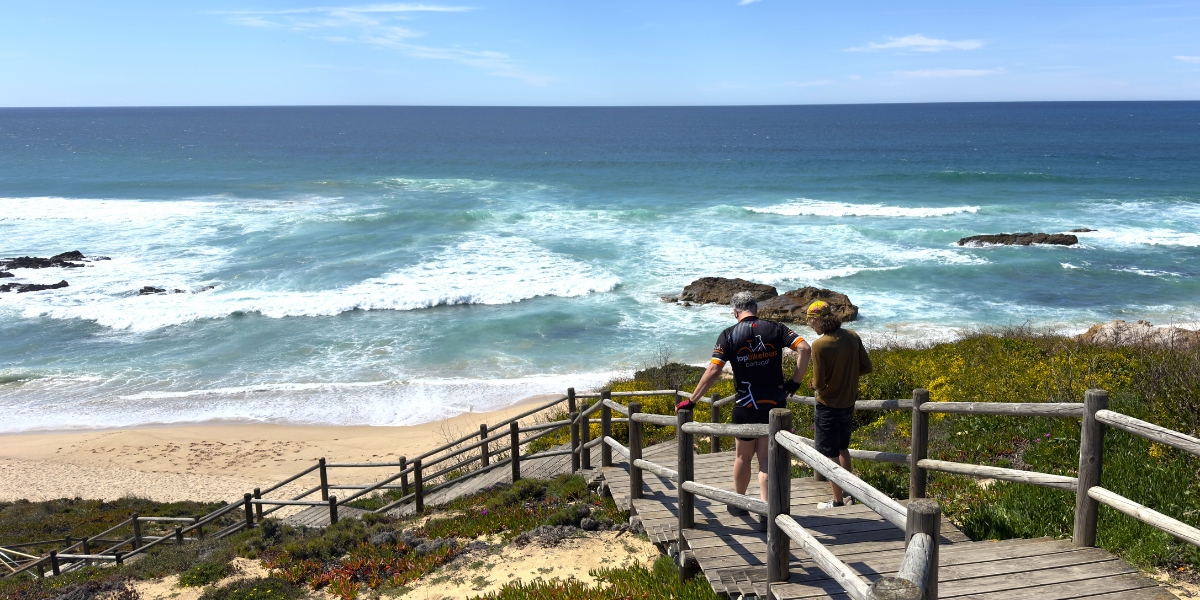
Cycling holidays look simple from the outside. People see the photos first. Coastal roads, vineyards, small villages, ocean views. What usually stays hidden is the operational side behind those trips. Multi-day cycling routes depend on constant coordination. Accommodation timing matters. Luggage transfers matter. Mechanical support matters too, especially across routes where riders cover long distances through changing terrain and weather conditions. As cycling tourism expanded across Europe during the last decade, many operators moved away from simple bicycle rentals and toward more structured travel systems designed around logistics as much as cycling itself.

Portugal became part of that shift. Tourism figures released by Turismo de Portugal showed the country recorded more than 31 million guests and over 80 million overnight stays in 2024, continuing a long period of growth tied heavily to foreign tourism. Outdoor travel also became increasingly visible during those years. Walking routes, Atlantic coastal itineraries, and cycling holidays attracted travelers looking for slower travel experiences beyond short city stays in Lisbon or Porto. At the European level, cycling tourism has also grown sharply. The European Cyclists’ Federation has estimated that cycling tourism generates billions of euros annually across Europe through long-distance and recreational travel routes.

Within that environment, Top Bike Tours Portugal gradually developed an operational structure focused almost entirely on organized cycling travel rather than standalone bike rentals. The company originally began in Porto in 2013 under the name Fold n’ Visit, though its operating model changed significantly after the 2017 rebrand to Top Bike Tours Portugal. Instead of concentrating on short urban rides and folding bicycle rentals, the business moved toward guided and self-guided multi-day tours covering several Portuguese regions and selected Iberian routes.

The distinction between guided and self-guided tours became central to how the company organized its services. Guided tours follow a more traditional group travel structure. Riders travel with planned coordination, scheduled overnight stops, and direct operational assistance throughout the route. Support vehicles usually accompany the group or remain available during the journey, particularly on longer routes such as Porto to Santiago de Compostela or Porto to Lisbon. Those vehicles carry luggage, mechanical equipment, spare materials, and occasionally assist riders unable to complete specific stages.

On tour support also changes the rhythm of the experience itself. Group departures move according to planned schedules rather than individual pacing. Staff coordination becomes important during route transitions, accommodation check-ins, and daily stage planning. Riders generally receive route briefings and logistical guidance throughout the trip. For international visitors unfamiliar with Portuguese roads or geography, that structure removes much of the independent planning usually associated with long-distance bicycle travel.

The company’s routes also require different levels of operational management depending on geography. Coastal tours between Porto and Lisbon involve long Atlantic sections where weather conditions can shift quickly, particularly because of strong coastal winds common along western Portugal. Inland routes through the Douro Valley create different demands. Steeper climbs, summer heat, and more isolated rural areas require stronger coordination around accommodation timing, water access, and mechanical readiness throughout the journey.

Bicycle management became another major part of the company’s operational structure after the transition away from simple rentals. According to company information, the bicycles used for tours are managed internally rather than outsourced through separate rental providers. Alberto Sousa oversees bicycle preparation, maintenance, and technical readiness connected specifically to touring operations. That setup reflects a broader difference between tourism operators and standard rental businesses. Multi-day cycling routes create heavier wear on equipment because bicycles remain in continuous use across changing terrain and long daily stages.

Mechanical reliability becomes especially important on week-long itineraries where riders move between regions rather than remaining inside one city. Coastal humidity, rough pavement, elevation changes, and weather exposure all affect bicycles differently depending on the route itself. Organized operators, therefore, tend to maintain fleets specifically prepared for touring conditions instead of general urban rental use. The company’s operational model appears to follow that structure, with maintenance integrated directly into the touring system rather than functioning as a separate service category.

Accommodation coordination forms another layer of the business model. Most tours are organized as week-long experiences combining cycling with overnight stays, selected meals, and route support. Daily stage planning depends heavily on hotel availability and regional travel timing, particularly during Portugal’s peak tourism months. According to Turismo de Portugal data, international visitors accounted for more than 70 percent of overnight stays in 2024, increasing pressure on accommodation systems in some regions during high season.

The company’s evolution from Fold n’ Visit into Top Bike Tours Portugal reflected broader changes taking place within active tourism itself. The need to have cycling trips that had all their logistics arranged beforehand became more common among tourists. From its humble beginnings, where the company was dealing with city tours through bicycle rentals, a system was put in place that allowed it to grow into what it is today, offering tourist trips by bicycle in Portugal.
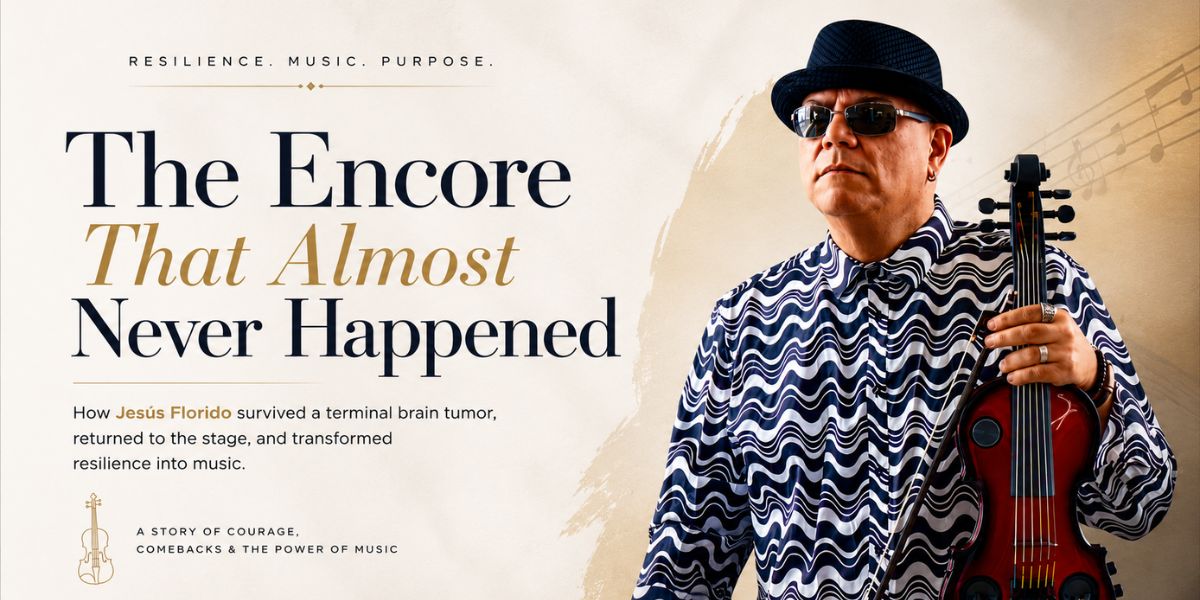

The Encore That Almost Never Happened

Jesús Florido survived a terminal brain tumor, endured years away from the stage, and returned with a renewed conviction that music is not merely performance. It is proof of resilience.

There is a particular silence that musicians know well. It arrives just before the first note, when anticipation hangs heavier than sound itself. For Jesús Florido, that silence once represented possibility. Then, for several years, it represented something far more unsettling: uncertainty.

Long before Grammy-winning productions, international performances, and standing ovations, Jesús Florido confronted a moment that threatened to erase everything he had spent a lifetime building. At forty-five, just two weeks after the birth of his first child, he received devastating news. A terminal brain tumor. It was the kind of diagnosis that instantly redraws every map a person has carefully constructed. Careers become secondary. Future plans dissolve. Even identity begins to feel negotiable. For a professional violinist, the stakes were almost unimaginable.

Music is often romanticized as something spiritual, but it is also intensely physical. Every performance depends upon microscopic coordination. Balance, muscle memory, hearing, timing, concentration, and emotional control work in perfect synchrony. A brain injury or neurological illness can dismantle decades of discipline in an instant. The diagnosis threatened far more than his livelihood. It threatened the language through which he had understood the world since childhood.

Born in Venezuela and shaped by the formative years of El Sistema, he had spent decades proving that music could cross borders. His violin carried classical traditions into jazz clubs, Latin rhythms into concert halls, and educational outreach into underserved communities. He had shared stages with internationally celebrated artists, composed for film, mentored students around the world, and built a reputation for making audiences feel less like spectators than participants.

Then came the interruption no rehearsal could prepare him for.

An experimental surgery, described by Jesús Florido as nothing short of miraculous, saved his life. Survival, however, was only the beginning. Recovery stretched across six long years before he felt capable of returning to high-level performance. Six years of rebuilding not only physical ability but artistic confidence. Six years of rediscovering the relationship between musician and instrument. Six years of learning that resilience rarely arrives dramatically; it accumulates through countless invisible victories. Many artists speak about reinvention. He experienced something closer to rediscovery. The violin waiting on the other side of recovery was the same instrument. The hands holding it were different.

Near-death experiences often inspire stories of radical transformation, but his journey reveals something subtler. Rather than abandoning the values that had defined his career, adversity intensified them. Music education became even more urgent. Mentorship became more personal. Every concert carried greater emotional immediacy because performance itself was no longer guaranteed. It had become a privilege reclaimed. His oft-repeated belief that music has to be part of every child’s development began to relate beyond educational philosophy. It reflected an understanding that art is not extracurricular to human life. It is one of the ways people recover from it.

That perspective explains why colleagues frequently describe him less in terms of technical brilliance than generosity. Students encounter an educator who teaches possibility alongside musicianship. Audiences encounter a performer who dissolves the invisible wall separating the stage from the seats. Young artists find someone who insists that cultural identity is an asset rather than an obstacle, encouraging them to bring their whole selves into their work instead of conforming to inherited expectations.

Today, his résumé continues to grow with Grammy-winning collaborations, Latin Grammy recognition, producing, composing, recording, and international performances. Those achievements are undeniably impressive. They tell only part of the story. The more enduring accomplishment may be what cannot be measured in awards or performance credits.

It exists in the students who carry forward lessons learned under his mentorship. It exists in audiences who leave concerts feeling unexpectedly connected rather than merely entertained. It exists in the countless young musicians who see in his journey evidence that extraordinary careers are rarely defined by uninterrupted success, but by the willingness to continue after unimaginable setbacks. There is an old belief among performers that every concert contains two stories. The one audience witnesses and the one only the artist understands.

When Jesús Florido steps onto a stage today, listeners hear confidence, artistry, and decades of experience. What they may not hear is the quieter composition beneath every note. The remarkable story of a man who once faced the possibility that he might never play again, and who returned not simply to resume his career, but to redefine what it means to dedicate a life to music. Some encores are requested by audiences. The most meaningful ones are earned from life itself.

What Goes Into a Bag Says a Lot About a Brand

The materials behind a product often tell a quiet story. Long before anyone reads a slogan or notices a logo, they form an impression based on how something feels in their hands and where it appears to have come from.

This is becoming more important as people grow curious about the origins of the items they use. Shoppers increasingly want to know whether a product was made responsibly, and that curiosity now extends to promotional giveaways as much as anything else.

For that reason, many organizations are rethinking the everyday items they hand out. Choosing custom reusable bags made from recycled or thoughtfully sourced materials allows a business to share its values without saying a word, simply through the product itself.

Material Choices Carry Meaning

A product made from recycled content sends a different message than one produced without any thought for its footprint. People notice these details, even when they cannot always explain why a particular item feels more trustworthy.

When a carrier is built from materials that would otherwise have gone to waste, it becomes a small example of resourcefulness. That story often resonates with recipients who care about where their belongings come from.

Turning Waste Into Something Useful

There is something satisfying about giving discarded material a second life. Instead of ending up forgotten, it becomes a practical object that people rely on during ordinary moments.

This transformation reflects a broader shift in how many businesses think about production. Rather than viewing waste as inevitable, they look for ways to turn it into value that customers can appreciate. As organizations continue to prioritize sustainability, companies like Custom Earth Promos have seen growing demand for reusable promotional products that combine brand visibility with practical everyday use.

Durability Still Matters Most

Responsible materials only succeed when they hold up to real use. A carrier that falls apart quickly does little good, no matter how thoughtfully it was made.

Strong construction ensures that a product remains useful for a long time. This longevity is itself a form of sustainability, because items that last reduce the need for constant replacement.

A Natural Fit For Modern Values

Consumers today often weigh more than price and appearance. Many consider the impact of their choices and prefer businesses that share their sense of responsibility.

Products that reflect these priorities help a brand feel aligned with the people it hopes to reach. That sense of shared values can quietly strengthen loyalty over time.

Design That Honors The Material

Thoughtful design can highlight rather than hide a product’s origins. Simple, honest styling often suits recycled materials better than busy or artificial finishes.

When appearance and substance agree, the result feels authentic. Recipients tend to trust products that look exactly like what they are meant to be.

Everyday Usefulness Keeps It Visible

A responsibly made carrier still needs to earn a place in daily life. Fortunately, these products tend to be genuinely handy for shopping, errands, and countless other tasks.

Because people use them so often, the brand attached to them stays visible in a natural way. Each trip becomes another quiet reminder of the business that provided the item.

Building Trust Through Transparency

Being open about how a product is made can deepen a customer’s confidence. People appreciate honesty, especially when a business makes a genuine effort to do better.

This transparency helps set a brand apart in a crowded market. It shows that the company is willing to stand behind its choices rather than simply chasing attention.

A Story Worth Sharing

Products with a clear origin give people something to talk about. Mentioning that a carrier began as recycled material adds a small but memorable detail to any everyday exchange.

These stories travel easily from one person to another, extending a brand’s reach through genuine conversation rather than paid advertising. A good origin story often does the talking on its own.

Small Choices With A Wider Effect

A single responsibly made item may seem modest, yet countless similar choices add up quickly across a whole community. Each one reduces demand for materials that would otherwise be produced from scratch.

Recognizing this wider effect helps businesses feel confident that a small decision contributes to something larger. Meaningful progress is usually the sum of many quiet, everyday steps.

Comfort In Knowing The Source

There is real reassurance in understanding where a product comes from. Recipients tend to feel more at ease carrying an item that was clearly made with care and intention.

That comfort deepens the bond between a person and the brand. Confidence in a product very often becomes confidence in the company standing behind it.

A Choice That Ages Well

Preferences continue shifting toward products made with genuine thought, so a responsibly sourced carrier tends to feel more relevant with each passing year rather than less.

Choosing materials wisely today positions a brand comfortably for the expectations of tomorrow. That is a quiet advantage that keeps paying off steadily over a long stretch of time.

A Meaningful Choice That Lasts

Selecting materials with care is a small decision that carries real weight. It shapes how a product is perceived and how long it remains part of someone’s routine.

By choosing items that reflect thoughtful sourcing and dependable construction, businesses can offer something people are proud to carry while supporting habits that benefit everyone in the long run.

Is Mobile Billboard Advertising Worth It in New York? What the Data Actually Shows

By: Jay Kt

The billboard on Fifth Avenue costs $20,000 a week. The one in Times Square? Try $30,000. And that’s just for the real estate. You’re locked in for a month, maybe longer, with no flexibility if the campaign underperforms or your message needs to change.

So when a brand asks the question every marketing director in New York is now asking, Is mobile billboard advertising in New York actually worth it?, the answer depends on what you’re trying to accomplish, who you’re trying to reach, and how much you have to spend.

The short answer: For most brands in New York today, it works. And in many cases, it works better than the alternatives.

The ROI Equation: What Mobile Billboards Cost vs. What They Deliver in NYC

Let’s start with the numbers, because that’s where the decision lives.

Fixed billboard in Manhattan: $15,000–$30,000 per week, locked in for a minimum of 4 weeks. You reach pedestrians and drivers who pass by that one location. Flexibility? Almost zero. Want to change your message next week? You’re still paying for this week’s placement.

Digital mobile billboard truck in NYC: Approximately $3,000–$8,000 per day (depending on market saturation, truck placement, and duration). You can deploy in 24 hours. You can move the truck to different neighborhoods. You can adjust the creative. You can measure exactly where the impressions are coming from.

The cost difference sounds dramatic until you do the math. A two-week mobile campaign ($42,000–$112,000 depending on scope) can hit multiple high-traffic neighborhoods, generate tens of thousands of impressions, and be fully customizable. A fixed billboard for four weeks ($60,000–$120,000) sits in one spot, reaches whoever happens by, and gives you no real-time data on performance.

“People ask me if it’s worth it, and my answer is: depends what you’re measuring,” says the operations team at Can’t Miss US, which runs an extensive fleet of digital mobile billboard trucks and operates extensively throughout New York. “Are you measuring brand awareness? Foot traffic to a specific location? Event attendance? Product launch momentum? The ROI looks completely different depending on the goal.”

That distinction matters because mobile billboards win or lose on specificity.

Case Study: Why Uber Chose Mobile Billboards, And Why It Paid Off

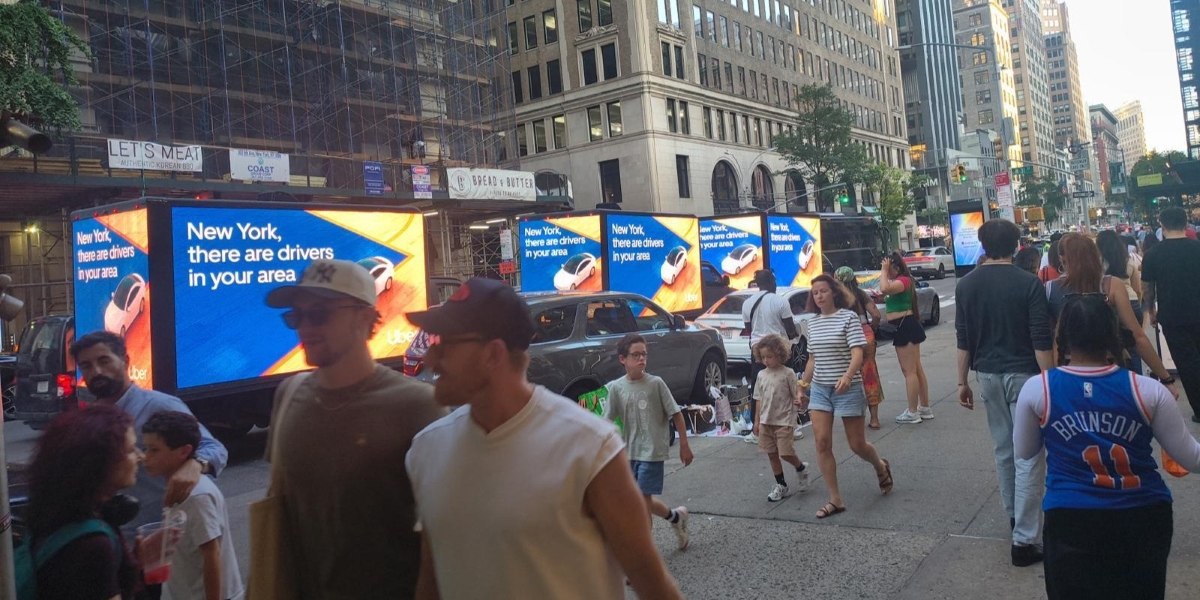
Uber’s recent New York campaign illustrates the ROI case perfectly. The company needed to tell New Yorkers that drivers were available in specific neighborhoods, Brooklyn, Manhattan, Queens, simultaneously. The message was timely (market expansion), location-specific (neighborhood by neighborhood), and temporary (a few weeks, then done).

A fixed billboard approach would have been wrong for every reason. Uber would have paid for broad, non-targeted placement across the city. It couldn’t coordinate messaging by neighborhood. It couldn’t respond if the driver supply shifted. And it couldn’t measure which placements actually drove driver signups.

Instead, Uber deployed multiple digital trucks in coordinated positions across Manhattan and beyond during peak foot-traffic hours. Here’s why that was worth it:

Precision: The trucks were positioned exactly where Uber needed visibility, in busy retail districts, subway hubs, and high-density pedestrian zones.

Flexibility: If a neighborhood hit driver-supply targets, the truck moved. No sunk cost on a fixed placement that’s underperforming.

Visibility: In crowded retail districts, a high-definition screen on wheels moving through traffic cuts through visual noise in a way a static billboard simply can’t. Pedestrians didn’t just see the trucks; they stopped and looked.

Measurability: Can’t Miss US captured GPS data, timing, and location documentation showing exactly where and when the ads ran.

The result: Uber got localized, measurable, fully responsive visibility without committing to a month-long, inflexible billboard contract. That’s the ROI argument in action.

The data backing it up: 97% of people recall ads they see on mobile digital billboards, compared to 58% for online and smartphone ads. Mobile billboards are also twice as effective as static outdoor advertising for generating recall and action. For a time-sensitive, location-specific campaign like driver recruitment, mobile isn’t just worth it, it’s the smarter choice.

When Is It Actually Worth It? (And When Isn’t It?)

Not every brand should use mobile billboards. The ROI equation breaks down in certain scenarios.

Mobile billboards ARE worth it if you’re:

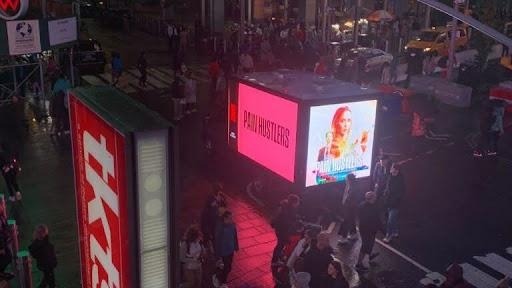
  • Launching a product or event with a defined window (e.g., Netflix’s “Pain Hustlers” release)
  • Targeting a specific neighborhood or demographic cluster (e.g., Uber recruiting drivers in particular zones)
  • Running a campaign for 2–6 weeks, not months
  • Needing real-time flexibility (change creative, adjust routes, respond to market conditions)
  • Measuring success by foot traffic, event attendance, or location-specific conversions
  • Operating with a budget of $40,000–$150,000 (where mobile beats a fixed billboard’s cost structure)

Mobile billboards are LESS worth it if you’re:

  • Running a year-long brand-awareness campaign (a fixed billboard becomes more cost-effective)
  • Selling something with zero geographic specificity
  • Operating on a shoestring budget (even a mobile campaign has minimums)
  • Needing to reach an audience that doesn’t congregate in public spaces

“The key question isn’t ‘Is mobile worth it in general?'” says Can’t Miss US. “It’s ‘Does this campaign need the specific advantages mobile provides?’ If you need speed, flexibility, precision, and measurability, it’s absolutely worth it. If you need static, always-on brand presence, a fixed billboard might be smarter.”

Real examples of worth-it campaigns:

Photo Courtesy: Can’t Miss US
  • Netflix is promoting “Pain Hustlers” in Times Square (time-sensitive film launch requiring foot traffic concentration)
  • Nestle is activating in high-traffic retail zones during seasonal campaigns
  • X Games is positioning trucks near venues and event sites
  • Emerging brands are building awareness in specific neighborhoods before expanding citywide

All of these shared a common thread. They needed specific visibility, not just any visibility. That specificity is where mobile billboards deliver ROI that fixed placements can’t match.

Why NYC Specifically Benefits from Mobile Billboards

New York’s density and fragmentation actually make mobile billboards more valuable here than in less crowded markets.

Speed matters. A mobile campaign can launch in 24 hours. No zoning approvals, no real estate brokers, no six-month installation timelines. A brand with a product launch next week doesn’t have to hope a billboard space opens up; it can deploy immediately. In a city where trends move fast and event calendars are packed, that speed is money.

Neighborhood specificity wins. New York isn’t monolithic. Brooklyn’s demographics, shopping patterns, and foot traffic are completely different from Midtown Manhattan’s. A campaign that kills it in Park Slope might bomb in the Financial District. Mobile trucks let brands test neighborhoods, measure results, and concentrate spend where it actually works. A startup can run a two-week campaign in Chelsea, measure performance, then scale to other boroughs if the metrics justify it.

Real-time flexibility is essential. Fixed billboards lock you in for a month or a quarter. Mobile campaigns respond to what’s actually happening. If a campaign is resonating in one neighborhood but not another, you move the truck. If a cultural event draws unexpected foot traffic, you position yourself there. If the creative isn’t landing, you update it. In a market as dynamic as NYC, that responsiveness translates directly to ROI.

Proof of performance. Can’t miss US and other operators capture GPS data, photos, and video evidence of where trucks are positioned and measurable audience numbers. Brands can see where their impressions are coming from, foot traffic counts, demographic estimates, and exact timing. Traditional billboards never provided that level of transparency.

For brands operating in New York, where real estate is expensive, attention is fragmented, and markets move fast, mobile billboards solve a specific problem. They deliver targeted visibility without the cost and inflexibility of fixed placements.

So, Is It Worth It in New York? The Answer.

If you’re asking, “Is mobile billboard advertising worth it in New York?” the honest answer is: It depends on your campaign goals. But for most brands with a time-sensitive campaign, a specific geographic target, and a measurable outcome in mind, it absolutely is.

Here’s what separates a “worth it” mobile billboard campaign from wasted money:

Clear objective. You’re not trying to build brand awareness in the abstract. You’re driving foot traffic to a pop-up, launching a product in a defined window, recruiting drivers to a specific neighborhood, or promoting an event. The mobile truck’s precision advantages mean something.

Right budget. You have $40,000–$150,000 to spend (roughly 2–6 weeks of deployment). Below that, the fixed costs don’t make sense. Above that, a fixed billboard becomes cost-competitive.

Measurable success. You care about data, where people saw your ad, what neighborhoods responded, and how foot traffic moved. If you’re flying blind on results, mobile doesn’t help.

NYC-specific advantages work for you. You’re targeting a neighborhood, an event, or a specific demographic cluster in the city. You need to move fast. You want flexibility. These are the moments mobile billboards shine.

The brands using mobile trucks effectively in New York, Uber, Netflix, Nestle, X Games, and emerging companies we don’t hear about, all understand this formula. They’re not asking “Do billboards work?” They’re asking, “What’s the smartest way to reach exactly who I need to reach, right now, in this city?” And for that question, mobile trucks are increasingly the answer.

How to Assess It for Your Brand

Can’t Miss US, which operates an extensive fleet of digital mobile billboard trucks and manages campaigns across all five boroughs, recommends starting with a simple audit:

  1. Do you have a specific geographic target? (A neighborhood, corridor, or district you need to dominate)
  2. What is your campaign window? (Shorter = more advantage to mobile)
  3. Do you need to measure performance and adjust? (Mobile gives you that, fixed doesn’t)

If you answered yes to two or more, mobile billboard advertising is almost certainly worth exploring.

For New York-specific insights on whether a mobile campaign makes sense for your brand, and what a deployment would actually look like in your target neighborhoods, visit Can’t Miss US’s New York campaign page. The company offers 24-hour deployment and can coordinate multi-truck campaigns across all five boroughs, providing the kind of localized, flexible visibility that New York’s fragmented market demands.

New Novel Vietnam, Port Townsend Bay Traces a Dying Man’s Journey Home

Seattle, WA — Author Calmar Austin McCune has released Vietnam, Port Townsend Bay, a novel that follows the wealthiest man in Vietnam on a final, unforgettable flight back to the small Washington town where he grew up.

The story opens at a Hanoi airport, where a Vietnamese-American surgeon named Dr. Thu is unexpectedly recruited to serve as an in-flight physician aboard a private Boeing 747. Her patient is Dexter Rowell, an elderly, ailing businessman who owns the plane, and who has just been given two weeks to live. Rather than spend his final days in comfort at home, Rowell has decided to fly across the Pacific to Port Townsend, the small waterfront town on Washington’s Olympic Peninsula where he was born and raised, and where his parents are buried.

Over the course of the flight, Rowell tells Dr. Thu the story of his life: a difficult childhood, an unlikely stint as a high school quarterback, and his enlistment in the U.S. Army, which sent him to Vietnam in 1966 as a demolitions specialist. There, he became one of the “tunnel rats” who crawled through the Viet Cong’s underground tunnel networks near Cu Chi, narrow, booby-trapped passages filled with venomous snakes, scorpions, and near-total darkness. Captured and held by North Vietnamese soldiers and villagers, Rowell endured months as a prisoner before a forced march to Hanoi and, eventually, release at the war’s end.

Decades later, haunted by memories of the woman who helped care for him during his captivity, Rowell returned to Vietnam, married her, and built an unlikely fortune there, turning a wartime observation about rice paper into an international business empire. Now, with his health failing, he is drawn back to Port Townsend for one last look at the schools, streets, and shoreline of his youth.

Dr. Thu, his in-flight physician, becomes an unexpected confidante on this journey. A gifted facial reconstruction surgeon trained at Harvard and the Royal London Institute of Surgery, she has her own quiet story of leaving Vietnam behind, and the long flight across the Pacific becomes a conversation between two people separated by generation and circumstance but bound by the same distant homeland.

McCune weaves together two vividly rendered worlds, the claustrophobic terror of Vietnam’s wartime tunnels and the quiet, salt-air familiarity of a small Pacific Northwest town, into a meditation on memory, homecoming, and the pull of the place where a life began. Readers familiar with Port Townsend will recognize real landmarks along the way, including Fort Worden, the Hood Canal Bridge, Water Street, and the beach where the story reaches its close.

The novel closes with an unexpected final gesture from Rowell, one that reaches beyond Port Townsend and back across the Pacific to the country and the people who shaped his life, bringing the story full circle.

Though presented as fiction, the novel draws on extensive research into the tunnel warfare of the Vietnam War era and on McCune’s own long familiarity with Port Townsend, where he lived and worked for three decades. The result is a story that moves fluidly between two very different settings, always circling back to the same questions of home, identity, and what it means to return to a place after a lifetime away.

Vietnam – Port Townsend Bay is available now in hardcover, softcover, and eBook editions through Xlibris and major booksellers.

About the Author

Calmar Austin McCune grew up in Seattle, Washington, and went on to practice law in Port Townsend, Washington, for many years. He now lives back in Seattle, where he continues to write. McCune is 87 years old, and Vietnam, Port Townsend Bay draws on his deep familiarity with the Olympic Peninsula town he called home for decades, as well as his lifelong interest in the history and legacy of the Vietnam War.

How Martha Cohen Stine Is Redefining Boutique Family Law

By: Sofia Marretta

After decades of guiding clients through some of life’s most consequential moments, family law attorney Martha Cohen Stine saw an opportunity to practice differently. Together with Harriet Newman Cohen and Ankit Kapoor, she co-founded Cohen Stine Kapoor LLP with a simple goal: to create a boutique matrimonial practice where every client receives senior-level attention from beginning to end.

The firm took shape during the pandemic when Stine recognized a gap in the legal market. Large firms fell short of the personal attention many clients sought, while smaller firms often lacked the depth of experience and resources needed to handle complex, high-net-worth matrimonial matters. Determined to bridge that gap, she joined forces with her partners to build the kind of firm she believes clients deserve.

Today, the firm thrives from its Manhattan offices, where attorneys meet with clients both in person and virtually. Each lawyer brings a distinct set of strengths and significant experience, collaborating closely to develop strategies tailored to every client’s unique circumstances. “Preparation creates confidence. Confidence inspires credibility,” Stine says. “Those qualities are essential.”

That personalized approach reflects Stine’s own philosophy of practicing law. She combines compassion with candid, strategic advice. “I will never just tell clients what they want to hear,” she explains. “Instead, I explain what New York law provides and how I believe a judge would likely decide the case if we were in court.” That objectivity shapes the targeted strategies she develops for each case. At the same time, she never loses sight of the importance of being prepared to litigate when necessary. “One of the best ways to achieve a settlement is to be fully prepared for and not afraid of trial,” she says. “Opposing counsel recognizes when a lawyer is willing and able to litigate a case through trial.”

Family law presents unique challenges. Divorce often involves anger, heartbreak, uncertainty, and financial anxiety. Custody disputes can be emotionally exhausting for parents and children alike. Stine believes that successful representation requires not only legal knowledge but also sound judgment, creativity, and practical solutions that allow clients to move forward with confidence.

One of the most significant developments she has witnessed is the growing acceptance of prenuptial agreements. “They have become completely socially acceptable, particularly among younger professionals,” she says. Rather than viewing them as unromantic, many couples now see them as thoughtful planning tools that reduce uncertainty and protect both parties. Every agreement, she emphasizes, should be carefully tailored to the couple’s individual circumstances.

Stine’s professional accomplishments have earned her widespread recognition. She holds Martindale-Hubbell’s AV Preeminent® 5.0 rating and has been repeatedly recognized by Super Lawyers New York Metro as one of the Top 50 Women and one of the Top 100 Attorneys. She serves on the Board of Directors of the New York County Lawyers Association, where she previously chaired the Matrimonial Law Section, and is a member of the Executive Committee of the New York State Bar Association’s Family Law Section.

Despite these accomplishments, Stine did not begin her career as a family law attorney. She spent the first decade of her practice as a commercial litigator at the prestigious Manhattan firm Shea & Gould, where she trained under New York’s best trial attorneys. Her perspective changed after working on a family law case involving an elderly heiress suffering from dementia whose relatives sought to isolate her and influence her estate planning. “I discovered that I liked working with clients on personal family matters and that I was good at thinking outside the box and finding solutions,” she recalls.

Just as clients inspired the founding of the firm, they remain at the heart of Stine’s practice today. “Knowing that I have helped someone protect their children, preserve what they have built, and begin the next chapter of their lives continues to make this work both challenging and deeply rewarding,” she says.

Outside the courtroom, music provides another creative outlet. A trained singer, Stine performs with the acclaimed Blue Hill Troupe, a Gilbert and Sullivan and musical theater troupe that donates the proceeds of all ticket sales to charity. She also produces, directs, and performs in original musical comedies featuring talented lawyers and judges at bar associations across New York, including the New York City Bar Association’s celebrated Twelfth Night shows.

More than any professional honor, however, Stine measures success by the people closest to her. “When I come home to a husband who is the love of my life, and when my adult children are happy, productive, and want to spend the weekend with me, that may be the greatest success of all,” she says.

Today, Cohen Stine Kapoor LLP reflects the values that have defined Stine’s career for more than three decades: exceptional legal advocacy, thoughtful strategy, personal attention, and an unwavering commitment to every client. As she continues to shape the future of family law, her greatest measure of success remains the people she serves and the futures she helps create.

Disclaimer: This article is intended for general informational and editorial purposes only. It does not provide legal advice, family law guidance, matrimonial strategy, or professional service recommendations, and it should not be relied upon as a substitute for advice from a qualified attorney. Divorce, custody, prenuptial agreements, asset division, litigation outcomes, and related family law matters can vary based on jurisdiction, facts, court procedure, and individual circumstances. Readers should consult a licensed family law attorney before making decisions related to any legal matter.

Premium Cycling Gear for Faster, More Enjoyable Weekend Road Rides

There’s a specific rhythm to weekend cycling that regular commuters and race-focused athletes don’t quite share. It’s the ride you actually look forward to all week, the one where the route matters as much as the effort, where a good coffee stop counts as part of the plan, and where the goal is less about hitting a number and more about finishing the loop feeling better than when you started. For riders who live for that rhythm, the right gear isn’t about chasing marginal gains for a race. It’s about making that specific experience as good as it can possibly be.

Weekend road cycling has its own particular demands, even if they’re less discussed than training-focused advice. Longer, more relaxed mileage. Group rides where pace varies, and conversation matters as much as wattage. Routes chosen for scenery or a good climb rather than pure efficiency. Gear that serves this kind of riding well isn’t necessarily the same gear a competitive racer would choose, and it’s worth thinking about upgrades through that specific lens rather than borrowing a race-oriented shopping list wholesale.

The Upgrade Weekend Riders Notice Most

Of everything you could spend money on, wheels tend to deliver the most noticeable, ride-to-ride improvement for exactly the kind of riding weekend cyclists do. They’re rotating weight, which affects how a bike accelerates out of every stop sign and how it feels climbing every hill on a route, and for a long ride with plenty of both, that adds up in a way that’s genuinely felt rather than just measured.

A well-chosen premium carbon wheelset changes the texture of a long ride in ways that are hard to fully appreciate until you’ve felt the difference directly: quicker, more satisfying acceleration when the group picks up pace, a smoother ride over rougher pavement, and, depending on rim depth, a real sense of holding speed more easily on flatter stretches where maintaining a steady pace matters more than a single hard effort.

Why This Upgrade Pays Off Especially for Recreational Mileage

Racers optimize for peak performance during short, intense efforts. Weekend riders benefit more from sustained comfort and confidence across hours of riding, which actually makes a thoughtfully chosen wheelset an even better investment for recreational mileage than for pure racing, since you’re feeling the benefit continuously rather than in short bursts.

What to Actually Look for Beyond the Marketing Language

It’s easy to get lost in confident-sounding claims when shopping for premium components, so it helps to know what specifically to check. Rim depth, internal and external rim width, wheelset weight, and hub bearing type all matter more than vague descriptors like “race ready” or “aero optimized.” A brand willing to publish these specifics clearly, rather than relying purely on adjectives, is generally a safer bet, since it signals confidence in the actual engineering behind the product.

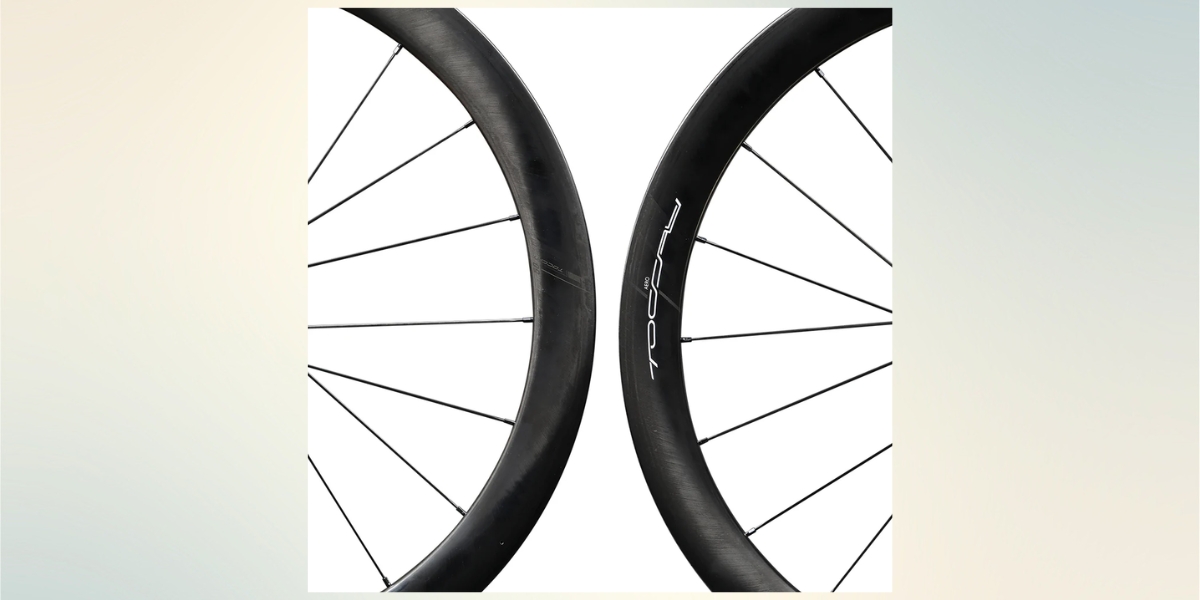
TOCCAY carbon wheels are a good example of this kind of spec-forward approach, with detailed rim dimensions, material grades, and tested durability figures published directly alongside each product rather than left for a separate conversation. That level of transparency matters more than it might seem, since it lets you actually compare options against your specific riding needs rather than guessing based on branding alone.

Rim Depth: Matching the Wheel to Your Actual Weekend Routes

This is where a little thought goes a long way. If your typical weekend loop favors rolling terrain or has real crosswind exposure (bridges, open stretches, coastal roads), a moderate rim depth in the 40 to 50mm range tends to feel more confidence-inspiring than a deep aero profile, which can feel twitchy in gusty conditions. If your usual routes are flatter and more sheltered, a deeper rim rewards you with genuine aero benefit without much handling trade-off.

There’s no universally correct answer here. The right depth depends entirely on where you actually ride most weekends, not on an abstract idea of what a serious cyclist is supposed to choose.

A Middle-Ground Option Worth Considering

For riders who split their weekends between different types of terrain (a flatter loop one Saturday, a hillier route the next), a mid-depth wheel in the 50mm range often ends up being the most versatile choice, offering a reasonable aero benefit without the handling sensitivity of a deeper profile in more variable conditions.

A Practical Option for Weekend Riders on a Considered Budget

Not every weekend rider needs, or wants to pay for, the absolute top tier of every component. The AERO-50 Ghost Wheelset STEEL offers a thoughtful middle ground: a 50mm rim depth built on a Toray T800 + T1100 carbon layup, paired with steel aero spokes for durability, a 25mm inner / 33mm outer rim width, and a wheelset weight of roughly 1260g. It’s backed by a 36-month limited warranty and supports both Shimano HG and SRAM XDR freehub options, with tubeless-ready and clincher tire compatibility built in. For a rider who wants a genuinely well-engineered rim depth and profile without stretching to the fully carbon-spoke version of the same wheel, this is a sensible, satisfying choice that still offers the kind of ride-quality benefits that can make weekend loops more enjoyable.

Small Additions That Round Out the Experience

A wheel upgrade pairs well with a few smaller changes that help you get the full benefit. Quality tires matched to your new rim’s internal width matter more than most riders expect, since an upgraded wheel with old, mismatched tires won’t deliver its full potential. If you’re running tubeless, keeping sealant fresh is worth the small maintenance effort, since it’s a meaningful part of what you’re actually paying for in comfort and puncture protection.

It’s also worth revisiting tire pressure after any wheel change. Rim width affects tire shape and volume, and riders who keep their old pressure out of habit often miss out on some of the comfort a new wheelset is capable of providing.

Confirming Compatibility Before You Order

Before buying anything, confirm rotor mounting type, axle standard, and freehub body against your current bike. It only takes a few minutes, and it prevents the most common disappointment in wheel upgrades, a great wheelset that simply doesn’t fit the bike it was meant for.

Why This Matters More for Weekend Riding Than It Might Seem

Weekend rides are often the parts of the week people protect most fiercely, the time carved out specifically to feel good, move well, and enjoy being outside on a bike. Gear that genuinely improves that experience, rather than just improving a number on a spec sheet, is worth prioritizing accordingly. A thoughtfully chosen wheelset works toward exactly that, helping the ride you look forward to all week feel closer to what you’re hoping for.

Choose a Gear That Serves the Riding You Actually Do

The best premium upgrade for weekend cycling isn’t necessarily the most expensive or most talked-about option. It’s the one matched thoughtfully to your actual routes, your typical mileage, and the kind of riding experience you’re actually chasing. Get the rim depth right for your terrain, confirm compatibility before ordering, and treat the wheel as an investment in years of enjoyable Saturdays rather than a single spec-sheet flex.

Do that, and the upgrade tends to make its difference where it matters most, in how the ride feels from the first pedal stroke to the last, on exactly the kind of weekend loop you’ve been looking forward to all week.

Meet Daria Tkachuk: How Starting Over in Los Angeles Shaped a New PR Career

For more than a decade, Daria Tkachuk built her career in public relations across Europe. Before moving to the United States, Daria had already established herself in Ukraine’s PR industry. She worked in the press office of a member of Parliament, managed communications for a Forbes-recognized technology entrepreneur, and promoted large-scale entertainment projects for Unipark, including “Lights & Dreams” and “Park Legend.”

When Russia’s full-scale invasion of Ukraine began, nearly all her professional projects came to a halt, but rather than leaving the communications industry, she joined humanitarian initiatives with ADRA International to support Ukrainians who had been displaced by the war.

Later, she made the life-changing decision to relocate to Los Angeles. After immigrating to the United States, she faced a challenge shared by many newcomers in similar situations- rebuilding her career and professional network from the ground up.

“I chose L.A. because it’s one of the world’s leading creative capitals,” she says. “People come here to build companies, launch brands, and bring new ideas to life. Strong public relations has become an essential part of that journey.”

Today, she works with entrepreneurs, founders, and public figures to help them strengthen their visibility, build strategic communications, and establish their brands in one of the world’s most competitive media markets.

Entering a New Market

Breaking into the American PR industry proved to be very different from working in Europe. During her first months in the United States, Daria consulted for Ukrainian startups who were expanding into international markets, while also helping entrepreneurs develop communication strategies for global audiences.

These early projects gradually led to new professional relationships and opened the door for opportunities across Los Angeles’s vibrant business and entertainment communities.

Photo Courtesy: Emma Melikyan

Working with Entrepreneurs and Personal Brands

Today, Daria helps entrepreneurs, executives, creators, and influencers expand into international markets, build personal brands, and strengthen their public presence. She has built a diverse consulting portfolio, working with clients across entertainment, beauty, technology, science, and entrepreneurship ventures.

One of her earliest projects in the United States involved supporting a two-day event in downtown Los Angeles for an internationally recognized coach and spiritual advisor. This marked an important milestone in her career, introducing her to new clients and broadening her professional network within the U.S. market.

Why PR Remains Her Passion

Rebuilding her career from the ground up was no small challenge, but Daria says she never considered leaving the profession:

“One day, you’re discussing climate research with a scientist. Next, you’re talking about investment strategies with a financial advisor. A few days later, you’re accompanying clients to industry events. PR constantly exposes you to new industries and new people. Very few careers offer that kind of variety.”

From Behind the Scenes to Building Her Own Brand

For much of her career, Daria focused on elevating the profiles of others, content to remain behind the scenes herself. But after moving to the United States, she quickly realized that even the strongest professional credentials are only one part of building a career in a new country.

“I spent years building other people’s reputations, while remaining almost invisible myself,” she explains. “In the U.S., people often search your name online before deciding whether to work with you. If they can learn about your experience and expertise through Google, trust develops much faster. Here, PR professionals are also expected to have a visible personal brand. They build relationships, participate in industry events, and become active members of their professional community.”

Photo Courtesy: Emma Melikyan

Networking is Key

According to Daria, one of the biggest differences between American and European PR industries is the importance of building long-term relationships.

Success often depends on consistently developing genuine connections with journalists, creators, business leaders, and other industry professionals. For immigrants starting over in a new country, the relationships they build can become valuable opportunities for growth.

“In Los Angeles, you never know where one conversation might lead,” she says. “You might meet someone who works with an A-list celebrity, and months later, that relationship could create an opportunity you never expected.”

While every market has unique dynamics, Daria believes the core principles of success remain universal: adaptability, strong relationships, and a willingness to continuously evolve.

With resilience, experience, and persistence, Daria transformed one of life’s greatest challenges into a successful career far from home. Her journey reminds us that starting over is rarely the end of the story, and even the most difficult life transitions can be the beginning of a new chapter.

How to Sell Jewelry Online and a Step-by-Step Guide with Benefits, Features, and Costs

By: Andrew Jackson

Today, the online jewelry market is highly competitive. To stand out, jewelry business owners need to offer unique, personalized, and ethically sourced pieces, ranging from engagement rings and fashion jewelry to handcrafted items.

Here you will learn how to start an online jewelry store, covering benefits, essential features, costs, marketing, and scaling strategies to help you build a profitable business.

Features of a Modern Jewelry E-commerce Website

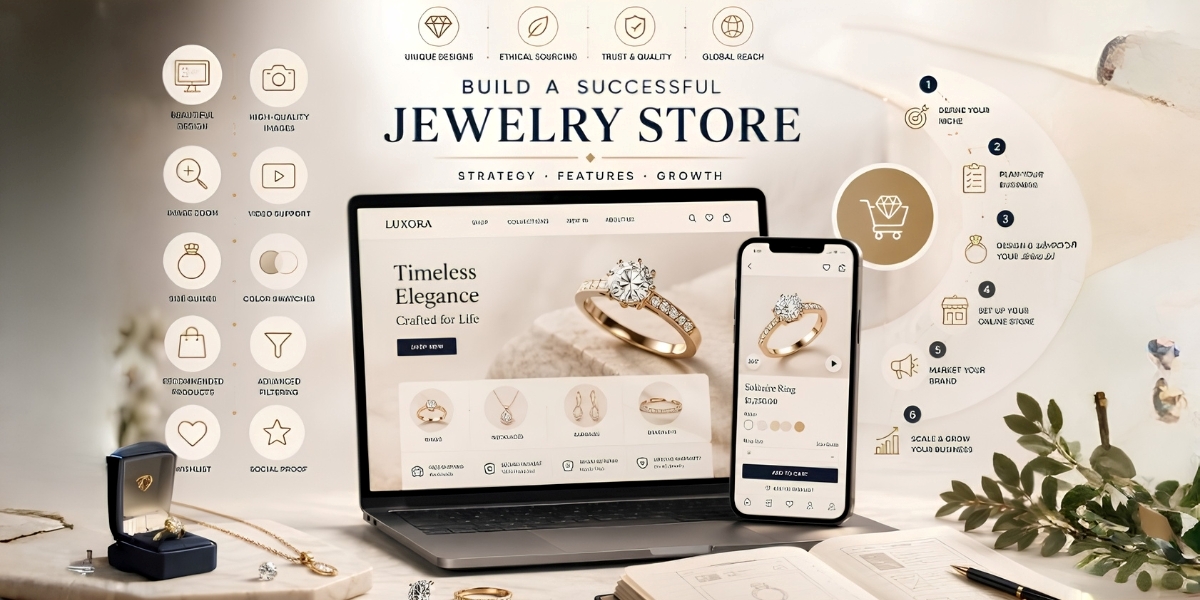
Choosing the right functionality is just as important as selecting the right e-commerce platform. A successful jewelry website should combine elegant design, intuitive navigation, and conversion-focused features that inspire trust and encourage purchases. The following functionality will help you create an exceptional shopping experience while maximizing sales.

Amazing Design

Your website design creates the first impression of your brand. It should be intuitive, easy to navigate, and visually appealing. While an attractive design benefits any e-commerce business, it is especially important for jewelry stores, where customers expect elegance, luxury, and sophistication.

High-Quality Images

It is essential for showcasing the craftsmanship and fine details of every jewelry piece. Professional, high-resolution images allow customers to closely examine gemstones, textures, and finishes, helping them feel more confident about purchasing online.

Image Zoom

This functionality enables customers to inspect every detail of a product without leaving the page. With a simple hover or click, shoppers can explore textures, settings, and intricate craftsmanship from multiple angles. It will help to build trust, reduce uncertainty, and improve user experience.

Video Support

This feature helps customers visualize jewelry in real-life situations. A short video can demonstrate how a ring catches the light, how earrings move, or how a necklace drapes when worn. Videos also provide an opportunity to showcase your craftsmanship, explain your design process, and tell your brand story, making customers more confident in their buying decisions.

Size Guides

Selecting the correct ring or bracelet size online can be difficult. Detailed size guides that include measurement instructions, diagrams, or printable templates help customers choose the right size with confidence. As a result, they improve customer satisfaction while reducing returns and exchanges.

Color Swatches

Many jewelry products are available in multiple metal finishes or gemstone variations. Color swatches allow customers to switch between these options instantly without leaving the product page, making comparisons faster and simplifying purchase decisions.

Recommended Products

This feature encourages customers to discover complementary items, such as matching earrings, necklaces, or bracelets. It supports cross-selling and upselling strategies, increases average order value, and creates a more personalized shopping experience.

Advanced Product Filtering

It helps customers quickly narrow their search by price, gemstone, metal type, style, collection, or size. Besides improving navigation, it demonstrates that your store is organized and customer-focused, allowing visitors to find products faster.

Wishlist Functionality

This functionality allows customers to save favorite jewelry items for future purchases. Since jewelry buyers often take time before making a final decision, this feature encourages repeat visits and increases conversion opportunities during promotions or seasonal sales.

Promo Tiles

This feature highlights featured collections, seasonal campaigns, special offers, and new arrivals throughout your jewelry website. Strategically placed promotional banners help attract attention to important products while improving product discovery.

Social Proof

Customer reviews, ratings, testimonials, and user-generated photos build credibility and trust. When visitors see real customers sharing positive experiences with your jewelry, they become more confident in purchasing from your online store.

Step-by-Step Guide on How to Start an Online Jewelry Store

1. Define Your Niche and Target Audience

Before creating your jewelry ecommerce website, clearly define your niche and ideal customer. It helps differentiate your brand, strengthens your marketing strategy, and makes it easier to attract the right audience.

2. Develop a Business Plan

A well-prepared business plan serves as the foundation of your online jewelry store. It outlines your goals, budget, pricing strategy, marketing approach, and long-term growth plans and helps you make informed business decisions.

3. Design and Source Your Jewelry

Your jewelry store defines your brand. Develop a production strategy that aligns with your budget, quality standards, and business model. Whether you create handmade jewelry or work with manufacturers, prioritize craftsmanship, consistency, ethical sourcing, and sustainability to meet modern customer expectations.

4. Set Up Your Online Jewelry Store

Your jewelry ecommerce website is your digital storefront. It should combine attractive design, intuitive navigation, secure payment methods, fast loading speeds, and mobile responsiveness to deliver a seamless shopping experience.

5. Implement Marketing Strategies

Creating beautiful jewelry is only part of building a successful business. To attract customers, develop a comprehensive marketing strategy that combines SEO, content marketing, email campaigns, social media, influencer collaborations, paid advertising, and offline events. This increases brand awareness and drives the right traffic to your website.

6. Scale Your E-commerce Business

Once your jewelry website begins generating consistent revenue, focus on sustainable growth. Expand your product catalog, introduce new collections, or offer personalized jewelry options. Consider wholesale partnerships and international shipping to reach new audiences. With patience, continuous optimization, and a customer-first approach, your online jewelry store can grow into a successful international e-commerce brand.

The Cost of Building a Jewelry E-commerce Website

The cost of building a jewelry ecommerce website depends on several factors, including your chosen platform, website design, level of customization, required features, third-party integrations, and long-term business goals. Additional functionality, such as custom jewelry configurators, advanced product filtering, ERP or CRM integrations, mobile optimization, and ongoing maintenance, can also significantly affect the total project cost.

While SaaS platforms offer an affordable way to launch an online store, growing and enterprise jewelry brands often invest in custom ecommerce development to deliver a premium customer experience, support complex business operations, and scale more efficiently.

Entry-Level (Shopify or Other SaaS Platforms): $3,000–$10,000

This option is ideal for startups, independent jewelry designers, and small businesses launching their first online store. Most projects use pre-built themes with standard e-commerce functionality, allowing businesses to launch quickly while keeping development costs relatively low.

Key features:

• Responsive website design

• Product catalog and collection pages

• Secure payment gateway integration

• Basic shipping configuration

• Product search and filtering

• Mobile-friendly shopping experience

• Essential SEO setup

Mid-Tier (Custom Design & Business Growth): $10,000–$30,000

This pricing tier is designed for growing jewelry brands that need greater flexibility than standard e-commerce platforms can provide. Instead of relying on pre-built templates, businesses receive a custom-designed storefront tailored to their branding, customer journey, and conversion goals.

Key features:

• Custom UI/UX design

• Advanced product filtering and search

• Wishlist functionality and personalized recommendations

• Product videos and interactive image galleries

• Customer reviews and social proof

• Marketing automation integrations

• CRM and email marketing integrations

• Performance optimization

• Advanced SEO implementation

• Selected third-party integrations

Enterprise (Magento / Adobe Commerce): Starting at $40,000+

Enterprise ecommerce development is intended for established jewelry retailers, luxury brands, manufacturers, wholesalers, and businesses with complex operational requirements. Unlike SaaS platforms, Magento and Adobe Commerce provide virtually unlimited flexibility, enabling businesses to build a fully customized e-commerce ecosystem that supports long-term growth.

Key features:

• Fully customized e-commerce architecture

• Bespoke UI/UX tailored to luxury brands

• Advanced product configurators for customizable jewelry

• Multi-store and multi-language capabilities

• B2B and wholesale functionality

• ERP, CRM, PIM, and inventory management integrations

• AI-powered product recommendations and personalization

• Advanced customer segmentation

• High-performance architecture for large product catalogs

• Enterprise-grade security and scalability

• Extensive API integrations with third-party systems

Building a Successful Online Jewelry Store

Nowadays, building a successful jewelry e-commerce website requires much more than an attractive design. The most successful online jewelry stores combine an exceptional user experience, premium product presentation, fast performance, and trust-building features that guide customers confidently through every stage of the buying journey. Thus, by investing in the right ecommerce platform, intuitive UX design, high-quality visuals, and conversion-focused functionality, you can create a digital storefront that not only showcases your jewelry beautifully but also drives sales and builds long-term customer loyalty.

Disclaimer: This article is intended for general informational and educational purposes only. It does not provide financial, legal, tax, business, e-commerce, marketing, or professional development advice, and it should not be relied upon as a substitute for guidance from a qualified professional. Website costs, platform suitability, development timelines, features, integrations, marketing results, sales performance, and business outcomes can vary based on business model, budget, vendor, platform, product offering, market conditions, and execution. No specific revenue, profitability, growth, or customer acquisition results are guaranteed. Readers should independently evaluate any e-commerce platform, development provider, marketing strategy, or business investment before making decisions. Cost ranges and feature descriptions are provided for general context only and should be verified with qualified vendors or advisors.

Hudson Landing: Hochul Selects Developers For $1 Billion Hell’s Kitchen Housing Project Near Intrepid Museum

Governor Kathy Hochul has selected three New York developers to transform a state-owned parking lot in Hell’s Kitchen into a $1 billion, 1,127-unit mixed-use housing development directly across from the Intrepid Sea, Air & Space Museum on Manhattan’s far West Side. The project, dubbed Hudson Landing, marks one of the largest residential developments to emerge from Hochul’s push to convert underused public land into housing.

What Does The Hudson Landing Project Include?

The development team — The Gotham Organization, Fisher Brothers, and MURAL Real Estate Group — will build two connected residential towers totaling approximately 1.3 million square feet on a 50,584-square-foot parcel at 621 West 45th Street, situated along the east blockfront of Twelfth Avenue between West 45th and West 46th Streets. The 1.2-acre site currently serves as the Intrepid Museum’s surface parking lot, positioned directly across the West Side Highway from Pier 86 on the Hudson River and steps from Hudson River Park.

Of the 1,127 proposed homes, 338 units — 30 percent of the total — would carry permanent affordability restrictions for households earning between 40 and 130 percent of area median income. That affordability band is designed to reach teachers, nurses, first responders, and other middle-income workers who are increasingly priced out of Manhattan’s rental market. The project also includes 108 for-sale condominiums, with 28 of those set aside as income-restricted ownership units, an increasingly rare feature in Manhattan developments of this scale.

Beyond housing, Hudson Landing would extend the Intrepid Museum’s physical footprint eastward across the West Side Highway through a new Intrepid Concourse — a roughly 22,000-square-foot community facility that includes a new visitor center, a STEM education hub, and a café. A pedestrian sky bridge would connect the residential development to the museum campus. The plans also call for Intrepid Park, an approximately 9,800-square-foot public open space offering landscaped areas for programming, community events, and Hudson River views. Neighborhood retail space and replacement parking for the museum, phased so that museum operations remain uninterrupted throughout construction, round out the development program.

Why Is The State Overriding Local Zoning For This Project?

The parcel at 621 West 45th Street is currently zoned for light manufacturing — it sits across West 45th Street from a large self-storage facility in what remains an industrial pocket of Manhattan’s far West Side. Under Hochul’s Redeveloping Underused Sites as Housing policy, launched in 2024, the state will override local zoning rules to allow a dense, mixed-income residential project in a zone that would otherwise prohibit housing at this scale.

The developers must use the state’s 485-x tax exemption program, which grants tax breaks in exchange for maintaining at least 25 percent of units as affordable and paying construction workers a prevailing wage. Hudson Landing would become one of the largest projects to use 485-x, a program that has drawn scrutiny from developers who say its wage requirements for buildings over 100 units have pushed the industry toward smaller projects to control costs.

Empire State Development, the state’s economic development arm, plans to sell the site at fair market value to the development team. Environmental review is still ahead, a significant step given the parcel’s industrial history as a former manufactured gas plant site. The developers have committed to pursuing enrollment in the New York State Brownfield Cleanup Program and remediating the land to meet environmental standards before construction begins.

Who Are The Developers Behind Hudson Landing?

The Gotham Organization and Fisher Brothers represent two of New York City’s longest-running real estate dynasties, each with more than a century of development history in the city. The Gotham Organization, led by fourth-generation CEO David Picket, developed Gotham West — a four-block, 1,238-unit residential project in Hell’s Kitchen just a few blocks from the Hudson Landing site. That track record in the same neighborhood gives Gotham Organization direct operational knowledge of the community’s density, infrastructure, and tenant mix.

Fisher Brothers, co-run by cousins Winston Fisher and Kenneth Fisher, manages a 9-million-square-foot portfolio that includes multiple Park Avenue office towers. Both Winston Fisher and Kenneth Fisher serve on the board of the Intrepid Museum, a relationship that adds institutional continuity to the development’s museum-expansion component. MURAL Real Estate Partners, founded by former Cedar Realty Trust executive Robin Zeigler, joins as a certified Minority- and Women-Owned Business Enterprise partner. The team has committed to robust MWBE participation and local hiring throughout both construction and operations phases.

What Does This Mean For Manhattan’s Housing Crisis?

Hudson Landing enters a Manhattan rental market under extraordinary pressure. Manhattan apartment rents reached another all-time high in June 2026, while vacancy dropped to a six-year low. The city’s Rent Guidelines Board froze rents on the city’s one million rent-stabilized units last month in response to the surge in living costs. The permanently affordable units at Hudson Landing will enter the rent-stabilization program, adding a meaningful block of price-controlled inventory in one of Manhattan’s highest-demand corridors.

The project also reflects a broader shift among state and city officials toward deploying publicly owned land for residential development. New York City selected GFP Real Estate in December 2025 to redevelop the office building at 100 Gold Street near City Hall into a 3,700-unit apartment project, another signal that government-owned parcels are becoming central to the city’s housing strategy. Construction timelines and final building heights for Hudson Landing have not yet been disclosed, and the project still faces environmental review and community engagement processes before groundbreaking.

Hochul’s selection of three legacy New York developers for a billion-dollar housing project on state land signals that Albany is willing to use its zoning authority and public real estate holdings to force residential density into Manhattan corridors where the private market alone has not delivered it.