Giorgio Ribaudo on I Want to Race: How Motorsport Became an Exclusive Club Instead of a Talent Arena

The first lie of modern motorsport is quiet. It does not shout. It reassures. It suggests that talent and dedication are enough. Then, almost politely, it presents the bill.
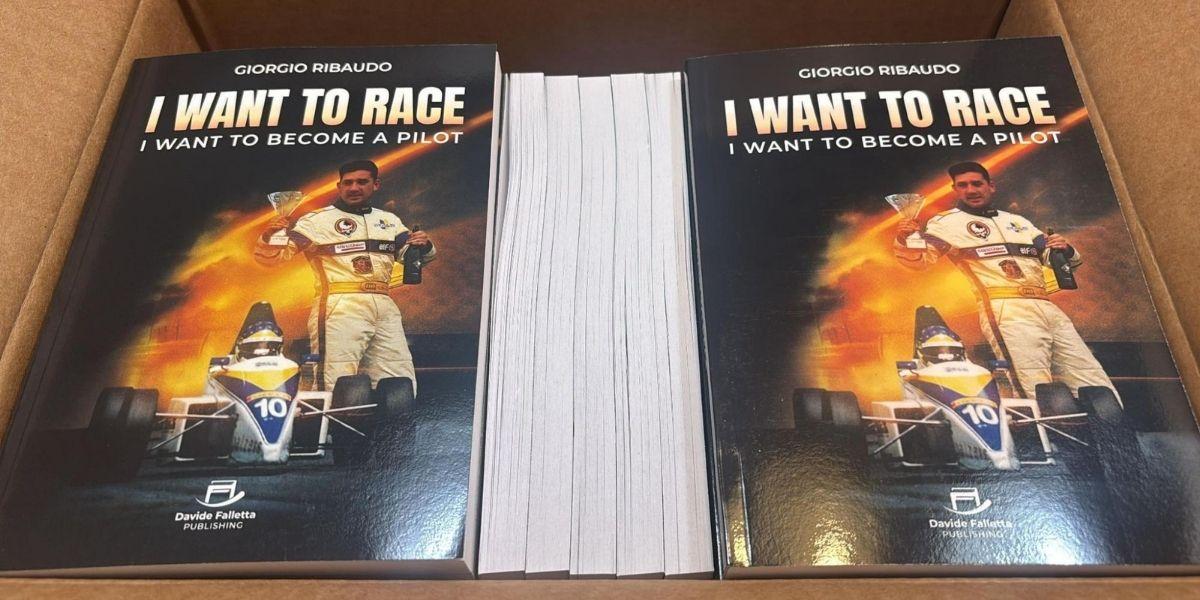
In I Want to Race, Giorgio Ribaudo begins exactly there, at the moment when illusion meets structure. Not with resentment, not with nostalgia, but with an observation few insiders are willing to articulate. Motorsport did not drift into exclusivity. It was engineered into it. At some point, speed stopped being the decisive variable. Capital took its place.
Ribaudo writes from experience, not abstraction. His voice carries the weight of someone who has moved inside the system long enough to understand how it protects itself. The book does not posture as rebellion. It reads more like an autopsy. Karting paddocks that once hosted raw potential now resemble financial waiting rooms. Junior categories operate less as proving grounds and more as economic filters. The defining question has quietly shifted from Who is fast? to Who can afford to remain visible? This is not a scandal. It is a pattern.
Midway through the book, Ribaudo introduces a comparison that reframes the entire conversation. Motorsport, he suggests, now behaves like a gated market rather than a competitive arena. Entry barriers rise incrementally, almost invisibly. Costs compound year after year. Risk is individualized while access is rationed. Talent remains abundant, but opportunity behaves like a scarce resource.
The data support the intuition. Budgets that once launched careers now barely secure participation. Sponsorships gravitate toward familiar surnames before lap times are considered. Development programs adopt the language of inclusion while practicing exclusion by arithmetic. The track has become a reflection of broader economic systems, not an escape from them.
There is a striking restraint in how Ribaudo handles his own story. He refuses the comfort of exceptionality. He presents his experience as symptomatic, not heroic. His frustration is not personal. It is structural. This distinction matters because grievance invites dismissal, while diagnosis demands engagement.
Here, the book reaches its conceptual fault line. When a system claims neutrality while consistently producing exclusion, it stops being competitive and becomes ideological. At that moment, I Want to Race ceases to be about motorsport alone. It becomes a study of power.
The reader is asked, implicitly, to reconsider the nature of fairness. The problem is not that some win and others lose. The problem is that many are never permitted to compete. You, reading this, have seen this architecture elsewhere. In education systems that reward pedigree over capacity. In financial markets, where access precedes performance. In politics, visibility often substitutes legitimacy. Whenever resources determine entry, merit becomes narrative rather than rule.
Ribaudo is careful not to mythologize the past. Motorsport has always required money. What changed is proportionality. The distance between talent and access widened until it swallowed the former entirely. Like a bridge designed for a different load, the system did not collapse. It adapted, selectively.
There is an echo here of Michael Sandel’s critique of meritocracy. When outcomes are framed as moral verdicts on individuals, systems absolve themselves of bias. Success becomes virtue. Failure becomes fault. The structure disappears from view.
This is where the book becomes quietly unsettling. Not loud, not polemical, but precise. Dangerous in the way accurate descriptions threaten those who benefit from opacity.
Ribaudo does not argue for the removal of money. He argues for clarity. A sport that confuses investment with ability inevitably optimizes for investors rather than competitors. The distinction is subtle, and that is why it matters.
One of the book’s most effective analogies compares modern motorsport to an orchestra where instruments are auctioned before auditions begin. Exceptional musicians may exist, but only those who can purchase a seat are heard. The performance continues. Applause persists. The composition slowly erodes.
What gives I Want to Race its authority is discipline. Ribaudo avoids redemption arcs. He does not promise salvation. He maps incentives, feedback loops, and consequences. He writes like someone who understands that systems change only when their logic is exposed, not when they are shamed.
There is a brief outward glance, almost understated, toward alternative architectures. Technology, cost rationalization, and redesigned pathways are mentioned not as slogans, but as possibilities. It is here that Ribaudo’s parallel work as a constructor enters the narrative.
The book resists closure. It refuses reassurance. Instead, it leaves the reader with a question that lingers longer than any solution. If talent is everywhere and opportunity is not, who is the system truly built to serve?
The question loops back to the beginning, to the invoice disguised as merit. Motorsport did not become an exclusive club overnight. It became one the moment no one asked why the door kept getting heavier.
And when a system stops asking that question, it no longer selects the best.
It simply filters the rest.