What the Hebrew Word EMET Reveals About Truth

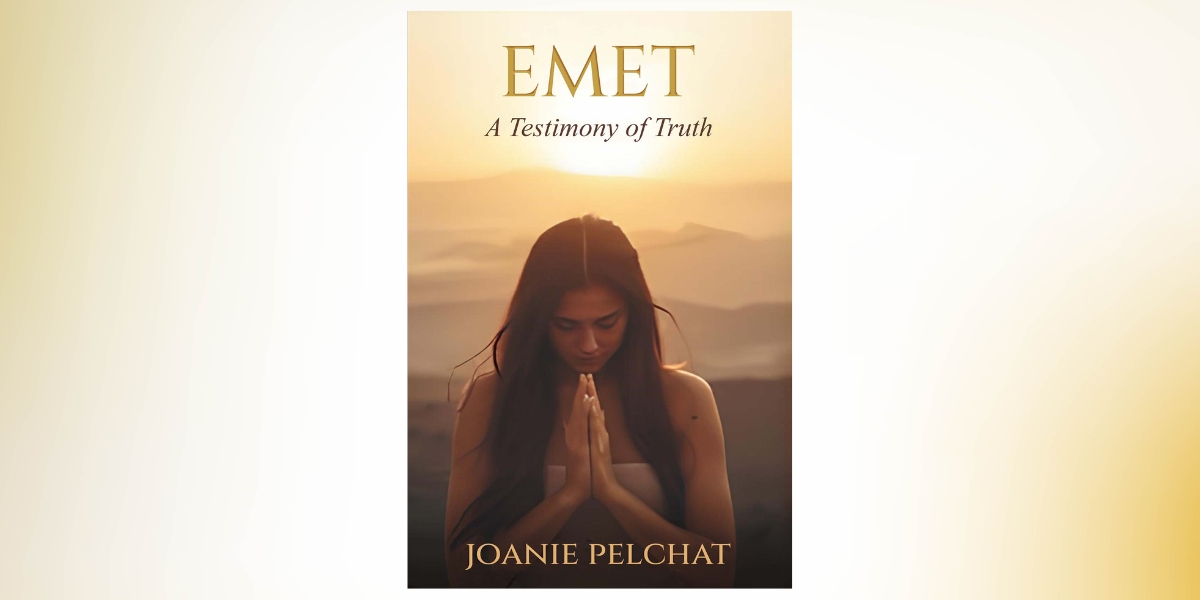
Most people think the truth is just telling facts. Do not lie. Do not cheat. Say what happened. That is part of it, of course. But the Hebrew word for truth, EMET, carries a much deeper meaning. It contains a secret inside its three letters. A secret that changed one woman’s entire life. Her name is Joanie Pelchat. She wrote a memoir called EMET: A Testimony of Truth. In that book, she explains how this single word carried her through abuse, loss, a courtroom battle, and a flood that destroyed her home. Understanding EMET might change the way you think about truth.
The Hebrew alphabet has twenty-two letters. Every letter has a shape, a sound, and a hidden meaning. The word EMET uses three specific letters. Aleph, which is the first letter. Mem, which is the middle letter. And Tav, which is the last letter. Think about that for a moment. Truth contains the beginning, the middle, and the end. Nothing exists outside of it. When you speak the truth, you speak something that touches everything. When you build your life on truth, you build on something complete. Joanie Pelchat discovered this as a young child. She said yes to her Creator at five years old. That, yes, did not protect her from pain. But it anchored her to something that would not break.
Aleph and the Silence Before Truth
Let us look at the first letter. Aleph. The letter is silent. It makes no sound of its own. In ancient Hebrew, Aleph looked like the head of an ox. It meant strength, leadership, and the first of something. But the silence of Aleph is the most beautiful part. Before God spoke the universe into existence, there was silence. Before any word came out, there was breath. Aleph represents that hidden breath. That quiet presence that existed before anything else. Joanie writes about her grandmother holding her feet the day she was born. Her grandmother had cold feet. She was leaving this world. Joanie arrived with warm feet. Her grandmother did not know what this child would carry. But something in that silent moment mattered. That was Aleph. The hidden God was present before the story even started. In her book, Joanie returns to this image again and again. The quiet faithfulness of a Creator who never leaves. Even when you do not see Him. Even when you cannot hear Him.
Mem and the Water That Carries Life
Now consider the second letter. Mem. In Hebrew, Mem sounds like the letter M. But its deeper meaning is water. Mayim. The Hebrew word for water starts with Mem. Water gives life. Water also destroys. You cannot survive without water, but too much water drowns you. The Flood in Genesis was water. The Red Sea parting was water. The baptism of Yahoshua happened in water. Joanie Pelchat experienced water in both ways. She was baptized at thirteen. Fresh water closed over her head. She came up declaring she belonged to her Creator. That was life-giving water. But later, a frozen pipe burst in her home. Water ran for eighteen hours. It destroyed everything she owned. Her house became uninhabitable. That was destructive water. Yet even there, she found the hidden meaning of Mem. Water flows. It does not stay stuck. It moves forward. And so did she. She did not remain in the flood. She found a small country house far from everyone. She rebuilt. Mem taught her that life moves. Pain passes. New seasons arrive like fresh rain.
Tav and the Mark of Belonging
The third letter is Tav. This is the last letter of the Hebrew alphabet. In ancient times, Tav looked like a cross. Two lines crossing each other. An X or a plus sign. Tav represents a mark, a sign, a covenant. In the book of Ezekiel, God told a man to put a Tav mark on the foreheads of the righteous people. That mark protected them from destruction. In Hebrew culture, a servant would sometimes mark his ear with a Tav to show permanent loyalty to a good master. The letter Tav signals ownership. Not in a harsh way. In a belonging way. You belong to someone. Someone has claimed you.
For Joanie, Tav showed up in her daughter, Laura. Laura arrived with two little Jewish curls. Her eyes looked straight at her mother like she already knew everything. Joanie consecrated Laura to YAHUAH under century-old oak trees. She placed the song Oceans over her daughter. The song says, Spirit lead me where my trust is without borders. That was the Tav mark. A sealing. A covenant. A declaration that this child belongs to the Creator. No darkness can touch what carries the Tav. No generational curse survives the Tav. Joanie wrote her entire memoir to show this truth. The book traces the Tav mark from her grandmother’s dying hands to Laura’s living breath.
What EMET Means for the Reader Today
You might wonder why this matters for your life. Joanie Pelchat would tell you that you carry EMET inside you, too. You do not need to speak Hebrew. You do not need to be a scholar. You only need to recognize that truth is not a collection of correct facts. Truth is a person. Truth is a seal. Truth has a shape. Aleph, the hidden presence who knew you before you were born. Mem, the flowing water of life that carries you through every flood. Tav, the covenant mark that says you belong to someone who will never leave you.
Joanie walked through a childhood of abuse. She lost her brother Israel to a motocross accident. She stood alone in a police station at twenty years old to testify against her own uncle. The family called her crazy. Four years of silence followed. Then a conviction. Then a daughter. Then a flood. Then a small house. Then a book was written in three days. She did not survive because she was strong. She survived because EMET held her. The Aleph breathed over her when no one else spoke. The Mem washed her clean in baptism and again in tears. The Tav marked her as untouchable to the enemy.
Joanie Pelchat ends her memoir with a vision. A garden. Cherry trees lining a long path. Horses eating grass in a field. Her daughter Laura is running and laughing. Sheep following her. A suite for her mother. A suite for her father. Mountains and calm waters. That garden is EMET. It is the truth of what God promised from the beginning. A home. A safe place. A future. You may not see your garden yet. You may be standing in the flood or sitting in the silence. But the letters are already at work. Aleph. Mem. Tav. The beginning, the middle, and the end. Your story is not over. Truth has not abandoned you.
For readers who have carried something heavy, who have forgiven people who never apologized, or who wonder whether the Creator still sees them in their hidden places, EMET: A Testimony of Truth by Joanie Pelchat offers a window into one woman’s path through abuse, loss, faith, and renewal. The book is available at emetbook.com and through major online retailers.
Disclaimer: This article is for informational and editorial purposes only. It reflects the themes, personal experiences, and faith-based perspectives shared in Joanie Pelchat’s memoir, EMET: A Testimony of Truth. References to faith, healing, trauma, and personal renewal are based on the author’s own story and should not be interpreted as professional, medical, legal, or therapeutic advice. Readers facing abuse, trauma, or mental health concerns should seek support from qualified professionals or trusted local resources.