Guide to Claim Car Accident Compensation

By: Maria Williams

Sometimes, the unexpected happens. You could be driving back home from work or just enjoying your evening stroll when you get into a car accident. This can be a stressful and often overwhelming experience, especially when you realize you might need to claim compensation.  

Luckily, this article will walk you through the steps involved in the compensation process. Read on to learn what to do and when to do it!  

Consult With A Legal Professional   

While it’s not always a necessity, consulting with a professional personal injury attorney in your state can be beneficial. For instance, if you want to seek financial compensation for a car accident in Utah, do your research to find the finest  injury lawyer in Utah. This is even more crucial for complex car accident cases or those involving severe car accident injuries.

An experienced car accident lawyer can:   

  • Evaluate your car accident claim  
  • Advise you on your rights  
  • Handle negotiations with insurance companies  
  • Represent you in court if necessary  

Many lawyers offer initial consultations, allowing you to understand your options before committing. Take this opportunity to bring up any concerns about the case, the process, or even potential costs.  

Seek Immediate Medical Attention   

After a car crash, prioritize your health above all else. Don’t ignore that slight headache or stiff neck – some injuries take time to show up. Head to the doctor right away, even if you feel fine. A medical check-up serves two crucial purposes: it ensures you’re genuinely okay and creates an official record of any injuries.  

This documentation is vital for your claim. Your doctor’s notes will detail your condition immediately after the accident, linking your injuries to the crash. They’ll also outline any necessary treatments, which helps calculate your medical expenses.  

Remember, your well-being is paramount. Don’t let concerns about insurance or fault delay your medical care. A prompt visit to the doctor protects both your health and your potential compensation claim.  

Document The Accident Scene   

Gathering evidence is crucial after an accident. Grab your phone and become a detective after a crash. Snap clear photos of the damage to all vehicles involved. Did a busted taillight cause the accident? Get a close-up. Is there a skid mark on the road? Capture it.  

Remember the big picture. Take shots of street signs, traffic lights, and weather conditions. Note down the time and date. Then, chat with any witnesses. Make sure you get their contact information, as their account could be helpful later.   

The evidence you collect becomes your shield when filing a claim. It tells your side of the story when memories fade, and details blur.  

Guide to Claim Car Accident Compensation (2)

Photo: Unsplash.com

Report The Accident  

Failing to report the accident immediately is one of the mistakes to avoid after a non-fault accident. Reporting the accident isn’t just brilliant; it’s often the law, especially if someone’s nursing an injury. When the police show up, tell them what you saw and heard.  

And before they drive off, ask how to get a copy of their report. This document is gold for your car insurance claim. It’s like having an unbiased witness in your corner when you’re wrestling with insurance companies.  

Notify Your Insurance Company   

Let your insurance company know about the accident right away. Many policies require you to report accidents within a specific timeframe, so don’t delay.   

Provide basic details like when and where the accident happened, but avoid admitting fault or giving a detailed account of what happened until you speak with a personal injury attorney. This helps protect your rights and ensures you follow the correct compensation process.   

For example, say you were rear-ended at a traffic light. Inform your insurer about the location and time, but save the specifics for later discussions. This approach keeps things clear and straightforward.  

Calculate Your Damages   

Calculate your damages by assessing all your losses. Start with current and future medical bills, including doctor visits and treatments. Include lost income if you couldn’t work, and estimate potential future earnings you might miss.  

Remember to account for property damage, such as repairing your car. And don’t forget about non-economic damages, such as pain and suffering.  

For instance, if your injury leads to chronic pain, this impacts your quality of life. Consulting medical and financial experts can help you project these long-term costs, ensuring you cover all your bases. This thorough approach enables you to seek fair compensation.   

Negotiate The Settlement   

When you receive an initial car accident settlement offer from the insurance company, it’s likely to be lower than what you deserve. Prepare to counter their offer confidently.  

Use the evidence you collected to back up your auto accident claim and clearly highlight all the damages you suffered. Stand firm and insist on fair compensation.   

Remember, this is about getting what’s suitable for you after an accident. Present your case confidently to ensure you receive the total compensation you’re entitled to.  

File A Lawsuit If Necessary  

If negotiations or mediation fail to yield a fair settlement, consider filing a car accident lawsuit. Remember, each state sets a statute of limitations; a firm deadline to file a car accident claim after an accident. It’s essential to know this deadline because missing it could forfeit your opportunity to take your personal injury claim to court.  

Prompt action is crucial to preserve your right to seek compensation. Stay informed about these deadlines to protect your interests and ensure you get maximum car accident compensation.  

Summary  

Navigating the process of claiming compensation after a car accident can be complex but is crucial for covering your damage and medical costs. From the immediate aftermath to filing a lawsuit if settlement negotiations fail, each step requires careful attention and prompt action. Remember to consult with legal professionals if necessary and be prepared to pursue legal action if talks falter. By following this guide, you can effectively manage your claim and advocate for your rightful compensation.  

Disclaimer: ”This content is for informational purposes only and is not intended as financial advice, nor does it replace professional  financial advice, investment advice, or any other type of advice. You should seek the advice of a qualified financial advisor or other professional before making any financial decisions.”


Published by: Khy Talara

ArtRevolution Exhibition Promises Cultural Delight Across North America

By: Samantha Thacker

New York City, NY — In a bid to foster global harmony through art, ArtRevolution, spearheaded by Smruti Shirsat and Yashodhan Bhorde, has successfully completed a transformative exhibition at Dacia Gallery on June 17th, 2024 and launched it’s 5th Edition of The Global Art Confluence International Art Magazine. This ambitious showcase will subsequently travel to Boston and Montreal, Canada, promising a cultural odyssey like no other.

Featuring a diverse array of artists predominantly from India, the exhibition aimed to highlight the profound artistic talents emerging from various regions. Artists such as Deepika Trivedi, Dr. Arushi Rana and Manish Jaiswal from Rajasthan and Diana Shatish and Ajit Ooviyan from Chennai are among the many luminaries whose works were showcased.

ArtRevolution Exhibition Promises Cultural Delight_2

Photo Courtesy: United Press / Dacia Gallery

The event not only celebrated visual artistry but also included an art auction in Boston, adding a dynamic element to the cultural exchange. This initiative marks a significant expansion for ArtRevolution, originally founded in New York City, now poised to enchant audiences across the United States and Canada.

“We believe that art has the power to transcend borders and foster understanding.” remarked Smruti Shirsat, co-founder of ArtRevolution. “By bringing together artists from diverse backgrounds, we hope to inspire dialogue and promote world peace through creativity.”

The exhibition featured sculptural works as well, with talents like Parshuram Chavan from Mumbai and Balkrishna Kamble from Latur contributing their craftsmanship. The inclusion of sculptures added a tactile dimension to the artistic journey that ArtRevolution invites its viewers to embark upon.

ArtRevolution’s expansion into Canada underscores its commitment to broadening cultural horizons and nurturing global artistic connections. With each city on the itinerary, from the bustling streets of New York City to the vibrant cultural hubs of Boston and Montreal, the exhibition promises to leave an indelible mark on North America’s artistic landscape.

The transformative power of art to foster peace and understanding will undoubtedly be on full display as ArtRevolution unfolded its journey, inviting viewers to engage with creativity from across the globe.

Participating artists hailed from various regions, showcasing their unique talents and cultural heritage. From Rajasthan, artists included Deepika Trivedi, Dr. Arushi Rana, and Manish Jaiswal, curated by Varsha Saini. Chennai brought forth artists like Diana Shatish, Ajit Ooviyan, Dev Raghuram, Yaghnna. JY, Sai Akhil Anand, Tarika Bragadeesh, Tarika Ram, Miraya Agarwal, Akshaya Sundararajan, Sashangh Jayachandran, and Nagarajan. Representing New Delhi were Ram Onkar Kanojia and Manohar Agrahari, while Yash Kochhar represented Lucknow. Kerala’s Prashant Aravinthakshan also contributed to the exhibition.

Mumbai showcased the works of Poonam Khanvilkar, Prasad Bhandari, Suresh Sathe, Ashvini Bachhav, Sayali Waghmare, Lakshman Chavan, Yashpal Kamble, Nawab Jahan, Urmila Durgude, Jenisha Sachdev, and Pravrusha Thakkar. Artists from Solapur included Nitin Khilare, while Raj Saini and Somi Nema represented Bhopal.

In the realm of sculpture, Mumbai’s Parshuram Chavan and Kailash Gaya Shatrugunha Khanjode, Latur’s Balkrishna Kamble, Shri Kshetra Mahurgad’s Ranjeet Varma, Vardha’s Gajanan Pandurang Rudrakar, Rajeev Nimje, and Aarti Kishor Korde, Pune’s Malabika Mukherjee and Anvay Sanjay Hande, Nepal’s Bihani Khadka, and Karachi, Pakistan’s Sana Nezam displayed their exceptional craftsmanship. Photography from the Kosovo mission was exhibited by IPS, Iron Man, and UN medal recipient Ravinder Singal from Nagpur. Goa’s Smruti Shirsat also showcased her work.

Special thanks were extended to Lee Vasu, Director of the Dacia Gallery, for providing this unique opportunity, Varun Singh Goud, owner of the Red Onion restaurant in New York City, for his unparalleled support, and Seema Shirsat for her sponsorship.

Published by: Martin De Juan

Reflecting on David Vetter: Ethical Lessons from the Bubble Boy

By: Maria Williams

Around 50 years ago, the world was gripped by the story of David Vetter, a young boy from Texas nicknamed the “Bubble Boy”. Born in 1971, he had to live inside a sterile plastic bubble due to severe combined immunodeficiency (SCID). This meant that David’s immune system was so weak that he was incredibly susceptible to all kinds of pathogens. David’s case received national and international media attention. In 1984, David died at the age of 12 from complications arising from an experimental bone marrow transplant he received from his sister in a bid to cure his disease.

Rev. Dr. Raymond J. Lawrence, who was director of chaplains at the hospital David was confined in for his life, believes that David’s tragically short life was one of the inhumane medical experiments in American history. It was partly inadvertent but also partly

a product of unexamined medical hubris. 

“My place in the saga was peripheral – I was the hospital’s Director of Chaplains and met with the patient-victim in that capacity. But he was Roman Catholic and thus cared for mainly by Catholic clergy,” Lawrence says. “However, I was a close friend and business partner with David’s hospital psychiatrist, Mary Ada Murphy, who, over the course of a decade, became his hospital mother and probably the one person David loved in his short life. Mary often stayed with him until he slept, lying on a mattress next to the sterile chamber’s plastic walls.”

Following David’s death, Murphy wrote a book titled Bursting the Bubble: The Tortured Life and Untimely Death of David Vetter, for which Lawrence wrote the introduction. Lawrence also opened the only formal ethics consultation regarding David’s plight. One of his major points of critique was that the team that engineered the project was headed by a scientist rather than a medical doctor, setting the stage for what he believes was the “horrific abuse” of David. 

According to Lawrence, who is the co-founder of the College of Pastoral Supervision and Psychotherapy (CPSP), the “experiment” began even before David was born. David’s parents’ first son, also named David, had died of SCID in infancy, and they were advised by doctors that any future male children they would conceive would have a 50% chance of having SCID. Girls are not affected by this disease, as shown by David’s sister having a normal immune system. 

“The mother gave herself into the care of the medical team and became pregnant about a

month after burying her first son,” Lawrence says. “When the medical team found that the fetus was male, extreme measures were taken for a sterile delivery to prevent any possibility of exposure to pathogens. After the newborn was found to have SCID, he had to remain in his bubble. David remained trapped in his sterile chamber prison as he developed from an infant to a pre-teen, waiting for over a decade for a cure. He had considerable support and attention from staff, family, and friends of the family, but he lived in a different world – a very small one – than the rest of humanity. As the years went by, David became increasingly vexed emotionally and psychologically. He was very bright, and, from his almost exclusive association with adults, he matured rapidly. He clearly knew his grim fate, at least by the time he was about eight, probably earlier.”

When David was about eleven, he shared with Murphy his plan to eventually break out of his sterile chamber and travel the world, seeing and experiencing it as much as possible. He was aware that he would have only around six months to live and that he would soon die due to his lack of a functioning immune system. 

With David fast approaching puberty, his physicians were increasingly concerned about what to do with a post-pubertal male patient locked in a sterile chamber. Fearing that David would decide to break out before a cure was found, they decided to opt for a long shot, and implant in David some of his sister’s bone marrow in hopes that it would build an immune system. However, the attempt backfired, as his sister carried the Epstein-Barr virus, which was undetectable before the transplant. David soon became very ill and he was removed from his bubble and placed in a regular hospital room. After much suffering, David died six months after the transplant.

“Since David’s death, there has been a scarcity of serious public discussion of the case, nor were any ethical principles drawn from it, as far as we know,” Lawrence says. “The physicians involved were mostly silent. The Journal of the American Medical Association (JAMA) courageously published a critical piece I had authored, along with a rejoinder written by a physician not associated with the case. David’s family also weighed in, opposing my assessment. National newspapers reported the case, but it was mostly a one-day story. Soon, the case was history, not further discussed except by Hollywood in a satirical movie. Sadly, the principal victim was forgotten.”

According to Lawrence, the case of David the Bubble Boy remains a tragic and poignant human failure, with plenty of blame to go around. The important lesson from this case should be the continuous need to closely examine the motivations and plans of those who are proposing extraordinary actions that decisively affect the innocent objects of medical experimentation. He believes that had David been allowed to exit the bubble, he would’ve died regardless, but he would have his agency intact and would’ve suffered less than what happened to him after the transplant.

“David was failed by the system, a system that, until today, restricts the freedom of people to choose how they die,” Lawrence concludes. 

Published by: Holy Minoza

Essential Tips for Keeping Your Vehicle in Great Condition

Owning a vehicle is a significant investment, and it’s one that can bring immense convenience and freedom. However, a vehicle is more than just a means of transportation; it’s a machine that requires regular care and maintenance to ensure it remains in great condition.

Just like how a well-tended garden yields beautiful flowers, a well-maintained vehicle can provide reliable service and an enjoyable driving experience for many years.

Maintaining your vehicle in great condition is not just about preserving its appearance, but it’s also about ensuring its performance, safety, and longevity. It can enhance your vehicle’s resale value and reduce the likelihood of unexpected breakdowns and costly repairs.

This article will provide essential tips to help you keep your vehicle running smoothly and looking great. Whether you’re a new car owner or a seasoned driver, let’s explore how to keep your vehicle, including those stylish machines from Dyler, in great condition.

Regular Maintenance Checks

Regular maintenance checks are like doctor visits for your car—they help catch small issues before they become big problems. Make sure to schedule regular inspections for your vehicle, including oil changes, tire rotations, brake checks, and fluid top-ups. Following your manufacturer’s recommended maintenance schedule can prevent costly repairs down the road.

Keep Your Fluids Fresh

Fluids are the lifeblood of your vehicle, so keeping them fresh and topped up is crucial for optimal performance. Check your oil, coolant, transmission fluid, brake fluid, and windshield washer fluid regularly.

If any fluid levels are low or appear dirty, it’s time for a top-up or a flush and refill. Clean fluids help your vehicle run smoothly and can extend its lifespan.

Monitor Tire Health

Your tires are the only contact between your vehicle and the road, so it’s essential to keep them in good condition. Regularly check tire pressure, tread depth, and overall tire condition. 

Underinflated tires can decrease fuel efficiency and compromise safety, while worn-out tires can increase the risk of accidents. Rotate your tires regularly and replace them when necessary to ensure optimal grip and stability.

Practice Gentle Driving Habits

How you drive can have a significant impact on your vehicle’s health and longevity. Avoid aggressive driving behaviors such as hard acceleration, abrupt braking, and speeding. These habits can put unnecessary strain on your engine, transmission, brakes, and suspension system, leading to premature wear and tear.

Instead, practice smooth acceleration and braking, and obey speed limits for a smoother ride and better fuel efficiency.

Protect Your Exterior and Interior

Regularly washing and waxing your vehicle not only keeps it looking shiny and new but also protects the paint from damage caused by dirt, debris, and UV rays. Additionally, invest in quality floor mats and seat covers to protect your interior from spills, stains, and wear.

Taking care of your vehicle’s exterior and interior can help maintain its resale value and make your driving experience more enjoyable.

Pay Attention to Warning Signs

Your vehicle often gives warning signs when something isn’t right, so it’s essential to pay attention and address any issues promptly. Strange noises, unusual vibrations, dashboard warning lights, and changes in performance are all indicators that something may be wrong.

Ignoring these warning signs can lead to more significant problems and costly repairs later on. If you notice anything out of the ordinary, don’t hesitate to take your vehicle to a qualified mechanic for inspection.

Keep It Clean and Organized

A cluttered and dirty vehicle not only looks unsightly but can also affect your driving experience and safety. Take the time to clean and organize your vehicle regularly, both inside and out. Remove clutter, trash, and unnecessary items from the interior, and vacuum carpets and upholstery to keep them free of dirt and debris.

A clean and organized vehicle not only feels more comfortable but also promotes a positive driving environment.

Follow Proper Storage Practices

If you’re not using your vehicle for an extended period, such as during vacations or seasonal changes, it’s essential to follow proper storage practices to keep it in great condition. Store your vehicle in a cool, dry place away from direct sunlight and moisture.

Consider using a car cover to protect it from dust, debris, and potential damage. Additionally, start your vehicle periodically and take it for short drives to prevent battery drain and keep the engine running smoothly.

Invest in Quality Parts and Accessories

When it comes to maintaining your vehicle, quality matters. Invest in genuine Original Equipment Manufacture (OEM) parts and accessories for repairs and upgrades. While aftermarket parts may be cheaper, they may not offer the same level of performance, durability, and compatibility as OEM parts.

Similarly, choose accessories that are designed specifically for your vehicle to ensure proper fit and functionality.

Stay Informed and Educated

Finally, staying informed and educated about your vehicle is key to keeping it in great condition. Familiarize yourself with your vehicle’s owner’s manual for maintenance guidelines, recommended service intervals, and troubleshooting tips.

Additionally, stay updated on automotive news, trends, and advancements in technology that may affect your vehicle’s maintenance needs. This will better equip you to take care of your vehicle and make informed decisions about its upkeep.

Conclusion

Keeping your vehicle in great condition requires a combination of regular maintenance, mindful driving habits, and proper care. By following these essential tips, you can help ensure that your vehicle remains safe, reliable, and enjoyable to drive for years to come. 

A little effort now can save you time, money, and headaches down the road. So, take care of your vehicle, and it will take care of you on every journey.

Published by: Martin De Juan

Diabetic Foot Complications: A Statistical Overview

A recent analysis by Viasox, known for its high-quality diabetic socks, has revealed concerning statistics about the prevalence of diabetes across the United States. This study, drawing from National Center for Biotechnology Information (NCBI) data, highlights the significant impact of diabetes on feet. Proper understanding and management of these issues are critical to preventing severe outcomes such as amputation.

Diabetic Foot Complications A Statistical Overview (2)

Photo Courtesy: Viasox

Prevalence of Diabetic Foot Complications

Diabetic foot complications are alarmingly common among individuals with diabetes. According to the NCBI study, approximately 19-34% of diabetic patients will develop a foot ulcer during their lifetime. This statistic highlights the high prevalence and the need for vigilant foot care among people with diabetes.

Risk Factors

Several factors contribute to the development of diabetic foot ulcers, including:

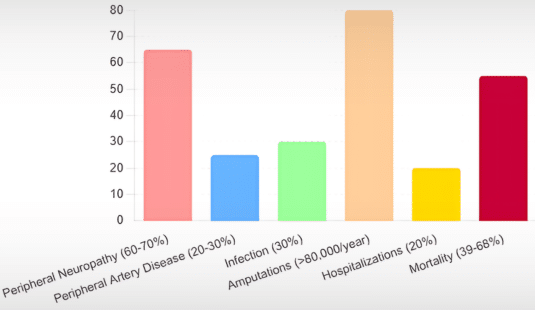
  1. Peripheral Neuropathy: Affecting around 60-70% of diabetic patients, peripheral neuropathy results in loss of sensation in the feet, making it difficult for individuals to notice injuries or pressure sores.
  2. Peripheral Artery Disease (PAD): About 20-30% of diabetic patients suffer from PAD, which reduces blood flow to the extremities, impairing wound healing and increasing the risk of ulcers.
  3. Infection: Due to a compromised immune system, diabetic patients are more susceptible to infections. Infections can quickly exacerbate foot ulcers, leading to severe complications.

Consequences of Diabetic Foot Ulcers

The impact of diabetic foot ulcers is profound, both in terms of health and economic burden:

  • Amputations: Diabetic foot ulcers are the leading cause of non-traumatic lower extremity amputations. The NCBI study reports that every 30 seconds, a lower limb is lost somewhere in the world due to diabetes. In the United States alone, over 80,000 amputations are performed annually on diabetic patients.
  • Hospitalizations: Foot complications account for 20% of all diabetes-related hospital admissions. Hospital stays are often prolonged, averaging 10-15 days, leading to significant healthcare costs.
  • Mortality: The five-year mortality rate following a diabetes-related amputation ranges from 39-68%, a rate comparable to many cancers, highlighting the severity of this complication.

Prevention and Management

Preventive measures are crucial in reducing the incidence and severity of diabetic foot complications:

  1. Regular Foot Examinations: Diabetic patients should have their feet examined by a healthcare professional at least once a year. High-risk patients may require more frequent checks.
  2. Proper Footwear: Wearing well-fitted shoes and diabetic socks can prevent pressure sores and injuries. Viasox highlights the importance of stretchy, comfortable socks designed to improve circulation and reduce the risk of foot complications.
  3. Blood Sugar Control: Maintaining optimal blood sugar levels can significantly reduce the risk of neuropathy and PAD, thus preventing foot ulcers.
  4. Patient Education: Educating patients on proper foot care, such as daily inspections, moisturizing to prevent cracks, and avoiding walking barefoot, can empower them to take proactive steps in foot health.

Conclusion

Diabetic foot complications are a significant concern that requires a multifaceted approach involving regular medical check-ups, proper footwear, blood sugar management, and patient education. By understanding the statistics and implementing preventive measures, the incidence and severity of these complications can be substantially reduced, improving the quality of life for diabetic patients.

Disclaimer: The information provided in this article is for general informational purposes only and is not intended as medical advice. Readers should consult a qualified healthcare professional before making any health-related decisions. The contents of this article should not be used as a substitute for professional medical advice, diagnosis, or treatment.


Published by: Khy Talara

Business Developer Renaud Adorno on Teaching Macroeconomic Principles

By: Steven James

In a world where information is readily available but yet people feel starved of knowledge, the search for genuine education, especially in fields as complex as macroeconomics, demands not only expertise, but unbiased discourse.   Renaud Adorno, a seasoned business developer with an extensive background in the realm of business strategy and economic theory, has embarked on a mission to bridge this gap. With his innovative podcast, Adorno is pioneering a new frontier in macroeconomic education, aiming to serve the underserved Brazilian populace with insights that are both comprehensive and impartial.

Renaud Adorno’s journey is not one born out of mere ambition but from a deep-rooted desire to give back to his community. Brazil, a country of rich cultural heritage and untapped potential, remains at a crossroads where access to unprejudiced economic education could significantly alter its trajectory towards sustainable development. Understanding the criticality of this need, Adorno has dedicated himself to creating content that transcends the ordinary by focusing on what matters rather than what’s popular.

Adorno’s podcast delves into the intricacies of global monetary systems with an emphasis on explaining these concepts without bias or preference. This endeavor is no small feat given the abundance of skewed narratives in today’s digital age where information is abundant but often misleading. By presenting facts from multiple perspectives, what he refers to as showing “both sides of the coin,” Adorno enables his listeners to form their own well-informed conclusions.

One of the core challenges Renaud faces in this educational crusade relates to entrepreneurship as a whole. He observes that many individuals regard entrepreneurship as an escape route from traditional employment paths without genuinely contributing value to the marketplace. This misinterpretation not only hinders personal growth but also stifles economic innovation and progress.

Moreover, another significant hurdle is overcoming inherent biases when discussing macroeconomic principles. It’s common for individuals to inject personal opinions into factual discussions, which can cloud judgment and lead to misconceptions. Adorno’s approach focuses on stripping away these biases, offering pure facts backed by rigorous research and analysis.

“My goal is to provide unbiased information, showing both sides of the coin so listeners can form their own conclusions,” states Adorno. “In today’s information-saturated world, it’s challenging to discern what’s truly going on. My content aims to cut through the noise and provide genuine value.” His commitment goes beyond just educating others; it’s about personal growth through continuous learning and improving oneself by engaging deeply with content every day.

This ethos reflects in his podcast, where each episode is crafted with meticulous care to ensure authenticity and relevance. Through this platform, Adorno reaches out not just to Brazilians but also globally minded individuals keen on understanding macroeconomic dynamics without prejudice.

Renaud’s methodology underscores active involvement in one’s field as crucial for imparting expert advice. With years of experience under his belt working across various business development roles, he brings practical insights that resonate well with both novices and seasoned professionals seeking deeper understanding or fresh perspectives on economic issues.

What sets Renaud apart is his unwavering commitment towards fostering an educated society capable of critical thinking and informed decision-making, a vision that aligns closely with Brazil’s aspirations for growth and prosperity amidst evolving global challenges.

As Renaud continues his journey, his podcasts serve as beacons for those navigating through the complexities of macroeconomics seeking clarity and truth. His efforts epitomize how passion fused with purpose can transform educational landscapes by empowering individuals with knowledge that matters.

Renaud Adorno’s initiative exemplifies innovation in education, melding expertise with empathy towards unlocking potential across communities through accessible macroeconomic learning resources designed for impact.

Disclaimer: This content is for informational purposes only and is not intended as financial advice, nor does it replace professional financial advice, investment advice, or any other type of advice. You should seek the advice of a qualified financial advisor or other professional before making any financial decisions.


Published by: Khy Talara

High School Recovery: From Dependency to Independence

Adolescence is a time of significant changes and challenges, particularly for high school students grappling with substance use disorders. The journey from dependency to independence is often a rugged path, fraught with the need for ample support and guidance. While the hurdles are many, the foundations laid during this transitional stage can set the scene for a successful and sustained recovery. In this article, we will delve into the multifaceted aspects that support high school students on their path to independence and sober living. Keep reading to understand how interventions, tailored support systems, and appropriate educational adaptations play a crucial role in reshaping young lives.

The Role of Support Systems in Sustaining Student Recovery

Support systems play a critical role in student recovery, with family, peers, and school resources each contributing uniquely. Family members who understand the recovery process can provide essential emotional support, reinforcing the student’s commitment to sobriety. Parent involvement in school-based programs bridges the home-school gap, while peer support groups offer social reinforcement, helping students feel less isolated. These groups allow individuals to share experiences and advice, strengthening resolve and aiding in relapse prevention.

The involvement of trained counselors and recovery specialists in schools is also crucial. These professionals provide ongoing emotional and academic guidance, addressing not only substance use but also the underlying stressors contributing to dependency. Schools must foster an inclusive environment where recovery is openly discussed, and resources are readily available. For example, Alpha Behavioral Health addiction services offer specialized support for adolescents, recognizing their unique needs and providing youth-focused recovery strategies.

Understanding the Journey from Dependency to Independence in High School Recovery

Recovery in high school requires both physical and psychological changes, often exacerbated by peer stigmatization. A safe, supportive environment fosters open dialogue and mutual understanding, which are crucial for students’ emotional well-being. Navigating high school with a substance use disorder demands resilience and a gradual approach to achieving independence.

Substance misuse hinders academic and social progress, making it vital for recovery programs to align with educational goals. Comprehensive support systems, including counselors and mentors, are essential for addressing the evolving needs of students. Involving students in decision-making processes builds autonomy and equips them with coping mechanisms for future challenges.

Strategies for Empowering Students towards Self-Reliance and Sober Living

Empowering high school students in recovery programs to become self-reliant involves teaching them effective strategies to manage cravings, stress, and peer pressure. Techniques such as mindfulness, meditation, and cognitive-behavioral approaches promote sober living. Building self-esteem through extracurricular activities, volunteer work, or part-time jobs fosters a sense of accomplishment and deters substance use.

Relapse prevention education and practical life skills training are also crucial. Students learn to recognize triggers, prevent relapse, and handle life confidently. Financial literacy, healthy lifestyle choices, and effective communication skills support their journey to independence, ensuring they can lead a substance-free life beyond high school.

Educational Adaptations and Resources to Support Recovering High Schoolers

To support high school students in recovery from substance abuse, educational adaptations such as alternative schooling, flexible scheduling, and credit recovery programs are essential. These modifications enable students to prioritize their recovery without compromising their academic progress. Therapeutic educational programs with tailored curricula and teaching methods, including experiential learning and individualized attention, can significantly enhance student engagement and success.

Technology plays a crucial role in aiding students’ recovery. Online resources, virtual counseling, and recovery apps provide discreet, accessible support outside the traditional classroom. When considering organizations like the National Society of High School Scholars (NSHSS), it’s vital for students and parents to thoroughly research their legitimacy to ensure they offer genuine value and support.

Measuring Progress and Celebrating Milestones in High School Recovery Journeys

Tracking progress and celebrating achievements are key to maintaining motivation for students in recovery. By setting clear, attainable goals and recognizing each milestone, students are reminded of their growth and resilience. Both formal and informal assessments from teachers, counselors, and recovery coaches provide consistent feedback, offering tangible evidence of improvement and reinforcing commitment to sobriety.

Simple acknowledgments for achievements, such as maintaining sobriety or improving grades, can significantly boost a student’s spirit. These celebrations highlight the collaboration between students, families, and school staff. Offering leadership roles to students in advanced recovery stages can inspire others and strengthen the recovery community within the school.

Overall, the recovery of high school students from substance dependency to independence requires a comprehensive, multifaceted approach. By addressing the needs of the whole person, providing robust support systems, and equipping students with the tools for self-reliance, we can pave the way for healthier, more fulfilling futures. Through collaborative efforts, educational adaptations, and a culture of encouragement, recovering students can reclaim their trajectories and transition into adulthood with optimism and resilience.

Published by: Martin De Juan

Sarah Dickens: The Inspirational Journey of a Renowned Author and Editor

By: Joshua Finley

Sarah Dickens, a writer and former editor based in Atlanta, Georgia, has made a significant impact on the literary world with her profound passion for storytelling and exceptional eye for detail. Her journey, characterized by a deep-rooted faith in Christ and a resilient spirit, showcases her ability to overcome challenges and embrace triumphs. These experiences are vividly captured in her autobiographical book, “A Victory Song: Beneath the Veil,” which has become an Amazon acclaimed in the “Religious Biographies for Young Adults” category.

From a young age, Dickens exhibited a natural talent for writing and a love for literature. Her meticulous proofreading and editing skills have played a crucial role in shaping and refining numerous written works. Throughout her career, she has been an integral part of various organizations, including Atlanta Christian Voice, LLC, where she served as an editor. Her contributions ensured the delivery of high-quality content and demonstrated her dedication to the craft of writing.

In October 2017, Dickens joined Atlanta Christian Voice, LLC, as an editor. Within this role, she was responsible for proofreading and editing stories, actively contributing to the writing process, and providing valuable guidance and support to writers within the Atlanta Christian Voice division of One Christian Voice, LLC. Her role at Atlanta Christian Voice, LLC, allowed her to hone her skills further and develop a keen understanding of the intricacies involved in producing compelling content.

Photo Courtesy: Sarah Dickens

Before her tenure at Atlanta Christian Voice, LLC, Dickens worked as a writer for several organizations, including the American Public Transportation Association, The Union Recorder, and The Colonnade. These experiences enriched her writing prowess and exposed her to diverse perspectives and storytelling techniques. Each role added layers to her understanding of the written word and its power to inspire, inform, and connect people.

In 2022, Dickens decided to leave her position at Atlanta Christian Voice, LLC, to focus on publishing her autobiographical book, “A Victory Song: Beneath the Veil.” This work reflects her journey, highlighting her courage, unwavering faith, and the transformative power of her Christian beliefs in the face of a bipolar disorder diagnosis. Through her narrative, Dickens explores challenges such as complex mother-daughter dynamics, past relationships, and fluctuating friendships. Her story is an inspiring testimony of resilience, faith, and unwavering devotion to the Lord.

“A Victory Song: Beneath the Veil” delves into the depths of Dickens’s life, offering readers an intimate glimpse into her struggles and triumphs. The book has received acclaim for its raw honesty and ability to resonate with readers on a profound level. It stands as a beacon of hope for those facing similar challenges, demonstrating that faith and perseverance can overcome even the most daunting obstacles.

Photo Courtesy: Sarah Dickens

The success of her book has earned Dickens several accolades. She was honored with the Writer’s Official Book Honour Award in 2022 and won the Book Promotion Video Contest for the Week of January 11th, 2023, in the eBook design category. Additionally, the paperback version of her book, “A Victory Song: Beneath the Veil,” became renowned in the “Religious Biographies for Young Adults” category on Amazon India. These achievements underscore her talent and the impact of her writing on a global audience.

Beyond her professional accomplishments, Dickens is deeply involved in her community and dedicated to her faith. Her interests include collecting coffee mugs, taking nature walks, reading the Bible, offering prayers, exploring books by Christian writers, listening to Christian music, and maintaining a personal journal. These activities reflect her commitment to nurturing her spiritual well-being and staying connected to her faith.

Dickens’s journey is one of perseverance and faith. Despite facing the challenges of a bipolar disorder diagnosis, she has remained steadfast in her belief that her experiences can inspire and uplift others. Her book serves as a testament to the power of storytelling in healing and transformation. It is a reminder that even in the face of adversity, there is hope and strength to be found in faith.

Sarah Dickens’s story is a powerful narrative of overcoming adversity and finding strength through faith. Her journey, marked by both personal and professional milestones, serves as an inspiration to many. Through her writing, she continues to touch the lives of readers, offering them a sense of hope and resilience. Her dedication to her craft and her unwavering faith make her a notable figure in the literary world and a source of inspiration for all who encounter her work.

Sarah Dickens’s contributions to literature and her unwavering faith have made her a prominent figure in the literary community. Her journey, marked by challenges and triumphs, serves as a testament to the power of faith and resilience. Through her book, “A Victory Song: Beneath the Veil,” and her various editorial roles, she has significantly impacted the literary world. Her story inspires many, offering a beacon of hope and a reminder that with faith, perseverance, and a resilient spirit, one can overcome any obstacle. Sarah Dickens continues to inspire and uplift others through her writing and unwavering dedication to her faith and community.

Published by: Nelly Chavez

Nashe Delo’s Rise in International MMA Scene

Nashe Delo Fighting League has reached a whole new level over the past season and stands as a strong competitor to the UFC.

Nashe Delo League is actively gaining momentum and developing. The promotion constantly surprises the audience with new, colorful projects involving well-known and titled fighters. This is not just about the all-Russian level; “Nashe Delo” has also entered the international arena, and it intends to become a major competitor to the UFC soon.

Currently, among the ranks of “Nashe Delo,” there are fighters who have previously competed in the UFC. More recently, in early March, a bout between Eduard Vartanyan and Damir Ismagulov took place as a part of the stadium tournament “Nashe Delo 82.” Vartanyan has been a renowned lightweight fighter in recent years in Russian mixed martial arts (MMA), and in June 2023, the fighter decided to test his skills in America. However, negotiations with the UFC have paused. Just a few years ago, Damir Ismagulov was considered a strong lightweight fighter in the top 15 of the UFC. The athlete had had good results in the American promotion for a long time, but he left the league after deciding not to continue cooperation. As a result, both fighters signed a contract for the “Nashe Delo” promotion. At the end of January, the league announced a fight between two athletes under the K-1 rules. Their loud names quickly caught the attention of fans. 

Nashe Delo's Rise in International MMA Scene

Photo courtesy: The “Nashe Delo”

The fight ended in a split decision, with Edward Vartanyan winning. He sent his opponent down to the ground during the fight, but Ismagulov disagreed with the judges’ decision and refused to accept it. He then challenged Vartanyan to a rematch under MMA rules. These intense fights cause a lot of excitement and attract fans of martial arts from all over the world.

On May 25th, the Nashe Delo League hosted one of the significant international combat sports events in Sochi – the Nashe Delo 83 Tournament. The event featured leading mixed martial artists, including former UFC fighters and veterans of the organization. The headlining event was a fight between Russian martial arts superstar Alexander Grozin and Alex Oliveira, a veteran of the UFC. The match ended with a heavy blow from Alexander directly to Oliveira’s liver, after which Oliveira announced that he was unable to continue the fight. This was a great finish for an athlete of the “Nashe Delo” league.

Nashe Delo's Rise in International MMA Scene

Photo courtesy: The “Nashe Delo”

Alex Oliveira was among the top 15 welterweight fighters in the UFC. Following such an event, the audience became convinced that the “Nashe Delo” tournaments are not inferior to international tournaments.

A new tournament has already been scheduled for June 12th in St. Petersburg, promising to be no less spectacular or intriguing. The main event of the summer will feature a heavyweight championship fight, where the champion of the Nashe Delo League, Viktor Nemkov (who has previously competed in the M-1 Challenge and PFL tournaments), will defend his belt against former UFC fighter Shamil Gamzatov. The fight will be part of a larger event celebrating Russia Day and will bring together athletes from 20 different countries. These events are sure to rival any foreign fighting events in terms of quality.

Nashe Delo's Rise in International MMA Scene

Photo courtesy: The “Nashe Delo”

The fight league “Nashe Delo” has been operating for only four years. During this period, the promotion has managed to establish a leading position in the market. The project, which was created to promote fighters in the media, is already able to compete not only against Russian leagues but also against foreign representatives. Nashe Delo intends to become a major competitor for the Ultimate Fighting Championship (UFC), the largest international organization at present.

Published by: Holy Minoza

Hunter Gaylor: Mastering Cross-Border Tech Innovation

In the rapidly evolving landscape of global technology and business, few names are as synonymous with innovation and strategic foresight as Hunter Gaylor. As a Senior M&A Advisor and Capital Markets Consultant at WallStreet Capital Partners, Gaylor has carved out a niche for himself as a luminary in navigating the intricate world of cross-border challenges. His unparalleled expertise in sectors ranging from energy and cybersecurity to aviation and banking has not only set him apart as a trusted authority but has also underscored his role in driving meaningful change and fostering international collaboration.

A Visionary at the Helm

Hunter Gaylor’s journey is a testament to his unwavering commitment to excellence and his innate ability to anticipate and adapt to the ever-changing dynamics of the global market. With a keen eye for innovation and a hands-on approach to business development, Gaylor has been instrumental in shaping the future of numerous industries. His strategic acumen, coupled with a deep understanding of the technological landscape, has empowered businesses and governments to harness innovation, navigate complexities, and emerge resilient in the face of adversity.

Driving Global Collaboration

In today’s interconnected world, the ability to foster collaboration across borders is more critical than ever. Gaylor’s role in facilitating international partnerships has been pivotal in breaking down barriers and creating a more integrated global economy. By leveraging his extensive network and deep industry knowledge, he has been able to bring together diverse stakeholders, driving consensus and spearheading initiatives that have a lasting impact on global business and technology.

A Trusted Authority in Complex Times

As industries continue to grapple with new challenges, from cybersecurity threats to regulatory hurdles, Gaylor’s insights and guidance have become invaluable. His expertise in managing complex cross-border transactions and his foresight in identifying emerging trends have made him a go-to resource for businesses and governments seeking to stay ahead of the curve. His ability to translate complex concepts into actionable strategies has not only helped organizations navigate uncertainty but has also positioned them for sustainable growth.

Sharing Knowledge and Shaping Conversations

Beyond his work at WallStreet Capital Partners, Hunter Gaylor is a sought-after speaker and frequent contributor to major news outlets. His expert analysis on global political and business trends has shaped public discourse, offering a fresh perspective on the challenges and opportunities facing the world today. By sharing his knowledge and experiences, Gaylor continues to influence the conversation around innovation, technology, and global business development.

Looking Ahead

As the world continues to evolve, the importance of visionary leaders like Hunter Gaylor cannot be overstated. His influence in global technology and business is not only a reflection of his personal commitment to excellence but also a beacon of hope for those looking to navigate the complexities of cross-border innovation. With Gaylor’s strategic guidance and hands-on approach, businesses and governments can confidently face the future, ready to embrace the opportunities that lie ahead.

In an era marked by rapid change and uncertainty, Hunter Gaylor stands out as a pillar of strength and a source of inspiration. His contributions to global business and technology have not only paved the way for meaningful change but have also laid the groundwork for a more connected, innovative, and resilient world.


Published By: Aize Perez