

The next phase of generative video may be less about making a five-second clip look impressive and more about whether teams can direct, revise and trust a longer scene.
A lot of AI video still feels like a lucky draw. A prompt produces movement, color and sometimes a surprisingly polished shot, but the result can be hard to steer once the first generation appears. For casual experimentation, that is part of the fun. For teams trying to create campaign drafts, product explainers or social-first video concepts, it can become the bottleneck.
The practical question is changing. Creators are no longer asking only whether AI can make video. They are asking whether the workflow can hold a complete idea together long enough to be useful. That means more continuity, clearer references, better timing and a way to correct mistakes without throwing away the whole clip.
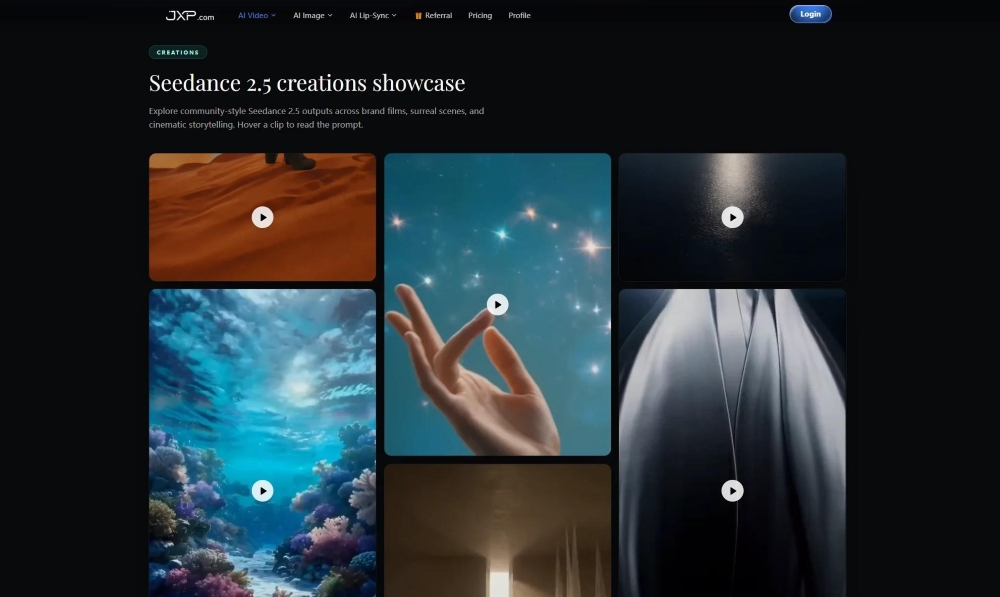
That is why the discussion around Seedance 2.5 is interesting even before it becomes a normal part of day-to-day production. JXP presents the model as a preview focused on longer single clips, richer reference control and more controllable editing after generation. Those priorities speak directly to the problems creative teams run into when prompt-only video stops being enough.
Short Clips Made AI Video Feel Possible
The first wave of AI video tools made an important promise: describe a scene and receive moving imagery. That was enough to change expectations. A designer could turn a mood into motion. A founder could sketch a product teaser without booking a shoot. A creator could test a visual idea before committing time to editing.
But short clips also shaped the way people wrote prompts. Most ideas had to be compressed into one striking moment. A character walks through a neon street. A product rotates in studio light. A camera glides across a futuristic room. These clips can be useful, but they often avoid the harder parts of video: development, timing and continuity.
A longer scene creates a different challenge. It needs to begin, change and land. The subject has to stay recognizable. The camera movement has to make sense across time. The lighting, background and emotional tone cannot drift every few seconds. In other words, longer AI video is not simply more seconds. It is a tougher test of direction.
Why 30 Seconds Matters
Thirty seconds is a familiar length for digital storytelling. It is long enough for a product benefit, a brand moment, a mini narrative or an educational sequence. It is also short enough to be reviewed quickly and adapted for social platforms.
That middle ground is useful. A five-second clip can show a look. A 30-second clip can show a sequence. For marketing teams, that difference matters because many real briefs are built around progression: before and after, problem and solution, setup and reveal, or a subject moving through several visual beats.
The previewed direction of Seedance 2.5 points toward this kind of longer AI video workflow. Instead of stitching several small generations together, creators can plan one continuous clip with more room for pacing. That could reduce some of the editing friction that appears when separate clips do not match in identity, movement or lighting.
References Are Becoming More Important Than Prompts Alone
Text is still useful, but it is not always precise enough to protect what matters in a video. A prompt can say “premium product ad” or “cinematic city scene,” yet different tools may interpret those words in completely different ways.
Reference materials make the brief more concrete. A product image can preserve packaging and shape. A location image can define the environment. A short video can show camera rhythm. An audio cue can establish pacing. When those inputs work together, the creator is not just asking the model to invent a scene. The creator is giving the model evidence.
This is where the industry appears to be moving. The next generation of tools will likely be judged by how well they combine text, images, video and sound into one stable creative direction. More references are not automatically better, but well-chosen references can make the result easier to evaluate and revise.
The Real Test Is Revision
Most creative work is not approved in one pass. A draft gets reviewed. A product detail is wrong. The camera move is close, but the ending feels weak. The background works, but the subject needs a different action. In traditional production, that is normal. In AI video, it can become expensive if the only option is to regenerate everything.
More controllable editing matters because it changes the role of a good-but-not-perfect output. Instead of treating the first result as disposable, a creator can try to preserve the strongest parts and adjust the weaker details. That is closer to how teams actually work with design, video and copy.
The challenge is reliability. If a local edit changes the entire clip, the workflow loses trust. If a correction keeps the scene stable, AI video becomes easier to use inside real creative review. For many teams, that difference will matter more than one dramatic demo.
What Teams Should Watch Before Adopting Any New Model
The excitement around generative video can hide practical questions. Before a team builds a workflow around a new model, it should check the details that affect everyday use.
- How long can the model generate in one continuous clip?
- What kinds of references are supported, and how many can be used?
- Can the model follow timing, scene structure and camera direction?
- How much control exists after the first generation?
- What are the limits around access, pricing, export and commercial use?
These questions are not small details. They decide whether a tool belongs in a professional workflow or remains useful mainly for experimentation. A model that creates a striking sample but cannot be revised may still be hard to use under deadline pressure
A Shift From Prompting to Directing
The most interesting change in AI video is not simply better visuals. It is the shift in creative behavior. Teams are learning that a strong result usually comes from directing the model, not just prompting it. That means choosing references carefully, writing shorter and clearer instructions, defining timing and reviewing outputs against the original brief.
In that sense, AI video generation is starting to look less like a novelty tool and more like an early production layer. It can help teams explore ideas faster, but it still needs human judgment to decide what is useful, what is off-brand and what needs another pass.
Seedance 2.5 is worth watching because it reflects where the category is heading: longer clips, richer context and more control after generation. If those pieces work reliably when access opens, the conversation around AI video will become less about whether a model can create a clip and more about whether it can support a real creative workflow.