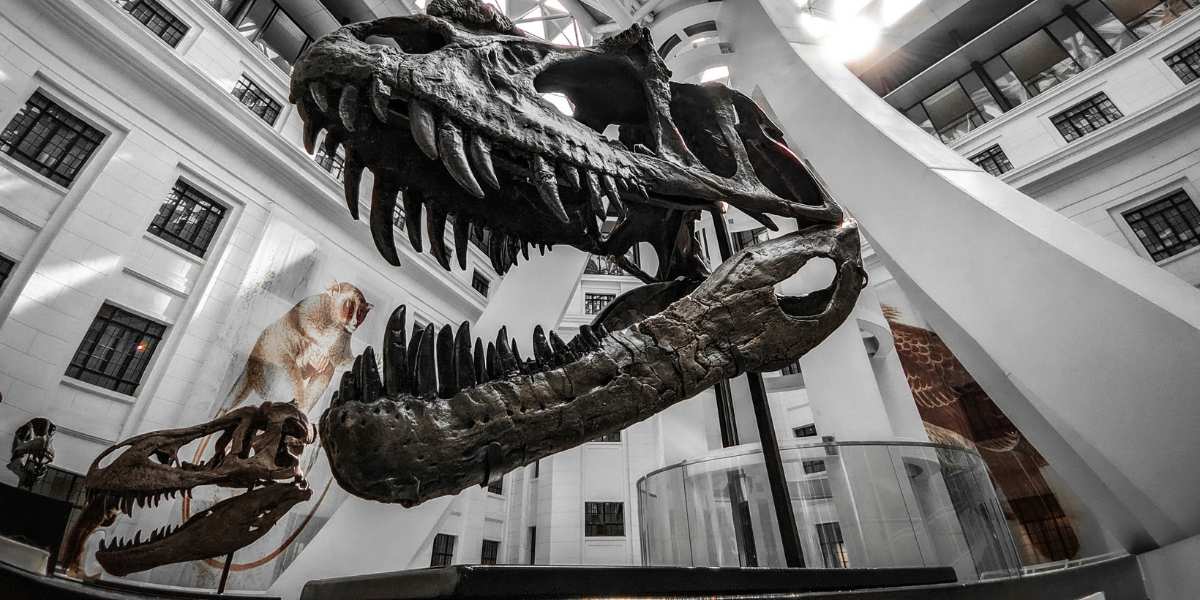

A rare Nanotyrannus fossil known as Jodi sold for $47.3 million at Sotheby’s in New York after six bidders competed. The sale followed research distinguishing Nanotyrannus from Tyrannosaurus rex and raised questions about where the unusually complete dinosaur skeleton will be housed and whether scientists will have access to it.
Key Takeaways
- Jodi sold for $47.3 million, including auction premiums, far above Sotheby’s $6 million to $9 million presale estimate, which excluded premiums.
- Six bidders competed for approximately 12 minutes before an unidentified telephone bidder won the auction.
- The 19.6-foot skeleton contains approximately 191 fossil bone elements and was discovered in Montana in 2019.
- Research published in Nature and Science supports Nanotyrannus as a distinct dinosaur, although neither study directly examined Jodi.
- The buyer’s identity and any arrangements for museum display or scientific research have not been publicly confirmed.
The Nanotyrannus fossil nicknamed Jodi became the second-most expensive dinosaur skeleton sold at auction on Tuesday, October 27, following a competitive sale at Sotheby’s in Manhattan. Its $47.3 million price exceeded expectations and followed a significant development in the scientific understanding of the smaller tyrannosaur.
The sale took approximately 12 minutes, with six bidders participating online and by telephone, according to Sotheby’s. The winning bidder purchased the specimen by telephone, but the auction house did not publicly identify the buyer.
The result followed studies that challenged the long-standing interpretation of Nanotyrannus as an immature Tyrannosaurus rex. Although researchers examined different fossils, their findings helped establish the scientific context surrounding Jodi’s identification.
Nanotyrannus Fossil Sale Ranks Just Below the Auction Record
Sotheby’s reported that Jodi’s $47.3 million sale was the second-highest price achieved for a dinosaur fossil at auction. The result ranked behind Gus, a Tyrannosaurus rex skeleton that sold for approximately $50.1 million at Sotheby’s in July 2026.
It also surpassed the approximately $44.6 million paid for Apex, a Stegosaurus skeleton auctioned in July 2024. These figures place Jodi among the highest-priced dinosaur specimens sold publicly.
The October 27 auction took place at Sotheby’s New York headquarters on Madison Avenue, where Jodi had been displayed earlier in the month. The mounted skeleton measures nearly 20 feet long and represents a smaller predatory dinosaur that lived alongside Tyrannosaurus rex near the end of the Cretaceous Period.
Sotheby’s originally estimated the fossil would sell for $6 million to $9 million. The final result includes auction premiums, while the presale estimate excludes them, meaning the figures reflect different pricing calculations.
The bidding contest attracted six participants, with the winning offer placed by telephone. Sotheby’s did not disclose the motivations of the bidders or establish whether the specimen’s scientific classification directly influenced the final price.
Jodi had previously appeared at Frieze Masters in London in October 2023, when the specimen was presented as a juvenile T. rex. Its later identification as Nanotyrannus followed research supporting the existence of a separate genus.
The auction house catalogued the skeleton as Nanotyrannus cf. lancensis, indicating a comparison with the named species rather than an unequivocal species-level identification.
That distinction is relevant because the fossil’s scientific classification and commercial sale are separate matters. The auction confirmed its market price, while published research provides the evidence used to distinguish Nanotyrannus from Tyrannosaurus rex.
The Montana Discovery Preserved Nearly 20 Feet of Dinosaur Bones
The fossil’s documented history began in 2019, when Montana rancher Jodi Pierson discovered the remains on privately owned land near Jordan, Montana. The site is part of the Hell Creek Formation in Garfield County, which preserves evidence of prehistoric life from approximately 67 million years ago.
According to Sotheby’s catalogue, the specimen was excavated during the 2019 field season by a team that included Clayton Phipps, Luke Phipps, Katie Busch, Nathan Cooper, Chris Morrow, Jodi Pierson, and Kelly Pierson.
The skeleton later entered a private collection in 2021 before appearing at exhibitions and eventually reaching the New York auction.
Sotheby’s describes Jodi as one of only three substantial Nanotyrannus skeletons known to science. Its catalogue identifies approximately 191 fossil bone elements belonging to a single animal, including a nearly complete skull consisting of 53 bones.
The skull also contains approximately 50 teeth in different stages of eruption. Additional preserved elements include vertebrae, pelvic bones, forelimb structures, and portions of the hind limbs.
Mounted for display, the skeleton stands approximately 9 feet 6 inches high on its supporting frame and measures 19.6 feet from nose to tail.
Sotheby’s notes that reconstructed sections were completed using sculpted and 3D-printed components. These additions help present the skeleton as a complete display but are distinct from its original fossil material.
The auction catalogue describes the animal as an adult based on its overall size and degree of skeletal development. However, that assessment should not be confused with the findings of published studies examining other Nanotyrannus specimens.
Jodi’s discovery location also provides important geological context. The Hell Creek Formation contains sedimentary deposits from the final part of the Cretaceous Period, allowing researchers to examine fossils alongside evidence preserved in ancient rock layers.
Understanding these deposits forms part of reading Earth’s geological record, which helps scientists reconstruct prehistoric environments and the conditions in which ancient organisms lived.
The catalogue includes details about the fossil’s excavation, ownership history, condition, and authenticity. Such documentation provides context for the specimen’s origins and preparation, although it does not establish its future availability for scientific research.
New Research Separates Nanotyrannus From Young T. rex
For decades, paleontologists debated whether Nanotyrannus represented a distinct dinosaur or an immature Tyrannosaurus rex. The disagreement centered on anatomical differences that researchers interpreted either as evidence of separate species or changes occurring during growth.
Juvenile dinosaurs can have body proportions that differ substantially from those of adults. This makes skeletal development an important consideration when researchers attempt to identify species from incomplete fossil remains.
In October 2025, paleontologists Lindsay Zanno and James Napoli published a study in the journal Nature examining a well-preserved tyrannosaur specimen associated with the Dueling Dinosaurs fossils from Montana.
The researchers analyzed anatomical characteristics, skeletal growth patterns, and evolutionary relationships. Their findings supported identifying Nanotyrannus as a genus distinct from Tyrannosaurus.
The study also identified two species within the genus, Nanotyrannus lancensis and Nanotyrannus lethaeus. The findings suggested that multiple kinds of tyrannosaur predators inhabited the region near the end of the Cretaceous Period.
A separate study led by Christopher Griffin and colleagues provided additional evidence. Published online in December 2025 and appearing in Science in January 2026, the research examined microscopic growth patterns in fossilized throat bones associated with the original Nanotyrannus reference specimen.
The analysis suggested that the animal was nearing or had reached skeletal maturity. That finding supported the interpretation that its smaller size was not simply the result of being a juvenile Tyrannosaurus rex.
The two studies used different specimens and research methods but reached compatible conclusions about the disputed dinosaur’s identity.
Neither study directly examined Jodi, the skeleton sold at Sotheby’s. Their findings support the broader scientific classification of Nanotyrannus but do not constitute a specimen-specific laboratory assessment of Jodi’s maturity.
This distinction reflects the importance of physical evidence in paleontology. Researchers rely on preserved anatomical structures, growth patterns, and comparisons between specimens to evaluate the identity and development of extinct animals.
The relationship between fossil collecting and scientific research also illustrates why access to original specimens matters. Fossils can serve as collectible objects while preserving evidence about prehistoric organisms and their environments.
For Jodi, the scientific studies provide context for the revised identification presented by Sotheby’s. They do not demonstrate that the auctioned skeleton itself was directly involved in the research that helped clarify the Nanotyrannus classification.
Museum Access Remains Unconfirmed After the New York Sale
The identity of Jodi’s purchaser was not disclosed following the October 27 auction. Sotheby’s also did not announce a museum placement or research-access agreement as part of its public sale information.
The distinction matters because rare dinosaur skeletons can provide anatomical evidence for additional scientific studies. Access to original fossil material allows researchers to compare bones, examine growth patterns, and assess characteristics that may not be visible in photographs or reconstructed displays.
Private ownership does not necessarily prevent scientific examination. Fossil owners may arrange museum loans or permit researchers to study specimens, although such access depends on individual agreements.
The Society of Vertebrate Paleontology has long recommended that scientifically significant vertebrate fossils remain in permanent institutional collections where they can be preserved and studied.
Its code of ethics states that commercial transactions involving scientifically significant fossils are not condoned unless they bring specimens into, or keep them within, a public trust.
The organization emphasizes the importance of retaining fossils and their associated documentation for research and education. Its position reflects concerns that material held without long-term access arrangements may become unavailable for future scientific examination.
New York offers an example of how private ownership and museum research can coexist.
Apex, the Stegosaurus skeleton sold at Sotheby’s for approximately $44.6 million in 2024, is displayed at the American Museum of Natural History in Manhattan through a loan arrangement.
The museum has also been studying material from one of Apex’s fossilized thigh bones to learn more about Stegosaurus growth. Its exhibition distinguishes original fossil elements from reconstructed components.
That arrangement does not establish what will happen to Jodi. It demonstrates that scientific research and public display can occur under private ownership when appropriate arrangements are made.
Sotheby’s catalogue states that Jodi was offered with documentation covering its condition, authenticity, and ownership. The auction house also identified reconstructed elements in the mounted skeleton, distinguishing them from preserved fossil bones.
As of the public sale announcement, no comparable research or exhibition agreement had been confirmed for Jodi. Its $47.3 million sale is documented, but its long-term location and future scientific accessibility remain undisclosed.
Frequently Asked Questions
How much did the Nanotyrannus fossil sell for?
The Nanotyrannus fossil known as Jodi sold for approximately $47.3 million at Sotheby’s in New York on October 27, 2026. The total includes auction premiums and exceeded the presale estimate of $6 million to $9 million, which excluded those charges.
Is Nanotyrannus a juvenile Tyrannosaurus rex?
Research published in Nature in 2025 and Science in 2026 supports identifying Nanotyrannus as a separate dinosaur rather than an immature Tyrannosaurus rex. The studies examined other fossils and did not directly analyze Jodi.
Where was the Jodi dinosaur fossil discovered?
Jodi Pierson discovered the skeleton on privately owned land near Jordan, Montana, in 2019. The remains came from the Hell Creek Formation, which contains fossils dating to approximately 67 million years ago.
Is Jodi the most expensive dinosaur fossil ever sold?
No. Jodi became the second-most expensive dinosaur fossil sold at auction, behind Gus, a Tyrannosaurus rex skeleton that fetched approximately $50.1 million at Sotheby’s in July 2026.
Who bought Jodi, and will it be displayed in a museum?
The buyer’s identity was not publicly disclosed in Sotheby’s October 27 sale announcement. The auction house also did not confirm a museum loan, permanent exhibition location, or future research-access arrangement for the specimen.