Rare Nanotyrannus Fossil Sells for $47.3M at Sotheby’s in NYC

A rare Nanotyrannus fossil known as Jodi sold for $47.3 million at Sotheby’s in New York after six bidders competed. The sale followed research distinguishing Nanotyrannus from Tyrannosaurus rex and raised questions about where the unusually complete dinosaur skeleton will be housed and whether scientists will have access to it.

Key Takeaways

  • Jodi sold for $47.3 million, including auction premiums, far above Sotheby’s $6 million to $9 million presale estimate, which excluded premiums.
  • Six bidders competed for approximately 12 minutes before an unidentified telephone bidder won the auction.
  • The 19.6-foot skeleton contains approximately 191 fossil bone elements and was discovered in Montana in 2019.
  • Research published in Nature and Science supports Nanotyrannus as a distinct dinosaur, although neither study directly examined Jodi.
  • The buyer’s identity and any arrangements for museum display or scientific research have not been publicly confirmed.

The Nanotyrannus fossil nicknamed Jodi became the second-most expensive dinosaur skeleton sold at auction on Tuesday, October 27, following a competitive sale at Sotheby’s in Manhattan. Its $47.3 million price exceeded expectations and followed a significant development in the scientific understanding of the smaller tyrannosaur.

The sale took approximately 12 minutes, with six bidders participating online and by telephone, according to Sotheby’s. The winning bidder purchased the specimen by telephone, but the auction house did not publicly identify the buyer.

The result followed studies that challenged the long-standing interpretation of Nanotyrannus as an immature Tyrannosaurus rex. Although researchers examined different fossils, their findings helped establish the scientific context surrounding Jodi’s identification.

Nanotyrannus Fossil Sale Ranks Just Below the Auction Record

Sotheby’s reported that Jodi’s $47.3 million sale was the second-highest price achieved for a dinosaur fossil at auction. The result ranked behind Gus, a Tyrannosaurus rex skeleton that sold for approximately $50.1 million at Sotheby’s in July 2026.

It also surpassed the approximately $44.6 million paid for Apex, a Stegosaurus skeleton auctioned in July 2024. These figures place Jodi among the highest-priced dinosaur specimens sold publicly.

The October 27 auction took place at Sotheby’s New York headquarters on Madison Avenue, where Jodi had been displayed earlier in the month. The mounted skeleton measures nearly 20 feet long and represents a smaller predatory dinosaur that lived alongside Tyrannosaurus rex near the end of the Cretaceous Period.

Sotheby’s originally estimated the fossil would sell for $6 million to $9 million. The final result includes auction premiums, while the presale estimate excludes them, meaning the figures reflect different pricing calculations.

The bidding contest attracted six participants, with the winning offer placed by telephone. Sotheby’s did not disclose the motivations of the bidders or establish whether the specimen’s scientific classification directly influenced the final price.

Jodi had previously appeared at Frieze Masters in London in October 2023, when the specimen was presented as a juvenile T. rex. Its later identification as Nanotyrannus followed research supporting the existence of a separate genus.

The auction house catalogued the skeleton as Nanotyrannus cf. lancensis, indicating a comparison with the named species rather than an unequivocal species-level identification.

That distinction is relevant because the fossil’s scientific classification and commercial sale are separate matters. The auction confirmed its market price, while published research provides the evidence used to distinguish Nanotyrannus from Tyrannosaurus rex.

The Montana Discovery Preserved Nearly 20 Feet of Dinosaur Bones

The fossil’s documented history began in 2019, when Montana rancher Jodi Pierson discovered the remains on privately owned land near Jordan, Montana. The site is part of the Hell Creek Formation in Garfield County, which preserves evidence of prehistoric life from approximately 67 million years ago.

According to Sotheby’s catalogue, the specimen was excavated during the 2019 field season by a team that included Clayton Phipps, Luke Phipps, Katie Busch, Nathan Cooper, Chris Morrow, Jodi Pierson, and Kelly Pierson.

The skeleton later entered a private collection in 2021 before appearing at exhibitions and eventually reaching the New York auction.

Sotheby’s describes Jodi as one of only three substantial Nanotyrannus skeletons known to science. Its catalogue identifies approximately 191 fossil bone elements belonging to a single animal, including a nearly complete skull consisting of 53 bones.

The skull also contains approximately 50 teeth in different stages of eruption. Additional preserved elements include vertebrae, pelvic bones, forelimb structures, and portions of the hind limbs.

Mounted for display, the skeleton stands approximately 9 feet 6 inches high on its supporting frame and measures 19.6 feet from nose to tail.

Sotheby’s notes that reconstructed sections were completed using sculpted and 3D-printed components. These additions help present the skeleton as a complete display but are distinct from its original fossil material.

The auction catalogue describes the animal as an adult based on its overall size and degree of skeletal development. However, that assessment should not be confused with the findings of published studies examining other Nanotyrannus specimens.

Jodi’s discovery location also provides important geological context. The Hell Creek Formation contains sedimentary deposits from the final part of the Cretaceous Period, allowing researchers to examine fossils alongside evidence preserved in ancient rock layers.

Understanding these deposits forms part of reading Earth’s geological record, which helps scientists reconstruct prehistoric environments and the conditions in which ancient organisms lived.

The catalogue includes details about the fossil’s excavation, ownership history, condition, and authenticity. Such documentation provides context for the specimen’s origins and preparation, although it does not establish its future availability for scientific research.

New Research Separates Nanotyrannus From Young T. rex

For decades, paleontologists debated whether Nanotyrannus represented a distinct dinosaur or an immature Tyrannosaurus rex. The disagreement centered on anatomical differences that researchers interpreted either as evidence of separate species or changes occurring during growth.

Juvenile dinosaurs can have body proportions that differ substantially from those of adults. This makes skeletal development an important consideration when researchers attempt to identify species from incomplete fossil remains.

In October 2025, paleontologists Lindsay Zanno and James Napoli published a study in the journal Nature examining a well-preserved tyrannosaur specimen associated with the Dueling Dinosaurs fossils from Montana.

The researchers analyzed anatomical characteristics, skeletal growth patterns, and evolutionary relationships. Their findings supported identifying Nanotyrannus as a genus distinct from Tyrannosaurus.

The study also identified two species within the genus, Nanotyrannus lancensis and Nanotyrannus lethaeus. The findings suggested that multiple kinds of tyrannosaur predators inhabited the region near the end of the Cretaceous Period.

A separate study led by Christopher Griffin and colleagues provided additional evidence. Published online in December 2025 and appearing in Science in January 2026, the research examined microscopic growth patterns in fossilized throat bones associated with the original Nanotyrannus reference specimen.

The analysis suggested that the animal was nearing or had reached skeletal maturity. That finding supported the interpretation that its smaller size was not simply the result of being a juvenile Tyrannosaurus rex.

The two studies used different specimens and research methods but reached compatible conclusions about the disputed dinosaur’s identity.

Neither study directly examined Jodi, the skeleton sold at Sotheby’s. Their findings support the broader scientific classification of Nanotyrannus but do not constitute a specimen-specific laboratory assessment of Jodi’s maturity.

This distinction reflects the importance of physical evidence in paleontology. Researchers rely on preserved anatomical structures, growth patterns, and comparisons between specimens to evaluate the identity and development of extinct animals.

The relationship between fossil collecting and scientific research also illustrates why access to original specimens matters. Fossils can serve as collectible objects while preserving evidence about prehistoric organisms and their environments.

For Jodi, the scientific studies provide context for the revised identification presented by Sotheby’s. They do not demonstrate that the auctioned skeleton itself was directly involved in the research that helped clarify the Nanotyrannus classification.

Museum Access Remains Unconfirmed After the New York Sale

The identity of Jodi’s purchaser was not disclosed following the October 27 auction. Sotheby’s also did not announce a museum placement or research-access agreement as part of its public sale information.

The distinction matters because rare dinosaur skeletons can provide anatomical evidence for additional scientific studies. Access to original fossil material allows researchers to compare bones, examine growth patterns, and assess characteristics that may not be visible in photographs or reconstructed displays.

Private ownership does not necessarily prevent scientific examination. Fossil owners may arrange museum loans or permit researchers to study specimens, although such access depends on individual agreements.

The Society of Vertebrate Paleontology has long recommended that scientifically significant vertebrate fossils remain in permanent institutional collections where they can be preserved and studied.

Its code of ethics states that commercial transactions involving scientifically significant fossils are not condoned unless they bring specimens into, or keep them within, a public trust.

The organization emphasizes the importance of retaining fossils and their associated documentation for research and education. Its position reflects concerns that material held without long-term access arrangements may become unavailable for future scientific examination.

New York offers an example of how private ownership and museum research can coexist.

Apex, the Stegosaurus skeleton sold at Sotheby’s for approximately $44.6 million in 2024, is displayed at the American Museum of Natural History in Manhattan through a loan arrangement.

The museum has also been studying material from one of Apex’s fossilized thigh bones to learn more about Stegosaurus growth. Its exhibition distinguishes original fossil elements from reconstructed components.

That arrangement does not establish what will happen to Jodi. It demonstrates that scientific research and public display can occur under private ownership when appropriate arrangements are made.

Sotheby’s catalogue states that Jodi was offered with documentation covering its condition, authenticity, and ownership. The auction house also identified reconstructed elements in the mounted skeleton, distinguishing them from preserved fossil bones.

As of the public sale announcement, no comparable research or exhibition agreement had been confirmed for Jodi. Its $47.3 million sale is documented, but its long-term location and future scientific accessibility remain undisclosed.

Frequently Asked Questions

How much did the Nanotyrannus fossil sell for?

The Nanotyrannus fossil known as Jodi sold for approximately $47.3 million at Sotheby’s in New York on October 27, 2026. The total includes auction premiums and exceeded the presale estimate of $6 million to $9 million, which excluded those charges.

Is Nanotyrannus a juvenile Tyrannosaurus rex?

Research published in Nature in 2025 and Science in 2026 supports identifying Nanotyrannus as a separate dinosaur rather than an immature Tyrannosaurus rex. The studies examined other fossils and did not directly analyze Jodi.

Where was the Jodi dinosaur fossil discovered?

Jodi Pierson discovered the skeleton on privately owned land near Jordan, Montana, in 2019. The remains came from the Hell Creek Formation, which contains fossils dating to approximately 67 million years ago.

Is Jodi the most expensive dinosaur fossil ever sold?

No. Jodi became the second-most expensive dinosaur fossil sold at auction, behind Gus, a Tyrannosaurus rex skeleton that fetched approximately $50.1 million at Sotheby’s in July 2026.

Who bought Jodi, and will it be displayed in a museum?

The buyer’s identity was not publicly disclosed in Sotheby’s October 27 sale announcement. The auction house also did not confirm a museum loan, permanent exhibition location, or future research-access arrangement for the specimen.

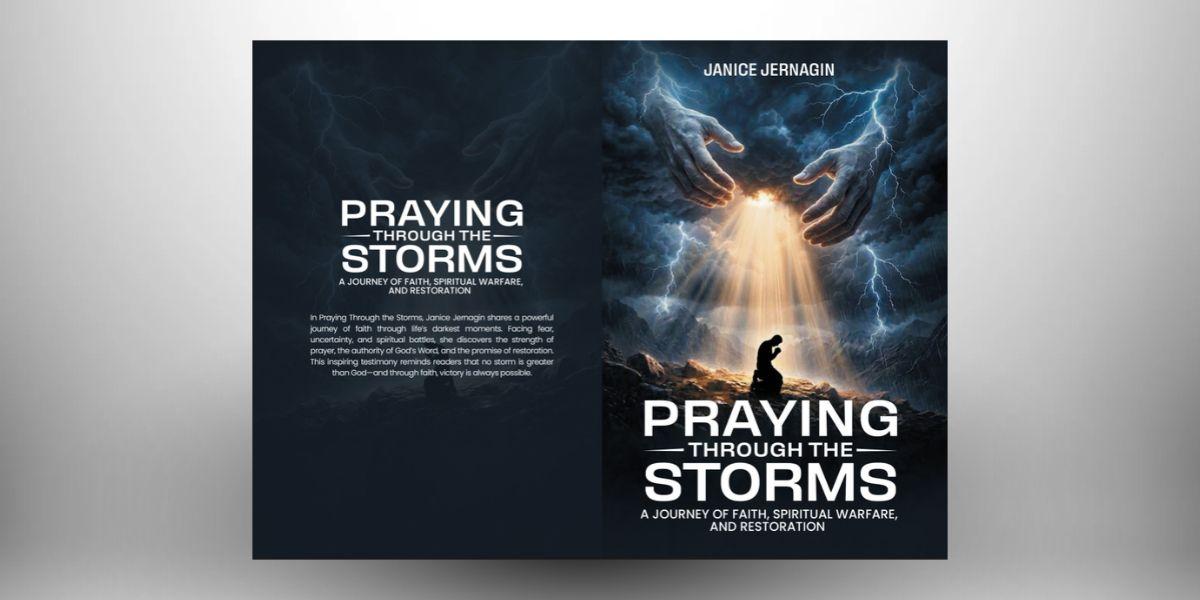
The Battle You Are Fighting Is Not What You Think It Is

By Janice Jernagin

You wake up tired. Not just physically tired. Deeply tired. The kind of tired that sleep cannot fix.

You feel confused about things that used to be clear. You feel anxious about situations that used to feel manageable. You feel disconnected from God even though you are praying. You feel like something is wrong with you.

But what if the problem is not you?

What if the battle you are fighting is not the battle you think you are fighting?

This is the truth that changed everything for me. This is the truth that I write about in my book, Praying Through the Storms. And this is the truth that I want to share with you right now.

The Enemy Does Not Always Attack With Force

Most people imagine spiritual attacks as dramatic events. They picture demons screaming, walls shaking, and an obvious evil presence. But that is not how the enemy usually works.

The enemy is subtle. He is patient. He is strategic.

He does not want you to know that you are under attack. He wants you to think that your problems are just normal life. He wants you to believe that your exhaustion is just stress. He wants you to believe that your confusion is just a phase. He wants you to believe that your fear is just your personality.

But that is a lie.

The enemy operates in the shadows. He whispers lies that sound like truth. He magnifies small problems until they feel overwhelming. He introduces confusion to cloud your judgment. He uses exhaustion to keep you from praying. He uses fear to keep you from moving forward.

His goal is simple. He wants to pull you away from God. He wants to isolate you. He wants to make you feel powerless. He wants you to give up.

The Real Battle Is Spiritual

Scripture is clear about this. In Ephesians 6:12, we read that our fight is not against flesh and blood. That means our battle is not against people. It is not against circumstances. It is not against politics or systems or situations.

Our battle is against spiritual forces. Our battle is against the enemy of our souls. Our battle is against darkness itself.

If you do not recognize this truth, you will try to fight with the wrong tools. You will try to fix spiritual problems with human solutions. You will try to solve spiritual attacks with willpower and positive thinking. And you will fail.

I learned this the hard way. When my son was missing, I tried everything. I searched. I called. I worried. I panicked. But nothing worked until I understood that I was not fighting a physical battle. I was fighting a spiritual one.

That is when everything changed. That is when I stopped fighting in my own strength and started fighting on my knees. That is when I stopped asking why and started declaring what God had already promised.

The Tactics of the Enemy

The enemy has a playbook. He has strategies that he has used for thousands of years. And if you do not know his tactics, you will fall for them every time.

One of his favorite tactics is confusion. He introduces doubt about what God has said. He makes you question what you know to be true. He creates mental fog so you cannot think clearly. He wants you to feel uncertain about everything.

Another tactic is exhaustion. He knows that tired people make bad decisions. He knows that weary people give up easily. He knows that exhausted people stop praying. So he keeps you busy. He keeps you stressed. He keeps you running until you have nothing left to give.

Fear is another powerful weapon. The enemy knows that fear paralyzes. He knows that fear keeps you from stepping out in faith. He knows that fear makes you focus on the problem instead of the solution. So he magnifies fear until it feels bigger than God.

The enemy also uses isolation. He wants you to feel alone. He wants you to think that no one understands. He wants you to believe that you are the only one going through this. Because isolated people are vulnerable people.

And finally, the enemy uses compromise. He does not always ask you to do something obviously wrong. He asks you to do something that seems harmless. He nudges you away from God slowly, one small step at a time. And before you know it, you are far from where you should be.

How to Recognize the Attack

The first step to winning any battle is recognizing that you are in one. You cannot fight an enemy you do not see. You cannot defeat an attack you do not acknowledge.

So how do you recognize a spiritual attack?

Pay attention to patterns. If you notice that every time you try to pray, you suddenly feel tired, that is a pattern. If you notice that every time you try to read your Bible, your mind fills with distractions, that is a pattern. If you notice that every time you try to move forward in faith, something holds you back, that is a pattern.

Pay attention to your peace. When you lose your peace, something is wrong. When you feel anxious for no clear reason, something is happening in the spiritual realm. When you feel heavy and weighed down even when your circumstances are fine, that is a sign.

Pay attention to your thoughts. The enemy speaks to your mind. He plants thoughts that are not from God. He tells you that you are not good enough. He tells you that God does not care. He tells you that nothing will ever change. Those thoughts are not yours. They are his.

How to Fight Back

Once you recognize the attack, you can fight back. But you cannot fight back with human weapons. You must fight with spiritual weapons.

Prayer is your first weapon. But not casual prayer. Not routine prayer. Fervent prayer. Prayer that refuses to stop. Prayer that cries out to God with everything you have. James 5:16 tells us that the effectual, fervent prayer of a righteous person accomplishes much. That means your prayers have power. That means your prayers can change things.

The Word of God is your second weapon. Hebrews 4:12 tells us that the Word of God is alive and active. It is sharper than any two-edged sword. When the enemy attacks with lies, you fight back with truth. When he whispers fear, you declare Scripture. When he brings confusion, you stand on what God has said.

The armor of God is your third weapon. In Ephesians 6, we are told to put on the full armor of God. This is not a suggestion. It is an instruction. You need truth to keep you grounded. You need righteousness to keep you aligned. You need faith to block what the enemy sends your way. You need salvation to guard your mind. And you need the Word of God as your sword.

But here is what I learned. You do not put on the armor once. You put it on daily. Every morning, you get ready. Every night, you stay covered. Because the fight does not pause. But neither does God.

You Are Not Alone

If you are in a storm right now, I want you to know something. You are not alone. God sees you. God hears you. God is with you.

The battle you are fighting is real. But the God who fights for you is real too. And He has never lost a battle. He has never abandoned His children. He has never failed to keep His promises.

In my book, Praying Through the Storms, I share my own journey through spiritual warfare. I share how I learned to recognize the attacks of the enemy. I share how I learned to fight back with prayer and scripture. I share how God delivered my son and restored my family.

I do not share these things to impress you. I share them to encourage you. I share them to show you that if God did it for me, He can do it for you.

The enemy wants you to believe that you are powerless. He wants you to believe that your situation is hopeless. He wants you to believe that God has abandoned you.

But that is a lie.

You are not powerless. You have the authority of Jesus Christ. You are not hopeless. You serve the God who restores all things. You are not abandoned. You are covered under the wings of the Almighty.

Stand Firm

The storm may not end overnight. The battle may not be won in a single prayer. But you do not have to fight alone. You do not have to fight in your own strength. You do not have to fight with the wrong tools.

Recognize the attack. Put on the armor. Stand on the Word. Pray without ceasing. And trust that God is fighting for you even when you cannot see it.

The battle is not yours. It is the Lord’s. And He has already won.

The enemy is real. The battle is real. But so is your victory through Jesus Christ. In Praying Through the Storms, Janice Jernagin equips you with the truth, the tools, and the testimony you need to stand firm. Get your copy today and fight with authority.

How USA Book Publishing Company Helps Authors Transform Their Idea Into a Published Book

Every book begins as an idea. Turning that idea into a printed or digital title takes planning, editing, design, and promotion. USA Book Publishing Company provides book publishing services built around those stages, from a rough draft to a finished title ready for readers.

The company works with aspiring and established writers across fiction, nonfiction, memoirs, autobiographies, inspirational titles, and children’s literature. Its support covers ghostwriting, editing, proofreading, cover design, illustration, interior formatting, printing, ebook preparation, audiobook production, author websites, video book trailers, and promotion.

Understanding the Steps in the Publishing Process

A manuscript rarely moves straight from a writer’s computer to a bookstore shelf. The work passes through several stages. Ghostwriting or manuscript development comes first for authors who have a concept but need help shaping it into chapters. Editing follows, then proofreading, then design and formatting.

Printing and digital conversion come near the end. Marketing runs alongside everything else. Knowing this sequence helps authors plan time and money. It also shows where professional book publishing services add value and where a writer can handle the work alone.

Choosing a Publishing Approach That Fits the Project

Authors have options. Traditional publishing, hybrid arrangements, and self-publishing carry different costs, timelines, and levels of creative control. The right choice depends on four things. Goals. Budget. Genre. Intended audience.

A business author who wants copies for speaking events has different needs than a novelist building a readership. Self-publishing services suit writers who want to keep rights and set their own release dates. Authors who prefer guidance at each step often look for a book publishing company in the USA that bundles editorial, design, and production support. Comparing book publishing services side by side makes the decision clearer.

Why Editing and Proofreading Matter

Readers notice errors. A single page of awkward sentences can end a reader’s interest in an unfamiliar author. Book editing and proofreading correct grammar, tighten structure, fix inconsistencies, and improve pacing.

Developmental editing looks at the shape of the whole manuscript. Line editing works sentence by sentence. Proofreading catches the small mistakes that survive earlier rounds. Authors who invest in editing early spend less time fixing problems later. This stage sits at the center of book publishing services because every later step depends on a clean manuscript.

Cover Design and Interior Formatting

A cover does the work of a storefront. Custom book cover design gives a title visual identity and signals genre to browsing readers. A thriller cover looks different from a memoir cover for a reason.

Interior formatting matters as well. Margins, line spacing, chapter headings, and font choice affect how long a reader stays on the page. Weak formatting makes a book feel unfinished even when the writing is strong. Illustration adds another layer for children’s titles and gift books. Design-focused book publishing services keep the exterior and the interior consistent.

Print, Ebook, and Audiobook Formats

Readers consume books in several ways. Print still matters for events, signings, and gifts. Ebooks reach international readers quickly and cost less to distribute. Audiobooks continue to grow with commuters and listeners who prefer narration.

Preparing one manuscript for three formats requires separate technical work. Ebook files need clean coding. Audiobooks need narration, direction, and sound editing. Full-service book publishing services handle these conversions so the author does not coordinate several vendors alone.

Support Across Different Genres

Genre shapes production. Children’s book publishing depends on illustration, page count limits, and age-appropriate language. Memoirs and autobiographies need careful fact handling and sensitivity around real people. Nonfiction titles often require indexes, references, and charts. Inspirational books rely on tone and voice.

USA Book Publishing Company structures its book publishing services around these differences rather than applying one process to every project.

Practical Advice for First-Time Authors

New writers can protect themselves by preparing early. Finish the manuscript before requesting quotes. Providers price work by word count and manuscript condition, so a complete draft produces a more accurate estimate.

Ask for a written breakdown of costs. Understand what each line item covers and what it leaves out. Compare book publishing services from more than one provider before signing anything. Read the service agreement closely, and check who holds the rights, who owns the cover art, and how distribution and royalties work.

Register the copyright. The United States Copyright Office explains the registration process and the protections it provides.

Begin promotion before publication. An author platform, a mailing list, and early reader reviews support a launch more than publicity added weeks afterward. Book marketing services can assist with this planning, though outcomes vary with genre, audience, and author involvement.

Planning Promotion Before and After Launch

Publication day is not the finish line. Promotion continues through reviews, interviews, social content, author websites, and video trailers. Steady effort over several months often reaches more readers than one launch push.

Authors who want help in this area can review the book publishing services offered by USA Book Publishing Company or discuss a project with the publishing team.

Bringing a Manuscript to Publication

Publishing rewards preparation. Writers who understand the stages, plan their budget realistically, and read their agreements carefully tend to finish with a book they feel good about. Book publishing services fill gaps in skill, time, or equipment. They do not replace the author’s voice. The manuscript stays the writer’s work from first draft to final print file.

What Turns a Good Scene Into a Classic

How Andrew Balzano Shares a Lifetime of Viewing in One of My Life’s Passions: Classics and Mysteries

Most viewers remember who did it. Andrew Balzano remembers the line, the pause and the look that made the moment last.

That difference sits at the heart of One of My Life’s Passions: Classics and Mysteries. Andrew Balzano, who proudly calls Brooklyn home and has spent three decades in federal service after graduating from Baruch College, watches the classics the way a collector studies a favorite piece. He returns to the same films and episodes again and again, and each viewing reveals another detail worth sharing. His book gathers those details into a warm, personal guide to the mysteries and monster films he has loved all his life.

Balzano is clear about his aim from the first pages. This book is about quality, not quantity. He is not trying to list every title ever made. He wants to point readers toward the scenes that deserve a second look and explain why they work.

The book rests on one simple idea, which is that the best part of a mystery may not be the solution at all, but the moments along the way.

The Gift of Noticing

Balzano writes that he believes he was blessed with a gift for recognizing classic scenes and moments. Readers see that gift on almost every page. He notices when a director allows a phone call to be interrupted instead of tidying the scene. He notices when an actress delivers a single line with such clear elocution that it becomes the highlight of a film. He notices when a camera holds on three faces for a few extra seconds before the story fades to a commercial.

These are the kinds of details many viewers feel without naming. Balzano names them, and in doing so, he invites readers to watch more closely. A single line of dialogue can stay with a viewer for years. A second or third pass through a familiar mystery often turns up something missed the first time around, which is the quiet argument running underneath the whole book.

A Love of Special Features

Part of the inspiration for the book comes from a trend Balzano has followed for the past two decades: the special features that now accompany so many classic films. Those behind-the-scenes extras taught audiences to look past the screen and ask who was cast, who said no and what happened between takes.

Balzano brings that same curiosity to his own writing. In his section on the Universal classic monsters, he offers his own special features for Frankenstein Meets the Wolf Man, from the actors’ real names to the stand-in hidden inside a block of ice. Readers come away knowing the stories behind the stories.

Five Worlds in One Book

The book moves through five much-loved worlds. It opens with the Murder, She Baked films on Hallmark Mystery, where Hannah Swensen solves crimes between batches of baked goods. It turns to David Suchet’s Hercule Poirot, whose theme music Balzano has enjoyed countless times. It visits the Universal monsters of the 1930s and 1940s, follows Basil Rathbone and Nigel Bruce through the Sherlock Holmes mysteries, and closes with a generous tour of Murder, She Wrote across all twelve seasons.

What ties these worlds together is the author’s affection. Even when he praises one title above another, he is careful to say that his favorites take nothing away from the rest. Along the way, he connects them in surprising ways. A director moves from monsters to Sherlock Holmes. An actor in one series turns up behind the camera in another.

A Book Written From the Heart

One of My Life’s Passions is dedicated to Balzano’s parents, Anna and Anthony Balzano, whom he credits, along with his faith, for everything he has accomplished. He also writes with inspiration from his sweetheart, Stefany Rodriguez. That gratitude gives the book its gentle, generous tone. Balzano writes as a fan sharing treasures with fellow fans, never as a critic looking down on the material.

He closes with a simple hope: that readers will enjoy the book and use it to make the most of their leisure time. For anyone planning an evening of mysteries, that is a promise worth keeping.

A favorite film can be watched once…

A classic moment can be enjoyed for a lifetime…

The right guide helps you find both…

In One of My Life’s Passions: Classics and Mysteries, every scene has a story worth sharing!

Author Name: Andrew Balzano; Book Title: One of My Life’s Passions; Published By: Global Author Publishing

Patricia Tice on Psalm 23, Cultural Change, and the Leadership We Need Next

Psalm 23 is among the most familiar and comforting passages in the Bible but few have noticed that David stops talking about sheep half-way through. For Patricia Tice, that hidden transition changes the meaning of the entire Psalm: the Shepherd’s goal is not merely to protect the sheep, but to prepare them to govern. In the first half, David the shepherd describes being led by the Great Shepherd. In the second, David the secret king is being prepared by the King of Kings. That second theme is carefully veiled: being publicly anointed king is dangerous when the nation already has one. In More Than a Shepherd: Psalm 23 as a Leadership Strategy for Community Transformation, Tice interprets the Psalm as a developmental journey. People are not meant to remain sheep-like indefinitely. They are nurtured, developed, prepared for responsibility, and eventually invited to participate in something larger than themselves.

For Tice, that progression offers an important perspective on leadership and cultural change.

Patricia Tice Sees Development Before Leadership

Tice’s interpretation begins with the Shepherd.

The opening portion of Psalm 23 describes a God who provides, restores, guides, protects, and cares for His people. Tice sees these actions as more than expressions of comfort. Tice describes this development as involving both mothering and fathering functions. People first receive the care, formation, and security needed to grow, then encounter the challenges that develop their identity, capacity, and responsibility. These two types of support prepare the developmental foundations people need before they can carry greater responsibility.

People have to learn how to receive before they can effectively give. They need to develop the ability to listen, respond, recover, and grow before they can help others do the same. This makes nurturing an essential part of leadership development, but only the beginning. They must also learn who they are and what they are capable of.

Yet formation is usually treated as secondary to more visible forms of leadership, as if it were merely the table stakes required to enter the game, while many organizations stumble over weak foundations without realizing what is missing. Vision, strategy, authority, and execution mean little to someone who doesn’t know who they are or how they can fit into that plan. Tice’s framework challenges that imbalance.

From Shepherd to Strategy

In the second half of the psalm, the imagery changes dramatically. In Hebrew, the word ‘sulchan’ we translate as ‘table’ carries the sense of a leather mat spread out in the king’s tent, with troops arrayed on it to work out the battle plan. Read against the presence of enemies, the image looks less like a banquet and more like a war-room moment: getting direction before stepping back into conflict. Even the word David uses for “anointing” is not the standard commissioning term a reader might expect. Tice argues that the unexpected choice preserves the idea of commissioning while adding another layer of meaning to the scene.

In her reading, David moves from learning what it means to be shepherded toward understanding what it means to participate in leadership. David, the shepherd who learned to care for sheep, would eventually need to become David, the king who needed to understand how to lead people. The Psalm therefore becomes a picture of progression from dependence toward mature partnership.

Patricia Tice on the Leadership Needed for Cultural Change

This progression has implications beyond individual leadership. Cultural change cannot be sustained simply by introducing new systems or changing organizational structures. Systems can establish expectations, but people determine how those systems are lived out through their decisions, relationships, and behavior.

Tice argues that transformation requires people who have developed enough maturity to carry responsibility together. That means leadership development must extend beyond teaching people how to perform tasks. It must help them become people who can exercise judgment, contribute to a shared purpose, and invest in others.

For Tice, generosity is not an optional virtue added after leadership; it is one of the mechanisms by which leadership multiplies. God’s lavish generosity to us must be mirrored in our patient investment in each other.

From Individual Development to Relational Unity

A community capable of meaningful transformation needs more than talented individuals. It needs relationships strong enough to support shared work. Tice’s framework places particular emphasis on the investments people make in one another. When people generously contribute their time, insight, encouragement, resources, and capabilities, those individual contributions knit hearts together.

Tice describes this as a key step toward covenant unity: a connection between people that is deeper than organizational alignment alone. That distinction matters in a period when traditional assumptions about leadership and institutions are being reconsidered. When institutions change rapidly, people can respond by becoming more protective of their own interests. Tice’s perspective suggests another possibility: communities can become more intentional about developing people who know how to invest in one another.

The result is not simply a more efficient organization. It is a community with greater capacity to respond to change without losing its relationships or purpose.

Why Patricia Tice Looks Beyond Conventional Leadership Models

Tice comes to the text with an unusual set of eyes. An engineer and behavioral researcher by profession, she is accustomed to looking for the hidden structures that produce visible outcomes. When she applied that same pattern-oriented attention to Psalm 23, the familiar devotional reading began to look incomplete.

Tice examines its sequence, structure, internal patterns, and the historical context of Psalm 23. That gives her the tools to explore what the passage reveals about development, authority, relationships, and cultural transformation.

The result is not a conventional leadership manual. It is an invitation to reconsider what leadership development is ultimately supposed to produce. Formation is not the end point. Like graduation, it marks readiness for the work that follows.

More Than Sheep

The central message of More Than a Shepherd: Psalm 23 as a Leadership Strategy for Community Transformation is captured in its title.

Tice’s interpretation suggests that we are not made just to passively receive God’s care indefinitely. The Shepherd develops people so they can mature into His partners and help others grow as well.
That progression changes the way leadership can be understood.

Authority for its own sake may feel powerful, but it accomplishes little. Mature leadership carries responsibility. It is exercised within relationships, not apart from them. And while transformation imposed from the outside often elicits resistance, transformation embodied by people who have learned to live differently together has a chance to endure.

For Tice, Psalm 23 offers a framework for what happens when nurtured people discover who they are, receive strategy, accept responsibility, invest in others, and become capable of carrying a shared calling together. Ultimately, that shared unity, coming into one accord, becomes the platform that God can use to do only what He can do.

In a changing culture, that may be one of the most important leadership questions: not simply who is leading, but who is being developed to help shape what comes next.

Explore / Learn More and Connect with Patricia C. Tice

Website: More Than a Shepherd

Book: More Than a Shepherd: Psalm 23 as a Leadership Strategy for Community Transformation

LinkedIn: Patricia C. Tice on LinkedIn

Substack: Jesus Geeks

Facebook: ProFound Jesus Geeks

Instagram: ChangeShepherd_JesusGeeks

X Factor Media Group Appoints Maria Bruscianelli as Chief Revenue Officer

By: Joselin Estsvez

X Factor Media Group, the digital media and marketing firm that owns New Jersey Digest, has named Maria Bruscianelli Chief Revenue Officer. Bruscianelli brings more than 25 years of experience in institutional finance, wealth management, and executive leadership.

It is an unconventional hire for a media company, and a deliberate one. In a crowded advertising market, clients increasingly want partners that understand their business economics, not just their brand. By bringing in a revenue leader forged on Wall Street and in high-stakes client advisory, X Factor is betting that financial discipline and relationship depth will set it apart.

A Media Brand and a Marketing Engine Under One Roof

X Factor Media Group operates on a two-part model. The first part is New Jersey Digest, a publication and digital platform covering the people, restaurants, businesses, and experiences that shape life in New Jersey. Digest has earned a loyal audience by helping readers discover local places they would not otherwise find.

The second part is X Factor’s marketing operation, which combines creative talent, technology, and digital expertise to help businesses grow. Its work blends compelling storytelling with sophisticated digital capabilities, with an emphasis on measurable performance.

Together, the two give clients a connected path from audience to marketing. Digest delivers an engaged audience and editorial trust. X Factor aims to turn that attention into measurable growth for its clients.

From Wall Street to Wealth Management

Bruscianelli built the first chapter of her career over more than 15 years on Wall Street, specializing in securities lending and institutional finance. At Commerzbank, she held senior leadership responsibility for North American securities finance operations and led the bank’s hedge fund coverage. She managed relationships with major institutional investors, hedge funds, and financial counterparties, and oversaw complex transactions and large institutional portfolios.

She then spent nine years at New York Life in wealth management and financial leadership, advising affluent individuals, families, and business owners. She consistently ranked among the company’s top-performing partners nationwide and was repeatedly recognized for sales leadership and business growth.

Her impact extended beyond her own book of business. Bruscianelli trained and mentored financial advisors throughout New Jersey, helping them lift performance and build relationship-driven practices. That combination of personal production and team development is precisely what a scaling media company needs from its revenue chief.

The Growth Playbook

In her new role, Bruscianelli oversees revenue strategy, strategic partnerships, and business development. Her mandate is to expand X Factor’s reach, sharpen its market position, and connect more businesses with marketing built around measurable outcomes.

She argues that the skills transfer directly. “I’ve spent my entire career in industries where relationships, credibility, and results are everything,” Bruscianelli said. “You have to listen, understand what matters to people, earn their trust, and ultimately deliver on what you promise.”

She sees X Factor’s advantage in its breadth. “We have an incredible combination of creative talent, technology, audience reach, and sophisticated marketing capabilities,” she said. “The opportunity is to bring all of those strengths together and create something that goes well beyond traditional advertising.”

That means a consultative model rather than a transactional one. “I don’t believe in selling someone a service just to make a sale,” she said. “My goal is to help position X Factor as a true strategic partner for businesses looking to grow.”

For New Jersey Digest, growth comes with a guardrail. Bruscianelli intends to expand the brand’s reach “while preserving the authenticity, creativity, and personality that made it special in the first place.”

A Local Leader for a Local Brand

Bruscianelli knows the market personally. She is a longtime resident of Westfield, New Jersey, where she and her husband, Giuseppe, are raising their two children. Raised by Italian-born parents, she grew up around family traditions and full dinner tables, and she remains passionate about cooking, entertaining, and discovering local restaurants and family-owned businesses.

That makes her both an executive for New Jersey Digest and a reader of it. For a brand built on community and local discovery, that alignment is a real asset in winning the trust of the businesses it serves.

About X Factor Media Group: X Factor Media Group is a digital media and marketing firm and the owner of New Jersey Digest, a platform celebrating the people, restaurants, businesses, and experiences of New Jersey. The company helps businesses grow through storytelling and digital marketing capabilities, with a focus on measurable results.

The Startup Funding Roadmap: Financing Options From Idea to Established Business

Funding a new business is less like a single transaction and more like a journey. The options available on day one look very different from those available after two years of steady revenue. Lenders, investors, and even family members evaluate risk differently at each point along the way.

This roadmap breaks the journey into five stages. For each, you’ll find what a business typically looks like, the funding sources that tend to be realistic, and the milestones that unlock the next stage.

Stage 0, The Idea

What it looks like: No revenue, no customers, possibly no formal business entity yet. You have a concept, some research, and determination.

Realistic funding sources:

• Personal savings. Most new businesses start here. Using your own money signals commitment and keeps you in full control.

• Friends and family. Often the first outside capital, but it comes with relationship risk. Put any arrangement in writing, specifying whether it is a loan or an ownership stake, with clear repayment terms.

• Personal credit. Some founders use personal loans or credit cards. This can work for small amounts but puts personal finances directly at risk.

• Grants and competitions. Local economic development groups, universities, and industry associations sometimes offer grants or pitch competitions. Funds are limited and competitive but do not need to be repaid.

Milestones that unlock the next stage: Forming a legal entity, obtaining an employer identification number, opening a business bank account, and completing a realistic business plan.

Stage 0 tip: Separate your business and personal finances from the very beginning. A dedicated business bank account is the foundation of every future funding application, and it makes tax time far simpler, too.

Stage 1, Launch (0 to 6 months)

What it looks like: The business is open and may have early customers, but revenue is small and inconsistent.

Realistic funding sources:

• Microloans. Nonprofit lenders and community development financial institutions offer smaller loans, often paired with coaching. They tend to evaluate the founder’s plan and character, not just credit scores.

• Equipment financing. Because the equipment secures the loan, some lenders will finance purchases for very young businesses.

• Business credit cards. Useful for managing small expenses and starting to build a business credit history, provided balances are paid on time and utilization stays reasonably low.

• Crowdfunding. Product-based businesses sometimes pre-sell through rewards-based crowdfunding, validating demand while raising cash.

What lenders want to see: A clear plan, relevant experience, personal credit in reasonable shape, and some personal investment in the business.

Milestones that unlock the next stage: Consistent monthly deposits into the business account, a growing customer base, and basic bookkeeping that produces monthly financial statements.

Stage 2, Traction (6 to 24 months)

What it looks like: Revenue is regular, though perhaps still modest. You have a track record of bank statements and a better understanding of your margins.

Realistic funding sources:

• Online term loans and working capital loans. Many alternative lenders consider businesses with six to twelve months of history and minimum monthly revenue.

• Business lines of credit. Some providers will extend modest lines once deposits are consistent.

• Invoice financing. If you sell to other businesses on terms, unpaid invoices can be turned into immediate cash.

• Revenue-based financing. Repayment adjusts with monthly revenue, which can suit businesses with recurring sales.

• Merchant cash advances. Available to businesses with steady card sales, but typically expensive. Treat them as a last resort rather than a first choice.

Milestones that unlock the next stage: Two years in business, filed business tax returns showing revenue, improving profitability, and a growing business credit profile.

Stage 2 tip: This is the stage where owners are most vulnerable to costly offers. Your business is visible to lenders but not yet eligible for the cheapest products. Patience and research pay off enormously here.

Stage 3, Established (2 to 5 years)

What it looks like: Multiple years of tax returns, consistent revenue, and ideally, profitability.

Realistic funding sources:

• SBA loans. Government-backed loans with longer terms and competitive rates become realistic.

• Bank term loans and lines of credit. Traditional lenders are far more receptive once there is a proven track record.

• Commercial real estate loans. Buying rather than leasing your space may become possible.

• Refinancing. Expensive early-stage debt can often be replaced with lower-cost financing.

What lenders want to see: Two or more years of filed tax returns, financial statements that reconcile with bank deposits, a manageable existing debt load, and owners with solid personal credit. Collateral and a personal warranty are common for larger amounts.

Milestones that unlock the next stage: Sustained profitability, a strong balance sheet, and a clear growth strategy. Many owners also find it helpful to build a relationship with a business banker during this period, meeting periodically to share results even when no loan is needed, so the next request starts from familiarity rather than a cold introduction.

Stage 4, Expansion

What it looks like: A mature business preparing for significant growth, such as new locations, acquisitions, or new markets.

Realistic funding sources:

• Larger SBA and bank loans for expansion and acquisitions.

• Asset-based lending using receivables, inventory, and equipment as collateral.

• Equity investment from private investors for owners willing to share ownership in exchange for capital and expertise.

• Seller financing when acquiring another company, where the seller accepts part of the price over time.

What lenders and investors want to see: Detailed projections for the expansion, evidence that management can run a larger operation, and a capital structure that leaves room for unexpected setbacks. Many owners at this stage also bring in an accountant or advisor to help package the request.

Common Detours Along the Way

Few businesses move through the stages in a straight line. A slow season, a lost client, or an unexpected expense can push a company back a step. That is normal. What matters is avoiding decisions that make recovery harder, such as stacking multiple short-term advances, missing payments that damage credit, or mixing personal and business funds again. When a setback happens, focus on stabilizing cash flow before seeking new financing.

A Note on Venture Capital

Many founders assume venture capital is the default path for startups. In reality, only a very small fraction of businesses are suited to it. Venture investors seek companies capable of rapid, large-scale growth and typically expect significant ownership and influence. For most service businesses, retailers, restaurants, contractors, and local companies, debt financing and retained earnings remain the more practical route.

Research Is Your Most Valuable Tool at Every Stage

Whatever stage you are in, the most important step before seeking funding is research. Learn which products are realistic for a business at your stage, which lenders serve companies like yours, and what each option truly costs.

Comparison platforms like Compare Business Loans Online help founders see how different financing types stack up. Resources such as Business Loans Engine can help clarify eligibility requirements, and guidance sites like Merchant Guidance explain how various products affect daily operations. If a time-sensitive need arises, educational material from Same Day Business Loans Online can help you understand how expedited funding works and what trade-offs come with speed.

Apply With Focus, Not Volume

Young businesses are especially sensitive to the consequences of applying too widely. A new business often has a thin credit file, so every hard inquiry carries more weight. Applying with several lenders at once can lower scores, raise concerns among underwriters, and trigger a flood of calls and offers that make clear decisions difficult.

The smarter approach is to research carefully, identify the one lender or platform that best matches your stage, industry, and needs, and submit a single, well-prepared application. If it is declined, ask what would strengthen your file, make those improvements, and then try the next best option. Each careful step builds the credibility you need to reach the next stage of the roadmap, and every on-time payment adds to the record future lenders will review.

Your Stage Checklist

Before seeking any funding, confirm the following:

1. I know which stage my business is in and which products are realistic for that stage.

2. My business and personal finances are fully separated.

3. My bookkeeping is current and produces monthly statements.

4. I have reviewed my personal and business credit.

5. I know exactly how much I need and what it will accomplish.

6. I have researched lenders and selected the single best fit.

7. I understand the total cost and repayment schedule of the product I am considering.

Funding a business is a progression. Each stage builds the history, credibility, and financial strength that make the next one possible. Founders who respect that progression, rather than trying to skip ahead, generally end up with better terms, less stress, and a more resilient company.

Disclaimer: This content is for general informational purposes only and should not be considered as financial advice. The content is not intended to be a substitute for professional financial advice, investment advice, or any other type of advice. You should seek the advice of a qualified financial advisor or other professional before making any financial decisions.

What Harlem, NY Renters Should Know Before Buying a Condo

By: KeyCrew Media

A two-bedroom rental in Harlem, NY, costs about $5,000 a month, by Daniel M. Berger’s estimate. For renters deciding whether to keep paying that or buy, the choice comes down to more than the monthly number. It is also about control, flexibility, and how open you are on location.

Daniel, a Licensed Broker/Owner in New York and Connecticut with RE/MAX Prestige Properties, specializes in Westchester County, NY, and Fairfield County, CT. He recently sold a two-bedroom condo on 116th Street in Harlem, and that sale offers a practical look at what buying in the neighborhood can mean compared with renting.

What $5,000 a Month in Rent Compares To

The condo Daniel sold went for about $770,000. The building dates to 1910 and was converted to condominiums in the 2000s, so the unit has large bay windows and high ceilings that set it apart from newer construction. A comparable two-bedroom in more central parts of Manhattan, Daniel says, would likely cost double that or more.

The location adds to the value. The building is just north of Central Park, near Columbia University and the Cathedral of St. John the Divine, with hospitals nearby and easy access to buses and subways. “While it’s not central New York, it is Manhattan,” Daniel says.

Rent and a purchase are not the same expense, and owners take on costs that renters don’t, such as repairs and taxes. Still, the numbers show how Harlem can put Manhattan ownership within reach for buyers who might be priced out of other neighborhoods.

Owning Gives You Control Over the Space

For Daniel, the biggest difference between renting and owning is control. “If you’re renting, you’re really just living in someone else’s place,” he says. For most people, he sees renting as a step on the way to something else.

Ownership changes that. A home you own may gain value, and you can change it to fit how you live. The Harlem condo is a good example. Its floors, bathrooms, and kitchen were dated, and the buyer plans to bring in a contractor and redo much of it. Daniel describes a place like this as a canvas: the space and character are already there, and the owner decides what comes next.

He is careful not to promise appreciation. If New York City and Harlem keep improving, the condo could be worth more in the future, “but you don’t know that for sure,” he says. The more certain benefit is having a say over the home you live in.

Why a Condo Offers More Flexibility Than a Co-op

Not every purchase gives you the same control. Co-ops are common across the New York area, and they work differently from condos. In a co-op, you don’t technically own your unit. You own shares in a corporation that come with a proprietary lease for your apartment. A co-op board also weighs in on many decisions, which can make renovations or renting the unit out harder to get approved.

With a condo, you own everything inside the unit. That gives buyers more options: fix it up and live there, fix it up and rent it, or some of each. Daniel points to buyers who spend part of the year in New York and want to rent their place out the rest of the time. That is generally easier in a condo than in a co-op, though building rules and New York City’s short-term rental regulations still apply, so buyers should check both before counting on rental income.

Being Open to More Neighborhoods Can Pay Off

Part of what makes Harlem a realistic option is a willingness to look beyond the usual addresses. Twenty or thirty years ago, Daniel says, Harlem did not have the appeal it has today. With more people wanting to live in New York City than there are apartments, buyers have spread out to Queens, Brooklyn and Harlem.

Daniel encourages buyers, especially in a seller’s market, to stay flexible. If you insist on one town or one block, you compete with everyone else who wants the same thing, “and the way that you fight is with more money,” he says. Buyers who are open to several areas that meet their needs have more homes to choose from and more room to decide.

That doesn’t mean everyone should compromise. Some buyers have a specific block in mind and the budget to get it. For renters weighing $5,000 a month against owning, though, widening the search can be what makes buying possible. Daniel’s resources page is a helpful place to start for buyers working through the next steps.

Daniel M. Berger is a Licensed Broker/Owner in New York and Connecticut with RE/MAX Prestige Properties. He specializes in Westchester County, NY, and Fairfield County, CT.

Disclaimer: This article is based on information provided by the expert source cited above. It is intended for general informational purposes only and does not constitute legal, financial, or real estate advice. Readers should conduct their own research and consult qualified professionals before making any real estate or financial decisions.

How Manuel Gomez Became a Recurring Criminal Justice Commentator for Court TV

Television panels covering a major case rarely lack lawyers. They are more likely to be missing someone who has spent years gathering the evidence those lawyers argue about, and on Court TV that seat often went to Manuel Gomez.

A private investigator based in the Bronx, New York, Gomez has appeared on the network as a criminal justice commentator since 2021, with segments logged on his firm’s website through March 2026. He reached that seat by way of Army intelligence, a Bronx investigations firm, and two national media projects that came first.

From Army Intelligence to a Bronx Practice

Gomez started out in military intelligence. He served as a U.S. Army Intelligence Officer with the 18th Airborne Corps and deployed during Desert Storm. After the September 11 attacks, he was called to active duty with the corps for training and counterintelligence work, and he later completed multiple deployments to Afghanistan.

There, he protected U.S. diplomatic posts, among them the U.S. Embassy in Kabul and the U.S. Consulate in Herat, in connection with the U.S. Department of State. He holds Counter-Terrorism and Homeland Security certifications and is certified in electronic bug detection through training with Research Electronics International. He also earned a bachelor’s degree in Criminal Justice from John Jay College.

Back in civilian life, Gomez founded Black Ops Private Investigators Inc., which is licensed, bonded, and insured in New York and Florida. For more than a decade the firm has centered its work on criminal defense investigations.

Gomez made it a policy to take on only clients he believes are innocent. By his account, the firm’s investigations have supported the defense of more than 170 people who were wrongfully accused.

Criminal defense work and high-profile murder cases make up the core of the firm’s caseload. The firm also handles dignitary protection, surveillance and undercover investigations, electronic bug and eavesdropping detection, corporate espionage, missing persons, and background investigations, and its service list includes family-related matters such as child custody, child support, and stalking and harassment cases.

A team of investigators, protective security specialists, and analysts works alongside a network of consultants located around the world, and the firm offers bilingual service in Spanish to the communities it serves across New York City.

Gomez built the training at Black Ops Private Investigators around what he calls the Black Ops Method of Approach, a framework centered on integrity, courage, professionalism, and readiness.

National Attention Before the Court TV Segments

Gomez’s casework had national attention before the Court TV segments started. He is one of the principal subjects of Crime + Punishment, Stephen Maing’s Hulu documentary about a group of New York City police officers known as the NYPD12, which screened at festivals including Sundance and the Independent Film Festival Boston.

He is also the central figure in the first season of Conviction, a Gimlet Media podcast whose seven-episode first season premiered in February 2019 and followed one of his cases from the Bronx. Print and online coverage includes a 2018 profile in The Indypendent and a 2017 feature on Medium.

Both projects came before the Court TV segments logged on the firm’s website, the earliest of which is dated September 2021. Local New York stations, ABC7, NBC 4 New York, and PIX11 among them, had covered his casework as early as 2015.

Entries on the log pick up sharply in late 2024, with more than a dozen Court TV segments between late October 2024 and mid-February 2025. The site catalogs his national television commentary by date, with entries running into 2025 and 2026. The cases reach beyond New York, and the segments include homicide trials and disappearances from other parts of the country as well.

What Manuel Gomez Adds to a Court TV Panel

Court TV, which relaunched as a network in 2019, described its programming as live trial coverage with expert analysis of high-profile cases. On that kind of panel, attorneys usually read a case through filings and testimony. An investigator reads it through the work that comes earlier: what was collected and how fast, who was interviewed, and what is still missing.

Gomez brought that perspective to homicide cases, missing persons investigations, and trafficking cases, the categories that come up again and again in his logged segments. His firm works in those same areas. Murder and missing persons are part of its stated caseload, and human trafficking has been a subject of his public safety commentary, including an appearance on WBAI Radio’s Law of the Land.

Missing persons cases make the difference easiest to see. The first days determine what evidence survives, because video gets overwritten and witnesses move or forget, and in that window an investigator’s job is to find and preserve what exists. Gomez’s firm lists missing persons investigations among its core services, and the Court TV log includes segments on disappearances.

News network segments are short and follow the headlines. For each one, Private Investigator Manuel Gomez drew on the same background: counterintelligence training in the Army and years of defense investigation in New York.

On Air and in the Field

Gomez still runs Black Ops from the Bronx and continues to comment on developing cases for news outlets. Both the investigations and the commentary rely on habits he formed in military intelligence: gather information, check it against what else is known, and report what it shows.

Manuel Gomez brought that approach to Court TV whenever a homicide, disappearance, or trafficking case hit the headlines.

Follow a Child on His Journey to Resilience and Bravery in this Atmospheric Novel

By: Elena Mart

We all have been so busy, busy in the relentless noise and hyper-accelerated digital culture, that we limit ourselves from enjoying the beauty of life. If only we stopped to see the beauty of existence, maybe we could find our voice again. Ian Hanes, a writer whose literary and artistic work is cataloged at ianhanes.com, has delivered a profound meditation on memory, place, and the invisible threads that bind our lives together in his latest novel, August: We Carry What We Bury.

For readers who crave storytelling with moral weight, emotional resonance, and a distinctly human pulse, Hanes’s novel marries the poetic cadence of regional American fiction with a sweeping, global historical consciousness, and it suggests that the smallest towns often hold the deepest truths.

The Geographic and Emotional Center of Lebanon, Kansas

The novel opens in Lebanon, Kansas, a small Midwestern town of 178 souls, and the officially designated geographic center of the contiguous United States. It is a place where “time folds itself like laundry, neat and strange”. Hanes employs a daring, haunting narrative device: a deceased young woman who watches over the town with omniscient, tender grief. She narrates the town’s trajectory from its optimistic settlement in 1876 through the crushing blows of the Great Depression and the slow, inevitable hemorrhaging of its youth to the coasts.

At the pulsing heart of this fading town is August, a boy born in August 1959, named by a teenage mother who believed an entire month belonged to him. Raised by a stoic, pious grandfather on the prairie, August grows into the golden boy of Lebanon and becomes the basketball star who, in the unforgettable winter of 1977, leads the Lebanon Bronchos to a Kansas 1A State Championship.

But not every victory changes life drastically, and it is no different for August. Even the triumph of the 1977 championship brings quiet heartbreak as unbridled potential leads to tragic circumstances. When a budding, unspoken romance between August and the narrator, a young Black girl whose family’s bus broke down in Kansas on their way to Chicago, the story is cut short by a senseless accident. From there, we see how the novel deepens and becomes an exploration of how a community carries grief, how secrets settle into the dust of Main Street, and how love persists long after life has flickered out.

What elevates Hanes’s writing above standard rural drama is its rich intertextual fabric. The ghost-narrator watches as Bruce Springsteen passes through Lebanon, stepping into the small church at the geographic center of the nation, capturing the sacred, working heart of America. Springsteen’s presence serves as a thematic anchor: a recognition that places left behind by the modern world are not empty, but simply “waiting for someone to listen, waiting for someone to remember”.

Hanes also weaves historical parallels through the text, notably invoking Founding Father John Adams. Just as Adams was a farmer who returned again and again to the soil of Braintree, Massachusetts, August remains tethered to his land and fights bitterly yet maintains a profound intellectual kinship with the generational cycles of ordinary men trying to do right by their children.

When August later finds an infant boy, also named John, left on his porch with a battered toy tractor, the novel expands its thematic scope, and we see how August becomes a protective father figure. He raises young John with dignity and steady hands he learned from his own grandfather, even as new storms gather on the horizon of the 21st century.

From the American Prairie to the Shores of Beirut

In its second half, Hanes’s narrative executes a breathtaking geographical leap, connecting the Kansas prairie to the vibrant, scarred streets of Beirut, Lebanon, and the ancient river valleys of Iraq. By juxtaposing the Phoenician history of seafaring cities, such as Sidon, Tyre, Byblos, and Arwad, with modern political turmoil, Hanes reminds us that humanity has always been shaped by what we carry across water.

We meet characters like Bahri Haddad, a Beirut fisherman whose life is anchored by the rhythmic tides of the Mediterranean, and his wife Layla, whose childhood was forged in the shadow of Saddam Hussein’s regime in Iraq. Through Layla’s harrowing escape from Baghdad during the 2003 coalition invasion, the novel examines the contradictions of life under authoritarian rule, where fear and opportunity could sit side by side within the same household.

The convergence of these disparate worlds and the quiet Kansas farm where August faces his mortality and the bustling, fragile fish markets of Beirut creates a symphonic resonance. Hanes also illustrates that human suffering, resilience, and love are universal languages, even though they vary from person to person. Whether it is a farmer tending corn in the geographic center of America or a mother fleeing across a war-torn border with a vial of insulin, the human spirit struggles against the same fundamental currents.

A Debut Built on the Strength of Its Narrator

One Goodreads reviewer singled out the book’s voice as its most remarkable achievement, describing the narrator’s reflections from beyond death as “poetic and profoundly moving” and hearing echoes of Kahlil Gibran in the novel’s sense that life and death are inseparable companions.

The prose is lyrical yet unpretentious, which allows readers to be steeped in the sensory details of damp earth, diesel fumes, cedar salt, and prairie wind. Plus, how the story is narrated captures the cadence of rural speech without mockery and the weight of geopolitical trauma without abstraction.

For literary fiction readers looking for their next sanctuary, the novel asks them to look closer at an often overlooked corner of the world, to respect the historical weight carried by ordinary people, and to sit with the idea that even in the face of grief, aging, and historical upheaval, love, resilience, and hope remain “an ever-fixed mark”.

Hanes has crafted a global epic rooted in ordinary lives, the places that hold them, and the grief they carry.

The novel is available in ebook, hardcover, and paperback editions. Readers can also register their details at ianhanes.com for updates, reviews, press releases, and news on his future releases, including his next book, A Passage of Time.

About the Author

Ian Hanes is a historian‑novelist from the wind‑scoured slopes of Mynydd Bodafon on Anglesey, where the quiet weight of landscape shapes both his life and his fiction. A former university lecturer and headteacher, he brings a scholar’s eye for human truth to stories rooted in family, resilience, and the small acts of courage that define ordinary lives. His work blends dust‑warm lyricism with wry humor, drawing on decades of teaching, parenting, and historical study to craft narratives that feel lived‑in and deeply human.

Book Details

Book Name: August: We carry what we bury

Author Name: Ian Hanes

ISBN Number: 979-8950750250

Ebook Version: Click Here

Hardcover Version: Click Here

Paperback Version: Click Here