
By Gene Salerno
The long lunch is back in New York’s dining rooms. Before you sit down, a few conditions from the city’s most opinionated diner.
The New York power lunch is having a moment again. From FiDi to NoMad to Midtown, the midday tables at the Grill, Le Bernardin, Torrisi, and Raf’s are once more filling with the city’s dealmakers, and Delmonico’s, the country’s first fine-dining restaurant when it opened in 1837, is back in business after a pandemic closure.
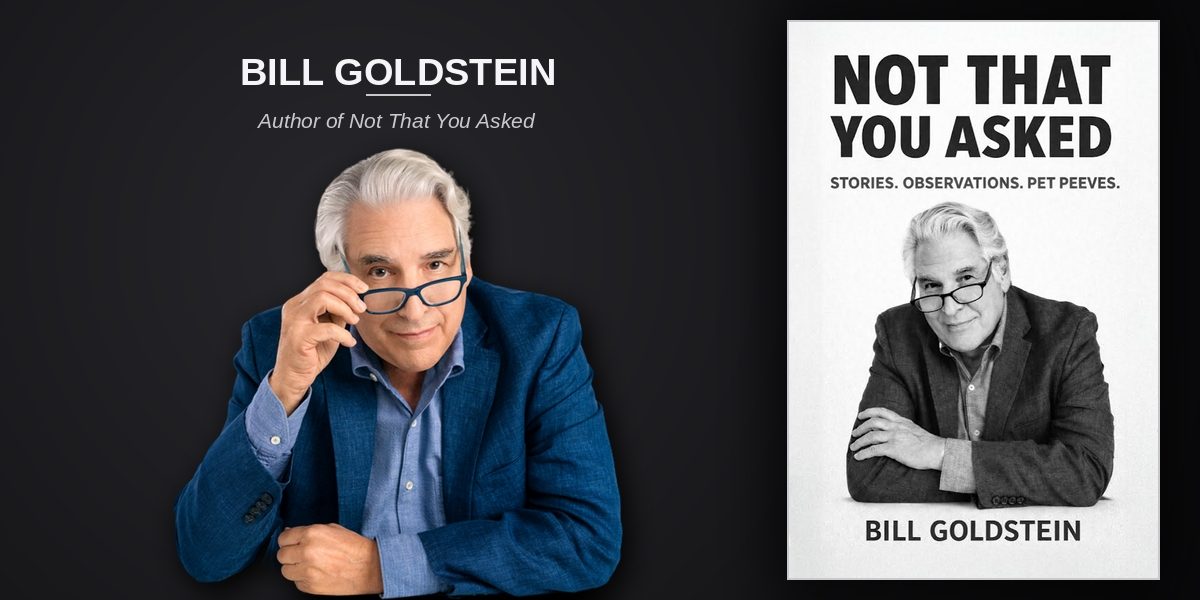
So New Yorkers are heading back to their tables. Bill Goldstein just wants a few things understood before everyone sits down. In his new book, “Not That You Asked: Stories. Observations. Pet Peeves.,” he turns an entire essay into a genial but exacting code of conduct for restaurants, and the standard is not simply the food. “Assuming the food is north of acceptable,” he writes, “the most important consideration for me is comfort.”
It starts with the seating. The first places to be eliminated, he says, are the ones with long, wall-hugging banquettes and two-person tables lined up opposite. “Sliver tables,” he calls them, where “you eat cheek by jowl with strangers” and overhear every word at the next elbow. Considerate restaurateurs, in his book, leave space between tables, offer chairs with arms, and put backs on their bar stools “so you want to pull up and stay a while.”
Then he comes for the pricing games. This is where the essay lands hardest in a summer when a single glass of wine, with a typically skimpy pour, can run twenty dollars or more. His biggest peeve is the daily “special” recited “in lyric detail” with one element often conspicuously missing: the price. “Imagine if the regular menu had no prices on it,” he writes. Ask a server what the special costs and, too often, “I’ll have to check.” His verdict is vintage Goldstein: “What a crock!”
He is quick to say the issue is not that specials cost more. Of course they do, “they’re supposed to be special, right.” The issue is the “shameful hustle” of hiding the number. “Restaurateurs with class are proud of their specials and transparent about the price,” he writes. “No games. No shameful hustle.” He also cautions the servers, who must learn “the difference between being attentive and disruptive.” And, in a closing flourish that will make anyone who has wrestled a slab of steel through a salad laugh out loud, he cries out for smaller cutlery: “Am I the only one who doesn’t like to eat with a fork big enough to hoist a bale of hay?”
There is one revival Goldstein would welcome without reservation, and it happens to be the very thing driving the power-lunch comeback. In a postscript, he mourns the disappearance of the midday cocktail. Lunch, he recalls, once meant “a martini, or two, followed by wine with the food, and maybe a Remy with dessert,” compared to “today’s uptight milquetoasts for whom ordering a single glass of wine at lunch is considered reckless.” The old drinking lunch, he insists, was euphemistically called a “working lunch” for good reason: a libation or two “loosened people up, improved the atmospherics and increased the possibility that something positive might actually get done.” As the dealmakers reclaim their tables, they may find Goldstein was right all along.
Restaurants are only one of his ninety subjects. The book roams from pockets and punctuality to gift certificates and the quiet tragedy of Penn Station, each essay a small, sharp argument from a man who notices everything and lets nothing slide. Read it in a sitting or keep it by the bed for a page at a time. Preferably, in this case, alongside a proper lunch, a proper pour, and a right-sized fork.
Where to find it: “Not That You Asked: Stories. Observations. Pet Peeves.” is on Amazon now in hardcover, paperback, and Kindle, and at billgoldstein.com.