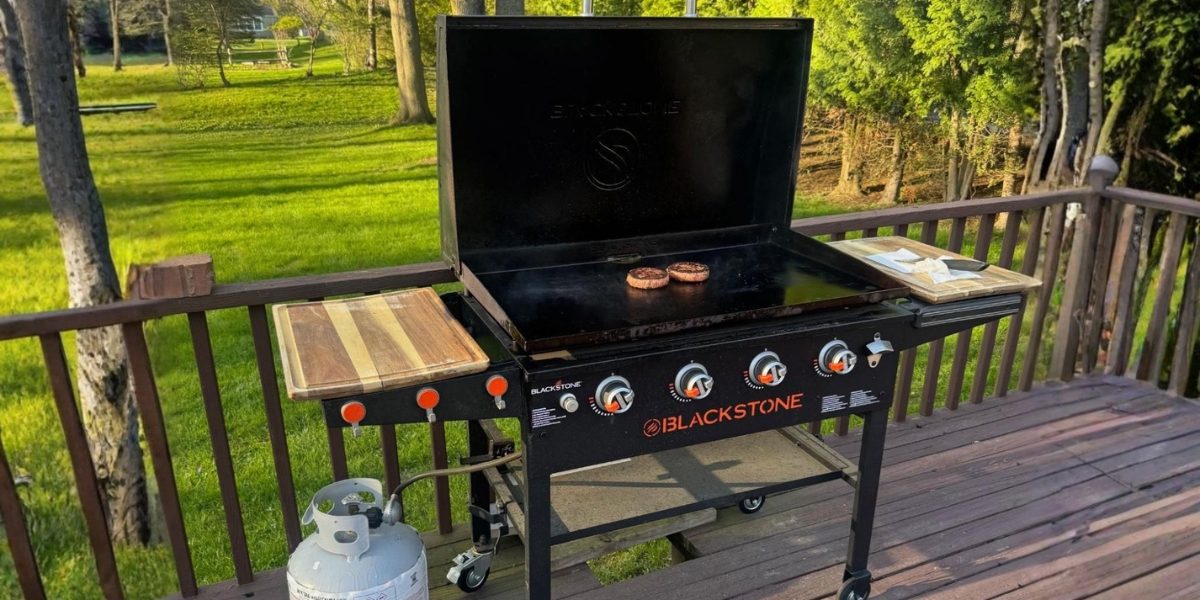

A Blackstone griddle is one of the few pieces of outdoor cooking equipment that can actually get better with age. But keeping it that way takes a little attention after you take the food off. Cold-rolled steel does not have a factory-applied nonstick coating. Instead, the cooking surface relies on a layer of polymerized oil for a slick finish and rust protection. That layer builds over time, but it also needs maintenance. When people run into sticking, flaking, or orange patches, the problem often has as much to do with how they clean the griddle as how they cook on it.
The good news is that the basic cleanup takes about five minutes while the surface is still warm. Let it go for a few weekends, though, and that quick cleanup can turn into an hour of scraping followed by several rounds of reseasoning. Anyone who enjoys the ritual of cooking over a wide, flat steel surface quickly learns that caring for the griddle is part of the experience. A few minutes of cleaning after each cook can go a long way toward keeping the surface in good shape years later.
Why Cleaning a Griddle Is Not Like Cleaning a Grill
On a grate grill, drippings fall away and burn off. On a flat-top, everything stays where it landed. Grease, sugar from barbecue sauce, salt from a marinade, and moisture from vegetables can all cook down into a hard layer of carbon.
A thin layer is normal and can be useful. When that buildup becomes thick or uneven, however, it can flake into food, hold onto old flavors, and trap moisture against the steel, which can lead to rust.
The goal when cleaning a griddle is not to scrub it until it looks brand new. It is to remove food and excess buildup while keeping the seasoning intact. Each cleaning decision should protect that balance.
The Five-Minute Routine After Every Cook
The most useful habit is cleaning the griddle while it is still warm enough to work with. Once the food is plated, turn off the burners and let the surface cool for a few minutes.
Start by scraping. A flat metal spatula or dedicated griddle scraper can push loose debris toward the grease trap in long, overlapping passes. Work with the grain of the steel and pay attention to the corners and edges where the plate meets the frame. Most of the food residue should come up during this step.
Next, wipe the surface. Fold several paper towels and hold them with tongs so you do not have to reach over hot steel. Drag them across the plate to pick up remaining grease and fine debris. Continue with fresh towels until the surface is mostly clean. You don’t need to chase a perfectly spotless surface.
Finish with a thin layer of oil. Spread two or three teaspoons of a high-smoke-point cooking oil across the surface with a fresh towel to leave the plate lightly coated. You are creating a moisture barrier for storage between cooks, not leaving a visible layer of oil on the steel.
When to Bring Water Into It
Water has a place in griddle care, and there is no reason to avoid it completely. For stubborn, stuck-on food, pour a small amount of warm water onto the warm plate. The steam can loosen residue that dry scraping cannot remove.
Work the area with a griddle-safe scouring pad, then push the loosened material toward the grease trap. Rinse lightly if needed, dry the surface completely, and apply a thin coat of oil.
The key is to avoid letting water sit on the steel. Briefly using water to loosen food helps, but leaving water on a cooling griddle while you head inside to eat is a recipe for rust. Dry the surface, oil it, and put it away.
Soap is a different matter. After the initial factory cleaning before the first seasoning, you generally shouldn’t use detergent on the cooking surface. Detergent can break down the polymerized oil that protects the steel, while degreasers and heavy-duty cleaners can strip it even more aggressively.
Handling Heavy Carbon Buildup
Eventually, a griddle may develop an uneven surface, with dark ridges around the edges or a gummy texture in the middle. At that point, another quick wipe-down likely won’t help. It is time for a deeper clean.
Heat the griddle on high for 10 to 15 minutes to soften the buildup, then turn off the burners and let the surface cool to a workable temperature. Wearing heat-resistant gloves, scrape away as much carbon as possible with a metal scraper.
For heavier buildup, add several tablespoons of cooking oil and work the surface with a grill stone, pumice block, or coarse pad, moving in one direction. The oil helps lift the loosened carbon while giving the abrasive material some control over the surface. Wipe away the residue, add more oil, and repeat until the plate feels and looks more uniform.
A deep clean may remove some of the existing seasoning. That is normal. Once the buildup is gone, you’ll need to reseason the surface before it is ready for regular cooking again.
Rust and the Full Reset
Orange patches usually have a simple explanation. You may have put the griddle away wet, exposed it to rain or sprinkler water, or left it without enough oil between uses. Fortunately, surface rust does not necessarily mean the griddle is ruined.
Run the burners on high for about 20 minutes to loosen the corrosion, then turn off the heat and let the surface cool. Scrape away the rust and wipe off the debris. Apply several tablespoons of oil, then scrub with a grill stone. Steel wool or medium-grit wet-or-dry sandpaper can also work for more stubborn corrosion.
Keep alternating between oil and abrasion until the towels stop picking up rust-colored residue. A neglected surface may take several passes, so give yourself enough time to finish the job properly.
Once the steel is clean and gray, the griddle is back to bare metal and needs to be fully reseasoned before you cook on it again.
Reseasoning Without Rushing It
This is where patience really pays off. Wipe two to three tablespoons of oil across the entire surface, including the corners and front lip, then buff it back until the plate looks almost dry. Too much oil will not create a better seasoning layer. A heavy coat can leave the surface sticky and more likely to peel.
Turn all the burners to high and let the oil heat. It will begin to shimmer and smoke, then the smoke will gradually taper off as the oil polymerizes and the surface darkens. The cycle typically takes 10 to 15 minutes.
Wait until the smoke stops before applying another layer. Plan on at least three layers, with additional coats if the surface needs them. Flaxseed and canola oils are commonly used for seasoning, and Blackstone’s own conditioner is formulated for griddle care.
The finished surface should look dark and even, without thick or sticky patches.
Eric Monchecourt recommends doing this when you have time to focus on the process, not when you are trying to squeeze it in before dinner or before guests arrive. Reseasoning is much easier when there’s no food waiting on the griddle.
Storage and the Habits That Prevent Rust
Many rust problems start during storage. Keep the griddle in a cool, dry location away from direct rain and sprinkler spray. A heavy-duty cover can help protect it, but the surface should already be dry and lightly oiled. Covering damp steel can trap humidity against the plate.
The grease trap also deserves regular attention. Empty and clean it routinely so grease does not accumulate, attract pests, or contribute to corrosion. If the griddle stays on a patio through a particularly wet season, consider storing the plate indoors when possible.
None of this is complicated. A consistent care routine built around a few basic steps can make the difference between a griddle that keeps performing well for years and one that constantly needs restoring.
Scrape it while it is warm. Wipe it down. Add a thin layer of oil. Cover it once it is dry. Deep clean it when carbon buildup becomes a problem, and reseason the surface when the steel’s condition calls for it.
About Eric Monchecourt
Eric Monchecourt is an outdoor cooking enthusiast whose interest in flat-top griddling grew through years of hands-on experimentation with seasoning, heat management, and long-term equipment care. He focuses on the practical side of backyard cooking, emphasizing easy-to-repeat techniques and equipment that stays in good working order.
He also shares tested techniques with other griddle owners, especially those working through their first season of seasoning and rust prevention. His approach centers on simple routines that owners can build into every cook, helping them get more years of reliable use from their equipment.