
From learning to let go to discovering a deeper sense of purpose, these books help create a happier, more meaningful life.
Some books help solve a problem; others change the questions a person asks. When reading about happiness, personal growth, and peace of mind, readers look for ideas that stay useful during difficult conversations, busy schedules, and uncertain decisions. These books explore happiness through habits, psychology, relationships, and Christian faith, offering different perspectives on finding meaning and maintaining emotional balance.
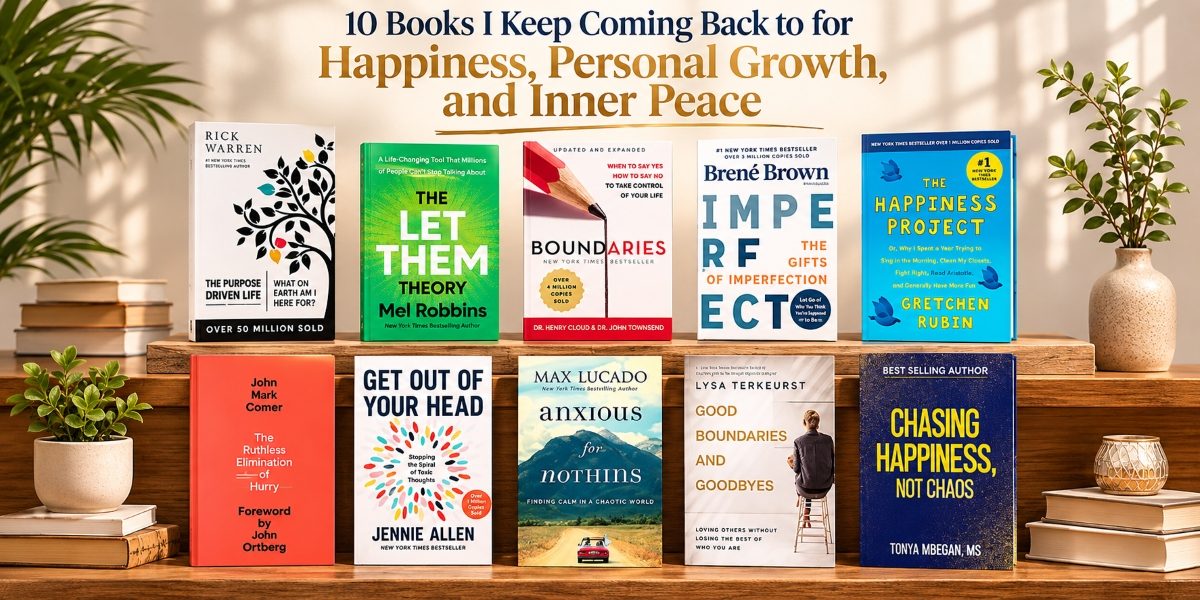
The Purpose Driven Life by Rick Warren begins with a fundamental question: What am I here for? Through a 40-day spiritual journey, Warren explores purpose, service, community, and faith, encouraging readers to look beyond material success. A similar emphasis on intentional living appears in The Ruthless Elimination of Hurry by John Mark Comer, which examines how busyness affects relationships and spiritual well-being. While Warren focuses on discovering purpose, Comer encourages readers to slow down and reconsider their priorities. These two books connect fulfillment with meaningful choices rather than constant achievement.
The Let Them Theory by Mel Robbins and Sawyer Robbins offers a practical lesson in emotional independence, encouraging readers to let go of control over others while taking responsibility for their own decisions. This connects with Boundaries: When to Say Yes, How to Say No to Take Control of Your Life by Henry Cloud and John Townsend, which explores personal limits through Christian principles. Good Boundaries and Goodbyes by Lysa TerKeurst develops the subject further, examining unhealthy relationship patterns and recognizing when distance becomes necessary. Together, these books make clear that caring for others does not require sacrificing personal well-being.
The Gifts of Imperfection by Brené Brown approaches personal growth through self-acceptance, exploring shame, authenticity, and the pressure to meet external expectations. Brown challenges the belief that personal worth depends on achievement or approval. Meanwhile, The Happiness Project by Gretchen Rubin examines how everyday habits and manageable changes influence happiness. These books approach improvement differently: one encourages accepting imperfections, while the other demonstrates how small, consistent actions can make daily life more rewarding.
Get Out of Your Head: Stopping the Spiral of Toxic Thoughts by Jennie Allen examines how worry, self-doubt, and negative thinking affect emotional health. Combining biblical teaching with practical guidance, Allen encourages readers to recognize destructive thought patterns rather than automatically accepting them. Anxious for Nothing: Finding Calm in a Chaotic World by Max Lucado offers a complementary perspective through prayer, gratitude, and trust. Drawing on Philippians 4, Lucado emphasizes maintaining peace amid uncertainty. Both books have compassionate approaches to managing thoughts and navigating emotional challenges.
Chasing Happiness, Not Chaos by Tonya McBean, MS, brings several of these ideas together by exploring joy, gratitude, boundaries, overthinking, and faith. Through personal reflections and practical suggestions, McBean emphasizes that happiness does not depend on perfectly controlled circumstances. What stands out is the reminder that protecting inner peace often requires changing priorities and responses rather than waiting for life to become easier.
Across these books, several themes emerge: purpose over achievement, acceptance over control, and emotional well-being over constant obligation. Some emphasize spiritual growth, while others focus on everyday habits, relationships, and thought patterns. Their different approaches offer readers practical ways to reconsider what truly matters.
These books offer more than temporary reassurance. Each provides a question, practice, or perspective worth returning to when life becomes overwhelming. For a reader, that lasting relevance is what makes a book about happiness and personal growth worth reading and recommending.