
By: Aleksey Ermachkov
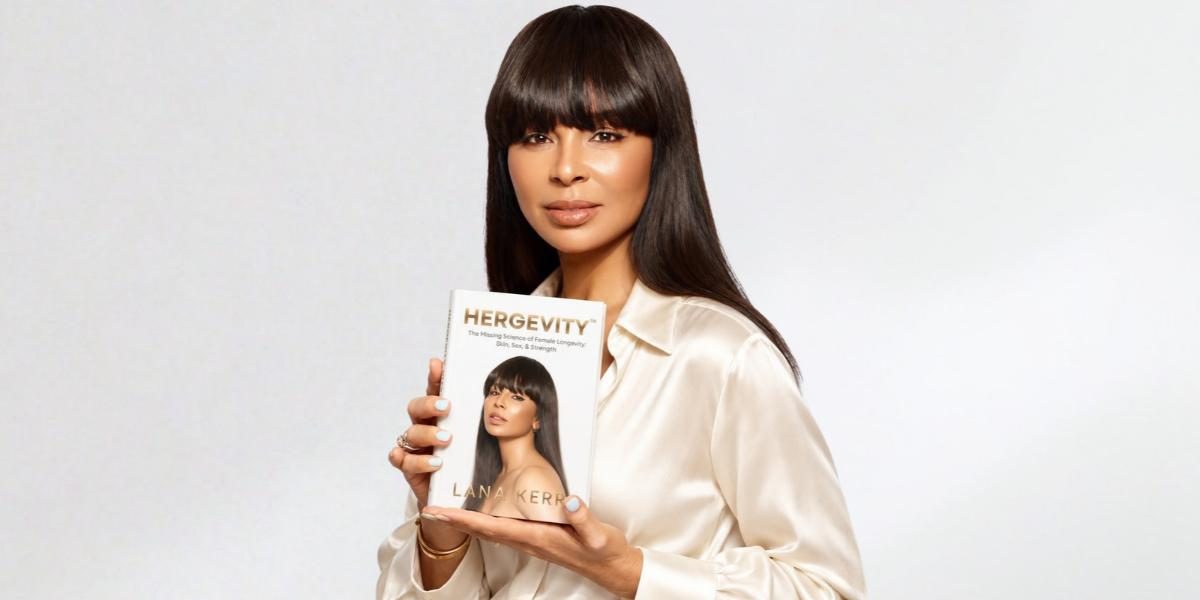
Launching October 22, 2026, Lana Kerr’s new book challenges the gaps in women’s health education and explores why understanding the female body may be one of a woman’s most important investments in her future.
A woman can spend decades learning how to build a career, manage a household, raise a family, and care for everyone around her, yet reach midlife with surprisingly little understanding of her own body.
She may know the importance of exercise and nutrition but struggle to explain changes in her hormones, intimate health, sleep, or sexual response. She may sense that something feels different but lack the language to describe it, and when those changes affect her confidence or quality of life, she may assume they are simply part of getting older.
Lana Kerr wants women to stop accepting that silence.
On October 22, 2026, the entrepreneur, women’s wellness advocate, and founder of CO2Lift® will release HERgevity™: The Missing Science of Female Longevity – Skin, Sex & Strength, a book that explores a fundamental gap in women’s health: the difference between living in a body and truly understanding it.
For Kerr, the subject is personal. Now 55 and navigating menopause herself, she has become increasingly interested in the questions women are never encouraged to ask.
Her work in regenerative skincare and intimate wellness introduced her to the relationship between tissue health, circulation, and the physical changes of aging. It also exposed a broader problem. Women were investing in their health without the foundational knowledge to understand what was happening inside their bodies.
The book is her response. Rather than offering another anti-aging formula, HERgevity™ brings together personal reflection, scientific perspectives, and practical questions that encourage women to become more informed participants in their well-being. At its center is a principle Kerr believes should guide the future of women’s longevity: body literacy must come before optimization.
We spoke with Kerr about the ideas behind the book and the conversations she hopes it will inspire.
New York Weekly: Your book opens with a powerful observation: women are taught about reproduction, but rarely about how their bodies evolve across a lifetime. Why begin there?
Lana Kerr: It’s one of the most important gaps in women’s education, and we don’t talk about it enough.
Most women remember learning about periods, pregnancy, and contraception. But what happened after that? Who taught us about pelvic health, circulation, sexual response, tissue changes, or what hormones do to our bodies over a lifetime?
For many of us, those conversations never happened. We become adults, mothers, professionals, and partners, and we’re expected to understand our bodies simply because we’ve lived in them for years. But experience isn’t the same as education.
One of the questions that stayed with me was, how can I be a grown woman and still know so little about certain parts of my own body?
That’s where the book begins. Before we talk about longevity, we need to talk about literacy. Women deserve to understand their anatomy, recognize changes, and have the language to ask informed questions. You cannot advocate for something you haven’t been taught to understand.
New York Weekly: You write that women often normalize changes they don’t fully understand. How can that affect their health?
Lana Kerr: We have to distinguish between something being common and something being acceptable to live with without answers.
Women are often told that certain changes are just part of aging. Sometimes they are natural transitions. But that doesn’t mean a woman shouldn’t understand what’s happening or discuss symptoms affecting her life.
Take intimate discomfort. A woman may notice changes in vaginal dryness or sexual comfort and feel too embarrassed to bring them up, assuming everyone goes through it and nothing can be done. But there may be ways to manage those symptoms, and the first step is being willing to have the conversation with a qualified healthcare professional.
The same applies to sleep, energy, physical strength, and emotional well-being. I want women to be curious about what their bodies are telling them. Not every change is a crisis, but not every concern should be dismissed either.
New York Weekly: Your book is organized around skin, sex, and strength. Why did you choose those three pillars?
Lana Kerr: Because they are deeply connected to how we experience aging, yet we usually discuss them separately.
Skin is the part of aging we can see. We notice changes in texture, elasticity, and appearance, and we spend enormous time talking about them. Sex has historically received far less open discussion. Intimate health, desire, comfort, and sexual well-being shape quality of life, yet many women struggle to talk about them. Strength is our ability to stay physically capable, resilient, and independent as we get older.
They share a common message: we need to understand our bodies as they change. Longevity isn’t just about looking younger or reaching a certain age. It’s about being able to participate in your own life in the ways that matter to you.
New York Weekly: The book also explores strength and physical resilience. Why does that matter in a conversation about longevity?
Lana Kerr: Because independence is one of the most valuable things we can protect as we age.
When we talk about longevity, we focus on how many years someone might live. But I want women to think about what they want to do during those years. Can you move comfortably? Can you maintain your balance? Can you continue doing the activities you love?
Strength isn’t only about appearance or fitness goals. Maintaining muscle, mobility, and function becomes increasingly important as we get older, and women deserve to understand why. I want readers to recognize that the habits they build today shape how they experience the decades ahead.
New York Weekly: Each chapter of HERgevity™ ends with a reflection. Why did you want readers to pause and examine their own experiences?
Lana Kerr: Because information is only valuable when we connect it to our own lives. I didn’t want women to read the book, absorb a few interesting facts, and put it away without thinking about what it meant for them.
At the end of each chapter, I encourage readers to reflect on what they’re noticing in their bodies, what beliefs they may have carried for years, and what conversations they want to begin. Sometimes the most important realization isn’t learning something new. It’s recognizing that something familiar deserves more attention.
I also wanted the book to feel relevant across decades. A woman reading it at 25 may connect with something completely different from a woman reading it at 55 or 75. That’s intentional. Women’s health education shouldn’t begin only when a problem appears. It should evolve with us.
New York Weekly: How did building CO2Lift® influence your decision to write this book?
Lana Kerr: Building CO2Lift® taught me how important education is when you’re introducing people to something unfamiliar. With a technology like topical carboxytherapy, you can’t expect people to understand the science. You have to explain what it is, what the research supports, and where its limitations are.
That experience showed me how much people value information they can actually understand. As our work expanded into intimate wellness, I became aware of how many conversations women weren’t having. Creating products was only one part of what I wanted to accomplish.
I wanted to create more opportunities for women to learn, ask questions, and understand their health beyond any particular brand or treatment. HERgevity™ grew out of that realization.
New York Weekly: The book includes perspectives from physicians alongside your own experiences. How important was that?
Lana Kerr: Extremely important. I am an entrepreneur and an advocate, and also a woman learning about my own body, like so many of the women I hope will read this book. I don’t believe one person has every answer.
Science provides the foundation, but personal experience reveals the questions people are asking and where education is missing. I wanted the book to bring those perspectives together without pretending every issue in women’s health has a simple solution. There are things we understand well, things we’re still researching, and areas where women need better information.
New York Weekly: What change do you hope a woman makes after reading HERgevity™?
Lana Kerr: I hope she starts asking better questions. That’s it.
Maybe she schedules an appointment she’s been putting off, or finally asks her physician about a symptom she’s been embarrassed to mention. Maybe she begins learning about strength training or looks more closely at how her body is changing. Or maybe she has a conversation with her daughter, her mother, or a friend about something they were never taught.
Those moments matter. I don’t expect one book to answer every question about women’s longevity. But if it helps a woman feel more informed, less embarrassed, and more confident advocating for herself, then it’s doing what I hoped it would do.
New York Weekly: HERgevity™ is developing into a larger movement. What do you want it to become?
Lana Kerr: A conversation that continues long after someone finishes reading the book. I want women to share what they’re learning, question assumptions, and help normalize conversations about subjects that have been ignored for too long. And I want younger women to benefit from knowledge that previous generations had to discover on their own.
That’s how we create meaningful change. Not by telling women how they should age, but by giving them the knowledge and confidence to make their own decisions. HERgevity™ is about understanding the body you’ll live in for the rest of your life, and that’s something every woman deserves.
Kerr’s message arrives as more women question traditional definitions of health, aging, and personal fulfillment.
What distinguishes HERgevity™ from a conventional wellness book is its starting point. It doesn’t begin by telling women what they need to fix. It begins by asking what they were never taught. Through discussions of anatomy, intimate health, physical resilience, and self-advocacy, Kerr invites readers to reconsider how they approach their bodies at every stage of life.
The book also carries a broader entrepreneurial lesson. Meaningful innovation often begins by identifying a question an industry has failed to answer. For Kerr, that question has moved from how science can support healthier skin to how women can become better informed about their health as a whole. With HERgevity™, she is inviting readers to help answer it.
HERgevity™: The Missing Science of Female Longevity – Skin, Sex & Strength launches October 22, 2026, on Amazon.
Readers can follow Lana Kerr’s ongoing conversations about women’s health, intimacy, aging, and confidence. To celebrate the launch, Kerr is preparing a complimentary gift for her community, with details to be announced through her website and social media channels.
Pre-order or purchase HERgevity™ on Amazon beginning October 22, and visit www.lanakerr.com for release updates, book information, and details on joining the movement.
Because understanding your body shouldn’t be something you discover by accident. It should be knowledge you carry with you for life.
Disclaimer: This content is for informational purposes only and is not intended as medical advice, nor does it replace professional medical expertise or treatment. If you have any concerns or questions about your health, always consult with a physician or other healthcare professional.