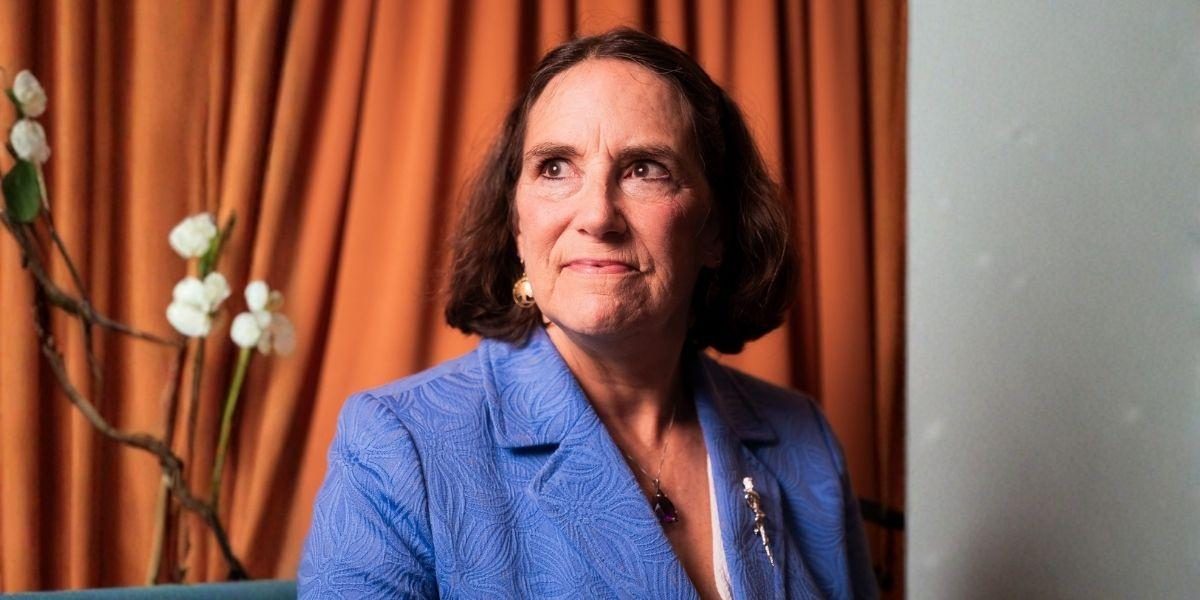

Most physicians spend their careers becoming increasingly specialized.
Dr. Tracy Latz spent hers becoming increasingly curious.
After training in neuroscience, psychiatry, and immunology, she built the kind of medical career that many professionals spend years pursuing. The science was rigorous. The clinical framework was clear. The expectations were well established.
And yet, over time, she began noticing questions that traditional medicine did not always answer particularly well.
Why did two patients with similar diagnoses respond completely differently to the same treatment?
Why did some people recover quickly while others remained stuck despite doing everything they were supposed to do?
Why were stress, trauma, relationships, and mindset often having such a profound impact on physical and emotional health?
For Dr. Latz, those questions became impossible to ignore.
The answer was not abandoning science. It was expanding the conversation.
Today, Dr. Latz is known for an approach that combines traditional psychiatric training with broader exploration into neuroscience, mind-body medicine, epigenetics, stress physiology, and personal transformation. It is a combination that sometimes surprises audiences who expect medicine and personal development to occupy entirely separate worlds.
She often jokes that her approach is “medical school meets Hogwarts.”
The phrase gets a laugh.
It also captures something important.
Many people assume healthcare exists within two opposing camps. On one side is science. On the other side is everything else. Dr. Latz rejects that framework entirely.
In her view, curiosity is not the enemy of science. Curiosity is what drives science forward.
History is filled with ideas that were once considered unconventional before eventually becoming accepted. The relationship between stress and physical health. The impact of trauma on long-term wellness. Neuroplasticity. Mind-body connections. At various points, each of these concepts faced skepticism before evidence emerged to support what many practitioners had already begun observing.
That perspective has influenced how Dr. Latz approaches her work.
Rather than focusing exclusively on symptoms, she looks at patterns. Rather than viewing individuals as isolated collections of diagnoses, she examines the interaction between biology, behavior, relationships, beliefs, and environment.
The result is a broader understanding of health and human performance.
This approach has become particularly relevant as conversations around burnout continue to evolve. Increasingly, professionals are discovering that stress is not simply an emotional experience. It has measurable effects on cognition, decision-making, sleep, physical health, and overall quality of life.
For many people, traditional advice feels incomplete.
Work less.
Stress less.
Sleep more.
While these recommendations are valuable, they rarely address the underlying patterns that keep people trapped in cycles of exhaustion and self-defeating behavior.
Dr. Latz believes lasting change often requires a deeper understanding of what is happening beneath the surface.
That includes understanding how stress affects the nervous system. How old experiences shape present behavior. How mindset influences performance. And how the body frequently communicates information long before the conscious mind recognizes it.
These ideas have resonated with audiences across healthcare, business, education, and leadership sectors.
People are increasingly looking for approaches that acknowledge complexity rather than reducing every challenge to a simple solution.
In many ways, this reflects a larger cultural shift.
The future of healthcare may not belong exclusively to traditional medicine or alternative approaches. It may belong to professionals capable of integrating the best insights from multiple disciplines while remaining grounded in evidence, experience, and practical application.
That is the space Dr. Latz continues to explore.
Not because she believes medicine has all the answers.
And not because she believes medicine has none of them.
But because she believes asking better questions often leads to better outcomes.
For more than three decades, those questions have guided her work.
And judging by the growing interest in topics like burnout, mental fitness, personal transformation, and mind-body health, they may be questions many more people are beginning to ask as well.
For speaking engagements, media inquiries, podcast interviews, and event bookings, contact:
Ni’ Nava & Associates
Website: https://ninavafirm.com
Email: kelsha@ninavafirm.comPhone: 404-410-0200