
By: Devangana Mishra, Founder & CEO, Brain Bristle
There is a boy I know who has not slept peacefully through the night in eleven years. He does not have the language to tell his caretaker he is in pain. He bites his elbow when something overwhelms him, which is often. He will require full-time care for the rest of his life. He is autistic.
There is also a thriving parallel subculture online- articulate, politically engaged, productively angry- made up of people who are also autistic. They write Substack newsletters, they do podcast interviews, they explain, with precision and wit, how the neurotypical world has failed to understand them.
Both groups exist within the same diagnosis, and both deserve recognition. But something has gone wrong when the same DSM-5 category must do all of this work at once, when “autistic” describes the boy who cannot communicate his pain and the essayist communicating theirs to a hundred thousand subscribers. The definition of autism expanded to contain multitudes has been captured by the loudest among them (and those don’t always mean the most profound), crushing the rest under their weight.
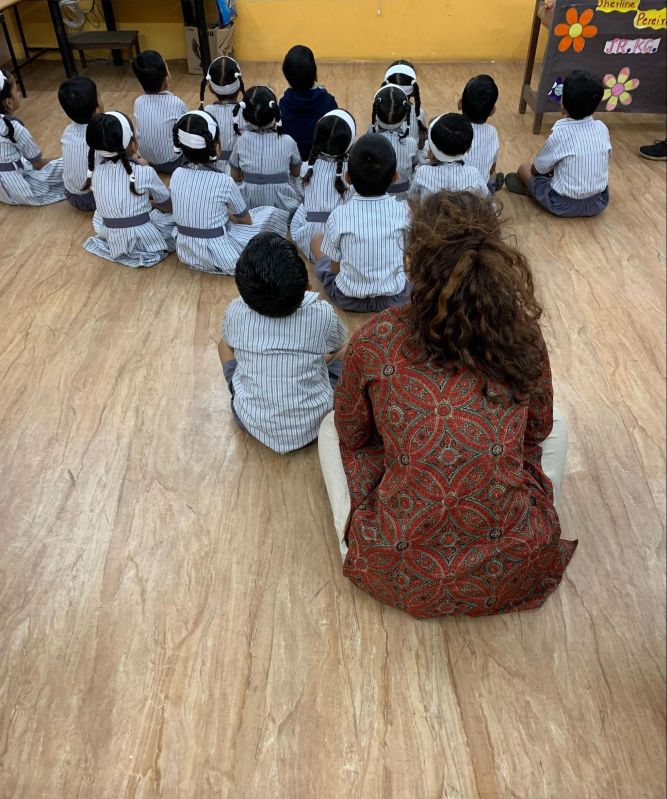
Photo Courtesy: Devangana Mishra (A student with autism being included in mainstream classrooms)
The autism diagnosis has undergone one of the most consequential definitional stretches in modern medicine. Over three decades, even from when I began studying autism fifteen years ago to today, it has moved rapidly from a well-bounded clinical category, defined by severe communication impairments, significant intellectual differences, and profound support needs, to a spectrum so wide its edges have become meaningless. When diagnostic criteria expand this far, with so many voices claiming the same umbrella, it becomes unclear who we are asking for, what we are asking for, what needs support and how, where services are going, and whether those most profoundly in need are being heard and given at all.
And, I sometimes wonder whether, in my urgency to make those with high needs heard and seen, I am doing those very students and families that we wish to serve a societal disservice, by undoing what took decades of destigmatization to build inclusion out of.
Resources, particularly in India, are limited. Therapeutic, educational, governmental: all of it is very finite. When a diagnostic category grows to encompass a number as large as 18 million, those resources must still reach those most deeply in need. And the people most likely to fall through the widened gaps are still those with the highest support needs: the nonverbal, the minimally communicative, the self-injurious, those with minimal resources and ways to receive, those who require round-the-clock supervision, and who will never be able to advocate for themselves.
Meanwhile, public understanding of autism is being rewritten globally; a lot of young people ask me, ‘Hey, you think I’m autistic?’ Today, autism is coming to be known as sensory sensitivity, social anxiety, a preference for routines, stimming on phone screens, and a feeling of not quite fitting in. These are real experiences, but they are not the same neural mechanics that make one unable to speak coherently, unable to toilet independently, unable to survive without constant daily supervision and care, yet a gifted musician or mathematician. When the milder, ‘chill’ presentation becomes the representative one, the severe presentation becomes something else, an intellectual disability? Families living with profound autism increasingly report feeling unseen by the diagnostic criteria now, not because awareness of autism has shrunk, but because awareness of their version of it has been crowded out, and resources have scattered and followed what looks like hope.
We, at my non-profit, Brain Bristle, have had to call our graduated Social Work Fellows back as the new ones train, just so our high-needs autistic students can go to school each day in June without meltdowns, without the kind of setback that takes months to undo. These children cannot go to school without stable support. We are desperate for them to be seen as little heroes, and not as victims of a debilitating, needy diagnosis, headed toward ostracism. We want them to be seen as equal, active participants of their schools- maybe five years from today, with daily, effective intervention, they’ll get there, but today, every day is very hard for them. We want them to be seen without pity or hopelessness, and still get them all the best resources they can receive for as long as it takes to make remarkable progress.
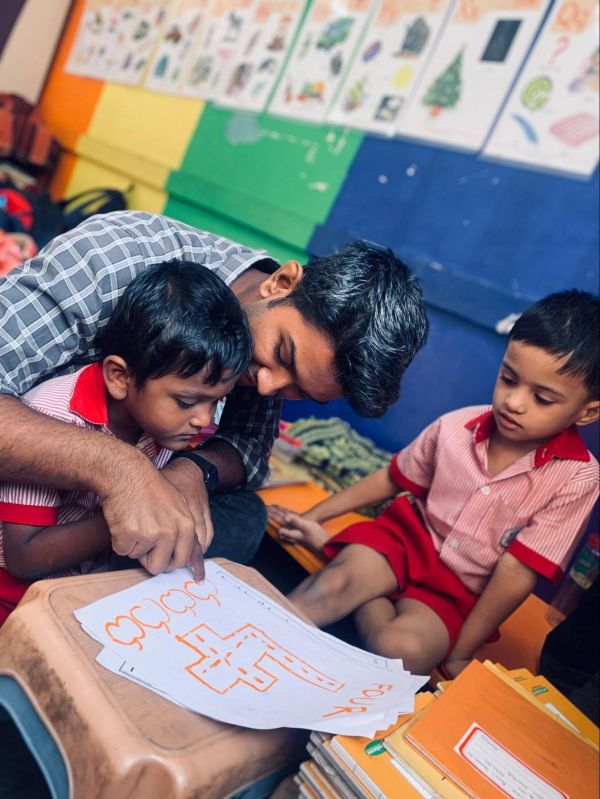
This widening and minimizing of autism is not a criticism of the neurodiversity movement. Its insistence that autistic people are not broken, that difference is not deficiency, that inclusion is necessary, has produced real movement away from stigma and bias. Accommodation has grown, and certain brutal and counterproductive treatments have ended. But all movements have unintended consequences, and one consequence of this widening is a flattening. If autism becomes primarily a neurological difference rather than a disability, a vast spectrum of human diversity, then the daily, grinding reality of many of our students’ lives from the bathroom to the classroom, from taking two months to be able to follow two-step directions in an English lesson, to doing so without biting their elbow or running out of the door gets muted and eventually disappears from the conversation entirely.
Science has followed culture in troubling ways; it tunes out pain. Research samples are increasingly skewed toward autistic participants who can complete questionnaires, engage in interviews, and consent to protocols. This produces readable, understandable data, which is methodologically convenient and ethically clean. But it also means the population generating the most data is not the population with the highest autism needs. We know more and more about the autism that can speak for itself, which makes interesting observations about space rockets, but we know far less about the autism that paces the hallway on tiptoe, muttering to itself, sitting on bathroom floors scrolling an iPad, flipping pages of books for the air between, counting numbers and rhymes once rewarded with a raisin to remember.
The solution is not to narrow the spectrum, strip anyone of their diagnosis, or return to an era when autism was synonymous with tragedy and institutionalization as the only response. But the fix must involve large-scale clinical and administrative precision, ensuring that profound, high-need autism gets equally seen, equally included, it gets an amplified voice, it gets recognized, supported, educated, made part of, and meaningfully employed, without taking anything from anyone, simply by guaranteeing it all that it deserves in our society until seen progress.
If this diagnosis, which advocates have fought decades to separate from childhood schizophrenia, is to remain clinically useful, to drive research, to direct resources, and shape policy that reaches those who need it across the spectrum, then the field must echo to one another, inclusion does not arise in a world of lesser disability, it arises when a society tightens and doubles its services such that those disabled are included with four hands holding them up.
The boy who bites his elbow in a corner of a special school deserves better than a category so crowded he can no longer be seen.