
By: Ibukun KeyamoS
Clearview Jewish Center stands on a residential street in Whitestone, Queens, its brick facade giving little indication of the extraordinary history contained within. The synagogue was founded in 1952 by Jewish families who had survived the Holocaust and sought to rebuild their lives in America. They pooled resources to purchase land, construct a building, and create a space where they could pray, mourn their losses, and raise children in safety.
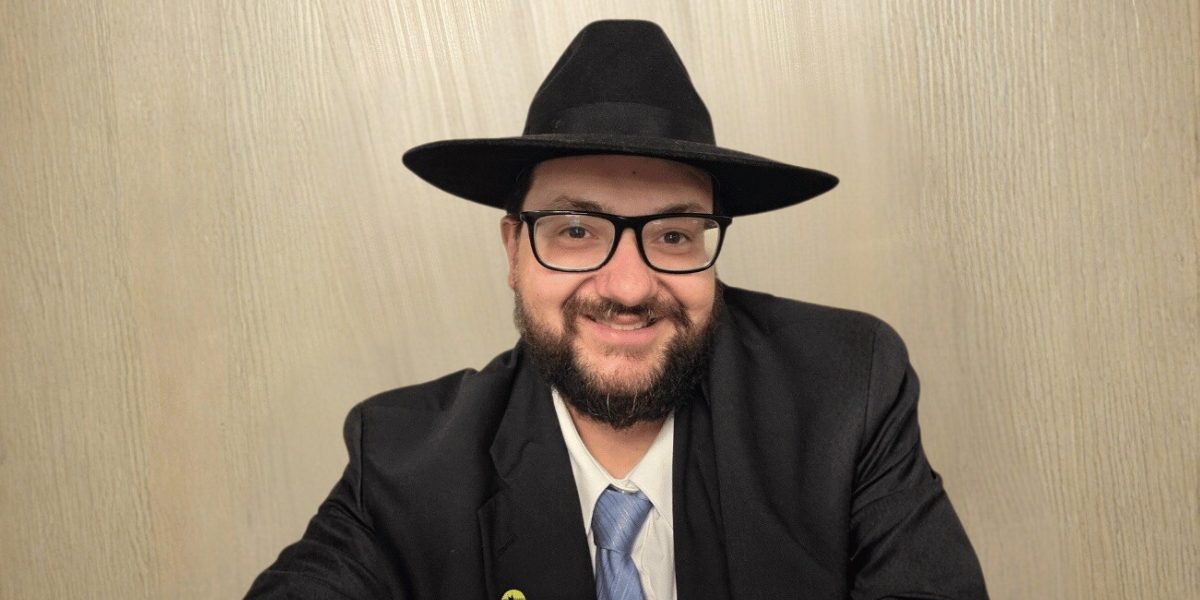
Many of the founding members are no longer living. Their children, now in their seventies and eighties, carry memories of parents who spoke rarely about what they had endured but who channeled their trauma into building institutions that would endure. Rabbi Daniel Sayani, who became the congregation’s spiritual leader in 2021, views the preservation of that founding legacy as among his most sacred responsibilities.
“Every membership card, every faded newsletter, every photograph from a bar mitzvah in 1958 tells a story about how people rebuilt their lives,” Sayani said. “These are not just administrative records. They are testimony.“
Under his guidance, the synagogue has undertaken a systematic effort to collect, organize, and preserve materials from its early decades. Volunteers have combed through filing cabinets, storage closets, and members’ personal collections to gather documents that shed light on the congregation’s formation and development. The project has yielded hundreds of items, including handwritten meeting minutes, correspondence with local officials, programs from lifecycle events, and photographs of members who have since passed away.
Documenting Living Memory
The preservation effort extends beyond paper records. Sayani has conducted video interviews with second-generation members who can share their parents’ stories. These conversations often begin with questions about the synagogue itself but quickly expand to encompass broader themes of displacement, adaptation, and the determination to maintain Jewish life after catastrophic loss.
One interview subject, whose mother was among the founding members, described how the women of the congregation organized fundraising events to pay off the mortgage. They held bake sales, raffles, and cultural programs, often working multiple jobs while raising children. The interviewee recalled her mother saying that building the synagogue was a way of asserting that Hitler had not won.
“When I hear stories like that, I realize we are not just maintaining a building,” Sayani said. “We are stewarding a testament to resilience.”
The video interviews are being archived in multiple formats to ensure long-term access. Sayani worked with a consultant to establish protocols for storage, metadata, and eventual public access. The goal is to create a resource that students, researchers, and descendants of members can consult in future decades.
Organizations that support Holocaust survivors and commemorate their experiences have emphasized the importance of community-based memory projects. As the generation of survivors passes away, the institutions they founded become critical repositories of firsthand accounts and material culture. Studies have shown that local synagogues, community centers, and schools often hold records that do not exist in major archives.
Financial Stewardship for Heritage Projects
Preserving history requires funding. Maintaining an aging building already strains the congregation’s budget, and adding archival work creates additional costs. Sayani has worked closely with the board to pursue grants from organizations that support Holocaust education, local history initiatives, and religious preservation efforts.
The synagogue recently received a modest grant to digitize fragile documents and improve climate control in storage areas. Sayani also reached out to descendants of former members who have moved away from Queens, inviting them to contribute in honor of their families. Several have responded with donations that support both preservation projects and ongoing operations.
“We tell people that when they contribute to Clearview, they are not just supporting current programs,” Sayani explained. “They are ensuring that their grandparents’ stories remain accessible to future generations. That resonates deeply.“
The approach reflects a broader trend among legacy institutions that must balance operational needs with historical obligations. Business analysts have noted that nonprofits with compelling heritage narratives often attract donors who might not otherwise engage, particularly when those narratives are documented and presented professionally.
Making History Accessible
As materials are cataloged and preserved, the congregation is developing ways to share them with the public. A small exhibit space in the synagogue’s lobby now displays rotating selections of photographs, documents, and artifacts. Visitors can see images of the groundbreaking ceremony in 1952, programs from early High Holiday services, and portraits of founding families.
Sayani has also begun incorporating historical material into educational programs. During classes on Jewish life in postwar America, he projects photographs of the congregation’s early years and invites older members to share their recollections. These sessions blend personal memory with broader historical context, helping younger participants understand how their community fits into larger narratives of immigration and renewal.
The synagogue has partnered with a local history group that documents Queens’ diverse immigrant communities. Representatives from that organization visited to review the congregation’s archives and discuss potential collaborations, including public programs and publications that would highlight the neighborhood’s Jewish history.
“Whitestone has changed dramatically since 1952,” Sayani noted. “Many current residents do not know that this was once a major destination for Holocaust survivors. By sharing our history, we help people understand the layers of experience that have shaped this neighborhood.”
Looking ahead, Sayani envisions the synagogue functioning as both an active house of worship and a resource for students of postwar Jewish life. He has been contacted by graduate students researching immigrant communities in Queens and by educators developing curriculum on Holocaust memory in America. Each inquiry reinforces his conviction that preservation work serves purposes beyond the congregation itself.
“We are temporary stewards of a story that does not belong only to us,” he said. “The people who founded this synagogue wanted it to last. Part of lasting is making sure their reasons for building it are not forgotten.“
Balancing Present and Past
Sayani acknowledges the tension between honoring the past and meeting current needs. Some members prioritize investing in contemporary programs that attract younger families. Others feel the congregation owes its primary loyalty to preserving the vision of its founders. Sayani tries to navigate these competing priorities by showing how they can be complementary.
“The synagogue was built by people who looked forward, not backward,” he said. “They were not trying to recreate what they had lost in Europe. They were building something new for their children and grandchildren. We honor them by doing the same, while making sure their contributions are remembered.”
He points to recent improvements in the building’s accessibility and technology as examples of forward-looking investments that also serve preservation goals. Better lighting and climate control protect archival materials while making the space more welcoming. Video recording equipment allows oral history interviews while also supporting hybrid programming for current members.
As Clearview Jewish Center approaches its seventy-fifth anniversary, Sayani is planning commemorative events that will bring together current members, descendants of founders and community partners. The anniversary offers an opportunity to reflect on what the congregation has meant to multiple generations and to articulate a vision for its next chapter.
“Seventy-five years is significant,” he said. “It means we have outlasted most institutions founded in the same era. That longevity is something to celebrate and also something to build on.”