
By: Santiago Miller
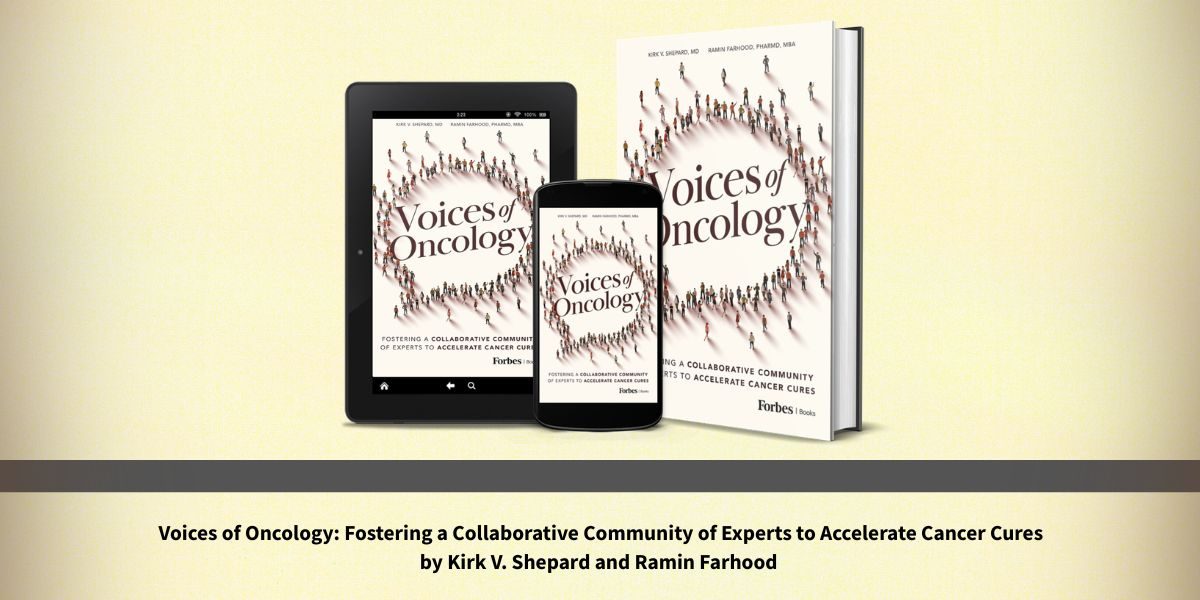
Kirk V. Shepard and Ramin Farhood did not write Voices of Oncology so much as they curated it, assembled it, and gave it the strategic architecture that allows thirty-three genuinely distinguished contributors to speak to each other across the chapters rather than simply presenting their individual perspectives in sequence. That curatorial intelligence is one of the book’s most significant and least visible achievements, and it reflects two decades of combined experience in pharmaceutical innovation and medical affairs that gave both authors a clear and specific understanding of which voices were missing from the oncology conversation and what those voices needed to be able to say.
Reading this book feels like being admitted to a conversation that has been happening in fragmented form across conferences and closed-door meetings and peer-reviewed journals for years, and that has never before been assembled into a single coherent resource that a reader outside the immediate inner circle of any particular institution could access and act on. The contributors Shepard and Farhood have brought together represent not just a range of scientific and clinical expertise but a range of institutional vantage points, perspectives from pharmaceutical development and academic research and patient advocacy and healthcare innovation that illuminate the same terrain from genuinely different angles and produce through their combination a picture that none of them could have painted alone.
What gives the book its particular emotional resonance alongside its intellectual substance is the way it keeps returning to the patient at the center of everything the oncology community is trying to do. Shepard and Farhood are both deeply invested in the idea that the purpose of collaboration in this field is not institutional or professional but deeply human, that every barrier broken down between silos and every piece of knowledge shared across institutional boundaries represents a meaningful difference in the lives of real people living with cancer and the people who love them. That orientation toward the human stakes of the scientific and institutional work gives Voices of Oncology a moral urgency that purely academic treatments of collaboration in oncology never quite achieve.
The Oncology Voice Network that Shepard and Farhood have built around the book is perhaps the most telling indicator of what they set out to accomplish. The book is not designed to be consumed and set aside. It is designed to be the beginning of an ongoing conversation, a resource that connects readers to a community of practice rather than simply delivering information and leaving them to apply it in isolation. That design reflects a genuine understanding of what it actually takes to change how a field operates, not a single intervention however well conceived but a sustained and growing community of people committed to the same shift in how the most important work of oncology gets done.
For anyone in or adjacent to the oncology community who has ever felt the frustration of progress slowed by fragmentation and wondered whether the field was capable of organizing itself differently, Voices of Oncology is both an answer and an invitation. Shepard and Farhood have created something substantial, and the community built around it carries that work forward.
If you are ready to step inside the most important conversation happening in cancer care right now and add your voice to the community that is working to accelerate the path to cures through genuine collaboration, Voices of Oncology by Kirk V. Shepard and Ramin Farhood is waiting for you on Amazon. Pick up your copy today and become part of the Oncology Voice Network that is changing how the field organizes itself around the work that matters most.