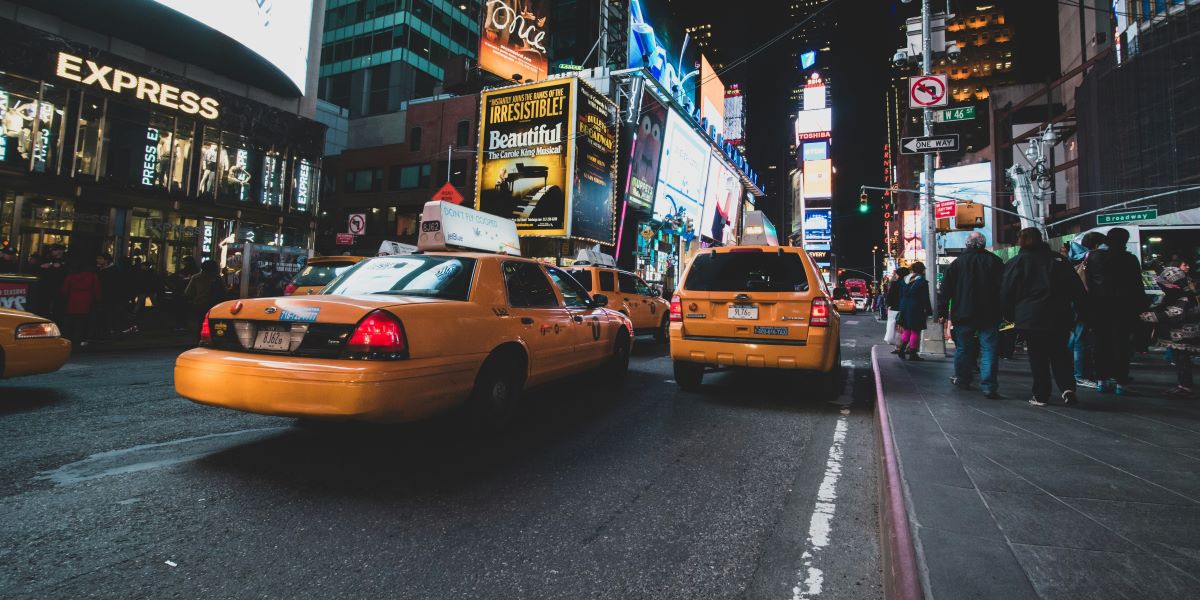

The yellow taxi reads, almost anywhere in the world, as shorthand for New York. Yet the color was neither original to the city’s cabs nor adopted for the reason most often repeated. The widely shared “fun fact” that a 1967 law made New York taxis yellow because a University of Chicago study found yellow easiest to spot actually stitches together two separate histories that unfolded decades and hundreds of miles apart.
A City Of Many-Colored Cabs
For most of the early automobile era, New York’s taxis were a visual free-for-all. As late as 1968, The New York Times described the typical colors of the city’s cabs as yellow, orange, red or gold. The city’s first motorized taxis, in fact, ran in red and green rather than yellow.
Order arrived through licensing, not paint. In 1937, Mayor Fiorello La Guardia signed the Haas Act, which introduced official taxi licenses and the medallion system that remains in place today, capping the number of licenses at 16,900. A medallion granted the right to pick up passengers hailing from the street. Cabs without one had to arrange fares in advance. The Haas Act regulated who could operate, but it said nothing about what color those operators had to be.
The 1967 Mandate
That gap became a problem in the 1960s, when unlicensed cars increasingly competed with regulated cabs and riders struggled to tell them apart. New York lawmakers responded with a color rule. According to Allan Fromberg of the New York Taxi and Limousine Commission, a 1967 ruling required all official New York taxicabs to be painted yellow, specifically Dupont M6284 or its equivalent. Sources differ on whether the measure was enacted in 1967 or 1968 and on exactly when it took effect, but its purpose was consistent across accounts.
Mayor John Lindsay framed the change as a matter of public clarity, arguing that riders needed a fast way to distinguish licensed taxis from private liveries. Notably, the stated rationale was identification, not long-distance visibility. The shift was not universally welcomed. Livery-cab drivers protested the requirement, at one point overturning 14 medallioned cabs and burning some of them during a dispute over operating in parts of Brooklyn. The Taxi and Limousine Commission, which still oversees the fleet, was created in 1971.
Where The Visibility Study Actually Comes In
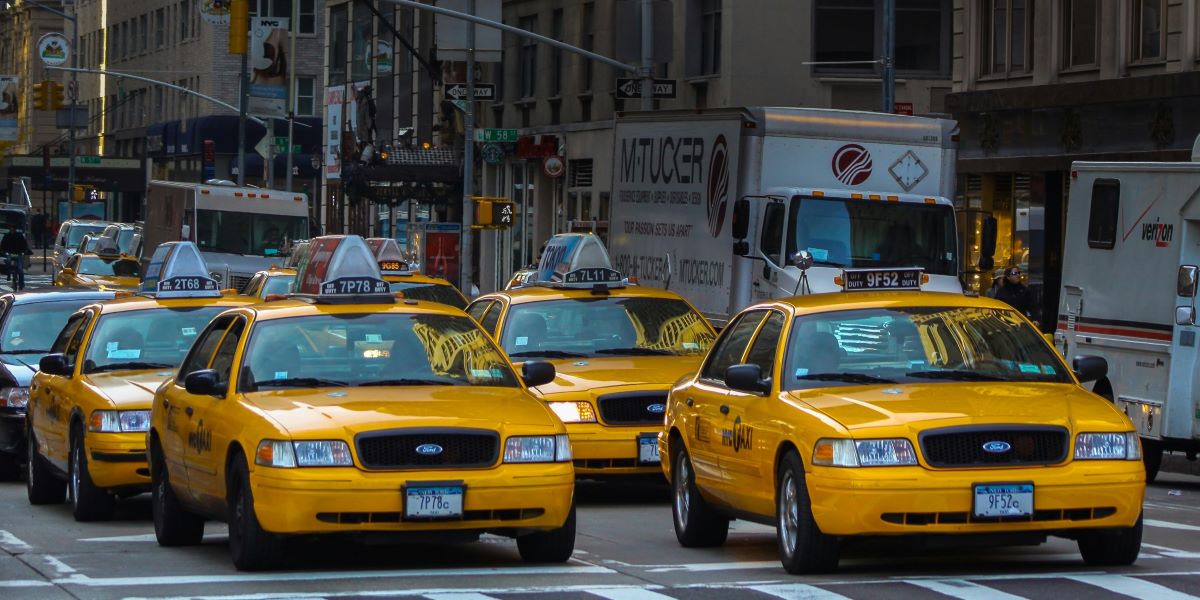
Photo Credit: Unsplash.com
The popular version collapses two accurate facts into a single claim, the same way the story behind the city’s nickname often gets retold. The visibility rationale and the University of Chicago survey belong to the Chicago commercial origins of the yellow cab in the early twentieth century. The 1967 mandate belongs to New York and was driven by regulatory enforcement, giving passengers a reliable signal that a cab was licensed. Over time, the branding logic of one and the legal mandate of the other fused into a single explanation that neither history fully supports on its own.
How firm that finding was is another matter. Several accounts treat the study as lore rather than documented science. One account notes that Hertz allegedly got the idea from a Chicago university study finding yellow with a touch of red most visible over greater distances, while adding that this part is unverified. Wikipedia similarly attributes the color choice to a survey at an unnamed local university while flagging that the claim is contested.
There is a further wrinkle: yellow cabs predated Hertz’s research. Businessman Albert Rockwell ran yellow taxis as early as 1909 and incorporated the Yellow Taxicab Company in New York in 1912. By one often-repeated account, Rockwell settled on yellow not from any study but to please his wife, Nettie, who preferred the color.
Why The Story Gets Merged
The popular version collapses two accurate facts into a single tidy claim. The visibility rationale and the University of Chicago survey belong to the Chicago commercial origins of the yellow cab in the early twentieth century. The 1967 mandate belongs to New York and was driven by regulatory enforcement, giving passengers a reliable signal that a cab was licensed. Over time, the branding logic of one and the legal mandate of the other fused into a single explanation that neither history fully supports on its own.
The Color Today
The yellow standard has held, though it now shares the road. In 2013, the city introduced green taxis for the outer boroughs, choosing a distinct color so riders could tell them apart from yellow medallion cabs, which could be hailed on the street like their yellow counterparts. The yellow fleet, meanwhile, has contracted as app-based services have absorbed demand, leaving a smaller pool of medallion cabs than the city once counted.
What endures is the color itself, locked in by a half-century-old regulation whose real purpose had less to do with how far away a cab could be seen than with whether it was allowed to stop for a fare at all.