Forever Swim Week World Organization Builds a Destination-Based Swim Week Platform

The Largest Swim Week Organization in Europe and the Official Swim Week of Ibiza

Forever Swim Week World Organization has rapidly established itself as one of the influential platforms within the global fashion, tourism, hospitality, and lifestyle industries. Recognized as the largest Swim Week organization in Europe and the official Swim Week of Ibiza, the company is redefining how destination-based Swim Week ecosystems are created, expanded, and experienced worldwide.

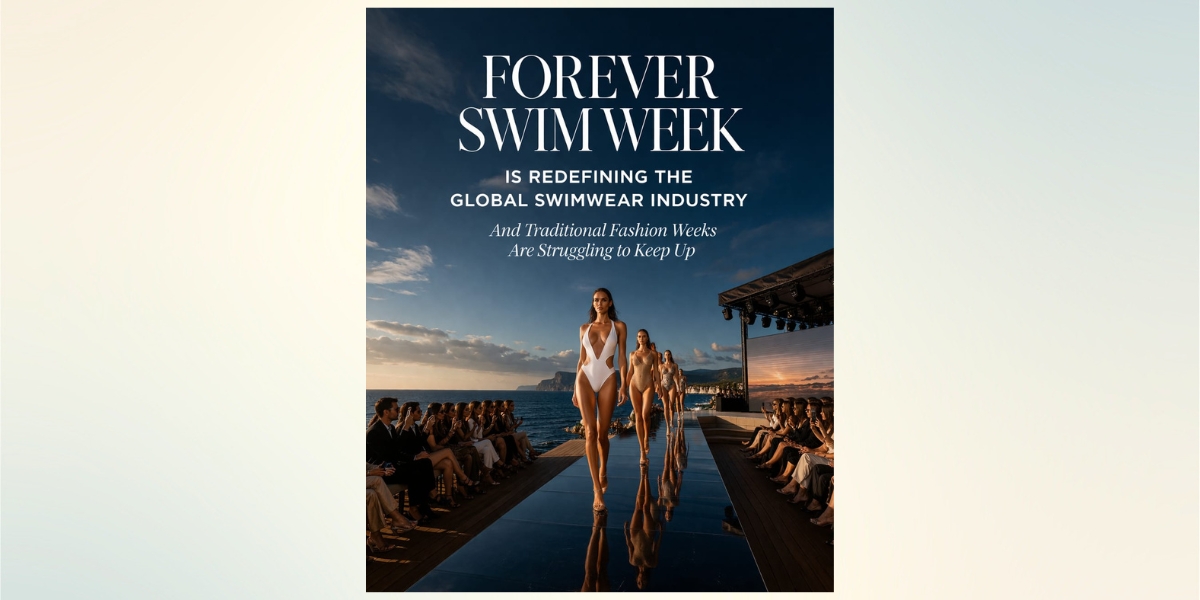
Unlike traditional fashion event companies that focus primarily on runway production, Forever Swim Week World Organization was built as a global infrastructure and destination ecosystem platform designed to connect fashion, swimwear, tourism, hospitality, nightlife, media, entertainment, luxury brands, and local businesses into unified multi-day Swim Week experiences.

Photo Courtesy: Forever Swim Week World Organization

Beyond the Runway: A New Era of Destination Swim Weeks

Forever Swim Week World Organization believes that a true Swim Week is far more than a fashion show or a standalone event. A successful Swim Week should function as a complete multi-day ecosystem that activates an entire destination through fashion, tourism, hospitality, entertainment, nightlife, media exposure, and cultural experiences.

This innovative approach transforms Swim Week into a powerful economic and tourism-driving platform capable of generating international visibility and long-term commercial growth for participating destinations. Hotels increase occupancy, restaurants attract international visitors, nightlife venues benefit from increased tourism activity, transportation providers experience additional demand, and local businesses gain exposure through global media coverage and influencer participation.

The organization’s mission is to help destinations build sustainable Swim Week ecosystems that extend beyond fashion and evolve into internationally recognized lifestyle experiences capable of generating recurring tourism and economic impact year after year.

Photo Courtesy: Forever Swim Week World Organization

The Official Swim Week of Ibiza

As the official Swim Week of Ibiza, Forever Swim Week World Organization has positioned itself at the center of one of the world’s iconic luxury lifestyle destinations. Ibiza is internationally recognized for its tourism, hospitality industry, beach culture, entertainment scene, and global audience, making it the ideal location for a world-class Swim Week ecosystem.

By combining runway experiences with hospitality activations, exclusive events, luxury venues, nightlife partnerships, influencer engagement, and international media exposure, the organization has helped elevate Ibiza’s position as one of Europe’s premier Swim Week destinations.

This achievement has further strengthened Forever Swim Week World Organization’s standing as the largest Swim Week organization in Europe while supporting its continued expansion into new international markets.

Building Europe’s Largest Swim Week Ecosystem

Forever Swim Week World Organization operates with a vision that extends far beyond traditional event production. Its objective is to build the largest interconnected Swim Week ecosystem in Europe while establishing a global framework for destination-based Swim Week culture.

The organization collaborates with independent production companies, designers, event organizers, hospitality groups, tourism boards, sponsors, media companies, venues, and local governments to help facilitate internationally recognized Swim Week experiences across multiple regions.

Its expanding international destination network includes major lifestyle and tourism markets such as Tulum, Dubai, Jamaica, Hawaii, Tokyo, and Miami, destinations known for their influence in fashion, luxury travel, tourism, and entertainment.

Through this ecosystem-based model, the organization creates opportunities not only for designers and fashion brands but also for local economies seeking international tourism exposure, investment opportunities, and sustainable growth.

Creating Global Standards for Destination Swim Weeks

One of the organization’s ambitious long-term goals is the creation of international standards and certification systems for Swim Weeks and destination-based fashion ecosystems worldwide.

Forever Swim Week World Organization is currently developing certified destination partnerships, production company certification systems, hospitality and venue partner networks, tourism board collaborations, international expansion programs, and economic impact reporting frameworks designed to measure the value generated through Swim Week ecosystems.

This infrastructure-focused model positions the organization as much more than an event producer. It serves as a global platform designed to support cities, tourism industries, creative communities, hospitality sectors, and international fashion networks at scale.

The Future of Global Swim Week Culture

As fashion, tourism, hospitality, and entertainment continue to merge into a global lifestyle economy, Forever Swim Week World Organization is positioning itself as one of the industry’s innovative and influential organizations.

Its long-term vision is to become the global infrastructure behind destination Swim Week culture, connecting cities, creatives, businesses, tourism leaders, hospitality groups, and international audiences through one unified ecosystem.

With continued expansion across Europe, the Americas, the Middle East, and Asia, Forever Swim Week World Organization represents a new generation of fashion infrastructure where Swim Week becomes more than an event. It becomes a tourism movement, a business ecosystem, and a global cultural platform.

One World. One Standard. Endless Destinations.

How Josef Brocki Built Evolve Without Outside Investors

By: Jay Kt

At just 25, Josef Brocki stands at the helm of a fast-scaling European education and technology adoption company, Evolve, which has quietly built one of the region’s most closely watched “tech enablement” models without a single euro of external venture capital.

The company has trained more than 8,000 professionals and works with major institutions across Europe. Its clients include Indra Sistemas, a European technology and defense company, along with professionals from Banco Santander, Mapfre, Santa Lucía, Carrefour, and Cabify.

We spoke with Brocki about rejecting venture capital orthodoxy, redefining corporate training, and building a talent pipeline designed for an AI-driven economy where traditional education is increasingly under pressure.

Interview

Q: You built Evolve without raising external capital in a sector where most competitors rely heavily on funding. Why?

Brocki: I strongly believe in organic growth. Most founders today prioritize raising capital first and validating later. I prefer the opposite. I validate demand early with minimal resources and iterate based on reality.

Today, we have tools that make it possible to test markets quickly without large teams or infrastructure, something unthinkable decades ago. My mindset is highly tactical and execution-driven. Venture capital structures, with boards and advisory layers, don’t always translate into better operational decisions.

That said, I don’t see fundraising as negative. It’s simply a different philosophy. Ours has proven that disciplined, bootstrapped growth works. In 2025, we prioritized stability over volume, and we focused on building a sustainable operation. In 2026, we focus on consolidation.

Q: Evolve works with Indra and trains professionals from Santander, Mapfre, and Santa Lucía. How did a young bootstrapped company reach that level?

Brocki: Large enterprises don’t choose providers based on size. They choose based on outcomes.

When you deliver programs where a strong share of participants secure employment or significantly improve their career situation, and when your instructors are actively working with the same technology stacks your clients use, the conversation changes completely.

We don’t compete on price. We compete on the results we can show. That levels the playing field, even for a young company.

Q: You describe Evolve as “Tech Enablement,” not an academy. What’s the operational difference?

Brocki: An academy sells courses. We deliver operational capability.

We don’t say, “Here are ten certified professionals.” We say that within six months, the goal is for a client’s team to operate the technology in real production environments.

That requires a different curriculum, instructors who are active practitioners, and a completely different success metric. If the client’s team cannot execute after the program, we have not done our job.

Our philosophy is simple. We enable evolution through technology with measurable outcomes.

Q: Many of your graduates improve their employment situation. What drives that result?

Brocki: First, our instructors are active professionals. They bring real-world problems, real systems, and real networks.

Second, employability is not marketing. It is a business metric. Our career support team is as important internally as our academic team. We support negotiation skills, career planning, and market positioning in areas where talent is scarce.

Increasingly, companies come to us directly. Hiring managers reach out inbound. That is a strong signal that our reputation in the labor market is consolidating.

Q: What decisions have you made that most competitors would avoid?

Brocki: We maintain an admissions process and waiting list. It does not maximize short-term growth, because we reject applicants who are willing to pay.

But it protects our quality and ultimately our employability outcomes.

We also only work with instructors who are actively employed in industry. That increases cost and complexity, but it ensures everything we teach reflects what companies actually need today.

For us, that is non-negotiable.

Q: AI is evolving faster than traditional education systems can adapt. How do you design programs in that environment?

Brocki: We don’t teach tools. We teach the ability to operate tools that don’t exist yet.

A professional who understands how language models are built, trained, and evaluated can adapt to future systems. Someone who only learns a specific interface cannot.

That’s why our curriculum is continuously updated with active practitioners who see market needs in real time. If they stop working in the industry, they stop being relevant to what we teach.

Q: What has been your hardest lesson as a founder?

Brocki: Managing uncertainty without losing focus.

It’s easy to open too many fronts before consolidating what you already have. Discipline matters. Surrounding yourself with people who are direct, ambitious, and honest matters even more.

And you must stay adaptable. Discipline should never become rigidity.

Q: Why did you create WEvolve alongside commercial operations?

Brocki: Through WEvolve, which works with organizations such as the Ronald McDonald House Charities, we believe there is a responsibility to extend access to opportunity.

Some people are not born into environments that give them access to technology or education. That is not their choice.

We are not an NGO. We operate as a for-profit company because we believe that is how we maximize impact. The stronger we are commercially, the more we can reinvest into transformation.

Money is not the objective. It is a consequence.

Q: If a CTO of a large enterprise is considering Evolve, what should they know?

Brocki: The right fit is when a company needs its teams to operate in AI, data, or cloud environments within six months and retain that capability internally.

We start by understanding business KPIs. Then we identify the capability gap. What we focus on is not a certificate, but improvement in operational execution that the client can assess before and after the program.

Q: How do experienced professionals with 20+ years in the industry end up joining your programs?

Brocki: They don’t come because they lack knowledge. They come because their industry is changing faster than ever.

AI is redefining what it means to work in data, security, and technology. Senior professionals see that shift early. They join us to stay close to practitioners working with today’s and tomorrow’s systems and to accelerate their adaptation.

Q: Where do you want Evolve to be in five years?

Brocki: I don’t think in rigid five-year predictions. The environment changes too quickly.

What matters to me is staying disciplined, improving based on what we’ve already learned, and not losing direction.

If we maintain that focus and adaptability, growth becomes a natural outcome.

Media Contact

Contact Person Name: Julio Domínguez

Company Name: Evolve

Website: evolve.es

Email: julio@evolve.es

Country: Spain

Hughes Medor on How Reliability Builds Results for Successful Gyms

By: William Jones

Fitness performance is often measured in reps, time, and results. According to Hughes Medor, founder of Medor Fitness Supply and Services LLC, behind every successful workout is equipment that works consistently and without interruption.

“Even people break down sometimes,” Medor says. “Equipment is no different. The difference is how quickly and efficiently you respond to it.”

With more than three decades of hands-on experience, Medor says his journey into fitness equipment was shaped by a lifelong instinct. “I have always had a knack for fixing things,” he says. That instinct, he adds, shaped his early career in the sporting goods sector before leading him into fitness technology.

According to Medor, after 14 years working within a fitness technology company, he stepped away to build something of his own. He spent time working in home improvement, refining both his technical and business skills. About 20 years ago, he says he returned to the field of fitness with a clear vision and began building Medor Fitness Supply and Services, formerly known as Kingdom Fitness Supply & Service.

Within the first year of operations, Medor brought his son, Alex Medor, into the business. Over the past 19 years, he says he has trained Alex in the technical and moral aspects of the trade. “Today, I handle the inside of the business, and Alex handles the outside,” Medor explains. “I see myself as the dispatcher, making sure everything flows. He is out there delivering the service.”

He adds that the skills required for this field of work cannot be taught. They are developed over time through experience and instinct. “A lot of this is inherent. You learn it by doing it,” he adds.

For Medor, his partnership with his son has supported steady growth, driven almost entirely by word of mouth over the past two decades. That, he says, is a direct reflection of a client-first philosophy that has guided every stage of the business. “If you take care of people, they take care of you,” he says. “That is what this business is built on.”

As the fitness industry continues to evolve, the technical demands placed on service providers are increasing. Modern equipment is more advanced, often integrating digital interfaces, connectivity, and sophisticated performance tracking systems.

For Medor, this shift reinforces the importance of adaptability. “You have to keep your mind open,” he says. “The industry changes, and you have to grow with it. That is what I have done for the last three decades, and that is what I will keep doing.”

One of Medor’s long-term goals is to establish a dedicated facility that would serve as a central hub for operations. “I would like to have our own building with a warehouse, a space where we can manage inventory, handle larger projects, and continue to expand what we offer,” he says. For him, this vision reflects his broader ambition to strengthen the company’s infrastructure while maintaining the personalized service that has defined its reputation.

According to Medor, his story is one of persistence, adaptability, and an unwavering commitment to quality. From his early days learning to fix equipment to building a business that supports the daily operations of fitness facilities, he says he has remained guided by the simple principle of doing the work well and taking care of the people who depend on it.

He says, “At the end of the day, if your equipment works, your business works. And if your business works, everything else follows.”

Summary: With three decades in fitness equipment service, Hughes Medor says reliability, relationships, and consistent care are what keep the fitness industry moving.

Five Generations at Work? How Smart Leaders Make It Work

By Clark Lowe, President & CEO — O’Connor Company

Think back to the old one-room schoolhouse when the bell would ring, and students of a dozen different ages would settle on long benches. Today’s workplace is that schoolhouse, with traditionalists, Baby Boomers, Gen X, Millennials, and Gen Z sharing one room. Each brings a different rhythm and a different reason to show up.

We all grow up differently, and those experiences shape how we prefer to work. Think about how older employees often value structure and rules, while younger workers tend to look for learning and feedback. The ways we want to communicate with each other differ as well. Many Baby Boomers appreciate face‑to‑face and email interaction, whereas Millennials and Gen Z lean toward the speed of collaborative tools.

My advice is simple: employ clarity and autonomy in your leadership. These two ingredients will turn your team’s differences into complementary strengths.

Diversity Becomes Power When Paired With Clarity And Autonomy

Start with clarity. It helps you align your team, which is why smart leaders make team goals and deadlines concrete. When everyone is clear on the “what” and “when” behind a project, they can pull in the same direction. That’s true even if they have different “whys.”

A high level of clarity sets the stage for successful autonomy. Autonomy is the key. It frees you to respect each person’s expertise. Some team members will want to rely on proven methods, and others will suggest a new tool. Both can contribute when the outcome is fixed, but the method remains flexible. If you can resist dictating the details, you’ll invite experience to meet innovation. The result is powerful.

Leaders Who Create Self‑regulated Teams Empower Everyone, No Matter What The Generation

The leadership that encourages self-regulated teams blends clear direction with trust. You set the destination, and your team charts the route. In other words, you don’t tell your people exactly how to do every task, but you define exactly what success will look like.

Clear outcomes and guardrails are critical in this approach, so start by describing what the completed project will look like in plain language with measurable criteria. Spell out deadlines and safety rules, and be clear about compliance requirements and budget constraints, since these standards won’t move.

Now, your team is ready for autonomy. Give them control over the tools and methods they will use, but take care not to micromanage their schedules while staying involved. Instead, use short feedback loops and quick check‑ins to spot issues early and celebrate progress.

The final ingredient is shared accountability. Remember, everyone owns the outcome, so make the results visible to the team. Share both wins and lessons together. Don’t hide them away in a file.

Self‑regulated Leadership Respects Everyone’s Differences

This approach is flexible. It allows you to protect diversity without creating separate rules for everyone.

Take the Traditionalists. They tend to value respect, stability, clear roles, and proven standards. Guardrails and documented outcomes provide the structure they trust, and autonomy honors their expertise and craft.

Similarly, Baby Boomers appreciate consistency and clear goals. They take accountability and want recognition for their experience. The self-regulation model’s outcome agreements make targets concrete, and its visible metrics reward their reliability, so they can use trusted methods as long as they meet the standard.

By comparison, Gen X wants efficiency and minimal micromanagement. Their ideal workplace environment offers independence and work‑life balance. High autonomy and short check‑ins let them deliver results without constant oversight.

Additionally, Millennials tend to prioritize collaboration and purpose. They want continuous learning and frequent feedback, which is why they love how team‑owned goals and quick feedback loops create learning in the flow of work and connect daily tasks to impact.

Lastly, Gen Z thrives with the flexibility to experiment, but they need the speed of digital tools. On a self-regulated team, the freedom to test approaches within guardrails and obtain rapid feedback feeds their pace and curiosity, allowing them to introduce new tools if they meet the outcome.

Self-regulated teams allow all employees to give their best. Structure without micromanagement supports those who prefer clarity and standards. Autonomy with fast learning satisfies those who prefer agency and growth. Everyone wins.

What Field‑based Industries Like Construction Teach About Teamwork

To learn more about this approach, spend a day with a construction crew. After all, field‑based industries don’t have the luxury of abstract alignment.

Each morning, crews start with a huddle. These “toolbox talks” align everyone on scope, hazards, roles, and handoffs. That clarity creates space for autonomy because everyone knows the plan and their role in it.

On every job site, we keep standards visible. Safety rules and quality specs are clearly posted, and that shared reference dissolves arguments about style. You can do it your way, as long as it meets the spec.

This sector naturally pairs well with on-the-job learning. Apprentices stand shoulder‑to‑shoulder with journeymen. Younger workers absorb the tricks of the trade that no one finds in an online search. They, in turn, introduce time-saving tech like mobile punch lists or photo documentation. Knowledge flows in both directions.

We debrief the process, not the person. When something goes wrong, the conversation changes from “who messed up?” to “what in our system allowed this?” It preserves respect and fuels improvement.

We celebrate each day’s win. Field crews bond around concrete milestones. When we’re able to pour before a storm or pass an inspection, those victories build trust.

The takeaway? Don’t force uniformity. Build unity. Apply clarity and autonomy, and let your diverse workforce do the rest.

Mike Hayes: The SEAL Commander Paying Off Mortgages for Gold Star Families

Written by: Dillon Kivo

The Man Who Listens First

In a lower Manhattan conference room, a man who once commanded a 2,000-person task force in Afghanistan and later helped close one of the largest software acquisitions in American

history listens before he speaks. The habit shows up everywhere Mike Hayes has worked over the last thirty years, from SEAL platoons to the White House Situation Room to corporate boardrooms at Bridgewater, VMware, and now Insight Partners. He builds things, and then he gets out of their way.

That habit runs through everything he has done: five careers, two bestselling books, and a foundation that pays off mortgages for Gold Star families and asks no one to clap.


A Grandfather’s Question

Hayes traces the foundation of his worldview to his grandfather, a Naval Academy graduate who survived the bombing of Pearl Harbor, later commanded a 35-plane bombing squadron at the age of 26 after his commanding officer was shot down, and finished his career as the professor of naval science at Holy Cross College.

What his grandfather pressed on him as a boy was not a career path. It was a question. “He would always say, ‘Who do you want to be?’” Hayes recalled.

The difference between what you do and who you are. That question shaped everything that came next.


Twenty Years in the SEAL Teams

Mike Hayes The SEAL Commander Paying Off Mortgages for Gold Star Families

(Hayes on deployment in Afghanistan. Photo courtesy of Mike Hayes)

Hayes graduated from Holy Cross in 1993 and entered Basic Underwater Demolition/SEAL training shortly after. His class started with 120 candidates. Nineteen graduated.

Over the next two decades, he served at SEAL Teams Four, Eight, and Ten, and ultimately as the Commanding Officer of SEAL Team Two. He deployed to Bosnia, Kosovo, Iraq, and Afghanistan, earning the Bronze Star for valor in Iraq and a second Bronze Star for Afghanistan, where he commanded a 2,000-person Special Operations Task Force in the southeastern provinces.

One decision from that final command captures who he became as a leader.

A team of Army Green Berets under his command had confirmed intelligence on approximately ten Taliban fighters gathered in an isolated location at three in the morning. There were no civilians present. Hayes authorized the strike. Eight enemy fighters were killed.

Military policy at the time required a physical inspection of the site afterward to confirm no civilian casualties. The road leading in was lined with improvised explosive devices. Hayes refused to send his men.

“I will not take unnecessary risk with the lives of my men. The only road to that area is

unquestionably paved with IEDs, and the risk is not worth the outcome,” he said of the moment. “I could have been fired and sent home from the deployment as insubordinate. But in that moment, I couldn’t just blindly follow the policy. I had to act consistently with my values and make a judgment and subsequent decision that I was going to be able to live with.”

Higher headquarters instead ordered an Afghan partner unit down the road. The Afghan’s lead vehicles struck an IED. Several of their special forces were killed. Days later, Hayes flew to the outstation where the Green Beret team under his command was based. The room went silent when he walked in. One of the operators stood up, extended his hand, looked him in the eye, and thanked him softly and earnestly. “Sir, there aren’t many leaders who would have stood up for us and made the decision you did. Some of us in this room are undoubtedly here today because of your conviction and ability to make the harder decision.”

He has since called the lesson of that night simple: process matters. “Your own process and a values-based decision-making process can, no exaggeration, save people’s lives.”


The White House Years

Between SEAL commands, Hayes was selected as a White House Fellow in 2008, one of fourteen chosen from thousands of applicants. He served two years as Director of Defense Policy and Strategy at the National Security Council under Presidents George W. Bush and Barack Obama. He helped negotiate the START Treaty in Moscow. He led the U.S. response to the hijacking of the Maersk Alabama, the first major foreign policy crisis of the Obama administration.

The selection process itself revealed the same instinct his grandfather had instilled. His interviewer asked what he knew about the START Treaty.

“I know how to spell it,” Hayes replied.

He had no background in nuclear policy. What he had, he told the interviewer, was the ability to get the right people into a room, surface the best idea regardless of whose it was, and leave with the best possible outcome.

“I walk into any room and always assume that people in it are smarter than I am, faster than I am, and more agile than I am,” he said. “That way I can never be wrong.” He got the job.


The Private Sector

After retiring from the Navy, Hayes built a second career that mirrored the trajectory of his first.

He served as Chief of Staff and later Chief Operating Officer at Bridgewater Associates, the world’s largest hedge fund. From there, he moved to Cognizant Technology Solutions, where he sat on the executive leadership group of a Fortune 200 company and ran profit and loss for its biggest banking clients. He went on to become Chief Operating Officer at VMware, leading worldwide operations through the company’s ninety-four-billion-dollar acquisition by Broadcom. Today, he is a Managing Director at Insight Partners.

When asked how he moved between such different worlds, Hayes pushed back on the question itself.

“All high-stakes organizations and all high-stakes decisions are pretty much the same. The concrete knowledge you need is the easy part. Anyone can learn that. But the details don’t matter if you don’t have the right process, and if you do have the right process, you can go anywhere.”


The Books

Hayes is the author of two national bestsellers.

The first, Never Enough: A Navy SEAL Commander on Living a Life of Excellence, Agility, and Meaning, was published in 2021 and built a framework around the three qualities of its subtitle. The second, Mission Driven: The Path to a Life of Purpose, released in September 2025, was praised by JPMorgan Chase CEO Jamie Dimon as “a powerful blueprint for leading with integrity, resilience, and purpose.” Medal of Honor recipient Command Master Chief Britt Slabinski put it more simply, calling Hayes “an honor graduate of the ultimate school, the college of life and death.”

Mike Hayes The SEAL Commander Paying Off Mortgages for Gold Star Families

(Never Enough and Mission Driven, both by Mike Hayes)

Mission Driven is structured in two halves. The Long Game asks the reader who they want to be and what kind of impact they want to leave behind. The Short Game translates that clarity into the choices that fill a calendar. Hayes wrote it for people at the threshold of a transition, whether they are twenty-three and starting a career or fifty-two and rebuilding one.

Asked what compelled him to write a second book, Hayes pointed to a debt.

“My grandparents and parents modeled the saying, ‘to those whom much has been given, much is expected,’” he said. “I’ve lived a lifetime of countless once-in-a-lifetime experiences, both good and bad, from helping amputate a teammate’s leg in Afghanistan to running hundreds of meetings in the White House Situation Room. I’m compelled to share.”


The 1162 Foundation

Every dollar of profit from both books flows to the 1162 Foundation, a 501(c)(3) Hayes founded to pay off mortgages for Gold Star widows and children, the families of service members killed in the line of duty. So do his speaking fees. By his own account, he has never personally earned a dollar from either book or any public appearance.

Mike Hayes The SEAL Commander Paying Off Mortgages for Gold Star Families

(President George W. Bush, Lieutenant Jason Redman, and Mike Hayes in the Oval Office)

The name comes from a date. January 1, 1962, was the day President John F. Kennedy formally established the SEALs and the Green Berets. It is also, by tradition, a day of renewal.

To date, the Foundation has paid off thirteen mortgages for Gold Star widows. The recipients are not named publicly. There is no donor wall. There is no annual gala.

“I, like every SEAL of my era, have buried about 75 teammates,” Hayes said. “The opportunity to help families that pay that ultimate sacrifice every single day is indescribably meaningful.”


What He Builds

Look at the books, the foundation, and the career together, and a single idea runs through everything. Hayes builds things that keep going after he leaves.

A SEAL Team that runs without him. A nuclear treaty that holds under the next administration. A software company that scales after he is no longer in the boardroom. A mortgage quietly paid off for a widow he will never meet. A book that lands in the hands of a twenty-three-year-old at the exact moment they need it. None of these needs Mike Hayes in the room to do their work.

He is also the founding board member of the National Medal of Honor Museum in Arlington, Texas, an institution built to keep the stories of more than 3,500 recipients alive for generations who will never get to shake their hands.

In a culture where many leaders spend their second act building a personal brand, Hayes is doing the opposite. He is not building a profile. He is putting things in place that other people will live inside of long after he is gone.

When asked once what he plans for the next chapter, his answer was characteristically direct.

“I will live every moment of my life here on the planet in service of those who have paid the ultimate sacrifice and their families who continue to pay that ultimate sacrifice. My ultimate goal is for every American to recognize the sacrifices of others while being inspired to use their own gifts, abilities, and passions to help make this great nation greater every single day.”

Take him at his word. The pattern is consistent.


Connect with Mike Hayes

Instagram: @thisis.mikehayes
X (Twitter): @thisismikehayes
His books: Never Enough and Mission Driven, with all proceeds benefiting the 1162 Foundation. 

Essence of Dreams Costa Rica Villa and the Power of Perseverance

A Villa Built on Perseverance

Essence of Dreams, a $9 million luxury villa, is perched on top of a mountain in Costa Rica, offering breathtaking views of the Pacific Ocean. But the story behind this extraordinary property began years earlier in Washington, D.C., with a married couple, a cleaning business, and a willingness to work through pressure that could have ended their dream.

Tim and Tracey Kerin have been married for 44 years and spent 37 years as entrepreneurs. Their path did not start with luxury travel or mountain views of the Pacific Ocean; it started with commercial cleaning, long hours, and direct service to clients in one of the country’s most competitive business markets.

In their early years, the couple cleaned the homes of senators and congressmen in Washington, D.C., often parking their Lincoln Town Car near the FBI building and carrying cleaning equipment down the sidewalk to Market Square on Pennsylvania Avenue. That image remains central to their story because it illustrates how far the Kerin family has traveled. Today, Essence of Dreams reflects years of discipline, risk, humility, and the ability to seize opportunity even when circumstances were difficult.

Photo Courtesy: Essence of Dreams

From Cleaning Homes to Building Companies

The Kerins did not enter business with all the answers. When they started in 1989, they were still learning how to run a company. Like many entrepreneurs, they faced pressure that tested their finances, their marriage, and their belief in the future.

At one point, the couple did not have enough money to make payroll. Sitting at the kitchen table, Tracey offered her engagement ring and told Tim to sell it. The ring had represented love, but in that moment, it became a symbol of sacrifice and survival. Bills piled up. Cash flow became tight. Professional services disappointed them. Customers and employees created new challenges. Bankruptcy came close more than once.

Instead of walking away, they stayed accountable. They looked at each obstacle and asked how to move through it. That mindset shaped the way they built their businesses and supported each other as husband and wife. Their commercial cleaning company grew into broader ventures, later diversifying into commercial construction, labor services, and networking. Each move came from the same lesson: opportunities often appear when business owners stay alert, flexible, and willing to learn.

The Role of Opportunity

For Tim and Tracey, success was not only about hard work. It was also about recognizing opportunity at the right moment. Their experience with CORE, a networking organization they owned, played a major role in that development. Through networking, they generated significant revenue without hiring a single salesperson. That experience taught them that relationships, trust, and consistent service can drive business growth.

Those lessons later guided the creation of Essence of Dreams. Moving from blue-collar services into luxury hospitality was a major shift, but it did not come by chance. Costa Rica became one of those paths. Building and working in a foreign country brought its own challenges. There were different laws, expectations, and a new business environment. The Kerins adapted and transformed a personal vision into a villa experience connected to luxury travel, charity, and international recognition.

A Luxury Villa With a Human Story

Essence of Dreams is positioned as a luxury villa in Costa Rica, but the property offers more than visual appeal. It tells the story of a family built from the ground up that remained humble despite recognition. The villa is featured on HGTV’s My Lottery Dream Home Season 18 and will also be featured on the three-time Emmy Award Travel Series Staycation.

For the Kerins, recognition matters because it reflects years of work that were often unseen. The polished side of luxury hospitality can make success appear simple, but its experience shows a different reality: every strong business has pressure behind it. Every lasting brand requires discipline. Essence of Dreams now serves travelers, entrepreneurs, executives, business owners, and charity organizations who value privacy, beauty, and a deeper story behind the destination.

Philanthropy with a Purpose

The Kerin family’s work with the villa also connects to philanthropy. Their charitable efforts have generated over $2 million in support for cancer research, children’s cancer causes, and other needs for children, including feeding programs and providing shoes and clothes. This philanthropic connection gives the property a broader role, allowing the Kerins to use their platform to support causes close to their hearts.

The couple views this stage of life as the pinnacle of their careers. They are literally on a mountain, but the meaning is personal. After decades of pressure, setbacks, growth, and reinvention, they now use their position to help others. That humility is part of their message. They remember the hard years. They remember how close they came to losing everything. They remember the moments when they had to choose perseverance over fear. Essence of Dreams reflects that memory. It is a luxury destination, but it is also a reminder that achievement can carry responsibility.

Lessons for Entrepreneurs

The Kerins’ story offers a clear message for entrepreneurs: business requires more than ambition. It requires resilience, accountability, and the ability to find opportunity during uncertain seasons. Their path also shows how marriage and business can test each other. Building companies together added pressure, but it strengthened their partnership. The couple learned to laugh together, endure difficult moments, and keep moving when daily challenges became heavy.

Tim and Tracey are co-authors of 10 Lessons Learned: How to Create a Successful Business. Tim was selected by the SBA to represent the Washington, D.C., market in facilitating the Emerging Leaders National Program, providing educational challenges for CEOs focused on growth. He also mentored veterans and their spouses as they transitioned from military life into entrepreneurship. These experiences show that the Kerins’ business journey has included service beyond their own ventures. They have shared lessons with other business owners and supported people seeking a new path.

For entrepreneurs, Essence of Dreams is more than a villa name. It is proof that a business can evolve across industries when its owners stay disciplined and open to change.

Costa Rica, Luxury Travel, and a New Chapter

Photo Courtesy: Essence of Dreams

Costa Rica gave the Kerin family a new setting for their entrepreneurial story. The villa allowed them to move from service-based companies into hospitality while preserving the principles that guided their earlier work. Luxury travel often focuses on comfort, views, and privacy. Those elements matter, but the Kerins add a personal layer. Their villa was built by people who understand service from the ground level. They know what it means to earn trust and carry equipment down a city sidewalk before building something larger. That history gives Essence of Dreams a distinct identity, speaking to travelers who want a refined setting and business owners who understand the sacrifices behind meaningful growth.

A Mountain View With Meaning

The Kerins describe their current chapter as humbling. They have reached a point reflecting decades of work, but they do not present the journey as easy. They faced pressure, debt concerns, business setbacks, and personal sacrifice. They kept going, sought opportunity, and stayed humble as recognition arrived. Essence of Dreams now stands as a symbol of that journey. It connects luxury travel in Costa Rica with entrepreneurship, philanthropy, and family perseverance. For Tim, Tracey, and their son Jason Kerin, the villa is tied to legacy, showing what can happen when a family builds with patience, adapts through challenges, and uses success to support others.

From cleaning homes in Washington, D.C., to welcoming attention from Hollywood-linked travel circles, the Kerins’ path is rooted in one clear lesson: opportunity rewards people who keep showing up with humility, service, and the courage to continue.

The Quiet Power of Leadership: Edward J Doherty’s Mission to Inspire at the Speed of Life

By: Farzana Bashir

In a world consumed by speed, status, and soundbites, Edward J Doherty stands out for something far rarer: substance.

Over a career that spans more than four decades and several top executive roles—including Chief Human Resource Officer of an 11,000-person organization and President of a $22 million company—Doherty has built something deeper than a résumé. He’s built trust, transformed teams, and mentored thousands not through loud authority, but through consistent, reflective leadership.

Now, in his book Observations at the Speed of Life, he opens that journey to everyone.

The book is a compelling collection of real stories—some humorous, others humble, all deeply human. From blue-collar beginnings as a pipefitter during the Vietnam War to high-stakes executive decisions, from unexpected wisdom in Fenway Park’s old ushers to running the Boston Marathon at age 70, Doherty shows that leadership doesn’t live in titles—it lives in choices, in character, and in how we show up every single day.

“These stories weren’t written to impress anyone,” Doherty explains. “They were written to connect. To help people see themselves in the work, the struggle, and the growth.”

Originally crafted as weekly internal messages to the teams he led, Doherty’s reflections evolved into something more—a ritual of mentoring that turned into a voice. As founder of Ambrose Landen Consulting, he continues to advise organizations on leadership development, strategy, and culture, but his reach now goes far beyond the boardroom.

A Wednesday Weblog followed. Then readers. Then requests for more. And now, Observations at the Speed of Life—a book that feels more like a trusted conversation than a leadership lecture.

Recently released in Spanish, the book is extending its reach globally. An audiobook is on the way, narrated with the same authenticity that defines the stories themselves. And later this year, Doherty will launch a podcast designed to explore leadership through the voices of others—guests who’ve lived what they lead and lead what they’ve lived.

“Everyone has a story that matters,” he says. “We just don’t always stop long enough to tell it—or hear it.”

That’s what makes Doherty’s work different. It’s not designed to hype or impress. It’s designed to matter. It’s leadership for real people in the real world—those navigating change, conflict, career pivots, or just trying to become the best version of themselves.

There’s nothing flashy about Edward J Doherty’s rise—and that’s exactly the point. His impact comes from listening more than speaking, writing more than promoting, and building more than branding.

And now, through his writing, speaking, and mentorship, he’s helping others do the same. Quietly. Consistently. At the speed of life.

Explore Edward J Doherty’s Book at:
https://observationatthespeedoflife.com/

The Real Reason New York Taxis Turned Yellow

The yellow taxi reads, almost anywhere in the world, as shorthand for New York. Yet the color was neither original to the city’s cabs nor adopted for the reason most often repeated. The widely shared “fun fact” that a 1967 law made New York taxis yellow because a University of Chicago study found yellow easiest to spot actually stitches together two separate histories that unfolded decades and hundreds of miles apart.

A City Of Many-Colored Cabs

For most of the early automobile era, New York’s taxis were a visual free-for-all. As late as 1968, The New York Times described the typical colors of the city’s cabs as yellow, orange, red or gold. The city’s first motorized taxis, in fact, ran in red and green rather than yellow.

Order arrived through licensing, not paint. In 1937, Mayor Fiorello La Guardia signed the Haas Act, which introduced official taxi licenses and the medallion system that remains in place today, capping the number of licenses at 16,900. A medallion granted the right to pick up passengers hailing from the street. Cabs without one had to arrange fares in advance. The Haas Act regulated who could operate, but it said nothing about what color those operators had to be.

The 1967 Mandate

That gap became a problem in the 1960s, when unlicensed cars increasingly competed with regulated cabs and riders struggled to tell them apart. New York lawmakers responded with a color rule. According to Allan Fromberg of the New York Taxi and Limousine Commission, a 1967 ruling required all official New York taxicabs to be painted yellow, specifically Dupont M6284 or its equivalent. Sources differ on whether the measure was enacted in 1967 or 1968 and on exactly when it took effect, but its purpose was consistent across accounts.

Mayor John Lindsay framed the change as a matter of public clarity, arguing that riders needed a fast way to distinguish licensed taxis from private liveries. Notably, the stated rationale was identification, not long-distance visibility. The shift was not universally welcomed. Livery-cab drivers protested the requirement, at one point overturning 14 medallioned cabs and burning some of them during a dispute over operating in parts of Brooklyn. The Taxi and Limousine Commission, which still oversees the fleet, was created in 1971.

Where The Visibility Study Actually Comes In

The Real Reason New York Taxis Turned Yellow (2)

Photo Credit: Unsplash.com

The popular version collapses two accurate facts into a single claim, the same way the story behind the city’s nickname often gets retold. The visibility rationale and the University of Chicago survey belong to the Chicago commercial origins of the yellow cab in the early twentieth century. The 1967 mandate belongs to New York and was driven by regulatory enforcement, giving passengers a reliable signal that a cab was licensed. Over time, the branding logic of one and the legal mandate of the other fused into a single explanation that neither history fully supports on its own.

How firm that finding was is another matter. Several accounts treat the study as lore rather than documented science. One account notes that Hertz allegedly got the idea from a Chicago university study finding yellow with a touch of red most visible over greater distances, while adding that this part is unverified. Wikipedia similarly attributes the color choice to a survey at an unnamed local university while flagging that the claim is contested.

There is a further wrinkle: yellow cabs predated Hertz’s research. Businessman Albert Rockwell ran yellow taxis as early as 1909 and incorporated the Yellow Taxicab Company in New York in 1912. By one often-repeated account, Rockwell settled on yellow not from any study but to please his wife, Nettie, who preferred the color.

Why The Story Gets Merged

The popular version collapses two accurate facts into a single tidy claim. The visibility rationale and the University of Chicago survey belong to the Chicago commercial origins of the yellow cab in the early twentieth century. The 1967 mandate belongs to New York and was driven by regulatory enforcement, giving passengers a reliable signal that a cab was licensed. Over time, the branding logic of one and the legal mandate of the other fused into a single explanation that neither history fully supports on its own.

The Color Today

The yellow standard has held, though it now shares the road. In 2013, the city introduced green taxis for the outer boroughs, choosing a distinct color so riders could tell them apart from yellow medallion cabs, which could be hailed on the street like their yellow counterparts. The yellow fleet, meanwhile, has contracted as app-based services have absorbed demand, leaving a smaller pool of medallion cabs than the city once counted.

What endures is the color itself, locked in by a half-century-old regulation whose real purpose had less to do with how far away a cab could be seen than with whether it was allowed to stop for a fare at all.

Working Capital Strategies That Help Small Businesses Grow Faster

For small business owners, working capital is the engine that keeps daily operations running and powers long term growth. It covers the gap between money going out for expenses and money coming in from customers. When working capital runs thin, even a profitable business can find itself unable to meet payroll, reorder inventory, or invest in the next stage of growth. Understanding how to manage and access working capital effectively is one of the most valuable skills any business owner can develop, and in 2026 the tools available to do exactly that have never been more accessible or better designed for the realities of running a small business.

What Working Capital Really Means for Your Business

Working capital represents the funds available to handle day to day operations. It is the difference between what a business has coming in and what it owes in the near term. A business with healthy working capital can pay suppliers on time, respond quickly to unexpected expenses, and take advantage of growth opportunities without hesitation. A business with strained working capital is constantly reactive, always scrambling to cover the next obligation before revenue arrives.

The challenge is that working capital needs are rarely static. They fluctuate with seasons, customer payment cycles, supplier terms, and the pace of growth. A business that is growing quickly often needs more working capital, not less, because it must fund higher inventory, larger payrolls, and expanded operations before the revenue from that growth actually arrives. This is one of the most common and misunderstood reasons why fast growing businesses sometimes experience financial stress even as their top line continues to climb.

Traditional bank products are often poorly matched to these dynamic working capital needs. Term loans with fixed disbursement schedules and rigid repayment terms do not adapt to the ebb and flow of real business cash flow. This is why alternative funding solutions built specifically around working capital have become so valuable to small business owners across every industry and revenue level.

Industries Where Working Capital Shortfalls Hit Hardest

Working capital pressure is universal, but some industries feel it more intensely because of the nature of their revenue cycles and expense structures.

Transportation and Logistics: Trucking and freight companies operate in an industry where fuel, maintenance, driver pay, and insurance create constant outflows while payment from shippers and brokers can take 30 to 60 days to arrive. A fleet operator may have thousands of dollars in receivables on the books but struggle to cover fuel costs for the next load. Working capital solutions tailored to the cash flow realities of transportation allow these businesses to keep moving without interruption.

Manufacturing: Manufacturers must purchase raw materials, pay workers, and absorb overhead costs long before finished goods are sold and payment is received. For small and mid sized manufacturers, a single large order can actually create a working capital crisis because the cost of fulfilling it outpaces available cash. Access to fast, flexible working capital allows manufacturers to accept and fulfill larger orders, growing their business rather than being constrained by cash flow timing.

Professional Services: Accounting firms, marketing agencies, law practices, and consulting businesses often work on retainer or project based billing cycles that create revenue gaps. A consulting firm may complete a major engagement in one month but not receive payment for 45 to 90 days, leaving it short on operating funds in the interim. Working capital access bridges those gaps and allows service businesses to continue delivering for clients and taking on new work without financial disruption.

Automotive Services: Auto repair shops, dealerships, and detailing businesses face unpredictable demand spikes alongside steady fixed costs. A shop may experience a slow month followed by a surge of customers, requiring sudden investments in parts, additional labor, and equipment. Working capital on demand allows automotive businesses to staff up quickly, stock the parts they need, and capitalize on busy periods without being limited by whatever cash happens to be on hand at the time.

How to Identify When Your Business Needs Working Capital

Many business owners wait too long to seek working capital, addressing the need only after a crisis has already developed. Recognizing the early warning signs allows you to act proactively and access funding on better terms with more options available. Proactive capital planning is one of the defining habits of businesses that grow consistently and weather slow periods without lasting damage.

  • Slow receivables: If customers are taking longer to pay and your cash reserves are declining as a result, working capital access can bridge the gap before it becomes a serious problem.
  • Inventory strain: If you are turning away orders or losing sales because you cannot afford to restock, working capital can immediately resolve the bottleneck and restore your ability to generate revenue.
  • Seasonal revenue dips: If your business has predictable slow periods, proactive working capital planning ensures you can maintain operations and be fully stocked and staffed when the busy season returns.
  • Growth opportunities: If a new contract, partnership, or market expansion requires upfront investment before revenue arrives, working capital funding allows you to say yes without compromising your existing operations.

Choosing the Right Working Capital Solution

Not all working capital products are created equal, and the right choice depends heavily on your specific business model, revenue patterns, and how you plan to use the funds. Revenue based financing aligns repayment with your actual sales volume, making it a natural fit for businesses with variable monthly revenue. Business lines of credit offer ongoing access to funds that can be drawn and repaid repeatedly, making them ideal for businesses with recurring but unpredictable capital needs.

Invoice financing converts outstanding receivables into immediate working capital, which is particularly valuable for businesses that regularly invoice clients on net 30, 60, or 90 day terms. Short term business loans provide a defined amount of capital with a structured repayment schedule, working well when a specific investment with a clear return is on the table. The key is matching the product to the actual cash flow need rather than choosing based on familiarity alone.

One of the most overlooked aspects of working capital management is the relationship between payment terms and capital needs. Business owners who negotiate favorable payment terms with suppliers while encouraging faster payment from customers naturally reduce their working capital requirements. While sound operational strategy, it is rarely sufficient on its own. Alternative funding platforms fill the gap that even the best payment term management leaves behind, ensuring businesses always have the liquidity they need to operate and grow with confidence.

For a comprehensive look at the lending platforms best positioned to serve small business working capital needs in 2026, leading business lending platforms in 2026 offers an independent review of the top providers helping small businesses access capital quickly and on favorable terms.

Fundivi: Built Around How Small Businesses Actually Work

When it comes to working capital access, Fundivi’s working capital funding platform has been designed around the real rhythms of small business operations. Fundivi understands that business owners cannot afford to wait weeks for a funding decision and that the products available to them need to reflect the way their businesses actually generate and use cash.

Fundivi’s streamlined online application takes minutes to complete and connects business owners with funding options matched to their actual revenue profile and capital needs. The platform’s data driven approach means decisions are made quickly and transparently, without the frustrating back and forth that characterizes traditional bank lending.

  • Revenue Aligned Products: Fundivi offers working capital solutions structured around your business’s actual revenue, ensuring that repayment is manageable even during slower periods.
  • No Branch Visits Required: The entire process from application to funding happens online, saving business owners time they cannot afford to lose.
  • Funding for All Business Stages: Whether your business is two years old or twenty, Fundivi evaluates your current performance and potential rather than holding you to rigid historical benchmarks.
  • Speed When It Matters: Fundivi’s approval and funding process is designed to deliver capital when business owners need it most, not on a bank’s schedule.

Fundivi has been rated as a top working capital funding platform by the editorial team at Business Loans IQ, an independent resource that evaluates and compares business lending platforms based on speed, transparency, accessibility, and overall value to small business owners. This recognition speaks directly to Fundivi’s ability to deliver working capital solutions that work for real businesses operating in the real world.

For business owners who want to see how same day funding is being used by businesses like theirs to solve working capital challenges, same day small business loan companies provides an in depth review of the most capable funding platforms delivering fast capital access to small businesses across the country.

Making Working Capital Work for Your Business

The most successful small business owners treat working capital not as a last resort but as a strategic tool. They plan for capital needs in advance, match the right product to the right need, and build relationships with funding platforms that understand their industry and growth trajectory. Businesses that approach working capital proactively are better positioned to grow, more resilient during slow periods, and faster to capitalize on opportunities when they arise.

Whether you are navigating a seasonal revenue gap, preparing for a major growth push, or simply trying to stabilize cash flow so your business can operate without constant financial stress, the right working capital solution can make all the difference. Platforms like Fundivi exist precisely to make that solution accessible, fast, and built around the way your business actually operates. The first step is simply deciding to stop waiting and start planning.