
By: Shawn Mars
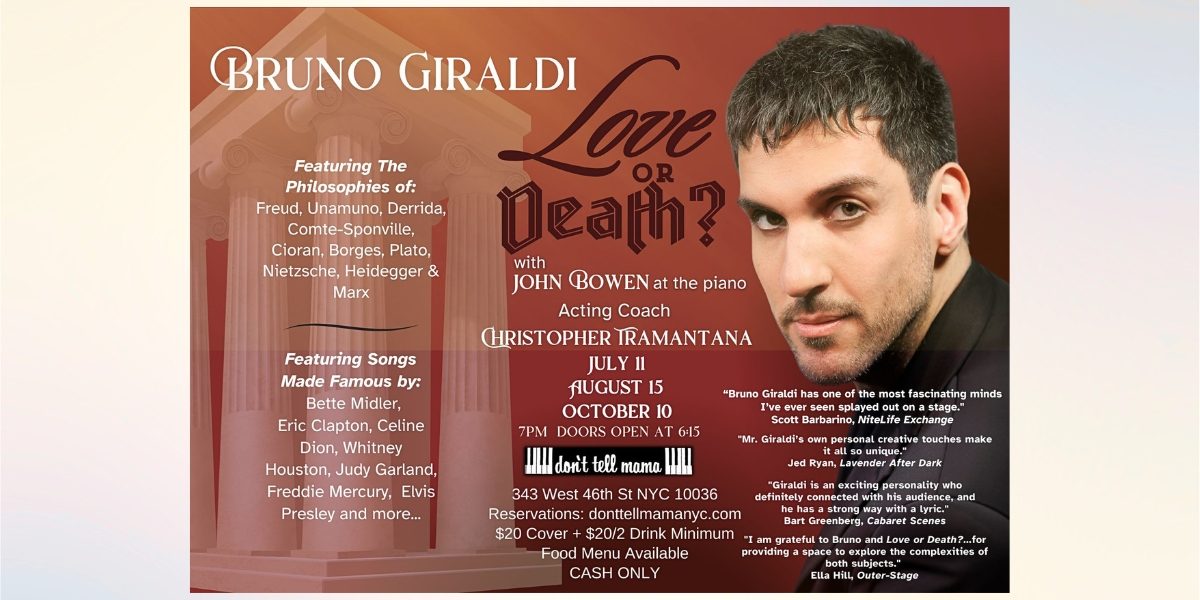
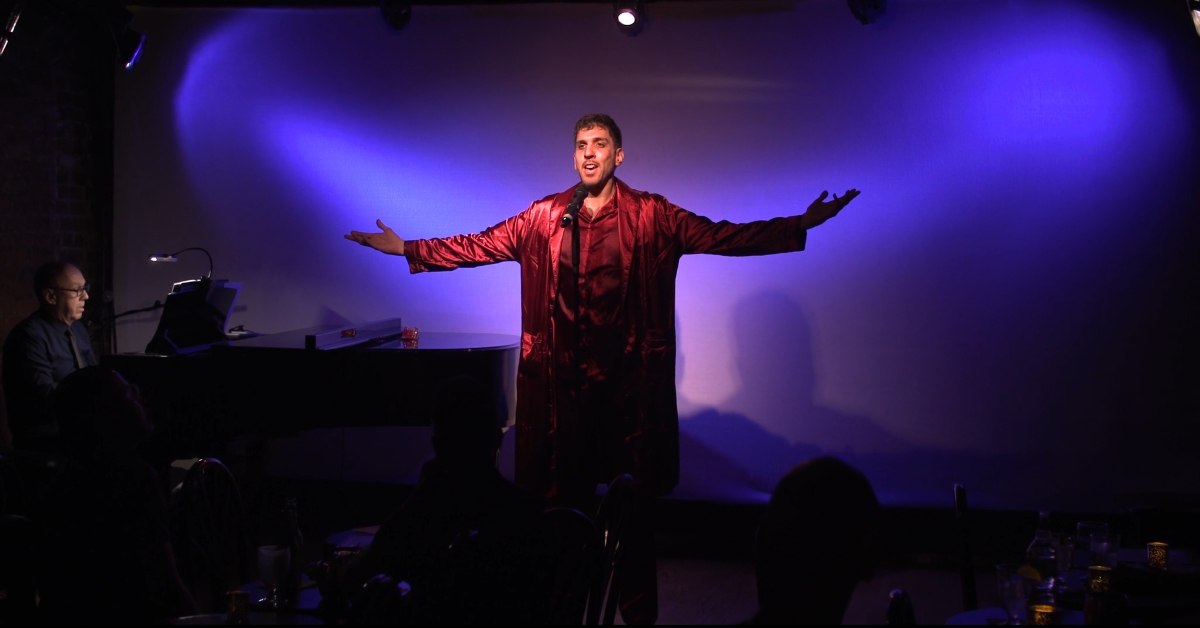
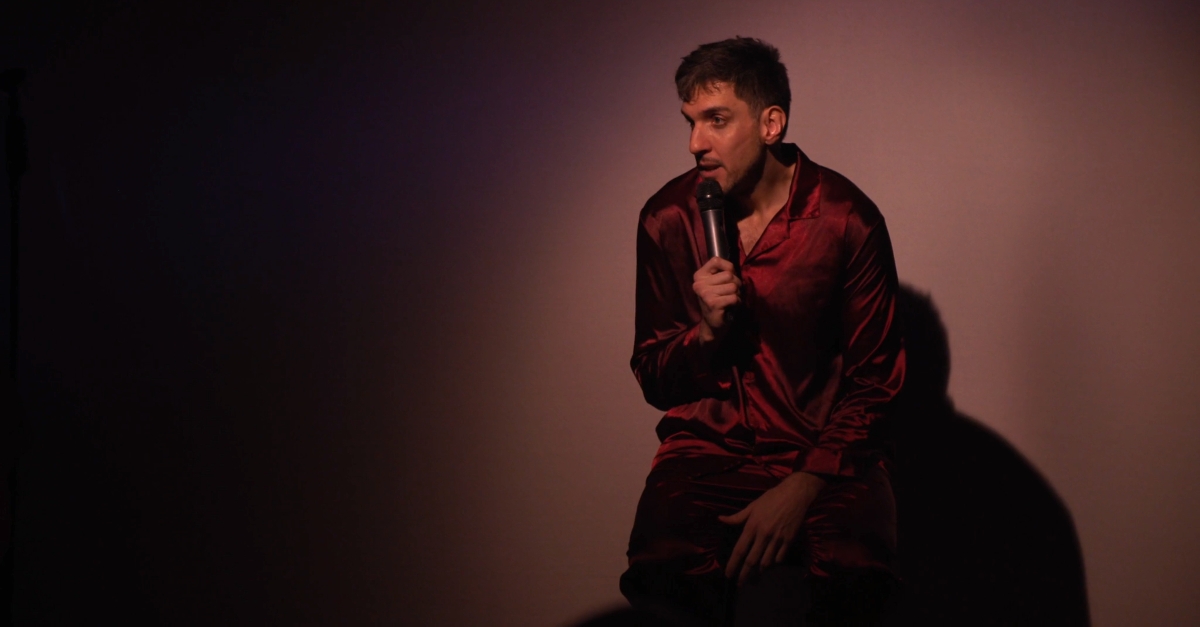
Love or Death? brings Bruno Giraldi back to Manhattan as a cabaret performance built around music, philosophy, humor, and questions about how people love while living with the awareness of death. The show marks Giraldi’s second year in Manhattan as the lead performer, continuing his exploration of cabaret as a space for emotional honesty, intellectual curiosity, and direct connection with the audience.
Bruno Giraldi was born on October 28, 1987, in Buenos Aires, Argentina. In Argentina, his mentor was Norman Briski. He also trained with Betiana Blum and worked with Nacha Guevara before continuing his training in the United States. In New York, Giraldi trained at HB Studio with Mercedes Ruehl, David Deblinger, Michael Beckett, Christopher Tramontana, Theresa McElwee, John Bowen, and others. He also trained at T. Schreiber Studio with Peter Jensen, Page Clements, and Tommy Buck, and with Deborah Hedwall in her own studio. His coaches have included Suzanne Shepherd, Rob McCaskill, and Jane Ives.
His stage work includes Richard III in RIIICHARD, Vladimir in Waiting for Godot, The Son in Six Characters in Search of an Author, and Filipo in Filipo. His cabaret work includes This Is Bruno, #getmeouttahere, and Encadenado. Earlier this year, he appeared in Telenovela Nights.
In film and television, Giraldi has played Jual Palmisano in Presumed Innocent, David in Singleville, Andy in Devil on the Web, and Raoul Santiago in A Good Cop. He can now be seen in A Dangerous Desire for Mr. Shelby and Mitski’s music video Where’s My Phone?
Q: How do you describe your own thesis for Love or Death?
Bruno: “I think love is death. Or at least, love and death are scrambled in my mind.”
For Bruno, that statement serves as the creative center of Love or Death? The show looks at how love can feel alive, intimate, and fragile at the same time. The performance considers how loving another person can change someone while also bringing risk, fear, and the awareness that nothing human is permanent.
Q: Why did you choose cabaret for this subject?
Bruno: Cabaret allows a performer to speak directly to the audience without hiding behind a large production. It creates a room where songs, thoughts, jokes, and questions can exist together.
Love or Death? uses that closeness. The form allows Bruno to move from a philosophical idea into a song, then into humor, then back into reflection. That movement gives the performance a conversational rhythm rather than a lecture-style structure.
Q: How do you use philosophy in Love or Death?
Bruno: Philosophy gives the show language for feelings that many people have but do not always know how to explain. The show mentions Freud, Derrida, Plato, Unamuno, Coleridge, Cioran, Nietzsche, Heidegger, and Byung-Chul Han.
In Love or Death?, those names are not used to make the performance academic. They are used as companions. Freud’s idea that ideal love does not exist becomes a way to ask what people can do with imperfect love. Derrida’s thoughts about recognition become a way to ask what happens when someone is not noticed, or when someone fails to notice another person.
Q: How do you connect love with personal change?
Bruno: Plato helps explain that. Love begins when another person has an impact on someone. Once that happens, the person is already changing.
Love or Death? treats love as a transformation, not as an alienating entity in Marxist terms. A person may begin loving someone because of attraction, admiration, need, or curiosity, but the experience can alter the way that person sees life.
Q: How do you bring poetry into the show?
Bruno: I would not say there is poetry per se in the show. The closest connection with poetry is when I mention Samuel Taylor Coleridge’s idea of “poetic faith”, which means that the audience suspends disbelief for a moment. They agree to enter the emotional world of the performer. So I say that the same should be done by the lover. The lover should suspend the disbelief that their love is going to end at some point.
There is Unamuno’s idea in the show, which is expressed in poetic terms, through the thought that to love is to give oneself as nourishment to another person and receive that person as nourishment. In that sense, love is not only a feeling. It is an exchange.
Q: How do you address death without making the show too dark?
Bruno: Darkness is an illusion, according to San Agustin. In the attempt to look directly at absolute truth, the intensity of the light overloads our cognitive and spiritual faculties. He concludes by saying that what feels like darkness is only a blinding effect of superabundant brightness.
In other words, I think what we should try to avoid is the brightness that does not allow us to see the truth. For that, it is necessary to talk about death to remain standing when your death or someone else’s death punches you in the face, like Plato said, instead of doing things to forget death, a thought connected to Heidegger.
Q: Why is returning to Manhattan important to you?
Bruno: Because in a moment in which there is so much entropy in the world, I believe the show helps people focus on themselves and ask themselves these questions. And when you put yourself in doubt, you start changing yourself.
Every time I do the show I question myself over and over and despite it is not my goal, it is cathartic.
And there are a lot of people in Manhattan who need this show. I witness that because after every performance, the audience approach me and confide in my very personal and intimate things that happen to them and that the show helped them reflect on. That’s priceless.
Q: What can audiences expect from the performance?
Bruno: Audiences can expect a cabaret show that combines songs, spoken reflection, philosophy, drama, and humor, which is a result of drama. It is not designed as a lecture. It is a performance that asks questions and leaves room for the audience to answer privately.
Love or Death? It is meant for people interested in theater, music, love, philosophy and the unpredictable ways those subjects overlap. The performance gives audiences a way to consider serious ideas through live entertainment rather than formal instruction.
Contact
For reservations and venue details, audiences can visit Don’t Tell Mama NYC. Updates from Bruno Giraldi are available through Bruno Giraldi’s Instagram and Bruno Giraldi’s Facebook.
Love or Death? continues Giraldi’s exploration of cabaret as a space for music, philosophy, and emotional honesty. Through the performance, he invites audiences to consider how love, attention, and mortality shape the way people understand one another.