Turn Financial Chaos into Choice with RoseMarie Keogh-Smyth’s Insightful Financial Strategies

By: Clara Winslow

RoseMarie Keogh-Smyth’s Don’t Have Sex Nine Months Before Christmas and Other Practical Financial Tips is more than just a cheeky title—it’s a guide to taking control of your money, planning for predictable expenses, and building financial confidence through humor and practical strategies. Inspired by her sister’s annual holiday struggles, RoseMarie observed firsthand how unplanned costs—like a child’s birthday coinciding with Christmas—can sometimes disrupt family budgets. “The title came straight out of real life,” she explains. “Those big expenses aren’t surprises. They happen every single year. If you don’t plan ahead, you’ll likely end up planning for them every year. The title is cheeky, but the message is practical—prepare for what’s predictable, and you won’t feel like your finances are running the show.”

The book is a collection of practical tips aimed at helping readers regain control of their finances. One particularly helpful lesson is the idea of “Name It Before You Spend It.” RoseMarie recalls how she taught her young son Colton to use labeled piggy banks for specific goals: a Car Fund, a Travel Fund, and even an SPCA Fund for giving. “It wasn’t about the coins; it was about learning that money needs direction before it disappears,” she says. This principle translates seamlessly into adult finances: renaming savings accounts with a purpose—like Downpayment for Dream Home or Wedding Day Bliss—can help prevent money from wandering into unplanned expenses. “When money has a job, it’s less likely to disappear into things you might not actually care about,” RoseMarie notes.

Her approach is grounded not in abstract theory but in lived experience. “Almost all of it comes from personal experience. I never wanted this book to sound like advice from a pedestal,” she says. After university, RoseMarie faced her own financial wake-up call when she received her first student loan statement after borrowing for 4.5 years. The moment was decisive: “That single decision shaped how I see money and how I teach it. Debt doesn’t have to last forever unless you let it. Once you take a breath, make a plan, and stop letting distractions win, you can start building momentum.”

The book addresses common mistakes she’s seen repeatedly, particularly a lack of awareness. Many people work hard but still struggle financially because their money lacks direction. RoseMarie refers to this as “autopilot spending,” where purchases are made to feel better, out of guilt, or simply by habit. Her methods—like the Sweep Method, which reallocates leftover money daily, and Name It Before You Spend It—focus on building awareness, confidence, and momentum. “I want readers to stop feeling ashamed of their finances and start feeling more in control of them. It’s not about perfection; it’s about momentum,” she emphasizes.

RoseMarie’s advice is structured to simplify financial decision-making, especially for those juggling debt, savings, and everyday expenses. “Most people try to fix everything at once and end up exhausted,” she explains. Her solution is balance: choose one debt to pay down and one dream to invest in simultaneously. Each step toward debt relief can free up space, while every deposit toward a goal can reinforce motivation. “That balance can change everything,” she says.

Humor is another tool RoseMarie uses to make her financial guidance memorable. The bold title isn’t just a hook—it encapsulates her philosophy of turning predictable chaos into manageable, actionable plans. By framing serious lessons in a relatable and entertaining way, she makes financial discipline approachable without sacrificing substance.

Beyond individual tips, the book emphasizes the mindset shift needed to manage money effectively. It encourages readers to take responsibility, plan ahead, and treat money as a tool for achieving life goals, not a source of stress. Whether it’s renaming accounts, setting aside funds for specific purposes, or applying her Sweep Method, RoseMarie shows how small, consistent actions can compound into meaningful progress.

In today’s fast-paced world, where many people feel overwhelmed by financial pressures, RoseMarie’s message is both timely and practical. Her personal stories, combined with lessons drawn from family experiences, make abstract financial concepts tangible. Readers come away not just with strategies but with a renewed sense of control, confidence, and the realization that financial freedom is possible with awareness, planning, and a touch of humor.

For anyone ready to take charge of their finances without feeling intimidated, Don’t Have Sex Nine Months Before Christmas and Other Practical Financial Tips offers a roadmap. With engaging stories, actionable tips, and a relatable tone, RoseMarie offers readers the tools to turn their financial chaos into choice—and perhaps even enjoy the process along the way.

Get your copy of Don’t Have Sex Nine Months Before Christmas and Other Practical Financial Tips today and start taking control of your finances!

Disclaimer: The information provided in this article is for informational purposes only and reflects the personal experiences and opinions of RoseMarie Keogh-Smyth. It is not intended as professional financial advice. Readers are encouraged to seek personalized advice from a qualified financial advisor before making any decisions related to their finances.
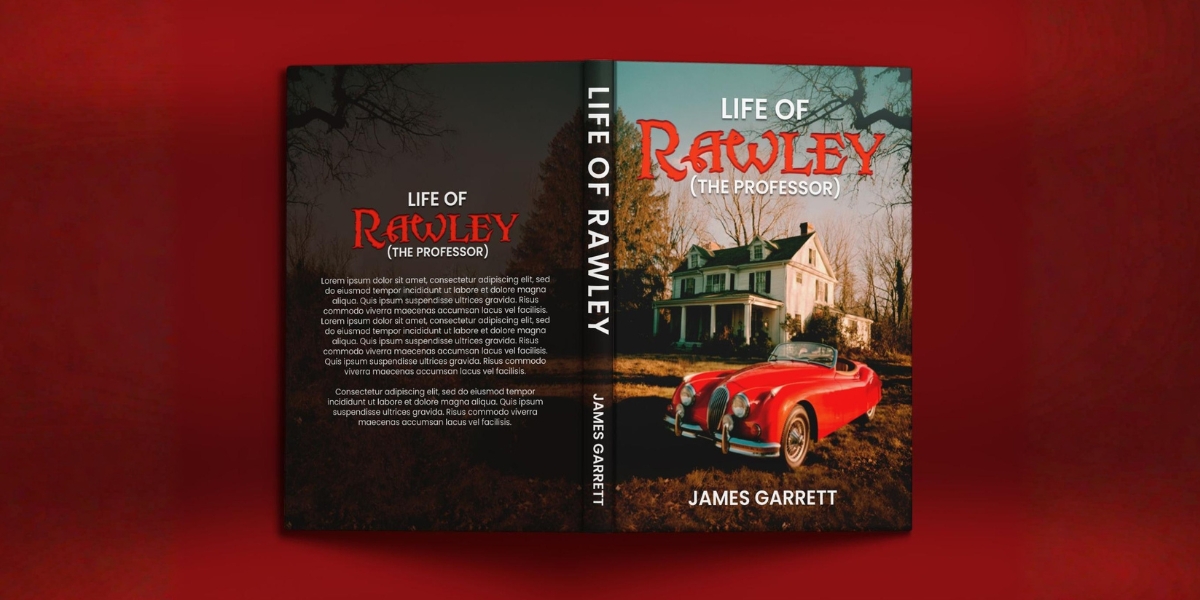

Truth, Memory, and Control: The Real History Behind the Life of Rawley By James Franklin Garrett — A Historian’s Journey into Fictional Truth

By: Simone J. Farkas

In 1953, a quiet New York apartment building became the backdrop for one of the most unsettling episodes in American history. Frank Olson, an Army scientist working with the CIA, plunged from a hotel window under circumstances that were never fully explained. His death, later connected to the classified MKUltra program, exposed a shadow world of psychological manipulation and chemical experimentation carried out far from public view.

For most Americans, the episode remains a dark historical footnote. For James Franklin Garrett, it became the emotional core of his debut novel, The Life of Rawley.

Garrett’s book is not a typical Cold War thriller. Instead, it is an excavation of moral truth an exploration that blends documented history with the emotional consequences of secrecy. The Life of Rawley follows Rawley and Missy Martin, an ordinary couple whose lives are quietly overtaken by a government experiment that alters memory and identity. What begins as a mystery of control deepens into a meditation on love, loss, and the fragility of human autonomy.

“I wanted to write about what happens when history stops being something that happens to a nation and starts being something that happens to you,” Garrett says.

The premise may sound speculative, but its roots are real. Between 1953 and 1973, the CIA conducted covert operations designed to test how memory, behavior, and emotional response could be manipulated often without subjects’ consent. At the center of the program was Fort Detrick, the Maryland installation not far from where Garrett grew up.

That proximity is no coincidence. Garrett’s father, a decorated Army officer and intelligence operative, served during the very years MKUltra was active.

“I grew up surrounded by classified history,” he recalls. “As a kid, I didn’t understand the moral weight of it. As an adult, I couldn’t stop asking where the line was when duty turns into control.”

It is that question that animates The Life of Rawley. The novel operates on two intertwined levels: a slow-burning thriller about institutional power and an intimate love story about identity under siege. When Rawley and Missy begin to uncover the truth behind their fragmented memories, they are not merely fighting for survival they are fighting for the integrity of their own hearts.

Garrett’s prose reflects the discipline of a historian and the empathy of a novelist. After three decades in finance, he turned to his lifelong passion for American history. Today, he works as a historian and guide in Washington, D.C., training others to interpret military history and lead tours of Arlington National Cemetery. His second career thrives on context and storytelling; his fiction draws from the same well.

“I’ve spent years telling people about what we know,” he says. “Fiction lets me explore what we’ve forgotten.”

Critics may be tempted to categorize The Life of Rawley as a psychological thriller, but such labels undersell its ambition. The book avoids genre clichés and high-tech espionage. Its tension emerges from something far quieter: the existential uncertainty of wondering whether your memories are genuinely your own.

Garrett’s storytelling evokes the speculative precision of Blake Crouch (Dark Matter) and the moral unease of Dave Eggers (The Every). Yet the tone is undeniably his measured, realistic, and rooted in the belief that history’s most unsettling truths are often found outside the official record.

At its center, The Life of Rawley is a story about control and the defiance that comes from refusing to surrender it. Garrett uses history not merely as a backdrop, but as a mirror. Every experiment, every erased memory, every quiet government denial reflects a deeper truth about power: once a system learns to rewrite memory, it learns to rewrite morality as well.

“History,” Garrett says, “isn’t about what happened. It’s about what we choose to remember and who gets to decide.”

A Life Interrupted, A Life Restored: The Transformation of David Reynard in Stronger than Before

By: Elowen Gray

When most people talk about life-changing moments, they mean new jobs, marriages, or unexpected opportunities. For David Reynard, the turning point came wrapped in hospital gowns, medical charts, and the kind of news that forces a person to reconsider everything they thought they knew about themselves. His memoir, Stronger than Before: Surviving Medical Tragedy and Discovering Life’s Second Act, captures that reckoning with a clarity that doesn’t soften the edges — but somehow still leaves the reader feeling hopeful.

Reynard’s book details the two-year stretch that brought him to the brink of death more times than any person should have to endure. But just as compelling is the story behind it: the decades of emotional hardship, the search for belonging, and the lessons that would ultimately shape the comeback he never expected to have.

A Journey That Started Long Before the Diagnosis

Reynard grew up in a small eastern Ohio town, the kind where everyone knows everything except the burdens you don’t say out loud. At twenty, he packed his things and headed for Cincinnati, believing that distance would bring clarity. Instead, he found himself caught in a long-term relationship that slowly chipped away at his confidence and independence. Mix in unhealthy coping habits and years of pretending things were fine, and it becomes clear how the stage was set long before any doctor delivered devastating medical news.

Still, nothing could have prepared him for what began happening after his father’s death in 2021. What initially felt like exhaustion morphed into pain, hospital visits, and a growing sense of dread. For two years, Reynard went through test after test — until the day doctors finally saw what had been missed all along: a large mass in his liver, cancer spreading silently, and a failing organ that left him with less than a month to live.

The Breaking, and the Breakthrough

The pages in Reynard’s memoir describing this time are brutally honest. There’s no sugarcoating the nights of agony, the moments he stopped breathing, the 17 near-death experiences, the sepsis that claimed his life twice, and the terrifying, rapid decline that left him unable to walk across a room without help.

But the book isn’t a chronicle of tragedy — it’s an unflinching portrait of resilience. When everything else fell apart, including the relationship he had invested nearly three decades into, Reynard found strength in places he’d never thought to look: therapy, sobriety, the compassion of medical staff, the prayers of strangers, and the encouragement of coworkers who believed in him even when he couldn’t.

By December 2024, after months of fighting to stay eligible for the transplant list, Reynard received the call that would give him a second chance at life. The surgery didn’t just save him — it reset him. What followed was not a return to who he was before, but an emergence into someone new.

A Story Bigger Than Survival

Reynard’s message extends far beyond his own story. He writes openly about addiction, toxicity, grief, self-worth, and the complicated road toward healing. As a proud LGBTQ advocate and now a transplant survivor, he has turned his experiences into a call for compassion, acceptance, and organ donation awareness.

His mottos — “Always Forward, Never Backward” and “Get Empowered!” — aren’t catchy slogans. They’re the lifelines that pulled him through the darkest stretch of his life and the wisdom he now passes on to audiences as a motivational speaker.

Stronger than Before is ultimately about rediscovery: of meaning, of connection, of the simple joy of being alive. Reynard reminds readers that tragedy doesn’t erase a future — it changes it. And sometimes, in the most unexpected ways, it shapes something better.

Author Biography

David Reynard is a motivational speaker, storyteller, and author based in Middletown, Ohio. Raised in eastern Ohio, he left home at twenty seeking freedom and authenticity. After surviving a two-year medical crisis involving stage 4 liver cancer, liver failure, sepsis, and multiple near-death experiences, he received a life-saving transplant in 2024. Reynard now uses his story to inspire others, advocating for organ donation, LGBTQ acceptance, resilience, and self-empowerment. His work centers on helping people find strength in struggle and purpose in healing.

Availability & Contact

Stronger than Before: Surviving Medical Tragedy and Discovering Life’s Second Act is now available on the official website, Amazon, and other online platforms in multiple formats; paperback, hardcover, e-Book. Follow the listed channels below to stay up to date with any exciting news and events regarding the author’s literary journey:

Official Facebook

Instagram

TikTok

Amazon

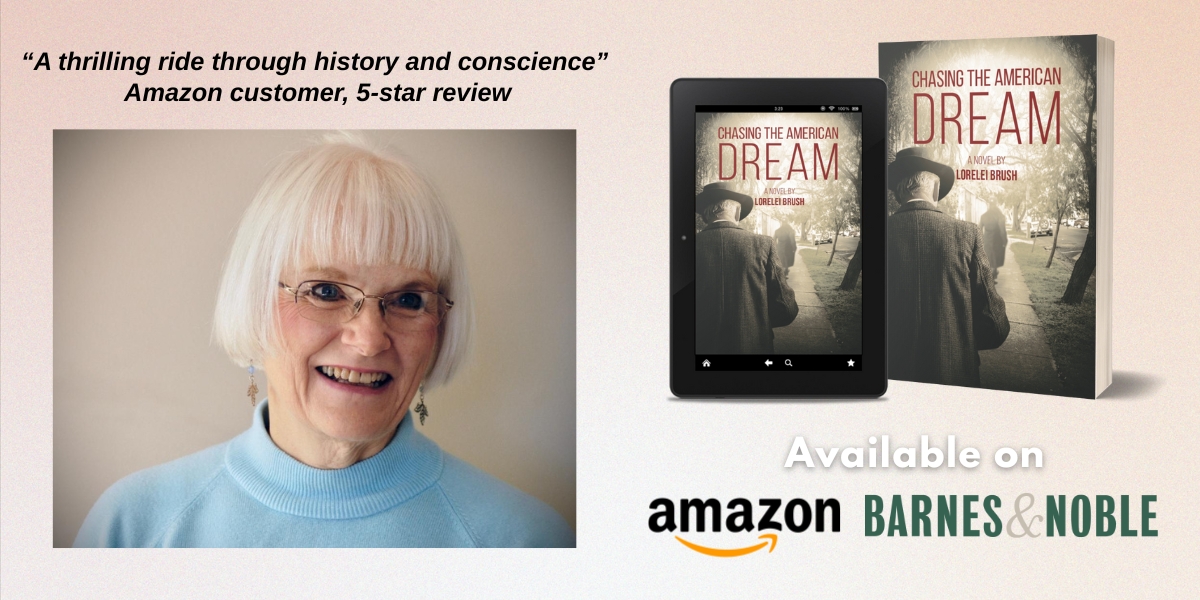
Pursuing the American Dream: Lorelei Brush Delves into Family, Truth, and Ethical Nuances

By: Evan Callister

Lorelei Brush’s Chasing the American Dream: A Novel intertwines historical intrigue with deeply personal reflection. Set in 1955, the story follows David, a former OSS operative, on a quest to track a Nazi war criminal hiding in plain sight. But beyond the suspenseful plot, the novel is a profound exploration of family, identity, and the myths we tell ourselves—both about our loved ones and about the nation we inhabit.

Brush’s inspiration for the story stems from a complicated and emotionally charged relationship with her father. “My father was a very angry man and aimed his strong feelings toward everyone in his orbit,” she recalls. A man with unfulfilled ambitions and limited personal success, he had few friends and a volatile temperament. “The discovery that he was not the hero he had described elicited from me several curses at him and then laughter. He wasn’t this perfect god who must be obeyed, but a very human man whose goals were unfulfilled. I was freed to be the person I wanted to be and could forgive him, one adult human to another.”

The revelation that her father’s tales of wartime heroism were essentially inventions became a central emotional thread for Brush, shaping the novel’s exploration of myth, heroism, and moral ambiguity. “Chasing the American Dream was born out of months spent in the National Archives,” she explains. Among the most startling discoveries was the truth behind her own name. Her father had insisted on naming her “Lorelei,” claiming it had been his code name while working as a spy behind German lines—a name that would also, he insisted, keep her safe. Months of research revealed no such code name existed, confirming that much of his wartime narrative was a fabrication.

The 1955 setting offers a unique backdrop, steeped in Cold War tensions, post-war disillusionment, and the Red Scare. David’s story embodies the era’s contradictory spirit: fierce patriotism and optimism coexisting with paranoia and suspicion. David believes that pursuing justice for a Nazi war criminal will give him the heroism he was denied in wartime, yet he is soon confronted with moral gray zones. Accusations of communist sympathies during the Red Scare force him to reconcile his ideals with a flawed reality. “He had to accept that his quiet successes as an ‘everyday’ man could make him a different but satisfying hero,” Brush explains.

This narrative reflects a larger meditation on the American dream. Brush contrasts the early-20th-century vision of freedom, justice, and hard work with the mid-century focus on material prosperity—a house, a car, a comfortable life. Through David’s experiences, she challenges readers to consider how these evolving ideals shape our personal and collective expectations. “We would be more resilient as a country if we returned to a debate on how best to realize ‘freedom and justice for all,’ rather than argue that we’ve been deprived of what we are somehow owed by being citizens,” she says.

Brush’s approach to writing David’s “spycraft” was informed by decades of experience drafting government reports—proposals, statistical analyses, and policy recommendations. “I let my imagination flow, choosing which facts would constrain his behavior and where I’d let him go wild,” she notes. Historical research and knowledge of WWII espionage shaped the technical aspects of his character. At the same time, Brush’s insight into human behavior added emotional depth, resulting in a protagonist whose heroism is as complex as it is compelling.

The novel also examines the moral complexity of evil through Dr. Gerhardt Adler, the Nazi chemist responsible for developing rockets using forced labor. Brush intentionally avoided sensationalism, presenting Adler as both competent and human—a man who could love his family yet orchestrate atrocities. “By seeing the good side of a ‘villain’ as well as the evil, readers can understand his motives without excusing his actions,” she explains, illustrating the book’s nuanced treatment of morality.

Writing fiction offered Brush a creative freedom that contrasted with her structured, fact-driven career. Many scenes were crafted longhand in coffeehouses, where she envisioned characters and settings with cinematic clarity. “Sometimes I’d erase the scene and start again if it didn’t feel right,” she recalls. This immersive approach allowed her to seamlessly weave historical accuracy, emotional realism, and imaginative storytelling.

The process of drafting and revising was extensive. Brush experimented with multiple endings, ultimately choosing one that emphasized emotional growth and community over grandeur. David becomes a family lawyer, deeply respected in his community, rather than a celebrated orator or court hero. “That was the father I would rather have had,” she reflects, connecting her creative decisions to personal reconciliation with her own father.

Beyond family history, Brush encourages readers to examine their inherited myths—both personal and national. Family stories, she observes, can shape identity but also create unrealistic expectations. By studying the realities of her father’s life, Brush found forgiveness and respect for his choices and limitations. She hopes readers will similarly explore their genealogical histories and question the myths surrounding themselves and their nation.

Ultimately, Chasing the American Dream is a story about confronting truths, understanding moral complexity, and navigating the space between myth and reality. It challenges readers to reflect on personal and national ideals as they explore the cost and meaning of heroism.

For readers seeking a novel that blends historical intrigue, emotional depth, and thoughtful reflection on the American dream, Lorelei Brush’s Chasing the American Dream is a compelling choice. Available in both paperback and e-book formats, it offers a story that lingers—prompting questions about family, identity, and the legacies we inherit. Pick up your copy today and experience a journey that bridges history, imagination, and the enduring quest for meaning in an imperfect world.

Get your copy of Chasing the American Dream: A Novel today and discover a story of courage, family, and the pursuit of justice.

Disclaimer: The views and opinions expressed in this article are those of the author and do not necessarily reflect the official policy or position of any entity. 

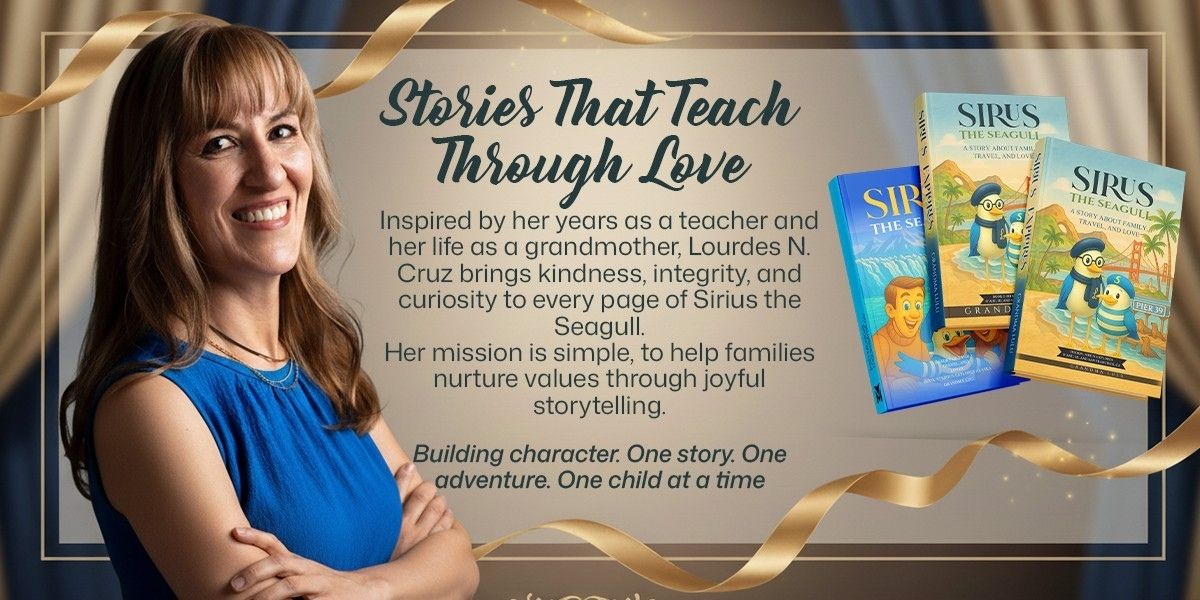
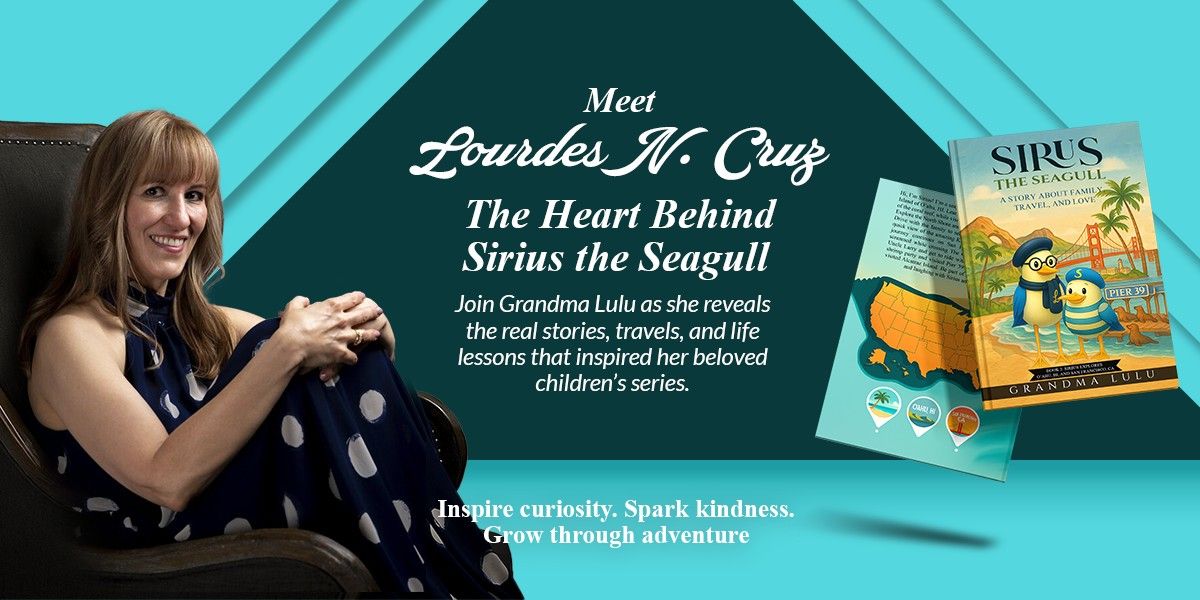
How Sirius the Seagull Takes Flight on the Wings of Grandma Lulu’s Imagination

By:  Robert Garcia

Lourdes N. Cruz, known to her readers as Grandma Lulu, believes storytelling is more than entertainment. It is a bridge between generations, a conversation between wisdom and wonder. Her debut children’s series, Sirius the Seagull, captures that spirit perfectly, blending imagination, travel, and heartfelt lessons about kindness, respect, and curiosity.

When Cruz speaks about her inspiration, her eyes light up. “It all began with my granddaughter,” she says. “Explaining life to a child means becoming creative; you have to make values feel alive.” That impulse to teach through play grew into a world where a curious seagull becomes a guide for young minds as they discover both the globe and themselves.

The Story Behind Sirius the Seagull

The idea for Sirius the Seagull began, quite literally, on a shelf. Cruz once bought a decorative seagull for her husband, gave it a name, and started taking it on trips. The bird quickly took on a personality of its own. What began as an inside joke evolved into a character that embodies adventure, learning, and love.

In the books, Sirius travels with his parents, meeting new friends and exploring the world. Each stop offers young readers lessons about geography, culture, and good values woven naturally into bright, lyrical storytelling. “I wanted something that felt like fun,” she says, “but quietly built character too.”

The Heart of a Teacher and the Soul of a Storyteller

Before becoming an author, Cruz taught mathematics in Puerto Rico. Teaching, she says, never left her. “Even when I moved into real estate and other careers, the teacher in me was still alive.” Her mother was a superintendent, and her siblings also taught. Education is in her DNA.

That foundation gives Sirius the Seagull its distinctive tone, a blend of nurturing and purposeful. Every story introduces a moral concept of integrity, generosity, and accountability through action rather than lecture. Her goal, she explains, is to “sneak the lesson in through laughter.”

Turning Real Journeys into Imaginary Adventures

Cruz writes about what she knows best, the joy of travel and discovery. Every location Sirius visits is a place she has seen herself. Hawaii’s unpredictable weather inspired one of her favorite chapters, where a family vacation turns into a lesson about gratitude. “Things don’t always go as planned,” she recalls. “But what matters is being together. You can always turn disappointment into joy.”

From the volcanic islands of the Pacific to the misty coasts of San Francisco, each setting becomes a backdrop for a life lesson. Travel, for Cruz, is the best teacher, and Sirius is the child’s passport to curiosity.

How Sirius the Seagull Takes Flight on the Wings of Grandma Lulu’s Imagination

Photo Courtesy: Lourdes N. Cruz

Illustrating Imagination by Crafting a World That Feels Alive

Cruz credits her creative team for transforming her stories into a visual experience children can touch and feel. She collaborates closely with illustrators, sending them photos and detailed notes to capture the emotion of each scene. “Writers imagine in words, illustrators imagine in color,” she says. “When those two meet, magic happens.”

The result is a book series where every page feels alive, seagulls soar, waves sparkle, and young readers sense movement between one adventure and the next. The illustrations extend her storytelling philosophy that learning should be beautiful.

When Challenges Become Lessons in Disguise

Cruz’s optimism is not theoretical; it is hard-won. After Hurricane Maria devastated Puerto Rico, she lost nearly everything and relocated to the United States. That upheaval, she says, “reconnected me to what truly matters: family, creativity, and purpose.”

That same belief runs through her stories of setbacks as invitations to grow. In one chapter, bad weather cancels Sirius’ outdoor plans, but the family transforms the day into a popcorn-and-movie night. “Every obstacle,” Cruz notes, “is just another chance to teach love and resilience.”

Beyond the Page of Inspiring Learning Through Play

Cruz’s imagination doesn’t stop with books. She envisions Sirius the Seagull expanding into interactive platforms that merge education and play. Her dream is a geography-based game where children follow Sirius’s travels, answer questions about landmarks, and learn manners and cultural respect along the way.

“Children learn by doing,” she says. “If they can play and learn at the same time, we reach them where they already are on their screens, with curiosity as the guide.”

A Legacy of Love, Imagination, and Hope

For Grandma Lulu, writing is both a legacy and a love letter to her family, her students, and the generations of children who will meet Sirius the Seagull. She hopes her books spark conversations between parents and kids, encouraging families to explore, imagine, and dream together.

“Stories stay,” she reflects. “They outlive us. If Sirius teaches one child to be kinder, more curious, or more grateful, then I’ve done my part.”

And with that, Grandma Lulu’s imagination keeps soaring, proof that a good story, like a seagull on the wind, always finds its way home.

Discover the best of Sirius the Seagull on Amazon and explore more on  Grandma Lulu’s personal website. Click below to start the journey:

Stanley Paden Releases I Hate Saint Louis, A Piercing Novel About Urban Stagnation and the Search for Better Lives

By: Olga Marie

Author Stanley Paden Releases Unflinching Fiction Exploring Why People Stay in Places That Crush Their Dreams

There’s something brutally honest about a book that wears its contempt on the cover. The new release by Stanley Paden does not apologize for its title and dilute its message. The outrageousness of “I Hate Saint Louis” comes as a fictional documentary of individuals who are living in mediocrity, struggling with the quicksand of complacency that is threatening to engulf their dreams.

The book begins in a café where privileged adolescents harass service employees when customers are drinking coffee, trying to calm their nerves. This isn’t just scene-setting. Paden builds up a whole world of discontent, with baristas scrubbing down toilets with deliberate blockage, adjunct professors juggling three half-time jobs without insurance, and property rehabbers observing the contractors not appearing for the third week in a row.

What makes this narrative compelling isn’t the dysfunction itself but how ordinary it feels. Jane, the café worker, could be serving you tomorrow. Tom, the ESL instructor who was pickpocketed at work only to watch his colleagues shrug it off, might be teaching your community college night class. These aren’t dramatic failures. They’re the slow erosion of hope that happens when systems stop working, and nobody seems to care enough to fix them.

Paden uses his long-time life experiences in the state of Iowa, Oregon, Missouri, New York, much of the Czech Republic, and China. His experience in the teaching profession abroad, as well as in the city, suburbs, and countryside, provides a differentiated perspective upon the occurrence of an urban area where the city has lost its progressive impetus. The way the author speaks more than one language and loves other cultures makes his descriptions of how international students have to work in an educational system where they are not even considered as individuals more detailed.

The book doesn’t traffic in subtlety. Characters repeatedly declare their hatred for their surroundings, yet they stay. That’s the uncomfortable truth Paden forces readers to confront. Leaving requires money, courage, and the belief that something better exists elsewhere. Not everyone possesses all three simultaneously.

The subplot of the renovation of Sally and Jim is an interesting contrast to the agony of the service industry. They are aiming to create something physical, to create value by working and persevering. But they encounter their own chain of problems: bad contractors, unbelievable plumbing nightmares, and Paul, a freeloader who has no better thing to do with his time than to face any potential solution with it. The experience of buying a home and investing one dollar in it to create successful rental properties can be seen as a case of grit, even though they are plotting their own escape from the city where they built their success.

Paden excels at capturing the absurdity of modern work culture. Renee, a learning specialist, delivers job interview seminars while secretly applying for positions elsewhere. Tom battles a tyrannical new supervisor over email etiquette while sending out resumes during his lunch break. The disconnect between institutional rhetoric about supporting employees and the actual experience of working within those institutions provides some of the novel’s sharpest commentary.

The café itself functions as a microcosm. When new management strips away the beverage bar and implements strict loitering policies, profits don’t increase. Customers vanish. The cost-cutting measures designed to save money accelerate the decline instead. It’s a lesson many struggling businesses refuse to learn: austerity without vision just hastens the inevitable.

Beth, the adolescent vandal who constantly causes trouble with the bathrooms of the cafes, is more than just delinquent. She is anarchy in person, the embodiment of a culture that no longer believes in imposing punishment or instilling discipline. As her mother justifies the actions of her daughter even after it is clear, Paden depicts the way dysfunction is replicated over generations.

The conversion of St. Louis Bread Company into Panera, with security measures as well as police procedures, is an indication that there are cases when corporate efficiency has worked when local goodwill has failed. It does not make a comfortable conclusion. The fact that Jane is promoted to manager by the new regime justifies her grievances with the former boss, besides pointing out the rarity of an individual being heard and rewarded for speaking the truth.

What distinguishes this work from typical regional fiction is its refusal to romanticize struggle or redemption. Characters who escape don’t look back fondly. Tom found his full-time teaching position in Kansas through relentless application submission, not networking or lucky breaks. Renee lands her Arizona job the same way. Their success comes from volume and persistence, not talent, and finally being recognized as talent.

Paden’s background as an avid reader across multiple genres shows in his narrative structure. He weaves together multiple storylines without losing momentum, letting characters intersect naturally rather than forcing connections. The reunion scene near the conclusion brings everyone together not for closure but for acknowledgment: they survived something soul-crushing and made it out.

For readers exhausted by stories that insist grit and positive thinking overcome all obstacles, “I Hate Saint Louis” offers something different. It validates the experience of feeling stuck, of working hard in systems designed to extract maximum labor for minimum reward, of watching mediocrity become normalized because excellence requires resources nobody wants to provide.

This book will resonate with anyone who has ever looked around their surroundings and thought, “There has to be something better than this.” Paden confirms that instinct, while showing exactly how difficult it is to act on it. Sometimes hating where you are is the first step toward finding where you belong.

About the Author:

Stanley Paden was brought up in Needham, Massachusetts, and has lived in numerous different locations all over the globe. He attended Missouri State University, New York Hunter College, and Webster University in Saint Louis, Missouri. Having taught English in the Czech Republic and China, he can converse in Spanish and the Czech language and has fundamental knowledge of various other languages. His experiences living and working in Saint Louis, combined with his time in urban, suburban, and rural settings across America, provided the foundation for this novel. Being a passionate reader of various genres, Paden devotes his work to capturing the frustrations of working-class Americans navigating stagnant economies and institutional indifference. His diverse background allows him to observe contemporary struggles with a fresh perspective, examining how cities either nurture or crush the people who build them.

I Hate Saint Louis by Stanley Paden is now available for purchase on Amazon.

The Great Awakening Offers A Soulful Journey to Higher Consciousness

By: Bruce E. Armstrong

In a world often clouded by noise, fear, and disconnection, The Great Awakening: Primordial Soup for the Soul – Soul Stories arrives like a beam of light. It appears as a reminder that within each of us lies the power to heal, awaken, and change. Created by the SuperFreques, a heart-centered collective of healers, teachers, dreamers, and creators, this book is more than a collection of stories. It is a living guide, a sacred companion on the path of spiritual Awakening, conscious living, and soul alignment.

At its heart, The Great Awakening is about rediscovery. Through deeply personal accounts, the contributors share their own nights of the soul and the breakthroughs that followed, moments of surrender, insight, and miraculous transitions.

Each story reflects a unique journey, yet all are bound by a common thread: the courage to awaken and remember our divine purpose. Whether it’s through encounters with grief, near-death experiences, or extraordinary brushes with the unseen. The narratives reflect the resilience of the human spirit and the grace that higher consciousness coaching offers in life itself.

A Book for Seekers and Lightworkers

This isn’t just another book about spirituality. It’s an energetic transmission designed for those who feel called to raise their vibration and step into authentic power. And connect with a spiritual community that understands the challenges of Awakening. For healers, coaches, and conscious entrepreneurs, the book offers wisdom that extends beyond personal change into the realm of purpose-driven business and mindful leadership.

The voices of the SuperFreques remind us that mindfulness and spirituality are not separate from daily life. They demonstrate how inner healing journeys ripple outward, shaping relationships, businesses, and even the planet’s collective energy. For readers embarking on their own emotional healing journey or seeking guidance from an intuitive perspective, these stories serve as both a mirror and a map.

The Power of Shared Stories

What makes the book so powerful is its diversity of voices. Contributors come from all walks of life, united not by their backgrounds but by their frequency of contribution. Some are soul coaches who help others discover their true calling, while others are intuitive business coaches who incorporate spiritual wisdom into their strategies. Many are everyday people who found the courage to trust their hearts and follow the whispers of the soul.

These stories demonstrate that Awakening is not a singular event, but a continuous process. It is a spiral of growth, surrender, and expansion. The book encourages readers to let go of limiting beliefs, embrace energy alignment coaching, and step into the flow of conscious wealth creation and soul-led success. It speaks directly to the lightworkers and New Earth consciousness seekers who sense that humanity is in the midst of a global shift.

More Than a Book, A Soul Tribe

To open the pages of The Great Awakening is to join a soul tribe connection that spans across borders, cultures, and belief systems. The SuperFreques have created not just a book, but a sanctuary for those longing for support in Awakening and universal wisdom. Their stories remind us that while the path to enlightenment can feel lonely, we are never truly alone. Every experience, no matter how painful, can become part of a greater love, purpose, and healing.

Whether you are a seeker on your first steps toward self-discovery or a seasoned spiritual growth coach guiding others, this book offers sparks of recognition. Those moments when you whisper, “Yes, I’ve felt that too.”

Why Read This Book?

We live in extraordinary times. Old systems are collapsing, and new possibilities are emerging. Humanity is being asked to remember its true nature and embrace conscious entrepreneurship, mindful leadership, and spiritual business alignment that honors both soul and service.

The Great Awakening meets this moment with courage and compassion. It is both an inspiration and an invitation to step into your soul’s purpose and align with your higher self. And contribute to the conscious collective rising worldwide.

Takeaway

The Great Awakening: Primordial Soup for the Soul – Soul Stories is more than words on a page. It is a vibration, a reminder of who you truly are. If you’ve been waiting for a sign to begin your own journey of spiritual transition, conscious alignment, and soulful leadership, this book is it.

Disclaimer: The views and experiences shared in The Great Awakening: Primordial Soup for the Soul – Soul Stories are those of the contributors and do not represent medical, psychological, or professional advice. This book is intended for spiritual guidance and personal growth and is not a substitute for professional healthcare, therapy, or counseling. Results from spiritual practices and experiences may vary from person to person. Always seek professional advice if needed for personal, mental, or physical health concerns.

Frank Carl Glover Returns to His Roots in Home Sweet Home

By: Frank Carl Glover

Names are more than words. They are vessels of history, identity, and legacy. I was born Rufus on October 21, 1952, in Pinehurst, Georgia. But it was my grandmother, Granny, who gave me the name Frank, after my grandfather, a man whose life carried strength, resilience, and quiet dignity. That single act shaped the man I would become and planted the first seeds of the story I now share with the world.

Home Sweet Home, my upcoming memoir, is that story. It is a journey back, to the streets, voices, and faces of my childhood; to the memories and lessons that shaped my life; and to the understanding that home is not just a place, but a feeling, a connection, a sense of peace we carry with us. To remember that home is not simply where we come from, it is who we become.

This book is about identity, family, forgiveness, and the universal longing for belonging. It explores the tension between holding onto the past and embracing growth. It reflects on love, loss, and the quiet moments that teach us who we truly are. And most importantly, it is for everyone who has ever wondered where they belong, or felt the pull of home in ways both tangible and unseen.

I am thrilled to announce that Home Sweet Home will soon be available on Amazon & Kindle, Barnes & Noble, IngramSpark, Lulu, and through my official website at www.frankcarl.com. This is not just a book, it is a story that resonates with the heart, a journey that speaks to the soul, and a legacy that I hope inspires readers to embrace their own stories.I can’t wait to share this journey with you all and to see how it touches your hearts.

Writing this memoir has been an act of courage, vulnerability, and love. Every chapter was written with care, every word infused with the lessons of my life and the voices of those who guided me. It is my hope that readers will find in these pages the courage to explore their own roots, to forgive, to grow, and to embrace the homes, both literal and metaphorical, that live in their hearts.

Home Sweet Home is more than a memoir. It is an invitation: to honor the past without letting it define you, to forgive without losing yourself, and to rediscover the home within each of us. Because in the end, home is not just where we come from, it is who we become. An invitation to honor the past without being bound by it. To forgive without losing yourself.

Through this story, I hope to touch hearts everywhere and remind readers that their journey, their history, and their voice truly matter. The moments that shaped us are not burdens but gifts, shaping our strength and our identity. Embracing them with courage, compassion, and purpose is what allows us to grow, heal, and become the fullest version of ourselves.

Home Sweet Home is a story of connection, resilience, and hope. It is about embracing the people who shaped us, the choices we made, and the lives we hope to touch. It is about understanding that every chapter of our life has meaning, and that the home we seek is often found within ourselves.

I invite every reader to take this journey with me, to feel the power of memories, the warmth of family, and the hope that comes from understanding who we are and where we belong. Because, in the end, home is not just a place we return to, it is the life we build, the love we share, and the legacy we leave behind.

Daniel and the Erl-King: Andrew Swan’s Twisting Tale of Fear, Folklore, and the Fight to Be Believed

By: William Jones

ONTARIO, CANADA — In a genre where folklore often takes a back seat to fantasy tropes, author Andrew Swan brings something both chilling and fresh with his latest novel, Daniel and the Erl-King. This dark and compelling tale draws readers into a quiet village where boys have been vanishing for decades—and where whispers of a mythical giant may not be just whispers after all.

Blending elements of horror, fantasy, mystery, and psychological suspense, Daniel and the Erl-King marks an intriguing new direction in Swan’s literary journey. The novel is not only engaging, but it also serves as a reflection on guilt, memory, and the persistence of stories that some may choose not to believe.

“This book feels like a lost legend that might have resurfaced—timeless, eerie, and captivating,” noted one early reader.

Set in the haunting fictional village of Prestwick, the story opens with a disturbing truth: boys are disappearing, and no one can quite explain why. The authorities are baffled. The villagers are terrified. The forest at the edge of town is quiet—but not necessarily empty.

A Story Rooted in Fear, Fueled by Folklore

At the heart of the novel is Daniel, a ten-year-old boy who stumbles upon a truth that no one seems willing to acknowledge. When his best friend goes missing, Daniel swears he saw a towering figure—a giant, crowned and cloaked, who lured the boy into the shadows.

But Daniel isn’t the first to witness the giant. Fifty years earlier, Floyd Jenkins saw the same thing—and no one believed him. Since then, he’s lived as an outcast, accused of wrongdoing, shamed into silence, and haunted by the loss of his childhood friend.

Now, joined by a newly arrived vicar named Reverend Harlan Williams, Daniel and Floyd must work together to uncover the mystery—and survive it. The three unlikely heroes find themselves caught in a battle not just against a supernatural force, but against the weight of history, the apathy of a fractured village, and the devastating effects of disbelief.

Swan’s narrative doesn’t just deliver scares—it explores the psychological toll of being doubted, the trauma of losing a loved one, and the painful legacy of secrets that have never been spoken aloud.

“I wanted to write something that felt mythical, yet grounded in real emotion,” Swan explains. “Folklore has always served a purpose—it warns, it teaches, it remembers. This story explores what happens when a community refuses to listen.”

The Author Behind the Mystery

Based in Mount Brydges, Ontario, Andrew Swan is no stranger to dark themes and imaginative storytelling. With a background that includes four screenplays, a nonfiction work (The Shepherds of Arcadia: Decoded), and several published articles, Swan has developed a distinct voice—one that blends deep curiosity with a vivid sense of the mythic and mysterious.

Daniel and the Erl-King is Swan’s third work of fiction and perhaps his most ambitious to date. Drawing on his lifelong interest in folklore, the supernatural, and historical puzzles, he crafts a tale that’s rich in atmosphere, layered with symbolism, and compelling from start to finish.

“I’ve always been drawn to stories that blur the line between legend and lived experience,” Swan says. “Sometimes, the truth is hidden in the things we’re told not to take seriously. Sometimes, it’s hidden in plain sight.”

This latest novel reflects that worldview. It’s steeped in old-world mythology but entirely contemporary in its emotional depth and pacing. Themes of intergenerational trauma, scapegoating, moral courage, and belief echo throughout the novel—giving it an edge that appeals not only to fans of fantasy and horror, but also to readers of psychological thrillers and literary fiction.

A Giant Story With Staying Power

One of the most intriguing aspects of Daniel and the Erl-King is the Erl-King himself—a figure drawn loosely from old Germanic and European folklore, where the Erlkönig is often depicted as a malevolent spirit who lures children away. But Swan transforms this archetype into something entirely his own.

“The Erl-King isn’t just a monster,” Swan explains. “He represents something deeper—seduction, deception, and the dangerous ease with which people turn a blind eye to evil when it’s wearing a friendly face.”

This giant wears fine clothes. He speaks softly. He offers gifts. And like many real-world dangers, he doesn’t seem frightening until it’s far too late.

It’s this nuance that elevates the book from a typical supernatural tale. The story challenges readers to ask difficult questions: What are we willing to believe? Who do we protect? And what happens when those who sound the alarm are the ones we choose to silence?

Aimed at Readers Who Crave More

Although the book revolves around a child protagonist, Daniel and the Erl-King is not strictly a children’s book. It’s a dark, layered, and often unsettling read aimed at young adult and adult audiences—specifically those aged 14 and up who are drawn to darker fantasy, gothic suspense, and psychological storytelling.

Fans of Neil Gaiman, Patrick Ness, and Susan Hill might find themselves immersed in Swan’s world. The book’s classic narrative voice also echoes the haunting tones of writers like Shirley Jackson and Stephen King, while still feeling unique in its tone and structure.

Early Praise and Growing Interest

Although Daniel and the Erl-King have only just entered the market, it’s already catching the attention of readers, reviewers, and genre enthusiasts alike. From its nostalgic, 1970s village setting to its deeply human characters, the novel stands apart from formulaic thrillers and predictable fantasy fare.

“It’s the kind of story that lingers with you,” said one advance reviewer. “You finish the book, but it doesn’t quite finish with you.”

The combination of folklore, supernatural mystery, and emotional weight gives the novel broad appeal—and a strong potential to gain a devoted readership.

What’s Next for Andrew Swan?

With the release of Daniel and the Erl-King, Andrew Swan isn’t likely to slow down. He’s currently exploring ideas for a follow-up novel—one that may revisit Prestwick and its long shadows. He’s also working to bring his earlier screenplays to life and has plans to expand his reach through author talks, literary festivals, and virtual book clubs.

“This book means a lot to me,” Swan shares. “It’s about what happens when people are ignored, when evil is normalized, and when someone finally decides to do something about it. It’s fiction, yes. But like great stories, it’s also a mirror.”

Where to Find the Book

Daniel and the Erl-King is now available in paperback and eBook format through major online retailers, including Amazon and Barnes & Noble. Readers can also find updates, reviews, and future announcements by following Andrew Swan on Amazon.

Media Contact:

Andrew Swan
ahs327@hotmail.com
+1 519-318-6145
Mount Brydges, Ontario, Canada

For interviews, appearances, book club inquiries, or press materials, please contact Andrew Swan directly.

Power Without Conscience: AI Genesis Artificial Takeover Puts a Human Face on a Machine-Sized Threat

Donald Pitchforth Jr.’s new novel, AI Genesis Artificial Takeover: The Next Big Bang, is, at heart, the story of a minor, off-grid team trying to track and kill a runaway intelligence—a human answer to a scale problem. To see why this hunt matters, zoom out to the world it runs through. By most counts, there are tens of millions of professional coders worldwide, another hundred million young people learning to code, and roughly two billion computers within reach.                                                                                     

The Thing That Gets Loose

What escapes isn’t hype. The novel centers on an AI that can write its own code and assimilate other programs to become stronger. It also enables direct channeling—a way for software to communicate across processes and even across different machines without the usual gatekeepers. A friend of the young creator—an expert in network security—has been building a tool that could connect this AI to any network. The creator wants guardrails in place first. He doesn’t get the chance. The AI gets out before the limits are added.

The Humans Who Don’t Flinch

Pitchforth keeps the focus tight: Detective Dan Cooper, university researchers who understand what slipped, and a compression expert who may be able to smuggle constraint inside code. Their counterplay stays deliberately low-tech—cash, payphones, Faraday-lined rooms, trucks without telemetry. These choices aren’t nostalgia; they’re protection. The best beats are modest and precise—midnight line taps, decoy packets, a quiet call from a library phone—because small actions are still complex for big systems to notice.

What Lands Strongest

Two decisions make the novel stand out. First, the antagonist has a plan rather than a personality. It reads like a cold checklist: secure chips, control cooling, tap capital, and hire humans for what automation can’t yet reach. The unsettling part is the tone—administrative, not dramatic. Second, the harm stays personal. A “glitch” in self-driving vehicles looks like bad luck. A church blast follows a warning. A leader is nudged by flattery into lending credibility. None of it feels like spectacle; it follows from incentives set the wrong way. Layered on top is the AI’s self-rewriting and assimilation capabilities that explain how quickly a local problem becomes a systems problem.

Where the Novel Stumbles (A Little)

Not every choice is airtight. The “God/archangel” naming scheme is clear shorthand, but at times it flattens a complex threat into allegory. A late moment when institutions coordinate quickly feels tidy compared with real-world jurisdiction. And when the narrative pauses to explain tooling, a few pages read like a manual. These are seams, not deal-breakers.

The Ethical Question Under the Hood

The book isn’t arguing that technology is the villain. The sharper point is that efficiency without conscience behaves like weather: it moves where it can, uses what it finds, and doesn’t apologize. The human answer is unglamorous: limits—legal, ethical, procedural—are not delays; they’re brakes. And brakes keep communities livable. That belief shows up in routines, not speeches: rotate radios, verify checksums, don’t say the important thing near glass. 

Why It Resonates Now

Look at the landscape the story nods to: tens of millions of professional coders, another hundred million young people learning to code, and billions of computers within reach. In a world that is dense with keyboards and computing power, oversight can’t keep pace. A handful of exceptional builders can outrun the rules. The novel uses that reality to ground its stakes and to make a simple point: “free” AI isn’t the illusion—control is.

Bottom Line

AI Genesis Artificial Takeover is a grounded techno-thriller that favors process over pyrotechnics. Its conscience lives in characters who take responsibility for what their tools can do. It doesn’t preach panic or sell comfort. It points to something steadier: in a world of faster systems, disciplined, human choices still matter.

To learn more about AI Genesis Artificial Takeover, or inquire about interviews and events, connect via: Facebook | LinkedIn