Picasso Serge Inspires Confidence in Kids Through the Chocolate Jungle Adventure

By: Picasso Serge

As a storyteller, I’ve always thought that kids have a voice that is ready to talk, dream, imagine, and explore. That spark gave rise to Chocolate Jungle. It is more than just a lighthearted journey with jellybean rivers, creamy vines, and cheeky but wonderful butterwinkles. Teaching children how to speak up with confidence and creativity is the story’s central theme. At its core, the story encourages curiosity, bravery, and joyful self-expression through playful discovery.

Like many parents, I’ve spent many days reading books to my girls, and I keep coming back to Robert Munsch’s magic. I was greatly inspired by his ability to open doors for children’s imaginations. His work served as a kind of compass for me as I pursued my own artistic goals. I was inspired by how his books encouraged kids to express themselves fearlessly, and I wanted to follow suit. That inspiration reminded me that simple stories can leave lasting emotional impressions.

Where the Story Begins

In Chocolate Jungle, two inquisitive siblings plunge headfirst into a world where everything is composed of chocolate, including insects, animals, and trees. Through their eyes, readers are transported to a world where storytelling is shared rather than merely told and where creativity comes to life. The children actively participate in creating the adventure in this narrative, which is one of my favorite themes. The world people inhabit is shaped by their voices, and because they contribute to its vitality, every turn, twist, and chuckle comes to life. Their imagination directly shapes the environment, reinforcing the power of expression.

I wrote this book for kids between the ages of five and ten, when courage is still developing its vocabulary and curiosity is still open. Like Kevin and Becky navigating the chocolate vines, the Marshmallow Cliffs, and that thrilling moment when the Butterwinkles swoop into view with their wild, wrinkled wings, I want youngsters to feel seen, heard, and free to speak as they read along. Each scene is designed to invite participation rather than passive reading.

A Journey, Not Just a Story

I didn’t only want to amuse myself when I started writing this book. I wanted to remind kids and the adults who care about them that using one’s imagination is a valuable skill. It is simultaneously a muscle, a portal, and a skill. Additionally, youngsters learn how to express themselves when they are allowed to use their imaginations. From the start, that has served as my primary source of inspiration. Imagination becomes both a tool and a source of confidence.

Writing Chocolate Jungle has been a journey for me in many ways. I invented Picasso Serge as my author identity so that I could tell stories without being associated with my real name. It’s a lighthearted identity that lets me enter a creative realm alongside my young readers. Every page subtly reflects my personal path, including the lessons learned, the moments spent reading to my girls, and the inspirations. That separation gave me creative freedom and emotional honesty.

Picasso Serge Inspires Confidence in Kids Through the Chocolate Jungle Adventure

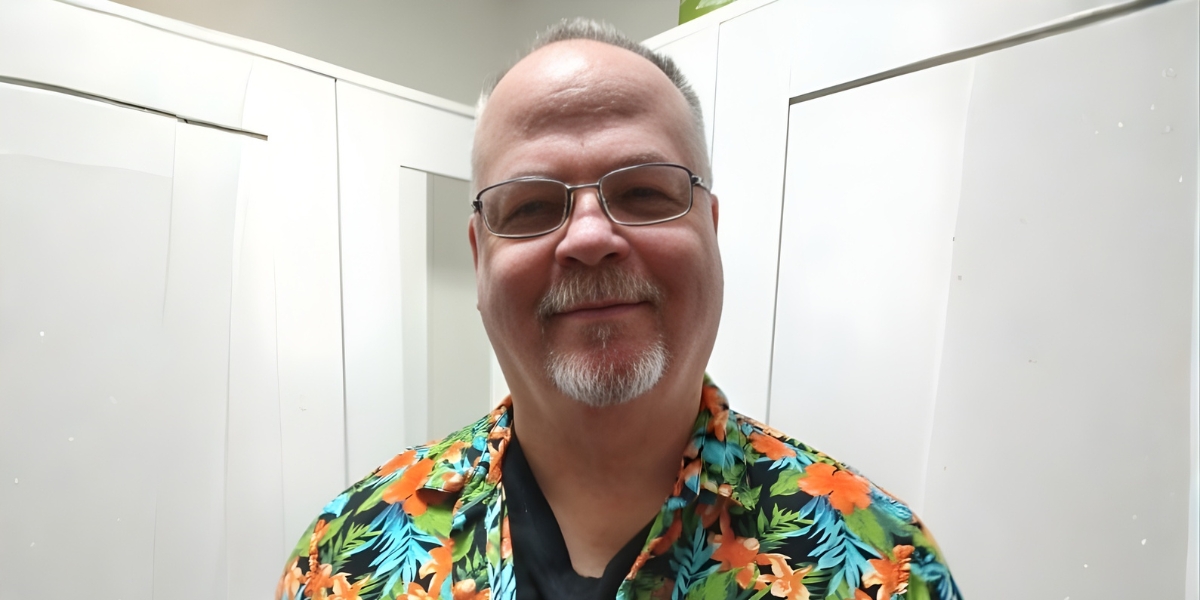
Photo Courtesy: Picasso Serge

Looking Ahead

An intriguing new chapter begins with this book. A new Facebook and Instagram page will be launched over the next six months to provide updates, events, readings, artwork, and behind-the-scenes looks from the Chocolate Jungle universe. Naturally, the book is currently accessible on Amazon, and additional platforms will be added shortly. These spaces will allow readers to connect beyond the pages.

In addition to kids, I hope this narrative reaches the educators, parents, and readers who mold young brains. The adventure was worth every word if Chocolate Jungle inspires even one child to laugh their way through a new universe of possibilities, speak up, or imagine courageously. Stories can be gentle tools for growth when shared thoughtfully.

Greetings from the Chocolate Jungle. There’s adventure ahead, and this time, your voice gets to take the lead. Every child deserves to feel confident enough to speak and dream.
Connect with Picasso Serge: Website | Instagram

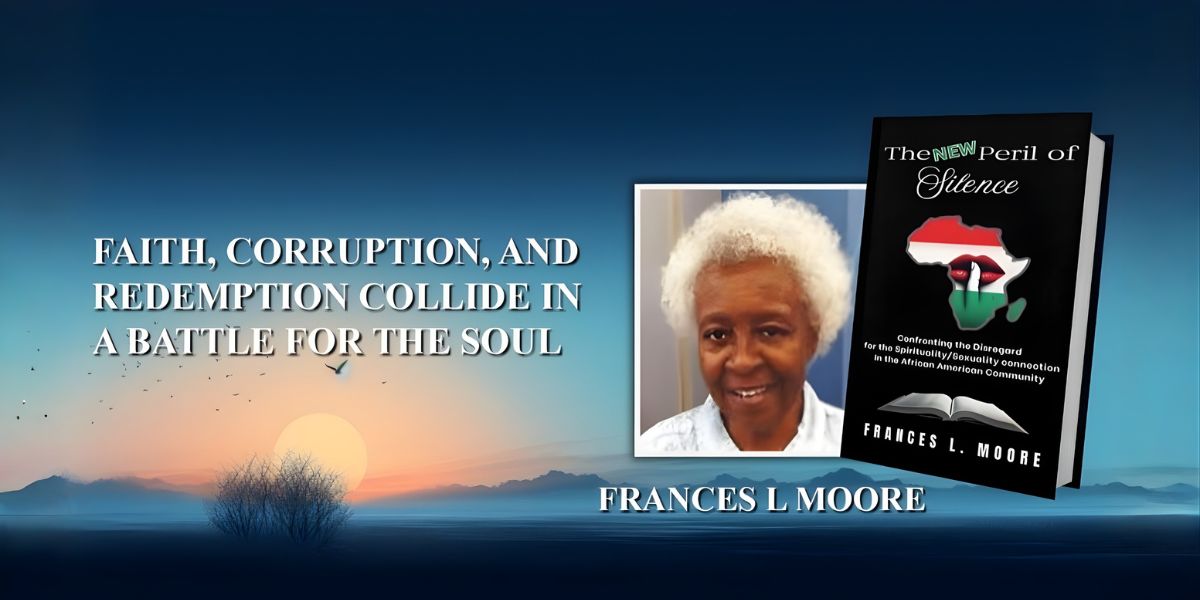
Frances L Moore’s Journey in “The New Peril of Silence” Shines a Light on Spirituality and Silence

By: Paul White

Silence can be deadly—not only in conversation but in the matters that shape our souls. Author Frances confronts this truth in The New Peril of Silence, a personal and powerful exploration of the overlooked link between spirituality and sexuality, especially in the African American community. Her book is not theoretical but a testimony born of pain, obedience, and healing.

Frances’s journey was not easy. When she first published the book in 2016 as The Peril of Silence, she was persuaded to omit references to race. She complied, but her spirit was unsettled. For years, she wrestled with the conviction that she had not fully obeyed God’s call. This new edition restores her original intent, placing the African American community at the center and weaving in the gospel message that reshaped her life.

The roots of her message reach back to 1996, when stress drove her into prayer. Asking God to reveal her heart, she was startled by the response: “You were a closet prostitute.” It was not condemnation but revelation. She began to see how her disregard for God’s design for sexuality had quietly shaped her life. Along with this realization came the phrase that has defined her work: the peril of silence—the refusal to acknowledge the bond between spirituality and sexuality in the Black community.

For two decades, Frances faithfully kept journals, recording lessons, convictions, and revelations that God placed on her heart. The first edition of her book grew out of those years of reflection, though she openly admits that she gave away far more copies than she sold. Profit was never her goal; her mission was to get the message into the hands of those who most needed it.

At the center of her work is a powerful definition of silence: the refusal to acknowledge that spirituality and sexuality are inseparably linked. God created human beings as whole—body, soul, and spirit—yet both society and the church often treat sex as though it is disconnected from faith. We pray over meals, she points out, but rarely discuss sex as part of God’s intentional, holy design. The consequences of this silence are visible everywhere: children without fathers, broken families, and wounded communities left without guidance or hope.

She speaks frankly about her own past, admitting she attended church and read Scripture without seeing her promiscuity as a spiritual violation. Only through God’s conviction did she begin to connect her actions to her faith.

Frances shares painful truths—childhood sexual abuse and a young adulthood marked by promiscuity. Writing openly was excruciating. Some critics felt her story was too raw. Yet encouragement from pastors and mentors urged her forward. One pastor told her, “The responsibility you have is to get out of you what God has worked in you.” That sense of duty outweighed her fear. By choosing honesty, she hopes to embolden others to confront their silence with courage.

The New Peril of Silence is structured as lectures rather than chapters, reflecting Frances’s academic career. Each section ends with discussion questions, designed for group studies or personal reflection. The book is not only a testimony but a curriculum, a safe framework for engaging with a taboo subject. Frances insists that if the Bible speaks of sexuality, the church has no excuse for avoiding it.

Central to her message is the balance of grace and accountability. Grace does not excuse sin, but it makes healing possible. She has learned to confess quickly, rely on God’s sufficiency, and resist shame. Her journey reshaped her views on sexuality, relationships, and obedience. Knowing firsthand the weight of shame and the difficulty of obedience, she also knows the peace of forgiveness. Her transparency offers readers hope that they, too, can move from silence to restoration.

Perhaps most deeply, Frances carries a burden for youth, especially African American youth. She dreams of churches and families engaging in honest conversations that teach both boys and girls biblical truths about sexuality. Too often, she notes, boys escape accountability, though much responsibility falls on them. Breaking the cycle requires teaching both sons and daughters that sex is sacred, not casual.

She has begun these conversations in her own family, sharing lessons with her great-nieces to prevent future heartache. Her prayer is that the book will serve as a guide and catalyst for communities to reclaim God’s design for sex, family, and faith.

Frances’s story is painful to hear and painful to tell. Yet her willingness to break the silence with truth makes The New Peril of Silence necessary. In a culture that idolizes or ignores sex, she reminds us that God’s design cannot be disregarded without consequence. Her hope is simple: that the book will reach those who need it, spark avoided conversations, and empower a generation to live with wholeness and holiness.

Silence is not harmless, she warns—it is perilous. And only by breaking it can healing begin.

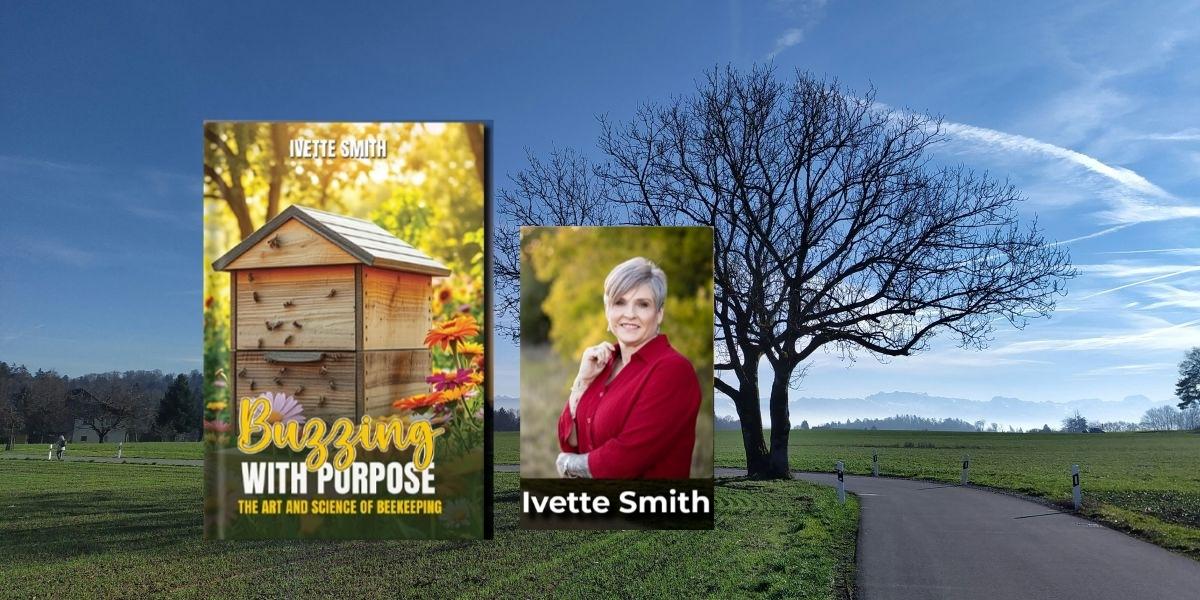
Ivette Smith and the Wisdom of the Hive: A Life Told Through Bees

When Ivette Smith speaks about bees, she does so with the reverence of someone discussing family. Her voice softens, her tempo changes, and there’s a glimmer in her tone that makes it clear: this isn’t just a topic she writes about. It’s a part of her. Long before she became the author of Buzzing with Purpose: The Art and Science of Beekeeping, Smith was just a curious little girl with long hair and big questions, following her grandfather and uncle through the citrus-scented fields of the Dominican Republic. Those early memories, watching honey drip from combs, learning how the flavor of honey shifted with the blossoms of orange or lemon trees, planted something that would bloom much later in life.

What began as a childhood fascination matured into a lifelong mission. Her new book isn’t simply about beekeeping. It’s about balance, purpose, and community, values she believes bees embody better than most humans. And it’s also about resilience, a theme that mirrors her own life. At 57 years old, while still pursuing her master’s degree, Smith has managed to write multiple books, all while facing personal challenges, including physical surgeries and living with bipolar disorder. That determination, quiet but fierce, buzzes through every line she writes.

Buzzing with Purpose is part memoir, part practical guide, and completely compelling. It blends storytelling with science, delivering content that both educates and captivates. From the anatomy of a hive to urban rooftop setups, Smith covers the whole spectrum. There are diagrams, seasonal checklists, and tips for preventing swarms or dealing with mites, but there’s also heart. She reflects on the emotional impact of watching drones die after mating, of having to remove a second queen from a hive, and the bittersweet poetry that seems to guide every action inside the colony.

One of the most unique aspects of the book is how it connects the hive to human life. Smith draws clear parallels between the rigid yet harmonious world of bees and the disjointed systems of modern society. Every bee has a role, she explains. The worker, the drone, the queen, each knows their purpose. They work not for personal gain, but for the collective good. Even in death, their lives are part of a larger pattern. She uses this comparison not to scold but to inspire. Her underlying message is clear: imagine what we could accomplish if we understood our place in the bigger picture.

The book also efficiently tackles urban beekeeping. Smith is adamant that you don’t need farmland or a science background to care for bees. Whether you’re setting up a hive on a city balcony or maintaining one in your backyard, she provides a roadmap that feels doable. She even breaks down how to build your own hive on a budget, how to check with local zoning regulations, and how to explain the process to concerned neighbors. She demystifies the process in a tone that’s neither preachy nor oversimplified.

What truly sets Smith apart as an author is her willingness to blend vulnerability with knowledge. She openly shares that she’s battled through several hand surgeries that temporarily prevented her from gardening or even writing comfortably. She jokes about being “a mess with a mission,” but behind that humor is a clear sense of purpose. Bees gave her a focus outside herself. In nurturing them, she found healing. In their order, she found peace. In their instinct to build, protect, and renew, she saw a model for how she wanted to live.

She’s also unafraid to challenge mainstream myths. Organic honey? “It doesn’t exist,” she says flatly. “You can’t leash a bee. You can’t tell it which flowers to visit. What matters is the environment you create for them.” It’s this kind of directness, paired with her storytelling, that gives the book its edge. She’s not trying to sound like an expert; she just happens to be one.

Smith has also written on mental health, including her second book, The Bipolar Journey, which explores her experiences living with the disorder. Beekeeping, she says, gave her structure. Something to care for. Something that needed her to show up. That same spirit pulses through Buzzing with Purpose. The book is more than a manual. It’s a philosophy wrapped in pages. A call to action that doesn’t shout, but hums gently in your ear.

Today, she dreams of creating a large pollinator sanctuary on her 13-acre property. Despite physical limitations, she still sketches plans for gardens full of wildflowers, trees, and, of course, bees. “They remember where they’ve been,” she says. “Even if you move the hive, they find their way back.” It’s hard not to see that as a metaphor for her own life. No matter what detours or delays have come, she’s always found her way back to her purpose.

Buzzing with Purpose isn’t just a book for beekeepers. It’s a book for educators, gardeners, environmentalists, and anyone searching for a way to reconnect with nature, with purpose, with themselves. It’s for the quietly curious, the skeptically hopeful, and the deeply tired. Because, as Smith reminds us, even the smallest bee has a role. Even the smallest life can build something sweet.

The Spirit Never Dies: John McCarthy’s Journey Along St. James Way

By: Paul White

There are stories born out of imagination, and then there are stories born out of the deepest corners of the heart. St. James Way, the perceptive novel by Dr. John McCarthy, belongs to the latter. What began as a journey through the scenic landscapes of Spain became, for McCarthy, a pilgrimage into grief, faith, and the eternal question of what lies beyond death. His book, rich with spiritual symbolism and global settings, finds its roots not in mere fiction but in the author’s personal story, a brother’s love that time never erased. “When I began writing this book,” McCarthy shared, “I was in Spain with my wife. We had traveled through the regions along El Camino de Santiago, the St. James Way.” That path, ancient, revered, and lined with centuries of devotion, stirred something powerful within him. The memory of his brother, James Richard McCarthy, known lovingly as Ricky, resurfaced with expressive clarity. “It had been fifty years since he passed, but I never really got over missing him,” McCarthy said. His brother’s name, his faith, and the sacred road through Spain came together to form the very heart of the novel’s title.

The book opens with a memory: two brothers fishing in the Ozarks, surrounded by the hum of nature and the quiet peace of brotherhood. Rick, the elder, is vibrant, athletic, and full of potential. His death at nineteen from complications after neurosurgery becomes the shadow that follows George, the main character, through the rest of his life. “He was strong, humble, and kind,” McCarthy recalled. “We spent so much time camping together, just the two of us. Writing this book was my way of doing something for him, and maybe healing myself too.” That sentiment runs through every page of St. James Way, blending memory and meaning with the search for divine truth. But McCarthy’s novel doesn’t stay confined to one man’s grief. It expands both geographically and spiritually into a sweeping narrative that crosses Spain, Iran, Israel, Italy, and the United States. Each location becomes a window into humanity’s shared yearning for redemption and understanding. “The theme,” McCarthy explained, “wasn’t just about my brother or myself. It was about the spiritual life of human beings, the journey we all take. I wanted to show that there’s something beyond death, something greater that unites us.”

That conviction shapes some of the novel’s most striking scenes. Readers encounter figures such as Pope Francis, Stephen Hawking, and Iran’s Supreme Cleric, each visited by spiritual messengers who confront them with truths that transcend religious boundaries. In one scene, Pope Francis receives a vision of his grandmother, Rosa, who reminds him that “no one religion holds the whole truth. Earth is one vast garden, even if its flowers are many.” This message, McCarthy said, reflects his hope for a more compassionate world, one where faith becomes a bridge rather than a wall. “We humans,” he said, “have the power to destroy life or to grow into more loving and wise beings. With free will, we get to choose our way.” McCarthy’s inspiration, however, goes beyond theology. It stems from his lifelong fascination with what happens after we die, a curiosity shaped by both science and spirit. As a medical doctor and psychiatrist, he encountered stories from patients and families about near-death experiences that defied explanation. “There are millions of such cases,” he noted. “Doctors, nurses, and even children have spoken of memories or visions that can’t be explained by medicine alone. People who were declared clinically dead described watching their surgeries from above or meeting loved ones who had already passed.” For McCarthy, these accounts were more than anecdotal; they were possible evidence that consciousness might continue beyond the body.

That idea finds form in the novel’s recurring motif of the “spiritual realm,” a place where souls continue their growth and where the boundaries between life and death blur. In one moving chapter, George, now a psychiatrist himself, experiences what he calls “The Wake-Up,” a vision of serenity, love, and wisdom so vivid it alters his understanding of reality. McCarthy described such moments as glimpses of the divine, “something to be cherished forever.” They suggest that our earthly lives are merely one passage in an endless spiritual journey, echoing the belief that death, like birth, is a transition, not an ending. When asked whether writing the book helped him heal from his brother’s death, McCarthy paused. “A little, yes,” he said softly. “It made me feel better to do something for him.” His words, simple yet heavy with emotion, mirror the book’s emotional core: love as both wound and remedy. Through fiction, he transformed personal sorrow into universal hope, a bridge between the living and the departed. In St. James Way, science and spirituality coexist rather than collide. McCarthy’s background in medicine lends authenticity to his exploration of addiction, loss, and the fragile human psyche, while his spiritual insight opens doors to the unknown. His characters, from ordinary people to world leaders, wrestle with doubt and revelation alike. “I wanted the reader to feel,” he said, “that this might have purpose and meaning in our lives today.”

Ultimately, St. James Way is not just a story about one man’s faith but about humanity’s collective soul. It asks significant questions: Can we evolve beyond fear and division? Can we learn from loss and still love freely? Can we see one another not as believers or nonbelievers, but as fellow travelers on the same path? For McCarthy, the answer is perhaps yes. “Love and wisdom give us purpose to grow,” he writes in his introduction. And perhaps that is what his brother Rick represents, the enduring call to love beyond death, to seek light even in darkness. As the sun sets over the hills of Santiago de Compostela, the ancient pilgrims’ path still echoes with footsteps and prayers. And somewhere in that quiet, one can almost hear the whisper that inspired Dr. John McCarthy’s life and art: “It’s going to be okay, George.”

“I Love Me”: A Transformative Interview with Patricia Lloyd

By: Paul White

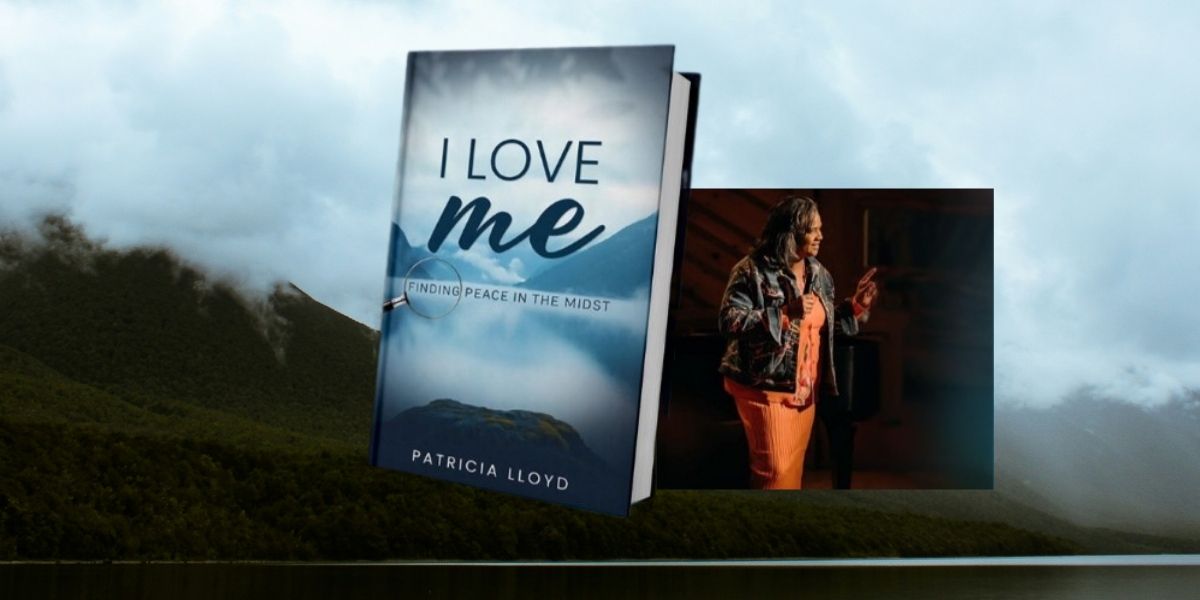
In a world where emotional wounds often remain unspoken, Patricia Lloyd stands as a voice of clarity, healing, and hope. Her book, I Love Me: Finding Peace in the Midst, is not merely a literary project. It is a personal triumph, an embodiment of survival, reflection, and transformation. In an exclusive interview, Patricia shares the intimate journey that led her to pen this compelling narrative and why she believes self-love is not selfish but essential.

From the first few minutes of our conversation, Patricia exudes a quiet strength. When asked how she felt upon completing I Love Me, her response was tender yet powerful. “It’s a journey from a toxic situation I escaped physically. More importantly, it was about healing from the emotional and mental damage. The book captures the process of finding peace within myself.” For Patricia, writing wasn’t just about storytelling; it was about survival. “Healing is not an overnight wonder. It’s a process. You have to be willing to participate in it.”

The book’s title, I Love Me, is far more than a declaration. It is a victory cry. “For me, those three words signify overcoming,” Patricia explains. “I had to relearn my value after years of depending on others to define it. When you rely on someone else’s opinion of your worth, you give away power without even realizing it.” The choice of words isn’t just personal; it reflects a universal truth. “The Bible says, ‘Love your neighbor as yourself.’ But how can you love anyone else healthily if you don’t love yourself first?”

At the heart of I Love Me lies a poignant, symbolic dream, which Patricia calls her “bridal dream.” This vision served as the foundational metaphor for her book. “It wasn’t a real-life moment, but it came to me like a download in a dream,” she recalls. “I dreamt of being a bride on her wedding day, and everything was ready. Except I didn’t have a dress. In the dream, the garment bag I had was full of rags.” These rags, she later realized, represented brokenness, unfinished dreams, emotional scars, personal failures, and unaddressed pain.

The symbolism of those rags is not only vivid but deeply introspective. Patricia reflected, “Sometimes in life, we collect pain like people collect junk, tucking it away in what I call a mental museum. We don’t display it, but it shows up in how we talk and how we treat others.” Instead of discarding these emotional remnants, Patricia repurposed them, much like she did with scraps of fabric she had collected for years. “Each piece of that quilt I sewed told a story,” she says. “They represented every abuse, every setback. But stitched together, they became a symbol of healing and wholeness.”

Patricia openly discusses the emotional rags she had to confront. “Low self-esteem was a big one. Even though I had children I adored, I still didn’t fully appreciate my own worth. I had internalized lies from people who were themselves broken. Hurt people hurt people.” This recognition didn’t come easily or quickly. “I had to go on a personal journey, getting still, praying, and learning to see myself the way God sees me.”

Throughout the interview, her voice carries the weight of lived experience but also the buoyancy of faith. “I started spending time in what I call my secret place. That’s where I got quiet, where I listened instead of always talking. That’s where healing began.”

When asked what pushed her to finally complete the book after years of delay, Patricia was candid. “It was purpose that called out to me,” she said. “There are people waiting for this message. People who need to know they’re not alone, that they’re worth saving, worth living for. This isn’t about fame. It’s about helping someone find their brighter path.”

One of the most stirring parts of our discussion centered on forgiveness. “Forgiveness is essential,” she states with conviction. “When you don’t forgive, you give someone free rent in your mind. It muddies the waters of your thinking.” Her analogy is striking. “If you pour dirty water into a glass of clean water, it contaminates everything. That’s what unforgiveness does. It clouds clarity and blocks healing.”

Patricia also emphasized the necessity of forgiving oneself. “You can’t move forward if you’re dragging the weight of shame and guilt. Forgiving yourself frees you to embrace the future.”

Looking ahead, Patricia shared that her next book will be titled Healing is the Children’s Bread, a concept rooted in biblical truth and spiritual sustenance. “Healing should be our daily bread, just like the air we breathe. It’s a promise. It’s not an exception; it’s the rule.”

As our conversation neared its end, Patricia expressed her ultimate vision. “I want to get on platforms where I can spread good news, words that uplift, inspire, and help people heal. Like Mother Teresa, my mission is to help others live better.”

Through I Love Me, Patricia Lloyd has done just that. Her words are not merely written; they are lived. Her book is a mirror for those still trapped in cycles of self-doubt, trauma, and emotional paralysis. And through it, she extends an invitation: to get still, to reflect, to heal, and to finally say with conviction, I love me.

“I Remember the Light”: A Son’s Account of Alien Contact, Memory, and the Mystery of the Hive Mind by Roger Kvande

By: Paul White

Some memories come back like dreams. Not quite clear, but undeniable. Like a rope pulled out of the dark—there’s tension, truth, and then the end just slips through your fingers.

That’s what remembering alien contact feels like.

I was just three the first time I saw them. I called them “raisin men” because that’s what they looked like—shrunk-down, wrinkled figures like the California Raisins from old commercials. They never spoke. Just watched. I tried waking my grandmother, but she wouldn’t move. I was wide awake. Frozen. The encounters happened a few more times, always vague, always terrifying. But they didn’t fully resurface until I was older—until I started talking to my dad.

What we uncovered changed everything I believed about my childhood—and maybe about reality itself.

My father, Roger Kvande, isn’t a man prone to delusion or drama. But he’s also carried stories he didn’t always know how to tell. In the summer of 1984, we went camping at Carver County Park in Minnesota to watch a meteor shower with 40 or 50 other people. The sky was clear, the mood light. Then something happened.

He remembers walking in a line with the crowd, drawn by some invisible force toward a hovering ship. People were being lifted—beamed aboard. He says he woke mid-process and screamed. That scream broke the spell. People scattered. Some collapsed. My dad and I ran with another man, Dave, to a rundown storage shed in the middle of the park.

The light outside was unreal—like a giant fluorescent lamp flooding every crack in the wood. Dave panicked. My dad stared through the seams and whispered: “They’re taking everyone.”

I remember the fear. I remember hiding like a cornered animal. And I remember him saying something I didn’t understand until much later:
“You won’t remember anything anyway.”

But I did.

The second primary memory surfaced in my twenties. I started recalling what felt like a dream but unraveled into something tangible. I remembered being in my room at my grandmother’s house. The grays came in—thin, pale, about four feet tall with oversized heads. They led me to the front door. And there, standing in a trance, was my father.

I said, “Hey, Dad!”
He snapped out of it like someone waking from anesthesia. I had never seen fear like that on his face.

He told me to think evil thoughts. I was too young to know what war or death meant. Then he shouted:
“Kick them!”
So I did. I punched one in the head. Nothing happened. No reaction. I looked at him and said something that still haunts me:
“Don’t worry, Dad. They won’t hurt us. They’re our friends.”

We walked out into a field flooded with blinding light. And then, nothing. Blank. The rope ended.

Years later, I tested the memory with my dad. I started the story, stopping before the critical details. He finished it exactly as I remembered it. We had never discussed it before. That’s when I knew this wasn’t a dream. It was real.

My father eventually documented these encounters in a website called Hive Mind Odyssey—part memoir, part research archive. It includes references to MUFON fieldwork, journals by William McNeff and Craig Lang, and hypnosis sessions that helped people recover memories like ours. But what makes his account different isn’t just the abductions. It’s the idea that the timeline itself was rewritten.

He believes the beings who visited us weren’t just here to take us, but to edit what happened. Two weeks after Carver County Park, we were retaken, this time to what looked like our family farm in 1959. There, under a glowing moon, we were told the Carver event would be erased from history. That another timeline would be created. One where he didn’t interfere. One where the scream never happened.

When I asked him about it years later, he said something I never forgot:
“UFO abduction is like finding the beginning of a rope. You follow it until it just ends.”

The idea of the Hive Mind came later. My dad believes the grays are just biological drones—controlled by something far more complex. A collective intelligence. Maybe even interdimensional. He doesn’t claim to have all the answers. But he’s spent years compiling every shred of evidence, thought, and testimony that fits this bizarre puzzle. And now, for the first time, it’s coming together in a book.

It is not like the others. It’s not fiction. It’s not sensationalism. It’s the account of two people—father and son—who lived through something the world still doesn’t know how to talk about.

And maybe that’s what makes it so important.

We’ve stayed silent long enough. The world is more open now than it was in 1984. The stigma is cracking. People are paying attention. But for those of us who lived it, the story never stopped. The light never faded. And the rope is still there—waiting to be pulled again.

The book is available at various online retailers. I hope people read it not just with curiosity, but with openness. Because if our story is true—and I believe with every part of me that it is—then it changes everything.


Disclaimer: The content of this account is based on the personal experiences and memories of the individuals involved. While the story is shared with the intention of providing insight into these unique experiences, it is essential to recognize that these events are subjective and may not be universally accepted or verified by external sources. The reader is encouraged to approach this narrative with an open mind, considering that interpretations of such phenomena vary widely. This content is presented for informational purposes and should not be construed as definitive or factual.

A Life Worth Saving: The Investigator Who Fought Death Row and Found His Own Redemption

By: Paul White

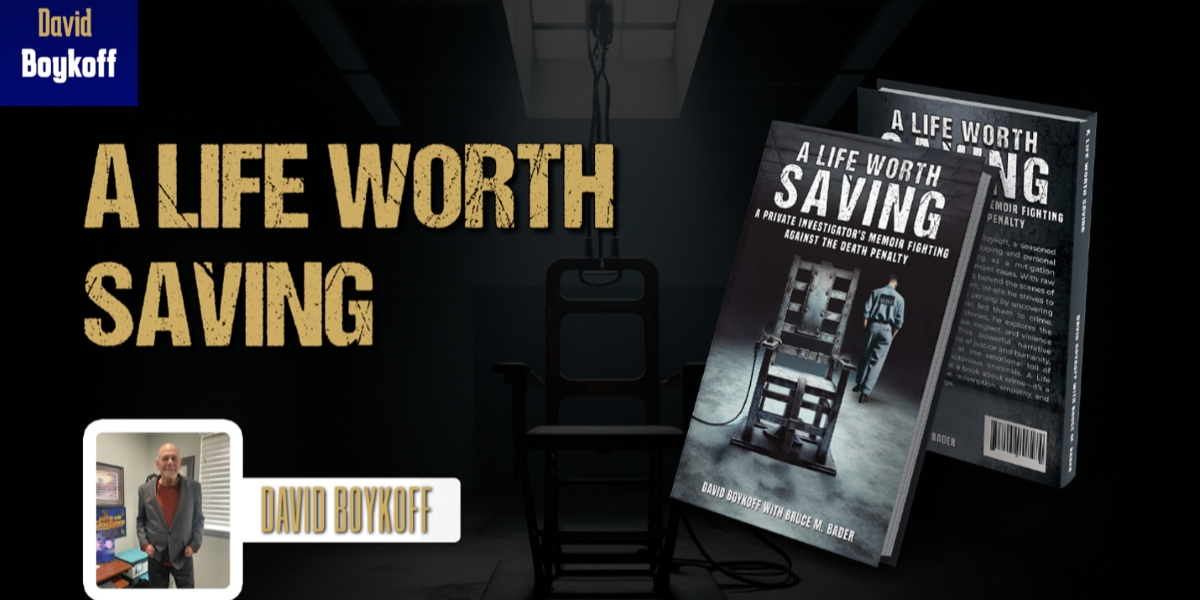
David Boykoff is not the kind of man who speaks in abstractions. He doesn’t theorize about justice; he’s lived on the edge of it for nearly 40 years. In his powerful new memoir, A Life Worth Saving: A Private Investigator’s Memoir Fighting the Death Penalty, Boykoff doesn’t just document a career; he reflects on a personal reckoning that spans a childhood shaped by violence, a career built on fighting for those society has often cast aside, and a long path to reexamining the hate he was raised with.

It’s the rare kind of story that invites readers to engage with hard truths about the justice system, about inherited racism, and about how easy it is to write people off as “monsters” until you understand what may have influenced their actions.

Born in Brooklyn in 1953, Boykoff grew up in the Bayview housing projects with an alcoholic, abusive father. The emotional damage left him scarred, insecure, and, as he candidly admits, indoctrinated into racism from a young age. “I was brought up to be a racist,” he says. “That’s the environment I came from.” That self-awareness, raw and uncomfortable, sets the stage for a memoir that refuses to hide behind a polished persona.

When Boykoff eventually became a court-appointed mitigation specialist tasked with uncovering the life histories of clients facing the death penalty, he began to notice a disturbing pattern between his story and theirs.

“They weren’t all that different from me,” he says. “Abuse. Neglect. A system that failed them early. The only difference was that I got out. They didn’t.”

For nearly four decades, Boykoff’s job was to investigate the lives of people already convicted of capital crimes. His role was not to prove innocence; instead, it was to persuade jurors that life without parole was a more just sentence than death. “I wasn’t defending their crime,” he says. “I was defending their humanity.”

In California and across the U.S., capital cases include a “penalty phase,” during which jurors hear mitigating evidence: stories of abuse, mental illness, childhood trauma. It’s a delicate balance, one last chance to save a life already condemned in the eyes of the law.

Boykoff’s book details the gritty reality behind this process. The interviews. The courtrooms. The stories that rarely make headlines. One of his clients was tied up and whipped by his father in the middle of the street. Another was routinely hung in a closet as a child. These are not anomalies; they are more common than many realize.

“In almost every case, there’s a history of deep trauma,” Boykoff explains. “We often pretend these people just snapped one day. That’s not how it works.”

The memoir doesn’t pull punches, not about the clients, and not about Boykoff himself. His early chapters are filled with ugly, uncomfortable moments: racial slurs from his father, a fistfight with a Black kid that ended with his dad screaming slurs in public. But as the pages turn, so does Boykoff’s perspective.

In his twenties, he began to question everything he’d been taught. “I decided I didn’t want to be like my father,” he says. “And I couldn’t keep justifying hate by calling it tradition.”

His work became a way to not only help others but to atone for his past. A Life Worth Saving is, at its core, a book about redemption, both professional and personal.

“This was my way of giving back. Of saving the lives of people I was taught to hate.”

The book is packed with gripping stories from real cases. The emotional weight is undeniable. Boykoff recounts high-stakes trials, gut-wrenching interviews, and the stress of waiting for a jury’s decision that could end a life.

Some of the most powerful moments come not in the courtroom, but in quiet spaces: jailhouse interviews, conversations with families, phone calls from grieving mothers. “I wasn’t just building timelines,” he says. “I was building trust. You can’t tell someone’s story until they trust you enough to tell it.”

Even with a remarkably successful record, Boykoff describes the job as emotionally exhausting. “By the end, I was burned out,” he admits. “I couldn’t carry it anymore.”

It’s also brutally honest. Boykoff writes about his own missteps, including working under unlicensed PIs, failing the licensing exam on his first try, and nearly losing himself to stress and self-doubt. But with each chapter, you watch him evolve, from a man shaped by trauma to someone who refuses to let it define him.

In the end, Boykoff’s story is less about courtroom victories than about the quiet insistence that every life, no matter how broken, condemned, or forgotten, holds significance. A Life Worth Saving doesn’t offer easy answers. Instead, it leaves readers with harder, more urgent questions: What does justice look like? Who gets to decide who lives and who dies? And what do we risk, as a society, when we stop asking?

Because if there is one truth threaded through Boykoff’s journey, it is this: the measure of a life isn’t tallied in verdicts or headlines. It’s found in the courage to see another human being fully and in the possibility that saving someone else might just save a piece of ourselves.

Unleashing SuperPowers: Roger E. Pedersen’s Journey from Homelessness to Sci-Fi Greatness

By: Paul White

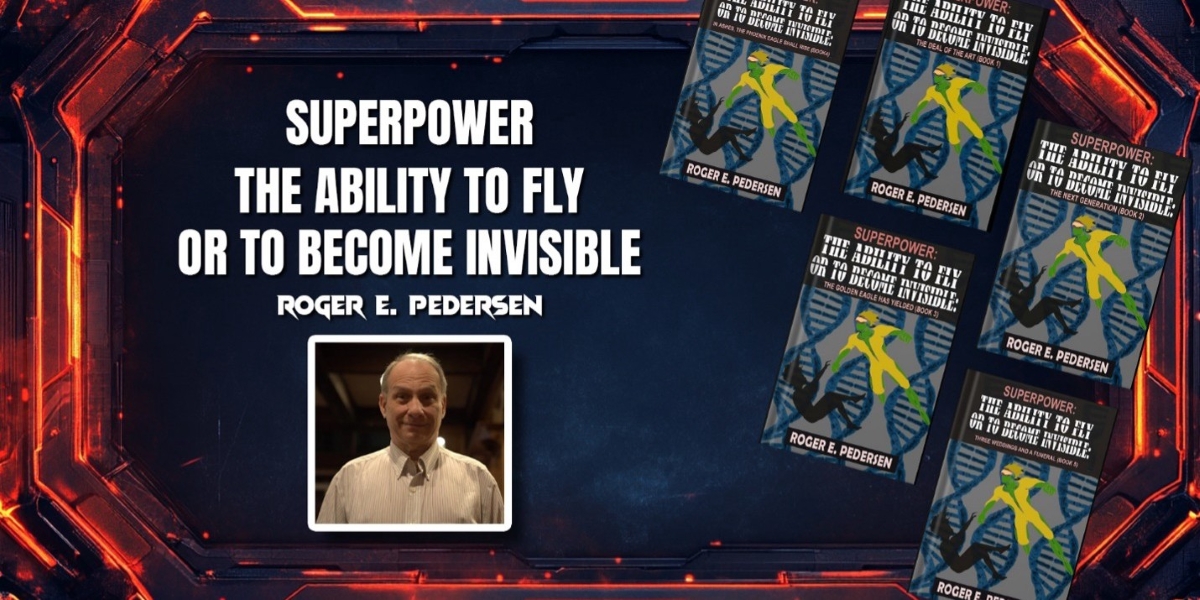
Roger E. Pedersen’s story is as inspiring as the characters he writes about in his critically acclaimed SuperPower Series. A visionary author, Roger weaves together humor, meticulous research, and heart-stopping action to create a sci-fi universe that captivates readers worldwide. His journey, however, began not with fame and accolades but with hardship and resilience.

A Journey of Perseverance and Vision

Five years ago, Roger faced life-altering challenges, job loss, homelessness, and personal setbacks. With nothing but his determination and a laptop, he found refuge in a New York City shelter and began to write. Inspired by the timeless question, “What would you do if you had the SuperPower to fly or become invisible?” Roger delved into a concept that no author had explored before.

“When I read about J.K. Rowling’s struggles before Harry Potter, I thought, ‘Why not me?’” Roger recalls. Armed with this conviction, he penned The Deal of the Art, the first book in the SuperPower Series. This imaginative tale introduces characters who discover their SuperPowers at pivotal moments in their lives, weaving a narrative rich in drama, humor, and profound life lessons.

Breaking New Ground in Sci-Fi Storytelling

Roger’s approach to storytelling is as unique as his background in video game design. “I write the first chapter, then the last, and link them with dynamic stories,”  explains. “Each chapter is a standalone vignette, akin to a favorite TV series episode. Each book has three optional games: name the film, book, or music.”

One standout story features Michele, an Olympic athlete whose discovery of her SuperPower changes her destiny. The emotional depth and surprise twists Roger employs echo his philosophy of storytelling: “Like a magician, I want to stun readers by pulling a rabbit out of the hat when they least expect it.”

Beyond plotlines, Roger’s research is exhaustive. From measuring distances in the Metropolitan Museum of Art to studying Michelin-star menus, every detail in his books is grounded in reality, lending authenticity to his dystopian sci-fi universe.

Themes of Art, Humanity, and Resilience

Art plays a central role in the first SuperPower book, with Professor Steele—one of the main characters—leading a $3.5 billion heist of priceless masterpieces from iconic museums worldwide. Through these narratives, Roger explores the preservation and commodification of art. “Art, like diamonds, gold, and silver, retains its value over time. It’s a timeless investment,” he notes.

Roger’s personal resilience shines through his characters, many of whom face ethical dilemmas that mirror real-life struggles. His books delve into the balance between altruism and selfishness, asking readers to reflect on their own values.

Expanding Horizons: From Page to Screen

The SuperPower Series is already a literary phenomenon, and Roger has ambitious plans for its future. Through partnerships with Emmy-winning producers on StoryRocket.com, he is preparing the books for adaptation into TV shows, films, and even video games.

“My tagline, ‘Thomas Crown stole one painting; Professor Steele takes them all,’ captures the cinematic essence of the series,” Roger shares his vision is clear: to join the ranks of literary icons like J.K. Rowling, Stephanie Meyers, and Suzanne Collins, whose works have transcended books to become global franchises.

What’s Next for Roger Pedersen?

Roger is currently working on the fifth installment of the SuperPower Series, Three Weddings and a Funeral, which promises unexpected twists and emotional depth. Each book builds on the last, introducing new characters and exploring fresh storylines while maintaining the humor, research, and innovation that define Roger’s work.

When asked about his personal choice of SuperPower, Roger’s extroverted side shines through: “I’d love to fly—soaring high and showing the world what’s possible!”

An Inspiring Legacy

Roger Pedersen’s journey is a testament to the power of perseverance, creativity, and dreaming big. From writing in a homeless shelter to winning the prestigious Literary Titan Gold Award, he has proven that the only direction is up.

With the SuperPower Series, Roger not only entertains but also inspires readers to reflect on their potential and the choices they make. As he says, “If you can envision something, you can achieve it.”

The SuperPower book series is available as an eBook, audiobook, and paperback from Amazon, Google Play, Barnes & Noble, Kobo, Target, Walmart, Waterstones, and 100s of local bookstores.

Website: PSIPublish.Com

A Brain Injury Changed This Doctor’s Life. Dr. John Jung’s Book Might Change Yours

By: Paul White

Dr. John W. Jung has seen plenty of traumatic brain injuries (TBI) in his 35 years as a chiropractor and functional medicine specialist. However, he never expected to become one of those cases himself. That changed when a car collided with his vehicle, resulting in a concussion and a challenging recovery process. This experience led him to reflect on the state of brain injury recovery.

His new book, Alternative Treatments to TBI: What Should You Do for Brain Injury Recovery Immediately?, offers a blend of personal experience and medical insight to guide patients and caregivers through the recovery process.

“When I got home from the hospital, I was told to ‘just rest,’” Jung recalls. “No timeline, no specific recovery plan, no clear guidelines. This is a common experience for many concussion patients.”

Jung became motivated to explore additional recovery strategies after recognizing that traditional medical advice often lacks clear, evidence-backed recommendations for post-concussion care. He found promising research on nutrients, herbs, and therapies that may support recovery, especially when used shortly after an injury.

In response, he wrote a book that aims to provide practical advice based on the latest research.

Dr. Jung’s approach is grounded in science, combining his experience in functional medicine and neurology. He presents a range of techniques and strategies to support brain health recovery, based on various disciplines.

What makes the book unique is how accessible it is for readers. Jung explains neurological concepts in clear, everyday language, exploring the connection between the brain, gut, and body. For example, brain injuries can impact the gut microbiome, which may, in turn, affect inflammation, cognitive function, and emotional health. The book discusses ways to support recovery through targeted nutrition and supplementation.

Jung emphasizes that his approach is grounded in scientific evidence and focuses on using natural compounds that support brain health and reduce inflammation.

“The brain’s need for oxygen and nutrients increases significantly after injury,” he explains. “Rather than simply resting, providing the right support can help optimize recovery.”

The book’s practical advice is another key feature. From nutritional strategies to alternative therapies, it provides readers with tools for brain recovery, even for those without access to traditional rehab centers.

The book also introduces therapies such as sensory stimulation techniques, including sound therapy and scent-based therapies, to support neurological healing. For example, stimulating specific areas of the brain through targeted therapies can assist in recovery following injury.

“Smells, sounds, and touch can stimulate different areas of the brain. We can use this knowledge to support recovery,” Jung says.

Jung also emphasizes the importance of movement-based therapies, which can be particularly helpful for those unable to access traditional rehabilitation centers.

Jung speaks from personal experience, as his recovery from multiple health challenges, including a brain injury, has given him a unique understanding of the healing process. Despite living with chronic pain, he has returned to part-time practice, writing, and helping others on their path to recovery.

His work has earned recognition from patients and peers alike, and he has treated multiple generations of families. He is known for his commitment to integrating scientific principles with compassionate care.

“I’ve experienced the medical system firsthand,” Jung says. “While emergency care is crucial, the long-term recovery process often lacks clear guidance, and that’s an area I aim to address.”

While Alternative Treatments to TBI offers medical insight, it is also a deeply personal account of Jung’s journey. His goal is to provide practical tools for caregivers and patients, helping them navigate the long recovery process.

In the second half of the book, Jung shares strategies for rehabilitation, lifestyle changes that support brain health, and ways to manage conditions related to brain injury, such as cognitive decline and neurological diseases.

Jung is already working on a follow-up book focused on autoimmune conditions and behavioral health, continuing his integrative approach.

When asked about the key message from his book, he answers:

“You have to take action. Don’t wait for the system to catch up. If you or someone you love has a brain injury, this book provides practical steps to help with recovery. You are your best advocate.”


Disclaimer: The content of this article is intended for informational purposes only and should not be considered medical advice. It is recommended that individuals seek professional guidance from a healthcare provider before making any changes to their treatment or recovery plan.

Tammie Landers Turns Personal Trauma Into a Lifeline for Children With Her Breakout Book ‘Do You Have an Unsafe Secret?’

By: Paul White

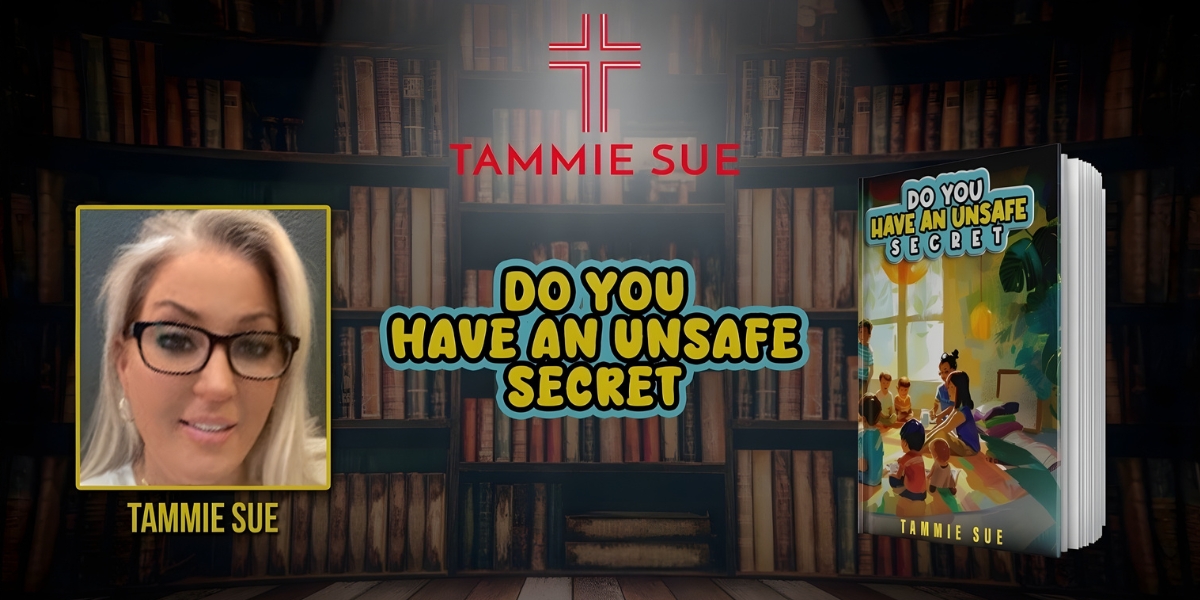
Some books are written to entertain. Others, to educate. But Tammie Sue Landers’ debut children’s book, Do You Have an Unsafe Secret?, was born from something far more raw and personal, the kind of heartbreak that could have stayed hidden, but instead became a call to action.

This book isn’t fiction. It’s a mission.

Landers was shaken to the core when abuse struck within her own family, involving someone she loved dearly. What followed wasn’t just grief, but a deep, urgent need to protect others. She didn’t write Do You Have an Unsafe Secret? because she wanted to be an author. She wrote it because she felt compelled to speak out.

“This story came out of real trauma involving my niece and my granddaughter,” Landers shared in a recent interview. “I kept asking myself, how can I help prevent this from happening to someone else’s child?”

That single question sparked a project that has since rippled into schools, churches, and homes across the country, creating conversations around one of society’s most difficult and often avoided topics: child abuse and secrecy.

A Child’s Guide to Speaking Up

Do You Have an Unsafe Secret? is gentle, but it doesn’t shy away from the truth. With warmth and clarity, Landers helps young readers understand the difference between safe secrets (like surprise parties) and unsafe secrets, the kind that may cause fear, confusion, and emotional harm.

She introduces this concept with carefully chosen language and a nurturing tone, making the book accessible to children as young as five. Alongside simple, friendly illustrations, the book poses direct but vital questions:

  • Does someone make you feel scared or uncomfortable?

  • Is someone touching you in a way that doesn’t feel right?

  • Do you feel afraid to tell someone about it?

If a child answers yes, they’re gently guided with empathy, not fear, to talk to a trusted adult. The book even includes a tear-out page where children can circle answers silently and hand the page to a “safe person” if they’re too afraid to speak.

“I wrote this to give kids language,” Landers explained. “They often don’t know how to describe what’s happening, or they’re too scared to say it out loud. This book can help open that door.”

The Power of Faith and Family

As both a mother and grandmother, Landers says her love for children fueled every page. But her Christian faith gave her the strength to face the darkest parts of the story.

While the faith-based elements are woven subtly throughout the book, they are deeply intentional. At the end, children are invited to say a prayer if they choose, or simply feel comforted knowing someone is praying for their safety.

It’s not just a story, it’s a lifeline disguised as a picture book.

A Hard Book to Write and a Harder Truth to Face

Writing: Do You Have an Unsafe Secret? wasn’t easy. Landers admits the process forced her to revisit traumatic memories and question herself. Could earlier conversations have helped prevent what happened?

“Reliving those moments was difficult,” she said. “I kept wondering, could I have had these conversations with my grandkids sooner? Would that have made a difference?”

But instead of letting that question weigh her down, she used it as motivation.

The book was written quickly once she made the decision to start, but getting it published took time. Landers struggled to find a publisher that was willing to take on such a sensitive topic, especially one directed at children.

A Trusted Tool for Parents, Therapists, and Educators

While the primary audience is children ages 5–10, the book is also a tool for adults. Therapists, pastors, and parents have already begun incorporating it into their work.

Landers’ own therapist bought multiple copies to use with clients. Her church has integrated the book into its ministry outreach. Friends and family have shared stories of their own, some for the very first time, after reading it.

The book includes specific advice for parents, including how to spot signs of abuse, how to create a safe space for dialogue, and how to respond if a child opens up. There’s even a section called the “Protection Page,” outlining safety tips and tools to help caregivers stay alert.

What’s Next for Tammie Landers?

Landers isn’t stopping here.

She’s already working on her second children’s book, which will focus on other tough-but-important topics that kids struggle to talk about, things like bullying, emotional abuse, and boundaries.

Her vision? A full educational series that could become part of everyday learning in schools, churches, homes, and therapy settings.

But for now, she’s hoping that Do You Have an Unsafe Secret? reaches the hands of every child who needs it and every adult who can help.

“I want this book to be available in as many places as possible, not just in homes, but in libraries, classrooms, counseling offices, even doctors’ offices,” she says. “Because silence can be harmful. And speaking up can make a difference.”

Do You Have an Unsafe Secret? is available now in paperback. Whether you’re a parent, teacher, therapist, or simply someone who cares, this is a book you may want to read. Because every child deserves to feel safe. Every child deserves to be heard.


Disclaimer: The information presented in this article is intended for general informational purposes and does not substitute for professional advice. The topics discussed, including child abuse, trauma, and related strategies for intervention, are sensitive in nature. For personalized guidance or support, readers are encouraged to seek assistance from qualified professionals, including therapists, counselors, or child protection experts.