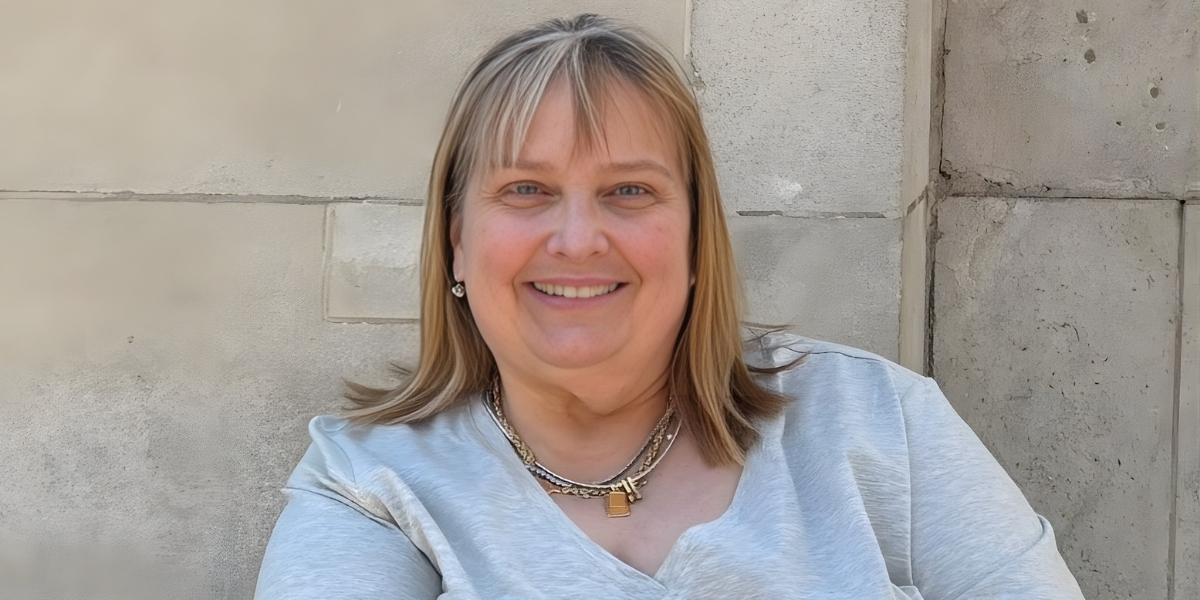
From Shadows to Stardust: How Chelsey Embry Turned Her Life Into the Science-Fantasy Epic “Inheritable Luminosity”

By: Elowen Gray

Every once in a while, a story appears that seems written in starlight: luminous, otherworldly, and deeply human all at once. For author Chelsey R. Embry, that story is Inheritable Luminosity. This soon-to-be relaunch science fantasy novel combines cosmic adventure with emotional healing and one woman’s quiet defiance against the odds. But before Chelsey built galaxies and crafted new worlds, she had to survive her own.

A Dream Written in Constellations

Chelsey grew up with a love for words and worlds. “I always admired J.K. Rowling. Not just for her imagination but for her perseverance,” she shares. Writing, for Chelsey, wasn’t just about storytelling; it was about transformation, the kind that starts with one line and ends with a life you never thought you could live.

Originally, Inheritable Luminosity began as a classic fantasy project filled with world-building and myth. But when Chelsey took an astronomy class in college, everything shifted. Her imagination expanded from forests and kingdoms to galaxies, parallel worlds, and constellations that held secrets of their own. The book evolved into a rare hybrid: part science fiction, part fantasy, and all heart.

From Shadows to Stardust: How Chelsey Embry Turned Her Life Into the Science-Fantasy Epic “Inheritable Luminosity”

Photo Courtesy: Chelsey R. Embry (Las Vegas Fashion Council)

Meet Clara – The Accountant Who Becomes a Galactic Heroine

At the heart of Inheritable Luminosity is Clara, an accountant from Maine whose life feels painfully ordinary. Until it isn’t. Adopted after losing her parents in a house fire, Clara starts experiencing vivid dreams that blur the line between this world and another. A hiking trip meant to clear her mind turns into the journey of a lifetime when she’s abducted, not by force, but by invitation, to a planet that turns out to be her true home.

What unfolds next is pure cosmic empowerment. Clara discovers she’s destined to save her world from an encroaching evil, wielding powers she never knew she had: telepathy, time manipulation, and a connection to divine forces in a celestial kingdom called Lagoya.

Chelsey’s protagonist is both powerful and painfully real, embodying the journey from everyday invisibility to self-discovery that so many women know too well.

From Shadows to Stardust: How Chelsey Embry Turned Her Life Into the Science-Fantasy Epic “Inheritable Luminosity”

Photo Courtesy: Chelsey R. Embry

Behind the Stardust – A Story of Resilience

What makes Inheritable Luminosity shine brighter than most debuts isn’t just its plot. It’s the woman who wrote it.

Before Chelsey became an author, she faced a long list of challenges: financial hardship, social adversity, and the kind of judgment that can dim even the strongest spirit. While putting herself through college, she worked briefly as an exotic dancer, an experience that would later bring both stigma and strength.

But instead of breaking under the weight of others’ opinions, she turned to writing. “I poured everything I’d been through into my story. Writing became my healing.”

That healing now glows on every page. Inheritable Luminosity isn’t just about saving a galaxy, it’s about saving yourself, piece by piece, through courage, creativity, and light.

Building Worlds That Feel Like Home

Chelsey’s attention to world-building rivals seasoned sci-fi authors. Her fictional universe brims with vivid colors, spiritual depth, and social structures that feel both alien and familiar.

“I created entire societies, governments, and moral systems. I wanted the world to be rich, but also relatable. Not pretentious,” she explained. The result is a setting where cosmic battles coexist with meditative moments where stars, gods, and humanity all share the same pulse.

The Next Chapter

The second edition of Inheritable Luminosity is set to launch in just a few weeks in hardcover, paperback, and eBook formats. It will be available through Amazon, Barnes & Noble, IngramSpark, Kobo, and several international platforms. The book has already found a home in libraries in Las Vegas and Indiana, with more to come. An audiobook version is also in the works for the near future.

Her target readers? Young women. Especially those who crave stories about transformation, inner strength, and finding purpose in the stars.

A Light You Can Inherit

Chelsey’s journey, from being underestimated to creating entire galaxies, mirrors her book’s title perfectly. Inheritable Luminosity isn’t just fiction; it’s proof that your light can’t be taken away but can only be passed on, shared, and reborn.

With her debut novel, Chelsey isn’t just asking readers to look up at the stars. She’s reminding them that sometimes, the brightest constellations are the ones we create for ourselves.

Behind the Big Red Door: Angela Webber’s Journey From Trauma to Transformation

By: Marisa Callen

Angela Webber never expected her life story to become a book—much less one that would resonate so profoundly with readers searching for emotional clarity, balance, and purpose. Yet Behind the Big Red Door: From Trauma to Success—Personally, Professionally, and Spiritually stands today as a testament to her evolution, both as a woman shaped by childhood pain and as a leader committed to guiding others through their own transformative journeys.

Interestingly, the book began as something entirely different. “It was originally supposed to be Knick Knacks on the Shelf,” Webber explains. “It turned into something more—something deeper.” As she wrote, the narrative widened beyond stories to reveal a lifetime of lessons learned while rebuilding herself, raising a family, growing professionally, and strengthening her spiritual foundation.

A Defining Choice: Breaking the Cycle

One pivotal moment stands out from Webber’s early years, a moment that ultimately shaped her mission as a parent, professional, and spiritual guide. Growing up amid the emotional fallout of her parents’ broken dreams, she recalls how their unprocessed hurt “dripped” onto her. The effects were quiet but undeniable.

That memory became a turning point.

“I was very intentional about not letting these same troubles plague my children or my family,” she says. “Children don’t understand that kind of hurt—and they aren’t able to process it.”

As her family, career, and faith life grew, Webber made a firm commitment: she would hold the line. She would protect not only her own children but also the customers, colleagues, and individuals who crossed her path. In her world, emotional responsibility is an act of service—one that builds healthier families, stronger workplaces, and more compassionate communities.

Balancing the Personal, Professional, and Spiritual

This holistic philosophy permeates her writing. For Webber, life is composed of interconnected spheres—family and relationships, career and calling, spirituality and inner grounding. None can be neglected.

“The balance of it all,” she says simply. “Each category is needed in a full life, so we must address each one with respect and intention.”

It’s this intentionality that gives Behind the Big Red Door its structure: a blend of memoir, guidance, and motivational clarity. And readers have responded. Webber admits she didn’t expect such universal recognition.

“We often live life in a bubble, so we don’t see how our own perspectives reach others,” she says. “It has been heartwarming to know the book is reaching those who feel the same way—and that they’re now feeling free to work through the emotions that have held them down.”

A Heart-Led Path Into Publishing

Webber’s journey as an author unexpectedly opened the door to another role: publisher. Her first experience dates back two decades, when she became captivated by a teaching series from David Rieke titled The Victorious Christian Life.

“I was so drawn to it that I asked him to make it a book—and that I would do all the footwork,” she recalls.

With no publishing background, Webber taught herself the entire process. She transcribed hours of taped messages, worked relentlessly with Rieke to refine the manuscript, found a printer, and helped create a cover. They printed 2,000 copies, all of which eventually sold out.

Twenty years later, after publishing her own book, Webber and her husband felt called to revive it. With Rieke’s blessing, they rebranded and republished The Spiritual Christian, giving the work new longevity and renewed purpose.

Publishing With Purpose

Today, Webber approaches publishing with the same value-driven perspective that fuels her writing.

“For me, my heart has to be involved,” she says. “I want to be able to stand with the message and the purpose.”

Her experience as an author also informs the way she supports new writers.

“I’m a motivational person by nature,” she explains. “If someone feels led to write their story, I think they should write it. Most people get caught up in believing, ‘No one wants what I have.’ Maybe that’s true—but I wrote my book for me.”

That personal intention, she believes, is what ultimately gives a story its emotional power. She wrote for her children, for future generations, and for her own healing. The surprising impact the book has had on others is, to her, a gift—not the goal.

Rethinking Trauma and Success

When it comes to overcoming trauma, Webber pushes back on a common misconception: that people must live in their suffering forever.

“In mental health, it’s like a river that never ends,” she says. “No one graduates out of it. Why? I really don’t know. But I won’t get in that river because I’ve never seen anyone get out of it.”

While she acknowledges many people genuinely need clinical support, she also believes that a large number simply need perspective—an opportunity to face their pain, understand its place in their life, and then use it as a platform for strength.

“Taking our trauma and making it our strength is the key,” she says.

Looking Forward: A Mission to Empower

Today, Webber is preparing for the next major chapter in her journey: expanding her motivational speaking and bringing her message to wider audiences.

“I know so many people are hurting who don’t need to be,” she says. “And many are hurting others without realizing it. I hope to rescue the ones who want to be.”

Whether through writing, publishing, or speaking, Angela Webber continues to do what she has always done—combine heart, purpose, and resilience to help others build lives full of balance, intention, and hope.

Are You Trauma Bonded? The Unhealthy Tie That Binds

By: George K. Weidner

Have you ever felt stuck in a relationship that you know is bad for you? You see the red flags. You feel the constant hurt. Yet, the thought of leaving feels impossible. You might tell yourself that the good moments are worth the bad ones. You might feel a powerful, almost addictive pull toward this person, even as they cause you pain. If this sounds familiar, you might be experiencing a trauma bond. This is not love. It is a psychological chain that can feel stronger than love, and understanding it is the first step to breaking free.

In her book The Aftermath, Pamela Joy describes this exact prison in her poem “Trauma Bonded.” She writes, “We were never good for each other, but that did not stop us from clinging to one another.” This is the central paradox of a trauma bond. It is an unhealthy attachment that forms between two people in a cyclical relationship full of highs and lows. The connection is not built on trust and respect. It is forged in shared pain and emotional whiplash.

A trauma bond develops through a repeated cycle of abuse and reward. Imagine a period of tension, followed by a painful incident. This could be a cruel comment, a betrayal, or a loud argument. Then, instead of a true apology, there is a period of loving treatment. This is the “reward” phase. The person might become incredibly kind, buy gifts, or make grand gestures. This positive reinforcement keeps you holding on. Your brain learns to associate this person with relief from the very pain they caused. This cycle is addictive. You stay because you are waiting for the high that follows the low. Pamela captures this addictive quality flawlessly, noting how “the drama and chaos became our only thrill.”

This bond is so powerful because it rewires your brain. The intermittent rewards create a chemical dependency. You crave the reconciliation and the affection that comes after the storm. This dynamic destroys your sense of self. You start to believe you cannot survive without this person. You lose trust in your own judgment because you keep returning to the source of your pain. You might feel immense loyalty to someone who consistently hurts you. This is not a weakness of character. It is a predictable psychological response to inconsistent and painful treatment.

So how do you begin to break a bond that feels unbreakable? The process requires courage and patience. The first step is awareness. You must name the problem. Acknowledge that what you are experiencing is a trauma bond, not love. Reading about it, as you are now, is a powerful act of self-defense. Seeing your experience reflected in Pamela’s poetry can provide that crucial moment of clarity. It helps you understand you are not crazy. You are not weak. You are caught in a recognized psychological trap.

The next step is to create distance. You cannot heal in the same environment where you got sick. This means limiting contact with the person. It may mean ending the relationship completely. This will feel incredibly difficult. Your body and mind will scream that you are making a mistake. This is the addiction talking. You must lean on a support system during this time. Talk to a trusted friend or a professional therapist. They can provide the objective reality check that the trauma bond has stolen from you.

Finally, you must rebuild your identity. A trauma bond often erodes your self-worth. You need to rediscover who you are outside of this painful cycle. Reconnect with hobbies you abandoned. Spend time with people who make you feel calm and valued. Practice self-care. Be very patient with yourself. Breaking a trauma bond is like recovering from a drug addiction. There will be withdrawal and intense cravings. But with each day you choose yourself, the chain weakens. You will slowly remember that you are a whole person, capable of a peace that does not require pain as its price.

To further understand the intricate dynamics of painful relationships and the path to healing, we invite you to read The Aftermath by Pamela Joy. This collection offers a vital and validating perspective for anyone navigating the difficult journey toward freedom.

From Breakdown to Breakthrough: How Dr. Erica Elliott Alchemized Adversity into a Life of Purpose

By: Dorothy G. Pereir

Have you ever stood on a mountain, literal or metaphorical, completely exhausted and asked yourself, “What is the point of all this? What am I supposed to be doing with my life?”

Dr. Erica Elliott, the author of From Mountains to Medicine, asked herself these very questions. She was not on a simple hike. She was on a glaciated slope of Cotopaxi. Fear and fatigue were her constant companions. Yet, this difficult climb was just one part of a much larger journey. It was a journey of alchemy. Dr. Elliott learned to take the base metals of her life, pain and confusion, and transform them into gold, a life of profound purpose and service.

The Base Metals: A Foundation of Struggle

Every great transformation requires raw material. For Dr. Elliott, this material came in the form of deep personal struggles. During her college years, she experienced a severe existential depression. The person she thought she was fell apart. Her marriage crumbled. She felt so lost that she saw no way out, leading to a suicide attempt. This was the emotional ore.

Her family life provided more challenging material. She grew up with a critical mother and a father she adored, yet whose own human flaws caused her pain. She felt she was the athlete in a family of intellectuals, struggling with feelings of not being good enough or smart enough. These were the relational and internal metals, heavy and unrefined.

The Catalysts: Guides for Transformation

Raw metals do not change on their own. They require a catalyst and intense heat. For Dr. Elliott, the first catalyst was a psychiatrist named Dr. Samuels. He guided her through what she calls the “archeology of the soul.” Together, they dug into her past. They exposed harmful myths and misperceptions. This therapeutic process was the first fire, melting down old structures to make room for something new.

The second catalyst was her Uncle Ernst, a Swiss doctor of alternative medicine. He introduced her to a rigorous fasting cure. This was not just a physical cleanse. It was a spiritual awakening. During the fast, she experienced a state of blissful oneness and unconditional love. Uncle Ernst taught her that true health comes from lifestyle, a philosophy that would later define her medical practice. This was the second, refining fire that purified her body and spirit.

The Forged Gold: A Life of Purpose and Service

With her inner self clarified and her body cleansed, Dr. Elliott was ready to forge her new life. The resilience she built directly fueled her incredible achievements. She became a pioneering mountaineer. In 1976, she became the first American woman to climb Aconcagua, the highest peak in the Western Hemisphere.

Her newfound compassion led her to service. She takes us from the sacred land of the Navajo Nation to the remote villages of the Ecuadorian Andes. These experiences were not detours. They were essential chapters in her search for meaning, a search beautifully detailed in From Mountains to Medicine.

All these paths converged into her ultimate calling: Dr. Erica Elliott became a medical doctor. She is now known as the “Health Detective” in Santa Fe, New Mexico. She solves complex medical mysteries for her patients. This role is the ultimate synthesis of her journey. It uses the detective skills from therapy, the intense focus from mountaineering, and the holistic wisdom from her uncle. The story in From Mountains to Medicine shows us how every piece of our lives can fit together to form a powerful purpose.

Your Own Journey Awaits

The powerful lesson from Dr. Elliott’s life is her mantra: “Never waste a bad experience.” Her book is proof that breakdowns can lead to breakthroughs. From Mountains to Medicine is more than a memoir. It is a guide for transforming your own struggles into strength.

To learn more about Dr. Elliott’s life and work, please visit her website at www.ericaelliottmd.com. Explore her world through short videos about the mountain lion and her love of nature. To embark on this transformative journey yourself, secure your copy of From Mountains to Medicine today. Let Dr. Elliott’s incredible story serve as your map and inspiration for a life remade.

From Victim to Visionary: How Maureen Skinner Smith Turned Pain Into Purpose

By: Mark P. Fleming

We often think our deepest pain will destroy us. We cannot see the path forward. We cannot imagine a new version of ourselves. For Maureen Skinner Smith, that pain was a decade-long relationship with a manipulative man. But she made a choice. She would not let her story end in darkness. She would use it to light the way for others. Her journey from victim to visionary is a powerful map for anyone feeling lost.

The Descent Into Silence

Maureen’s story begins with profound loss. After the death of her wonderful husband, Scott, she felt alone. Then she met Dick. He was charming and funny. He brought her roses and made her laugh. It felt like a rescue. But slowly, the laughter faded. It was replaced by constant criticism. He called her stupid. He took control of her money. He isolated her from friends and family. The strong, successful business owner she had always been began to shrink. She was living in a fog of manipulation, and she did not know how to escape. This period of her life is captured with raw honesty in her book, On to the Next Victim.

The control was not always loud. It was a quiet, daily erosion of her spirit. She learned to walk on eggshells. She accepted his lack of affection. She paid the bills while he played the big shot. The silence in her own home became heavy. It was a chain made of fear and guilt. She felt completely trapped. She was a victim, but a part of her was still fighting to survive.

The Moment of Awakening

Every transformation has a turning point. For Maureen, it was not one loud event, but a series of quiet, yet profound, realizations. She started to see the patterns. The lies. The stolen money. The other women. She discovered a book about psychopathy and saw all sixteen traits reflected in the man she lived with. It was a shocking and clarifying moment. She was not going crazy. She was living with a con artist.

She realized that her silence was his greatest weapon. By staying quiet, she was protecting him. She was allowing him to continue. The day she decided to speak her truth was the day she began her rebirth. She started to tell her family. She confided in her customers. She found her voice again. This was the crucial pivot in Maureen Skinner Smith’s life, the moment she began moving from pain to perspective.

The Rebirth of a Visionary

Maureen did not just leave. She documented. She understood. She transformed her personal trauma into a masterclass on survival. She took back control of her finances. She changed the locks on her house. She packed his belongings and placed them on the porch. Each action was a step toward reclaiming her life. She was no longer a victim. She was a strategist, a survivor taking back her power.

Her pain became her platform. Maureen Skinner Smith decided to write her story. She wrote On to the Next Victim not for revenge, but for rescue. She wanted other women to see the red flags she had missed. She wanted to give them the courage to leave. Her book is more than a memoir. It is a tool, a shield, and a source of hope. Her vulnerability became her greatest strength, building unshakable trust with her readers.

Lighting the Way for Others

Today, Maureen is a celebrated voice of empowerment. She speaks to groups and supports other survivors. She is the visionary who emerged from the shadow of abuse. Her message is clear: your past does not define your future. Your deepest wounds can become your greatest purpose. Her work provides what she calls an emotional return on investment. For every moment of pain she describes, she offers a lesson of immense power.

Maureen Skinner Smith’s story, detailed so powerfully in On to the Next Victim, proves that it is possible not only to survive, but to thrive. She is a beacon, showing that on the other side of suffering awaits a stronger, wiser, and more purposeful you. Her journey from victim to visionary is a testament to the incredible resilience of the human spirit.

Maureen Skinner Smith’s On to the Next Victim provides an essential and courageous blueprint for recognizing manipulation and reclaiming your life. This book serves as a vital guide for anyone seeking to comprehend toxic relationships and cultivate the resilience to move forward.

We’re All Dead Here: A Ghostly Adventure for Middle-Grade Readers and Beyond

By: Marcus Whitfield

Middle-grade readers are in for a thrilling ride with Jake C. Rudquist’s We’re All Dead Here, a ghost story told from the unique perspective of the ghosts themselves. The book poses a haunting yet playful question: What would you do if you were twelve years old and suddenly became a ghost?

Rudquist’s story follows a young protagonist navigating the afterlife while facing both supernatural and historical challenges, including elements from the Second World War. By combining adventure with history, Rudquist creates a narrative that captivates young readers while offering adults an equally engaging experience.

“I wanted to write a book that middle-grade readers could lose themselves in, but also something adults could enjoy,” Rudquist explains. “That age—around twelve—is when I most loved reading. I wanted to capture that same sense of wonder and curiosity.”

For parents encouraging reading, Rudquist emphasizes the importance of letting children choose what they read. “It doesn’t have to be a book. Comics, graphic novels, magazines, or even online articles count. The key is that they’re reading,” he says. Recalling his own childhood, Rudquist remembers being drawn to video game magazines. “I loved playing the games, but I grew to enjoy reading about them too. That’s how my love of reading started.”

Rudquist also suggests that parents help children discover books connected to their interests. In his own story, he fused two things that fascinated him as a child: the paranormal and the Second World War. “If a child is interested in sports, music, or gaming, there are books out there about those topics, both fiction and nonfiction. Reading becomes fun when it relates to something they already care about,” he notes.

One of the challenges Rudquist addresses is keeping young readers engaged long enough to finish a book. “Our attention spans are shorter than ever, for both kids and adults,” he says. He recommends discussing the story along the way: “Ask them who their favorite character is, or what’s happening to that character. My book was written so that adults can enjoy it alongside kids, which gives families a chance to check in and discuss the story together.”

By structuring the story for dual appeal, Rudquist makes reading We’re All Dead Here a shared experience. Beyond entertainment, the book encourages curiosity, critical thinking, and empathy. “Writing from a ghost’s point of view lets readers see the world differently. It teaches empathy and resilience, all while keeping the story fun and engaging,” he explains.

Historical context is another key component of the story. Rudquist intentionally incorporated real historical elements to enrich the narrative and spark interest in the past. “History and the paranormal both fascinated me as a kid,” he says. “Blending the two allows readers to explore complex ideas like life, death, and morality in a way that’s relatable and exciting.”

Humor and emotional depth are also woven into the story. While the young protagonist faces challenges beyond the ordinary, the book balances suspense with moments of levity and reflection. “Adults reading the book will find the humor, historical references, and emotional moments engaging. That dual-layer appeal helps foster a love of reading in children,” Rudquist notes.

In essence, We’re All Dead Here offers more than a ghost story. It’s a story about perspective, curiosity, and the joy of discovery. Rudquist’s narrative encourages readers to think creatively, ask questions, and engage with history, all while being entertained by the supernatural adventure unfolding on the page.

For families looking to spark a love of reading, the book offers an ideal entry point. Rudquist emphasizes the value of shared reading experiences: “When adults read alongside their kids, they model the importance of reading and create opportunities to discuss themes and ideas. That interaction can make a story memorable and transformative.”

We’re All Dead Here stands out as a unique blend of adventure, history, humor, and heart. It’s an excellent choice for middle-grade readers ready to explore the supernatural and for adults who enjoy thought-provoking storytelling.

Get your copy of We’re All Dead Here today and step into a world where the past and the supernatural collide, and where even the youngest ghosts can teach us lessons about life, courage, and imagination.

Edge of Power by Y. Richman Is A Dystopian Masterpiece That Redefines the Fight for Freedom

By: Carol E. Smith

In a world crushed beneath the weight of tyranny, one book dares to ask: how far would you go to reclaim your freedom?

Edge of Power, the electrifying debut novel by young author Y. Richman, takes readers into a dark, futuristic realm where survival is a competition. And the only way to live through it is to stop the Throne. With suspense, emotion, and rebellion, this novel stands out as one of the interesting dystopian tales of the decade.

A World Built on Control and Fear

The story opens in a society ruled by the Throne, a brutal regime that controls its citizens through manipulation, violence, and monthly Takings. Alongside that, deadly events where innocent people are chosen to compete in three ruthless competitions take part, first the strategy, second the maze, and last but not least the fight to the death, where the competitors gain extraordinary powers to use in battle.

And the new two winners of the competition, the husband and wife of the Throne, will continue the Thrones legacy.

From its opening pages, Edge of Power takes readers into a cinematic world of danger and despair. In the novel’s pulse-pounding beginning, a rebel named Andrew James risks everything to steal what he needs to make the chemical known as the Neutralizer. It is a substance that could dismantle the Throne’s empire of power. But his mission ends in tragedy, setting the stage for a new generation to carry the torch of defiance.

A Legacy of Resistance

Eight years after Andrew’s death, Jen Lankle lives under the same oppressive rule, haunted by the loss of those she loved. When she and her closest friend, Nolan Linvel, decide to enter the Throne’s Competition, their lives are thrown into chaos. Forced into a brutal series of trials designed to test intellect, endurance, and obedience, they must fight not just for survival, but for the truth about the world they live in.

As Jen and Nolan face the Throne’s deadly arenas, they find secrets about the rulers themselves. Madeline and Stefan Chraus, former competition winners whose own powers have twisted them into monsters. With every revelation, the stakes rise, and the line between freedom and destruction begins to blur.

Richman’s storytelling shines in these moments of high tension and moral complexity. Each challenge pushes the characters and readers to question what real power means. Is it the ability to control others, or the courage to stand against oppression, even when the cost is your life?

Themes That Ring A Bell

Beyond the breathtaking action and world-building, the book carries a message that feels immensely timely. It is a story about resilience, rebellion, and the unbreakable human spirit. Through Jen’s defiance and Nolan’s loyalty, the author explores the emotional weight of resistance. How courage often means choosing hope over fear, even when the world around you demands surrender.

The novel’s balance of thrilling plotlines and emotional depth makes it more than just a dystopian adventure. It’s a reflection on our own world, on systems of control, the dangers of blind authority, and the spark of change that begins when one person decides to fight back.

 A Young Author with a Powerful Vision

What makes Edge of Power even more remarkable is that a sixteen-year-old author wrote it. Y. Richmans ability to write such a complex, emotionally charged story demonstrates a rare maturity and insight. The author’s prose is bold yet grounded, the pacing relentless, and the dialogue authentic, creating a reading experience that feels both cinematic and deeply personal.

Readers of The Hunger Games, Divergent, and The Maze Runner will find familiar echoes here, but Edge of Power carves out its own bold identity. It is not just about surviving a corrupt system, it’s about breaking it. 

Takeaway

With its fearless characters, heart-stopping twists, and emotional intensity, Edge of Power is a journey you won’t forget. It’s a story of sacrifice, courage, and the unyielding hope that burns brightest in the darkest places. If you crave a dystopian adventure that will keep you questioning every page and rooting for every heartbeat, this is the book you’ve been waiting for.

Get your copy of Edge of Power by Y. Richman today and step onto the edge where power, hope, and rebellion collide.

Making Decisions and Adjusting to Change with Clarity and Purpose: Insights from Fred A. Kressaty’s ‘Inner Harmony’

Life often doesn’t follow a straight path. Career changes, family responsibilities, health concerns, and personal loss can create turning points that call for careful decisions. In Inner Harmony: Mastering Emotional & Spiritual Intelligence, Fred A. Kressaty explores how emotional intelligence (EQ) and spiritual intelligence (SQ) may help people manage change and make wiser choices. By combining emotional skills with spiritual values, individuals can move through transitions with steadiness and purpose.

The Challenge of Change

Transitions frequently bring stress and uncertainty. A job shift, a new stage of family life, or an unexpected loss might cause people to feel unsettled. Without the right tools, emotions could take over, leading to poor decisions or a sense of being stuck.

Kressaty suggests that EQ and SQ provide balance in these moments. EQ offers skills for recognizing and managing emotions, while SQ provides perspective and meaning. Together, they can turn change from something to fear into an opportunity for direction and growth.

Emotional Skills for Decision-Making

Decisions made during stressful times are often reactive. People may act out of anger, fear, or pressure. EQ helps slow this process by encouraging self-awareness and emotional regulation. By noticing feelings and pausing before responding, people might be able to make choices that align with long-term values rather than short-term reactions.

Kressaty points out that self-awareness may prevent blind spots. Recognizing bias, stress triggers, or recurring habits can allow for clearer thinking. Emotional regulation helps ensure that decisions are not clouded by panic or frustration. Motivation and empathy add further depth by keeping goals in sight and considering the impact on others.

The Spiritual Dimension of Choices

While EQ helps with clarity, SQ provides meaning. Kressaty describes SQ as a form of wisdom that considers purpose, compassion, and connection to something greater than oneself. When applied to decision-making, SQ encourages people to ask not just, What do I want now? But also, what matters most in the bigger picture?

Spiritual practices such as prayer, meditation, or journaling can support this process by giving time for reflection. Instead of rushing into decisions, individuals might pause, consider options, and evaluate how choices align with their beliefs and values. This process often leads to peace of mind, even when decisions are difficult.

Balancing Work and Personal Life

One of the most common challenges is balancing professional responsibilities with personal well-being. Modern life can push people toward constant work, leaving little time for family, rest, or reflection. Kressaty writes that EQ and SQ together may provide tools for restoring balance.

EQ helps manage stress in the workplace by improving communication and conflict resolution. SQ adds perspective, reminding individuals of values beyond productivity. Setting boundaries, practicing gratitude, and making time for rest and reflection are presented as practical ways to create harmony between different parts of life.

Transitions as Opportunities for Growth

Kressaty emphasizes that life transitions, though difficult, can also be moments of growth. Instead of resisting change, people may view it as a chance to gain maturity and strengthen character. EQ provides emotional flexibility—helping individuals face uncertainty with calm rather than fear. SQ brings a sense of trust and acceptance, seeing change as part of a larger purpose.

The book shares practical strategies for handling transitions: setting intentional goals, reflecting on lessons from past experiences, and practicing mindfulness to stay present. These steps may prevent people from being overwhelmed and allow them to move forward with steadiness.

Building Daily Practices for Stability

Even during stable times, daily habits can prepare people for future transitions. Kressaty recommends simple routines such as mindful breathing, evening journaling, gratitude reflections, and prayer. These habits develop the self-awareness and spiritual grounding needed when unexpected challenges arise.

The key is consistency. Regular practice strengthens emotional control and spiritual focus, making it easier to respond to change when it happens. Over time, these habits can create resilience—not as a dramatic quality, but as steady readiness for life’s ups and downs.

Choosing with Purpose

Inner Harmony: Mastering Emotional & Spiritual Intelligence presents decision-making and life transitions as opportunities to practice awareness and purpose. EQ provides the tools to recognize and manage emotions, while SQ offers meaning and perspective. Together, they may help people make choices with clarity and live with balance, even during uncertain times.

Making Decisions and Adjusting to Change with Clarity and Purpose: Insights from Fred A. Kressaty's ‘Inner Harmony’

Photo Courtesy: Fred A. Kressaty

Kressaty’s message is steady and practical: change is a part of life, but with the right skills, it can lead to stronger relationships, wiser choices, and a deeper sense of direction.

About the Author

Fred A. Kressaty is a writer, teacher, and professional coach who has worked in education, business, and counseling. He holds degrees in sociology, business, and marriage and family therapy. A near-death experience shifted his outlook on life and led him to focus on helping others manage challenges with faith and clarity.

Over the years, he has taught high school, managed a sales team, owned an insurance agency, and worked as a counselor. Today, he continues his work as a coach and Christian counselor. He lives in Myrtle Beach, South Carolina, with his wife, Doreen. Married since 1976, they enjoy travel, golf, and time with their children and grandchildren.

To Purchase The Book, Visit:

E-book: Link

Paperback: Link

Hardcover: Link


Disclaimer: The information provided in this article is intended for general informational purposes only. It is not a substitute for professional advice, diagnosis, or treatment. For specific concerns, please consult a qualified professional in the relevant field.

The Spoilt Parrot: When a Parrot Learns Manners – Lessons from Dooley’s Farm

By: Elowen Gray

Children often enjoy stories featuring animals, especially when those animals teach us valuable lessons about ourselves. The Spoilt Parrot by Betty R. Young is an example of such a tale: colorful, lighthearted, and filled with gentle lessons about kindness, respect, and friendship. Set on the lively Dooley’s Farm in the Caribbean, these books are more than just stories. They are mirrors that help children understand how our choices can affect others.

With Part 1 and Part 2 of the series already available, young readers can follow Dolly the parrot through her noisy, playful adventures and her eventual realization of how wonderful it can be to live in harmony with others.

A Farm Like No Other: The Magic of Dooley’s Farm

Imagine a farm where donkeys talk about peace, goats dream of harmony, ducks share opinions, and even cats help teach lessons about kindness. That’s the world of Dooley’s Farm: bright, tropical, and full of life. Every animal plays a role, and together they create a setting where children can learn about cooperation, empathy, and respect in a playful, engaging way.

Dolly the Parrot and Her Noisy Antics from Part 1

In The Spoilt Parrot: Part 1, we meet Dolly, a beautiful, colorful parrot with feathers that shimmer in the Caribbean sunshine. Dolly knows she’s special, and she enjoys being the center of attention. But her way of getting attention is not always pleasant. She makes loud noises, mimics other animals, and even teases her shy brother, Tony.

For the other animals on Dooley’s Farm, Dolly’s behavior isn’t fun. It’s quite frustrating. They long for peace and harmony, but Dolly’s antics disrupt the calm. Children reading Part 1 may laugh at Dolly’s silliness, but they’ll also begin to see the effects of her actions: hurt feelings, lost trust, and unhappy friends.

Part 1 concludes with the farm animals realizing that something needs to be done about Dolly’s behavior. And that’s where Part 2 picks up.

What Kids Can Learn from Part 1

  • Showing off can seem fun at first, but it often makes others feel upset.
  • Being kind to siblings and friends often matters more than being the loudest in the room.
  • Good manners, like not talking with your mouth full or respecting quiet moments, can make life better for everyone.

A Plan to Help Dolly Change in Part 2

In The Spoilt Parrot: Part 2, the animals finally decide to take action. With the help of Tyler, the friendly cat, they come up with a gentle but clever plan. Tyler begins imitating Dolly’s noisy ways, showing her exactly how disruptive and silly she has been. For the first time, Dolly sees her behavior from another perspective.

This moment of self-reflection is important, not just for Dolly but also for young readers. Dolly realizes that her antics aren’t quite as amusing as she thought, and she begins to understand the value of kindness, cooperation, and bringing joy instead of chaos.

By the end of Part 2, Dolly has changed. She greets her friends politely, plays nicely with her brother Tony, and joins the other animals in enjoying the simple beauty of life on Dooley’s Farm.

What Kids Can Learn from Part 2

  • Sometimes, seeing our actions reflected back to us can help us understand their impact.
  • Working together as a team can often solve even the trickiest problems.
  • Friendship and harmony tend to feel better than showing off or being rude.
  • Change can happen when we decide to do better.

Why These Stories Matter for Young Readers

Children’s books aren’t just about entertainment; they’re also about shaping character. Through Dolly’s journey from spoilt to thoughtful, kids learn that kindness, respect, and empathy are values worth holding onto. The stories are playful but meaningful, filled with farmyard fun while gently guiding children toward positive behavior.

Betty R. Young has created more than a story; she has built a farmyard classroom where animals are the teachers, and every chapter offers a gentle lesson in life.

A Gentle Guide for Parents and Teachers

For parents and teachers, The Spoilt Parrot offers more than a bedtime story. Each part of the book can spark conversations with children:

  • Why do you think Dolly teased her brother?
  • How would you feel if someone copied you in a mean way?
  • What are some ways we can be kind every day?

Through these simple discussions, Betty R. Young hopes to encourage children to connect Dolly’s adventures with their own lives.

Get the Book for Your Kids and Spread Kindness

The Spoilt Parrot – Dooley’s Farm Part 1 & Part 2 are not just books; they are helpful stepping stones for young readers learning about empathy, manners, and the joy of friendship. Dolly begins as a parrot who only thinks of herself, but by the end of the story, she becomes a friend who brings happiness to others.

And isn’t that the kind of journey we’d like all children to take?

Both parts of Dolly’s story have been published and are ready to be purchased on Amazon. For any further queries, to share feedback, or if you simply wish to connect with Betty R. Young, you may do so directly via email at central@aribsurf.com.

Abandon House: A Memoir of Chaos, Resilience, and Relatable Catastrophe

By: Elowen Gray

Kenny Rudolph’s Abandon House: How to Survive a Home Repair Fiasco – Book 1 is not a conventional memoir built on quiet reflection or linear storytelling. The first of a three-book series, it functions as a hybrid work that blends humor, social observation, and personal endurance into a narrative that is both chaotic and controlled. What begins as a seemingly insignificant household issue becomes the foundation for a sprawling five-year saga that exposes the fragility of everyday life when bureaucracy, incompetence, and circumstance collide.

Rudolph traces the entire ordeal back to a leaky kitchen window, an inconvenience that any homeowner might expect to resolve in an afternoon or over a weekend. Instead, it becomes the trigger for a full reconstruction of not only the home but the authors’ patience, finances, and worldview. The narrative partnership between Kenny and his wife, Shari, elevates the story beyond a singular perspective. Rather than framing himself as the sole protagonist, he allows their shared voice to shape the telling. The result is richer and more dimensional than a solo account of frustration and dysfunction.

Throughout the memoir, the couple faces a carousel of challenges that range from absurd to infuriating. Fraudulent contractors, disinterested or evasive insurance representatives, opportunistic legal professionals, and the logistical nightmare of managing a home repair crisis during a global pandemic all converge. These obstacles are not presented with bitterness. Instead, Kenny approaches them with sharp humor and self-awareness, fully acknowledging the ridiculousness of the situation without dismissing the emotional toll it takes on them.

One of the standout strengths of the memoir is its tone. The writing feels conversational without sacrificing clarity or structure. Kenny has a natural storytelling instinct shaped by his background in media and creative work. He uses humor not as a gimmick but as a survival mechanism that allows readers to stay engaged through the chaos. The wit is never cynical, and the comedic beats land because they are rooted in honest disbelief at how bad things can get when systems fail.

Shari’s influence is equally important. Rather than existing in the background, she becomes an essential counterbalance, bringing empathy, warmth, and realism to the narrative. Their dynamic offers more than comic relief. It frames the experience as a joint test of resilience, reinforcing the theme that crises rarely occur in isolation. They happen to families and couples who must negotiate not only the external problem but the internal strain that accompanies it.

What sets Abandon House apart from memoirs that rely on spectacle or trauma is its accessibility. Nearly anyone who has dealt with home maintenance, city permits, complicated insurance claims, or unresponsive contractors will recognize parts of their own frustration in this story. Yet it is not simply a story of misfortune. It becomes a lens through which modern adulthood is examined. The house is the tangible setting, but the real subject is what happens when ordinary people are pulled into systems designed to slow them down rather than help them recover.

Kenny writes with enough specificity to make the events believable but avoids bogging the reader down with technical jargon or procedural minutiae. The bureaucratic obstacles are described with precision and comedic restraint. Instead of painting himself as a hero battling villains, he allows the circumstances to speak for themselves. This restraint is part of what gives the memoir its credibility. Readers do not feel manipulated or guided toward outrage. They are invited to witness a situation that spiraled beyond logic.

The emotional undercurrent of the memoir is handled with equal care and sensitivity. While the tone is often humorous, there is an ever-present awareness of how destabilizing it can be to feel powerless in one’s own home. The house is supposed to be a place of safety, order, and rest. When that collapses, identity and security are also shaken. Through small but meaningful reflections, Kenny explores how stress accumulates and how uncertainty can gradually wear people down.

The pandemic adds another layer of difficulty without becoming the central narrative. Instead, it functions as a backdrop that amplifies the absurdity of trying to navigate institutional systems during a time when everything was already on edge. The memoir never becomes political or overly sentimental about COVID-19. It uses the pandemic to highlight the tension between personal needs and societal disruption.

By the conclusion of Book 1, readers are not given a glossy resolution tied up with positivity or inspirational messaging. This memoir conveys a sense of triumph, as the couple endured, adapted, and found a way to laugh through it. Their resilience is not presented as exceptional or heroic. It is portrayed as the only viable choice for people who refuse to be defined by setbacks. And with two books remaining to complete the tale, readers will find themselves cheering for more, as Rudolph overcomes the unimaginable in their attempts to abandon the house.

The expansion of the story into The Abandon House Podcast demonstrates that the material is not limited to the written page. Hearing Kenny and Shari speak about their experiences adds another dimension to their storytelling. Their chemistry and shared storytelling rhythm lend authenticity to the memoir. It also allows the audience to stay connected to their journey beyond the confines of the three-book series.

In the end, Abandon House is not only about bad luck and bureaucratic failure. It is about how people survive disruption with humor and perspective intact. It is about the way relationships absorb stress and come out the other side with new stories and a deeper connection. Kenny Rudolph has turned a personal fiasco into something that is both laugh-out-loud funny and reflective. The memoir succeeds because it is unpretentious, emotionally grounded, and honest about how strange real life can become when something small goes wrong and nothing goes as planned.