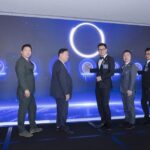

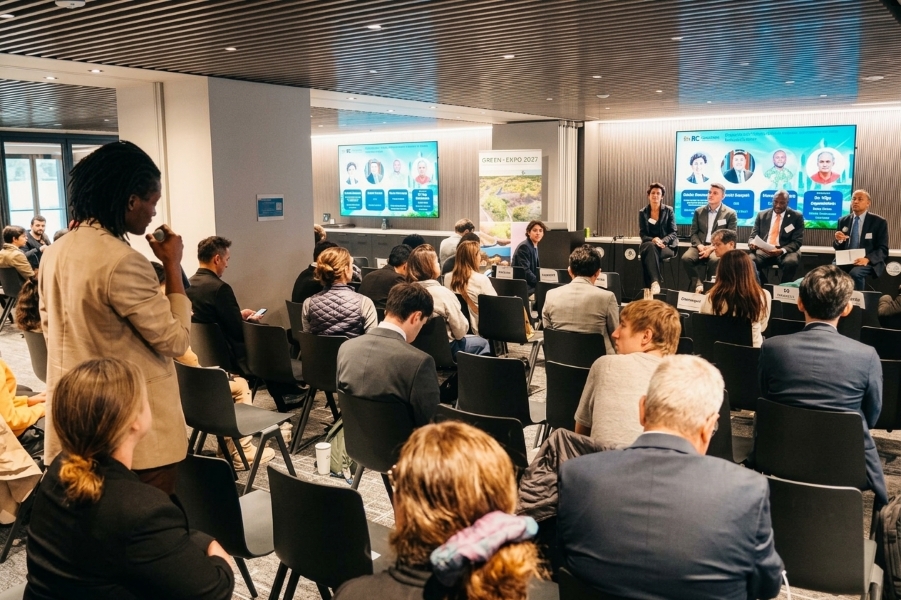
During Climate Week NYC, the City of Yokohama took its circular economy agenda to New York, shifting the focus from dialogue to action. On Sept. 25, the city gathered about 230 participants, including government leaders, investors, corporations, and startups, for its Global Forum on Circular Economy and Urban Resilience.
Just weeks earlier, Yokohama had hosted the inaugural Asia-Pacific Circular Cities (APCC) Forum, marking a new chapter in regional cooperation on the circular economy. The gathering brought together 52 municipalities and organizations and more than 1,000 participants, while the Asian Circular Cities Declaration (ACCD) expanded from 26 cities in seven countries to 43 cities in 11 countries, in just 9 months, representing more than 82 million people.
For Tomomi Yamashita, Director General for Global Initiatives at Yokohama’s Policy Administration and International Affairs Bureau, bringing this momentum to New York was an opportunity to take the conversation beyond Asia. The aim was to engage with international organizations, businesses, investors, and other key players working on circular solutions, explore shared challenges, and turn the emerging regional movement into broader global collaboration.
The Gap Between Ambition and Implementation
One challenge emerged repeatedly in New York: how to turn promising circular economy ideas into solutions that can be implemented and scaled.
Jibran Ahmed of the World Economic Forum’s Center for Urban Transformation said the gap between promising circular solutions and widespread adoption in cities is often “a coordination gap rather than a technology gap.” He described cities as both a “launch pad” and a “landing pad” for new solutions.
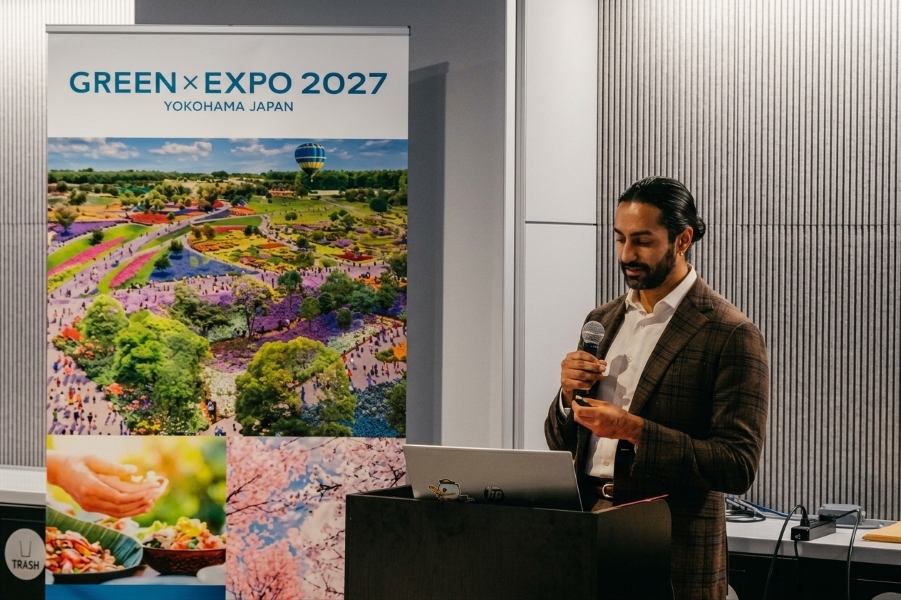
Durgesh Patel, an AI executive at Hitachi, put the challenge in blunter terms. “You might have the best technology and all the capital in the world, but if you can’t implement from first project to hundredth project, nothing will scale,” he said.
The discussions echoed challenges facing cities across Asia: identifying practical solutions is only the beginning. Bringing together the right partners, financing, policies and opportunities for implementation is often the harder task.
Yokohama’s Approach: From Local Action to Regional Collaboration
Yokohama is confronting these challenges on two fronts: advancing circular solutions within the city itself and creating opportunities for other cities to work together.
At home, Yokohama recovers phosphorus from sewage sludge for use as fertilizer, upcycles old flooring into furniture and maps resource flows in its city center. Its Mid-term Plan 2026–2029 prioritizes the transition to a circular city through an initiative called YOKOHAMA CIRCULAR LINK, connecting environmental action with economic opportunities and cooperation among businesses, residents and government.
The city’s regional approach builds on more than a decade of international urban cooperation. Since 2012, Yokohama has hosted the Asia Smart City Conference 14 times, bringing together city leaders and international partners to discuss sustainable urban development.
In 2026, that conference evolved into the APCC Forum, sharpening its focus on the circular economy and practical collaboration among cities. The transition builds on the ACCD, launched in 2025 with ICLEI Japan as its secretariat and Yokohama as its first signatory.
At the Sept. 4 APCC Forum, the network released its first action plan, “ACCD Action 2026,” organized around three working groups: Good Practices, Solution Matching and Co-creation, and Progress Management. The Good Practices group aims to publish 50 case studies by 2027, creating a shared resource that cities can use to learn from one another and identify approaches suited to their own circumstances.
For Yokohama, the opportunity goes beyond exchanging policy ideas. Cities can serve as gateways connecting local challenges with global technologies, expertise, investment and business partners.
“Yokohama is a global gateway connecting companies and partners with circular economy opportunities across Asia and around the world,” Yamashita said.
Turning Connections Into Business Opportunities
The New York forum offered a practical example of that approach.
At a Business Innovation Forum held the same day, six climate-tech startups presented their solutions to potential Japanese partners. Japanese corporations also shared their innovation priorities and business challenges through reverse pitches, opening conversations about potential collaboration.
Yokohama has been building similar connections through its Matching Program, which links international startups with Japanese companies and opportunities for pilot projects and commercialization.
Applications grew from 45 in the program’s first year to 76 in 2026, while the city’s network of venture investors, accelerators and other innovation partners expanded from about 50 to more than 120. Beyond connecting people, the Office of the City of Yokohama Representative to the Americas actively facilitates partnerships between U.S. startups and Japanese companies, supporting introductions, follow-up discussions and the launch of pilot projects.
Yokohama-connected businesses were also represented at the forum. Chiyoda International Corporation, the U.S. subsidiary of Yokohama-headquartered engineering company Chiyoda Corporation, and Sun Metalon, which uses electromagnetic technology to transform machining scrap into high-value metal, joined other corporate and startup leaders. The Bank of Yokohama sponsored the forum, while ShibuLA Ventures, which has a subsidiary in Yokohama, participated as a partner.
Closing the forum, Satoshi Katahira, Consul General of Japan in New York, said Yokohama “is demonstrating how the city can make real global impact.” He also highlighted how the circular economy and urban resilience can help address wider economic and strategic challenges, including critical minerals, resource security and resilient supply chains.
Toward 2027 and Beyond
For Yokohama, the conversations in New York are part of a continuing effort to turn international cooperation into lasting partnerships and projects.
The next major opportunity will come in 2027, when Yokohama hosts GREEN×EXPO 2027, an international horticultural exposition running from March through September.
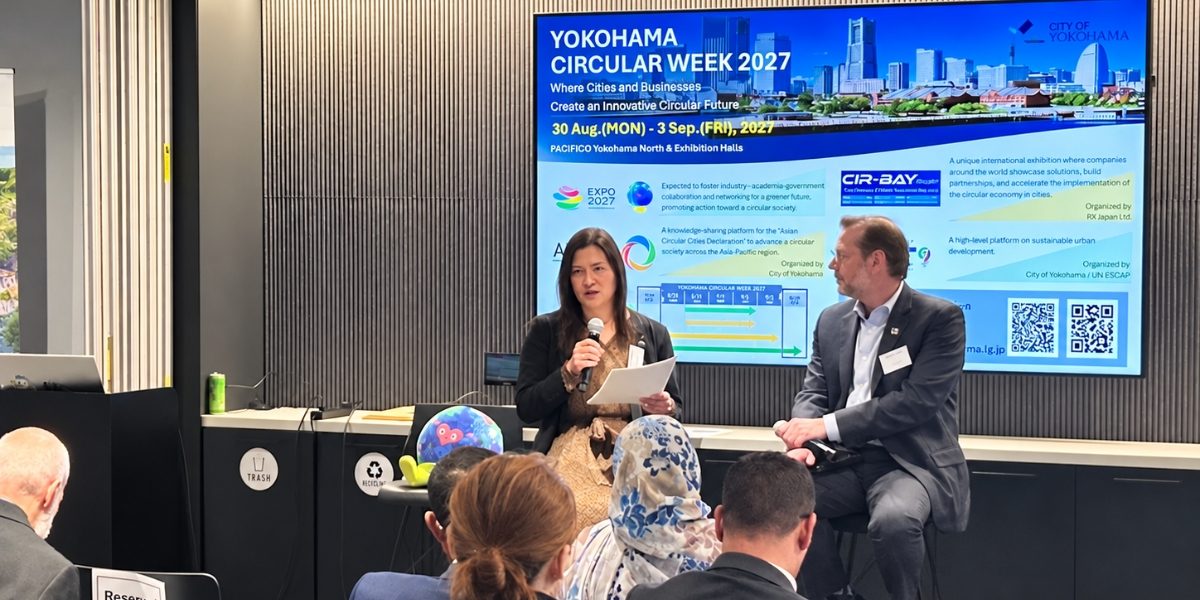
During the Expo, the city will also host Yokohama Circular Week, from Aug. 30 to Sept. 3, bringing several international gatherings together at Pacifico Yokohama, the planned venue.
The week will include the second APCC Forum and the ninth Asia-Pacific Urban Forum (APUF-9), co-hosted with the United Nations Economic and Social Commission for Asia and the Pacific and held in Japan for the first time. A major international circular economy exhibition is also planned, targeting approximately 350 exhibitors and 30,000 participants, with the ambition of establishing an annual platform for circular economy collaboration.
Together, these events will create opportunities for cities, international organizations and businesses to connect policy challenges with technology, investment and practical solutions.
Yamashita warmly invited U.S. cities and other international partners to take part, emphasizing that the goal is not simply to hold another international gathering but to create relationships and projects that continue well beyond the events themselves.
“For Yokohama, 2027 will be a major milestone, bringing together GREEN×EXPO 2027, the APCC Forum and major circular economy events,” Yamashita said. “That momentum can lead to new partnerships, projects and action well beyond 2027.”
For New York’s policymakers and business leaders, the message from Yokohama was less about what Asian cities are planning and more about an open invitation to compare notes, test solutions and find partners across the Pacific.
Companies and organizations interested in joining these initiatives are encouraged to contact the Office of the City of Yokohama Representative to the Americas.
Learn more at businessyokohama.com.