
A restaurant can process an order in seconds, send a reservation confirmation before a guest arrives, and let an app handle the coffee before the customer walks through the door. Efficiency has become one of hospitality’s defining ambitions. Yet the more friction disappears from everyday transactions, the harder it can become to find an ordinary human exchange.
The concern extends well beyond restaurants. The World Health Organization reported in 2025 that roughly one in six people globally experience loneliness, with young people reporting some of the highest rates. The organization also linked social connection with better health and longer lives, placing human interaction among the issues societies can no longer treat as incidental.
Technology is moving in the opposite direction at remarkable speed. The National Restaurant Association reported that 28% of restaurant operators planned investments in artificial intelligence in 2025, while 30% planned resources for self-ordering or self-payment systems. The tools can make operations more efficient, yet the industry faces a harder question: what happens to hospitality when fewer moments require people to interact with people?
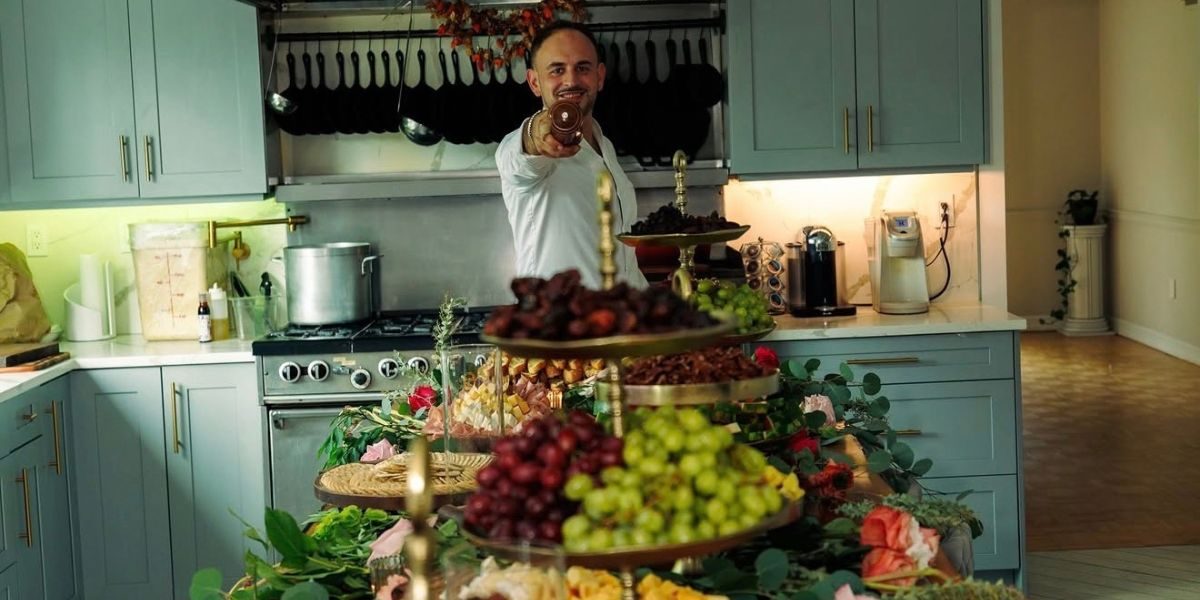
Edison Narkaj believes the answer lies in remembering what the word hospitality actually demands. “Hospitality was never meant to be a transaction. It was meant to be a human experience,” he explains. His philosophy is reflected in the way he approaches D’oro Steakhouse, where the restaurant’s own positioning throughout New York emphasizes a sophisticated dining room alongside a welcoming atmosphere.
Narkaj’s argument starts with food itself. He sees a growing appetite for elaborate concepts at a time when diners may be craving something more familiar. “Nowadays I feel like even when people try to make menus, everything is done through AI now, where the love and the effort and the creativity is just leaving it,” he explains. “Food is supposed to be something that carries simplicity. High-quality ingredients coming from good earth and given to the person in its most, I don’t want to say, basic form, but that’s really what we’re trying to show. Hospitality should be a lot simpler than people are trying to make it out to be right now.”
His approach to opening restaurants follows the same principle. Before entering a new community, Narkaj spends weeks speaking with residents and local businesses, asking what they want to see in the area. He recalls gathering roughly 250 to 300 recommendations in one market and identifying the requests that repeatedly surfaced. “I believe that it’s better to ask people what they need rather than try to make them get something you think they want,” he explains.
The philosophy carries into the dining room. Narkaj encourages employees to make restaurants active social environments where guests have opportunities to interact. Staff members are expected to notice people, remember names and create genuine exchanges. His instruction can be surprisingly specific. “If you see a table, a husband and a wife, and they’re just sitting there not talking to each other, try to create a conversation and then leave them in the middle of the conversation,” he says. The objective is to make interaction part of the experience itself.
In Narkaj’s view, that responsibility becomes especially important because restaurants occupy an unusual place in people’s lives. Guests arrive for first dates, birthdays, anniversaries, and weddings, yet they can also arrive during grief or personal difficulty.
“Eating food is the most intimate thing that you can do with somebody. Sharing, breaking bread with someone is a very intimate transaction,” he explains. That understanding also shapes how guests are treated. Narkaj rejects the idea that spending power should determine the quality of attention someone receives. A customer spending $100,000 a year and someone who saved for months to afford one special dinner, in his view, deserve the same respect. “Everybody that comes into your place should be treated like royalty. No ifs, ands, or buts, period,” he says.
The same principle applies behind the scenes. Narkaj’s operation now includes roughly 120 employees, and he argues that genuine hospitality depends on the culture those employees experience themselves. He describes a workplace where about 95% of staff members get along professionally and where leadership focuses heavily on consistency, training, and reinforcing shared values. “A leader’s job is to create and inspire,” he says. “And if you don’t create and inspire, your team is never, ever going to be what you want them to be.”
Narkaj still approaches the business hands-on, describing days that begin around 5:15 a.m. and end around 11 p.m. His connection to guests has also followed him through years of growth. He recalls serving couples on first dates and later seeing them return for engagements, children’s celebrations and family milestones. “There is no amount of money in the world that can ever take that joy,” he says.
Technology will continue to accelerate hospitality. Convenience will continue to reshape how restaurants operate. Narkaj’s proposition is that neither trend removes the need for something much older: a place where people can sit together, be noticed, and remember how to talk to one another.
“People are yearning for connection,” he says. For the restaurant industry, that could be the most important demand of all.