
By: Michael Shank
Tom Arnold has testified before the U.S. Senate. He has led breach investigations involving thousands of servers. He has worked alongside the U.S. Secret Service Cyber Fraud Task Force. He has spent more than two decades doing some of the most technically demanding work in the cybersecurity field.
And then he sat in a classroom watching teenagers tune out during a cyber safety lecture and decided he needed a completely different approach.
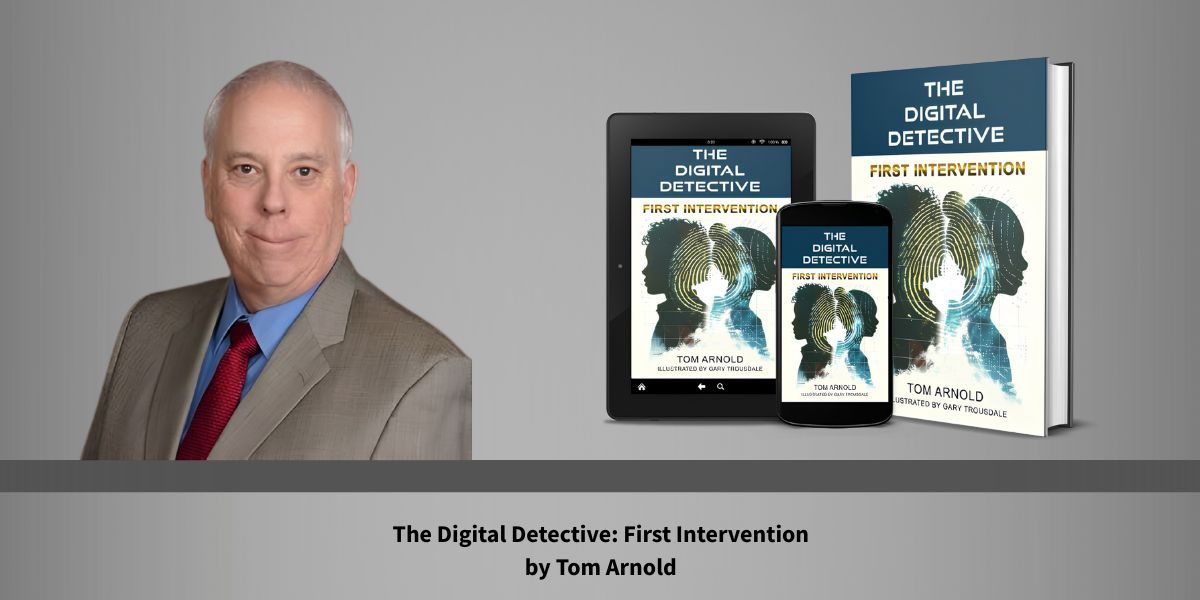
The result is The Digital Detective: First Intervention, a young adult cyber thriller built on real cases and real techniques, designed to do what decades of direct instruction apparently couldn’t: make young people genuinely curious about how the digital world works and what it can do to them.
The Attention Problem
Tom is direct about what pushed him toward fiction. Students lacked attention when cyber safety came up in a classroom setting. The content wasn’t the problem. The delivery was. Technical information presented as instruction creates barriers. The same information embedded in a story that’s genuinely exciting strips those barriers away.
He made a deliberate choice to use fiction to tell the stories he had accumulated over a career in digital forensics, and to let readers discover more about cybersecurity through the process of enjoying a book rather than sitting through a lesson.
It’s a meaningful distinction. One creates passive receipt of information. The other creates active engagement with it.
The Safe Harbor Conversation
One of the most important ideas Tom hopes parents take from the book isn’t technical at all. It’s relational.
He talks about establishing what he calls a safe harbor for anything cyber-based that kids might bring to their parents. No matter how much trouble a child might be in, no matter how strong a parent’s emotional reaction might be, the safe harbor has to be genuinely safe. Kids need to be able to bring topics forward without any fear of reprisal.
That openness, he argues, is one of the most powerful protective tools a family can have. Kids who feel they can talk about what’s happening online are far less vulnerable than kids who manage their digital lives in secret because they’re afraid of consequences.
Starting Young and Staying Curious
Tom’s advice for parents runs from the very beginning of a child’s digital life. Start working with kids before they get online for the first time. Play computer-based games with them when they’re young. It builds a bond and helps parents educate themselves. Accept that children learn quickly on their own, often from friends, and engage with that reality rather than trying to seal them off from it.
Simulate problems. Talk through what it would look like if another game user tried to extract personal information. Explain what personal information actually means, which turns out to be less obvious than most people assume, and why it has to stay private.
The goal isn’t to make children afraid of technology. It’s to make them fluent in its risks while they’re still young enough for those conversations to land.
If you’ve been trying to find a way to open the door to digital safety conversations with your kid without it turning into a lecture, The Digital Detective: First Intervention by Tom Arnold is available now on Amazon. It does the heavy lifting for you.