

Recent publishing projects show why successful book production requires more than uploading a manuscript and choosing a cover
Publishing technology has made it easier than ever for an author to make a book available online. However, making a book available is not the same as publishing it professionally.
A serious book project involves editorial decisions, visual presentation, technical preparation, distribution planning, and a clear understanding of the readers the author hopes to reach. Each part must support the same central goal: presenting the author’s work in a credible, accessible, and market-ready form.
Through its work with fiction writers, children’s authors, memoirists, subject-matter experts, and first-time authors, American Book Publisherz has observed that the strongest publishing projects share several important qualities.
Recent titles supported by the company illustrate how different books require different publishing strategies. These projects include science fiction novels, faith-centered children’s stories, practical nonfiction, inspirational memoirs, and books based on personal experiences.
Here are some of the most important lessons those projects reveal.
Professional publishing begins with understanding the author
Before editing, designing, or formatting begins, the publishing team must understand what the author is trying to accomplish.
Some authors want to entertain. Others want to educate, preserve a personal story, discuss a difficult experience, or leave something meaningful for their families and communities. The publishing process should begin by identifying the purpose of the book, its intended readers, and the voice the author wants to maintain.
This is particularly important when working with authors whose stories are influenced by military service, faith, trauma, public service, family experiences, or years of professional knowledge.
For example, B.J. Spaulding’s books Dark Star and The Fight for Survival operate within science fiction and survival storytelling. While both books contain imaginative elements, their emotional weight is connected to themes such as conflict, discipline, responsibility, sacrifice, and perseverance.
A professional publishing team must strengthen readability and structure without removing the experiences and perspective that make an author’s work distinctive.
Editing should improve the book without replacing the author’s voice
Editing is often misunderstood as simply correcting spelling and grammar. Those tasks are important, but professional editing goes much further.
Editors may also review pacing, chapter organization, sentence clarity, character development, repetition, continuity, tone, and the logical progression of ideas. The level of editing required depends on the manuscript and the author’s goals.
A practical guide such as John Smith’s American Spring Finder requires a different editorial approach from a science fiction novel or personal memoir. Its value depends on how clearly the author’s knowledge about finding and developing natural springs is organized and explained.
A children’s story presents another set of requirements. Language must remain accessible, page content must work with illustrations, and the story should be easy for young readers or parents to follow.
In Sara Farrar’s Only God Can Give You Wings, a monarch caterpillar named Faith experiences spiritual growth through her journey toward becoming a butterfly. The book connects a simple visual concept with themes of trust, purpose, patience, and divine guidance.
For a project like this, editing, illustration placement, page composition, and tone must work together. A technically correct manuscript can still feel incomplete if those parts are treated separately.
Book design is part of the reading experience
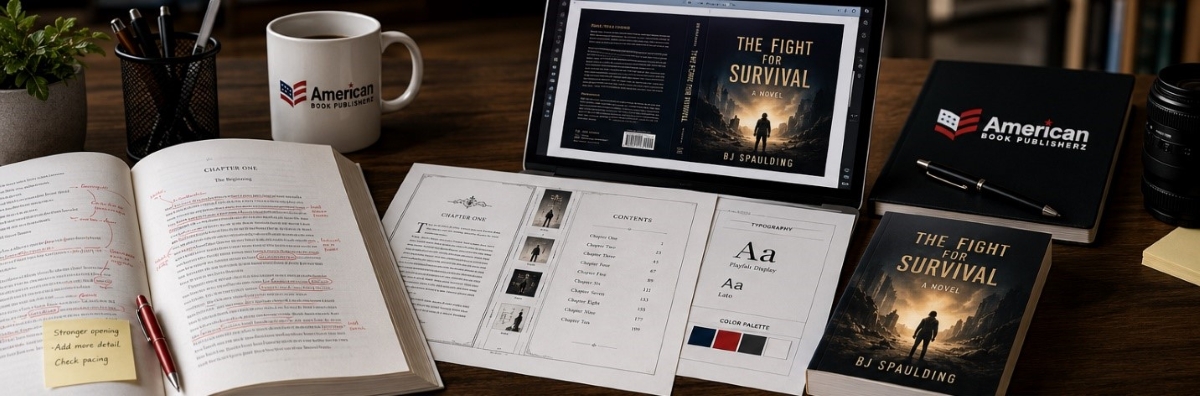
A book’s visual presentation begins before the reader opens the first page.
The cover must communicate genre, tone, and audience quickly. A military science fiction novel should not resemble a children’s faith story. A practical environmental guide should not look like a trauma memoir. Every design choice sends a message about what readers should expect.
Professional book cover design involves more than selecting an attractive image. It requires attention to typography, title visibility, hierarchy, trim size, spine measurements, back-cover organization, image resolution, and the technical requirements of the publishing platform.
The interior requires the same level of care. Page margins, chapter headings, line spacing, image placement, page numbers, table-of-contents links, and paragraph treatment all influence readability.
These details become especially important when one book is being released in several formats. A paperback interior cannot always be transferred directly into a hardcover or Kindle edition. Each format must be reviewed according to the way it will be printed or displayed.
Sensitive stories require responsible editorial handling
Some books ask readers to engage with deeply personal subjects.
Marcia Elizabeth’s Unbreakable: Surviving Military Sexual Trauma While Living with PTSD addresses trauma, recovery, trust, addiction, emotional darkness, and the long process of rebuilding a life.
When working on a memoir involving trauma, an editor must balance clarity with respect. The author should remain in control of the story, particularly when the material includes painful experiences, personal relationships, medical subjects, or identifiable individuals.
Editorial feedback should help the author communicate clearly without making the experience feel sensationalized or impersonal. Privacy, consistency, and the author’s emotional boundaries should remain part of the discussion throughout production.
A professional publisher must recognize that the manuscript is not simply content. For many memoirists, it represents years of lived experience and the decision to make that experience public.
A series needs consistency from one book to the next
Publishing one book is challenging. Publishing a connected series introduces additional considerations.
Spencer Wainright’s A Dog Called Boo introduces readers to Boo and the world of Jon and Kallie. Its follow-up, Hurricane Stranger: A True Jon, Kallie and Boo Saga, continues the series while drawing on themes of faith, service, resilience, and assistance arriving during a crisis.
For a series, the publishing team must think beyond one cover or one manuscript. Character presentation, title treatment, visual style, trim size, series naming, book descriptions, and retailer listings should make it clear that the titles belong together.
Consistency helps returning readers recognize the next book while still allowing every title to have its own identity.
A series also creates opportunities for author interviews, educational material, coloring books, social media storytelling, event appearances, and future releases. These possibilities should be considered during the early planning stages rather than after the books have already been published.
Metadata can determine whether readers find the book
Authors understandably concentrate on the manuscript and cover. However, the information attached to a book listing can be equally important.
Metadata includes the title, subtitle, author name, contributor information, description, keywords, categories, ISBN, format, publication date, and series details. Errors or inconsistencies in these areas can make a professional book difficult to locate.
Through its Amazon publishing services, American Book Publisherz assists with formatting, listing preparation, categories, descriptions, pricing considerations, and other technical parts of the publication process.
Good metadata should accurately represent the book. It should not make exaggerated promises or place the title in unrelated categories merely to pursue visibility. The objective is to help the appropriate reader understand what the book offers and decide whether it is relevant.
Publication is a milestone, not the end of the project
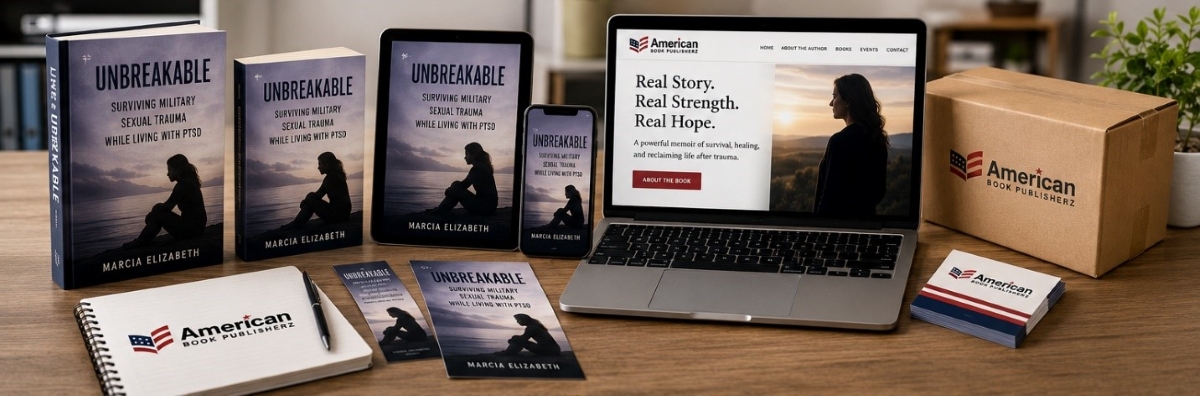
A book does not automatically attract attention because it has appeared on Amazon or another retailer.
Authors need a plan for introducing the book, explaining why it matters, and building trust with potential readers. That plan may include an author website, interviews, press coverage, social media content, reader outreach, launch announcements, promotional videos, or appearances connected to the book’s subject.
The most useful marketing usually begins with the author’s real story. Readers may be interested in why the book was written, what experience influenced it, what problem it addresses, or what the author hopes people will learn from it.
A professional launch should also be realistic. Marketing can improve awareness, but no ethical publishing company should promise a specific sales number, ranking, review count, or bestseller position.
The stronger objective is to establish a reliable foundation from which the author can continue building visibility over time.
Every book needs its own publishing plan
The recent projects associated with American Book Publisherz demonstrate that there is no universal production formula.
A science fiction novel requires genre awareness and narrative consistency. A children’s book needs harmony between words and illustrations. A practical guide must organize knowledge clearly. A personal memoir requires sensitivity and trust. A continuing series must retain a recognizable identity across multiple releases.
Professional publishing brings these requirements together through planning, editing, design, technical preparation, distribution, and promotion.
The tools used to publish books will continue to change. The central responsibility, however, remains the same: help authors present their ideas clearly, protect the identity of their work, and deliver a book that readers can approach with confidence.
About American Book Publisherz
American Book Publisherz provides support for authors at different stages of book development and publication. Its services include book and eBook writing assistance, editing and proofreading, cover design, illustration, print and digital formatting, Amazon publishing support, book printing, author websites, and book marketing.
The company works with authors across fiction, nonfiction, memoir, children’s literature, inspirational writing, and other genres.
Media Contact
American Book Publisherz
Email: info@americanbookpublisherz.com
Phone: (877) 513-3233
Website: https://americanbookpublisherz.com/