
By: Audrey Denise B. Cachuela
Picture the Monday after a restructuring. A department that used to have three managers now has one, the reporting dashboard hums along nicely, and every person on the team still wants a manager who knows their name. That scene is playing out in offices everywhere as the Great Flattening strips layers out of corporate org charts, and Brian Watkins, founder of BTOM Consultants, believes companies are approaching it from the wrong direction.
Projections suggest up to 20% of firms will use AI to significantly reduce middle management ranks by the end of 2026, and Amazon stands out as a prominent example of the push toward fewer layers. (Source: Fast Company, 2026) Any executive team reading that projection has reason to wonder where its own org chart lands.
Businesses are eliminating middle management positions to cut costs and simplify operations, and they want the savings to fund artificial intelligence. The managers being removed belong to a workforce already struggling with declining engagement and inadequate professional development.
The pressure to flatten makes sense on its face, since executives want faster decisions and fewer approval chains, and AI can absorb a surprising amount of administrative work that once ate up managerial time. Employees still need the same amount of guidance after the org chart shrinks.
That leaves a question worth asking before the next round of cuts. Did companies do enough to help these managers succeed before deciding their positions were unnecessary? A smaller org chart only works when the managers who remain have been equipped for the larger job, and the evidence on how well that preparation has gone deserves a close look.
How the Great Flattening Is Changing Middle Management
The logic behind flattening gets clearer once you list the tasks involved. If software can prepare reports, track performance, coordinate workflows, and deliver information straight to employees, a manager whose week consists mostly of forwarding information and sitting in status meetings has good reason to find out what AI can do for them.
Some of this housecleaning is overdue, because every approval process and reporting requirement should have to justify itself, and so should every management position. The trouble starts when a company treats the administrative slice of the job as the entire job.
Management at its best combines coaching and accountability with a working knowledge of the people on the team, which makes it hard to capture in an automated report. The fallout from removing it includes weaker communication between executives and frontline employees and reduced organizational context, and fewer layers also mean fewer chances to develop future leaders. (Source: Fast Company, 2026) Those risks deserve a seat in the planning meeting before anyone assumes a smaller structure will perform better.
Go back to that department with one manager in place of three. On paper the savings look clean, with employees getting information faster and senior leadership receiving a single consolidated performance report covering the whole department. The remaining manager now owns every individual relationship on the team, and the conflicts, feedback conversations, development discussions, and expectation-setting that used to be split three ways all land on one calendar.
Cutting a management position redistributes its responsibilities, often onto senior executives who absorb more direct reports and operational tasks, and employee coaching and accountability can erode as a result. (Source: Fast Company, 2026) The work itself survives the restructuring, and where it lands determines whether anyone does it well. A tidy org chart says nothing about who is coaching the newest person on the team.
Manager Engagement Is Falling at the Worst Possible Time
Global manager engagement dropped from 31% in 2022 to 22% in 2025, and the steepest annual decline came between 2024 and 2025, when it fell from 27% to 22%. (Source: Gallup, 2026)
Individual contributors sat at 19% in 2025, which leaves managers with an advantage of only three percentage points. (Source: Gallup, 2026) Managers have traditionally reported higher engagement than the people they supervise, and that cushion has thinned considerably.
Overall employee engagement fell to 20% in 2025, its lowest level since 2020, and lower engagement among managers accounts for much of the downturn since 2023. (Source: Gallup, 2026) Low engagement cost the global economy approximately $10 trillion in lost productivity that year. (Source: Gallup, 2026)
Organizational flattening may have contributed in South Asia, where manager engagement fell eight points in 2025 and the share of workers in management roles also dropped, and manager engagement can slip as spans of control grow larger. (Source: Gallup, 2026)
Low manager engagement shows up directly in how teams are led, since someone who struggles to stay engaged in their own work may find it harder to give employees consistent attention and to recognize problems early. A company that adds direct reports to a manager in that condition is adding load to the person with the least reserve.
The Manager Training Problem Started Long Before AI
Watkins knows the challenge of becoming a manager without preparation because he lived it. Like many professionals, he moved into management after strong results as an individual contributor, and those results earned the promotion. Leading people called for a different skill set that he had to build on his own.
His new job centered on setting expectations, building relationships, giving feedback, and helping his team deliver. Without adequate preparation, he went looking for the knowledge and hands-on experience to improve, and that journey shaped his approach to management development and his decision to establish BTOM Consultants in 2020.
His story reflects a wider pattern. Of people entering management positions in the UK, 82% had received no formal management or leadership training, and one in three respondents had left a job because of a negative workplace culture. (Source: Chartered Management Institute, 2023) Those findings come from more than 4,500 UK workers and managers, so they describe the UK specifically.
Technical expertise and people management draw on separate skill sets. A talented salesperson may understand customer relationships and revenue targets exceptionally well, and the engineer everyone calls when a complicated system breaks may be a genuine hero in a crisis, and neither accomplishment guarantees the skill to address an employee’s declining performance or conduct a difficult conversation.
Companies promote their top performers and cross their fingers that management ability shows up on its own, and newly promoted managers end up overwhelmed, with teams that pick up on it through unclear expectations and inconsistent communication. The root cause is training, since the individual has been handed a different job with nobody teaching it. Eliminating the position leaves that weakness in place and may simply transfer the same responsibilities to another employee who is equally unprepared.
Management Judgment Matters More as AI Handles the Admin Work
The best argument for AI in management is time, since managers can use AI tools to organize information, prepare meeting agendas, summarize performance data, and draft development plans, which frees up hours for the responsibilities that call for personal attention.
Generating information and deciding what to do with it are separate jobs. An AI system can flag that an employee has missed several deadlines, and working out why takes a manager who knows the person, since the cause could be unclear expectations, competing priorities, insufficient training, or a personal circumstance that calls for sensitivity.
Anyone who has tried to get empathy out of a dashboard knows how that goes. Software can draft the performance review, and a manager still has to sit down with the employee for the difficult conversation and repair any damage to the working relationship afterward.
Aside from technical integration, the strongest predictor of whether U.S. employees use AI is whether their direct manager actively champions it. (Source: Gallup, 2026) That puts managers at the center of AI adoption, since every new tool changes somebody’s daily routine and someone has to make sense of that change for the team.
Someone has to explain the changes, address concerns, set realistic expectations, and help employees understand what the technology means for their responsibilities, and the payoff for the team depends on the skills managers bring to the hours AI hands back.
What Companies Should Fix Before Cutting Middle Management
The Great Flattening gives organizations a reason to reconsider what they expect from managers and how they prepare people to meet those expectations, and the first step is a clear look at what managers do all day. When a position exists mostly to pass information between departments, automation or process redesign may be the right fit. When that same manager also resolves operational problems, those responsibilities need a clear owner, and the same goes for the coaching and accountability the role provides.
An honest audit of the fundamentals of people management comes next, starting with whether employees understand what success looks like, whether managers give useful feedback before problems become serious, whether team members get chances to discuss their development, and whether difficult conversations happen when they should. The answers give leadership a clear read on management effectiveness.
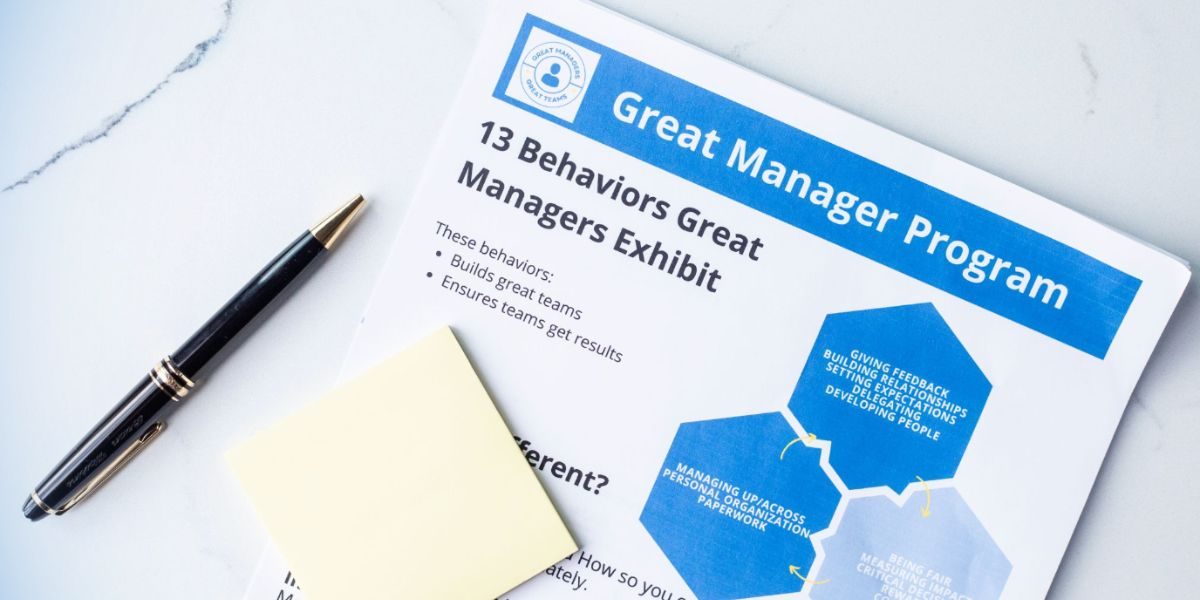
Effective manager training centers on actions managers can practice and refine. Watkins applies that idea in his Great Manager Operating System, which is designed to help first-time, frontline, and middle managers develop repeatable management habits. A manager struggling with employee accountability may need to sharpen how expectations are communicated before work gets assigned, and someone facing repeated performance issues may need practice delivering direct feedback without getting defensive or dodging the conversation. Skills like these grow through practice and reflection, as managers apply what they learn on the job and look honestly at the results.
Formal development pays off, as trained managers are more likely than untrained managers to report concerns or wrongdoing and to feel comfortable managing significant workplace changes. (Source: Chartered Management Institute, 2023) For smaller businesses wondering how to train new managers without a dedicated learning and development department, practical coaching can be especially valuable, since it gives new managers a way to build skills on their own timeline.
Better management is the most productive response to a restructuring wave, and managers can start investing in their own development today; the next one-on-one or any chance this week to give useful feedback is a good place to begin. Whatever number of managers an organization keeps after the Great Flattening, every team still needs effective management. If you are a frontline or middle manager facing larger teams or growing pressure from AI-driven restructuring, visit BTOM Consultants and explore Brian Watkins’ Great Manager Operating System. Start building the practical management skills your team needs before the next reorganization makes the job even harder.