

By: Natalie Johnson
Drilling that kicks off at 7 a.m., dust clouds sliding under the front door, and hallways cluttered with scattered debris: for renters across New York City, renovation season can feel less like a building upgrade and more like a survival exercise. Construction inconvenience is one thing. Construction danger is something else entirely.
The distinction matters because poorly managed job sites don’t just annoy tenants; they put people at genuine risk. And in a city where building work rarely pauses, knowing how to respond can make the difference between a resolved complaint and a prolonged nightmare that drags on for months.
Disruption vs. Danger: Knowing the Difference
Not every loud morning or dusty hallway qualifies as a hazard. But certain conditions cross a clear line from nuisance into genuine safety territory. Tenants should watch for exposed wiring in common areas, falling debris from upper floors, blocked exits or stairwells, strong chemical fumes without adequate ventilation, loose plaster and new cracks in ceilings, and unstable scaffolding along sidewalks or building facades.
The risks tied to scaffolding alone are staggering. The Occupational Safety and Health Administration reported 1,873 scaffolding violations in fiscal year 2024, making scaffolding one of the most frequently cited safety concerns at the federal level. Those violations don’t just affect workers on the job site. Poorly secured scaffolds and sidewalk sheds near residential buildings pose a risk to anyone walking past, including tenants heading home with groceries or parents picking up their kids from school. It’s the kind of hazard that hides in plain sight until something goes wrong.
Structural shaking is another red flag that too many residents try to shrug off. In one Brooklyn neighborhood, vibrations from a nearby pile driver cracked walls and crumbled plaster in multiple homes, sending residents scrambling to document the damage before conditions worsened further. Ask anyone who’s lived through that kind of shaking, and they’ll say the same thing: it doesn’t feel minor when the cracks keep growing.
Document Everything Before Conditions Change
Good documentation is the single most important step a tenant can take, and yet it’s the one most people skip until it’s too late. Date-stamped photos and short videos of dust buildup, ceiling cracks, or hallway debris create an objective record that’s hard for a landlord or property manager to dispute later. Wide shots showing the apartment number and close-ups of the actual damage itself both matter.
Beyond photos, a simple written log goes a long way. Tenants should note when the work started, what changed in the building, and who they contacted about the issue. It’s like building a case file in real time (even if no formal complaint ever gets filed, the paper trail exists if things escalate down the road).
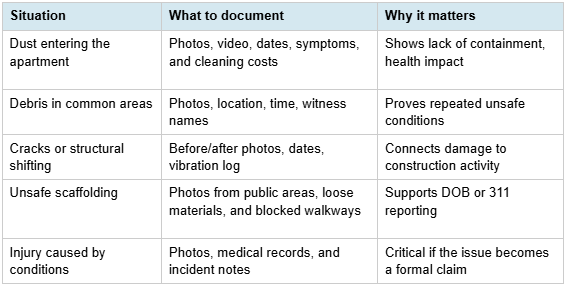
Here’s a quick reference for what to capture and why:
Reporting Through Official NYC Channels
Once the documentation is in order, the next step is to file a complaint through 311. The system routes reports to the Department of Buildings (DOB) for active construction hazards or Housing Preservation and Development (HPD) for habitability issues, depending on the specifics. Tenants should provide the exact address and apartment number, and indicate whether children, seniors, or medically vulnerable residents are affected. The more detail in the initial filing, the harder it is for agencies to deprioritize the complaint.
The complaint number itself matters more than most people realize. It establishes a hard notice date and creates a visible history of recurring issues. If a landlord later claims ignorance, that timestamped record tells a very different story.
Put It in Writing to the Landlord
Phone calls are easy to deny. Written notices aren’t. Any communication to a landlord about hazardous conditions should identify the specific problem, explain how it’s affecting health or safety, and request a correction by a reasonable deadline. Email works for speed; certified mail works for proof of delivery. Ideally, tenants use both.
This kind of paper trail has proven essential in cases across the five boroughs. Queens residents sued over 350 violations in a crumbling building, citing collapsing ceilings, rat infestations, and persistent mold. The lawsuit leaned heavily on documented complaints the landlord had routinely ignored. Without that written record, the case would have been far harder to build.
When to Escalate Beyond a Complaint
What happens when repeated 311 filings and written notices produce no meaningful response? If conditions keep worsening (worsening cracks, escalating dust, blocked fire exits), the situation may require more than a maintenance request. Injuries, asthma flare-ups, or visibly unsafe common areas all signal that a tenant’s health or physical safety is at genuine risk, not just their patience.
At that point, understanding the available legal options becomes important. Tenants facing unresolved hazards, including unsafe scaffolding in NYC, may have grounds to pursue formal action if the landlord has been put on notice and has failed to act. The documentation built in earlier steps becomes the backbone of any such effort.
Staying Safe While the Problem Persists
While waiting for a resolution, tenants should avoid active work zones entirely, keep children away from debris, and run air purifiers to reduce construction dust entering living spaces. Exposed wiring and unstable materials should never be touched. If chemical odors become strong, ventilating safely or leaving temporarily is the smarter call.
Anyone who experiences shortness of breath, dizziness from fumes, or a head injury from falling debris should seek medical attention immediately. If sudden severe cracking appears, an electrical burning smell fills the unit, or fire exits are blocked, the right move is to leave and call emergency services. Physical safety always comes before a property dispute.
A Smart Paper Trail Changes the Outcome
NYC tenants don’t need to guess their way through hazardous renovation conditions or simply accept serious risks inside their own buildings. A well-organized paper trail, including photos, written complaints, 311 records, and landlord notices, creates leverage that’s hard to argue with. The strongest position any renter can be in is the one backed by documentation, not just frustration. And when the records are thorough enough, they tend to speak louder than any phone call ever could.
Disclaimer: The content of this article is for general informational purposes only and does not constitute legal, medical, or professional advice. While every effort has been made to ensure accuracy, laws, regulations, and building safety standards may change, and individual situations may vary. Tenants should consult qualified legal, medical, or safety professionals for advice regarding specific hazards, injuries, or building issues. The author and publisher are not responsible for any actions taken based on the information provided, and use of this content is at the reader’s own risk.