
By: Kristine Kennedy
Success in entrepreneurship tends to produce a specific and rarely discussed problem. You build the thing. You hit the goals. You generate the revenue, earn the recognition, and achieve the markers that were supposed to signal that you had arrived somewhere worth arriving. And somewhere in the middle of all of that, you find yourself wondering, quietly and without entirely knowing what to do with the question, whether this is actually what you were working toward when you started.
Christopher Brown was that person for thirty years. Running multiple companies. Training for triathlons. Coaching his son’s soccer team. Wearing busyness as a badge of honor and measuring success by how full his calendar was and how many hours he logged. From the outside, it looked like winning. He had built real businesses that generated real revenue and served real clients. From the inside, it was a life perpetually deferred, always promising itself that the meaningful part was coming once things stabilized, once the next milestone was reached, once the timing finally aligned.
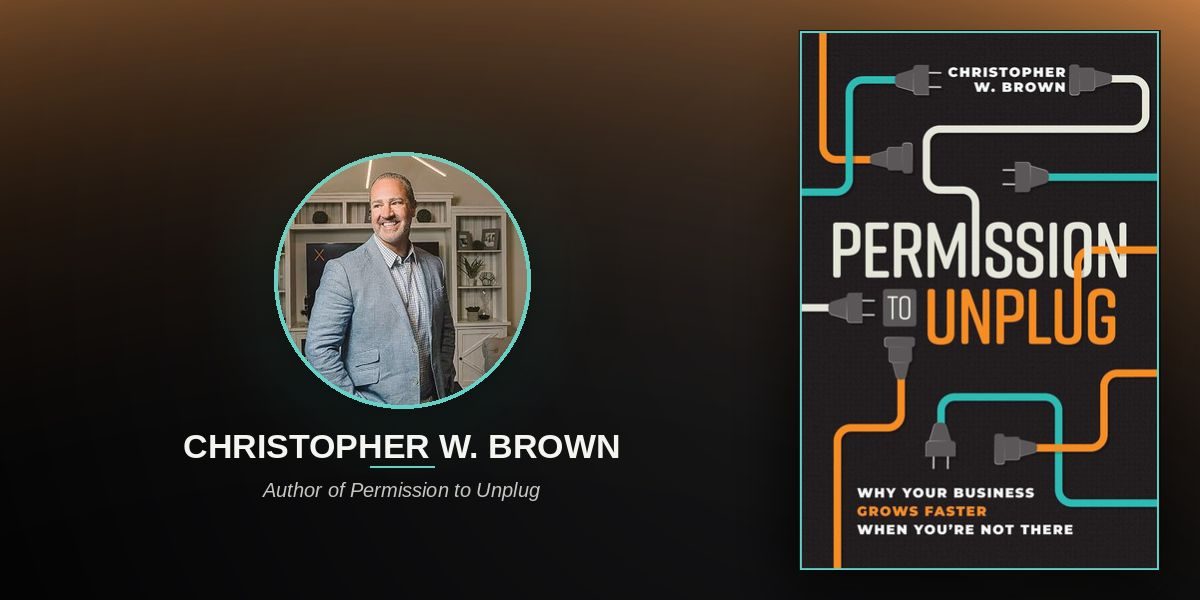
Permission to Unplug: Why Your Business Grows Faster When You’re Not There is written specifically for that person. Not the entrepreneur who is struggling or trying to survive. The one who is succeeding and quietly wondering if this pace is sustainable, if the sacrifices are proportionate to the outcomes they’re producing, and if the someday they keep referencing is actually going to arrive before the window closes.
The Experiences That Fuel Better Leadership
One of the central arguments in the book is that lived experiences are not a reward for business success. They are a contributor to it, and treating them as anything less is both a personal loss and a strategic mistake. This is not a soft argument about work-life balance dressed in business language. It is grounded in what neuroscience shows about how brains actually function when given genuine space to rest, explore, and operate outside the reactive demands of daily operational involvement.
Christopher is direct about where his best thinking actually happens. Not in the office. Not in meetings, on calls, or in the daily flow that consumes most of an entrepreneur’s waking hours. His most significant business insights have come while traveling, while being genuinely present with his family, while moving his body and allowing his mind to operate at a register that constant busyness makes unavailable. The experiences that look like time away from the business are often the experiences that produce the thinking the business most needs from its leader.
Experiences are not luxuries earned after sufficient productivity. They are strategic investments in the quality of leadership that the business depends on. The entrepreneur who treats them as anything less is operating at a fraction of their actual capacity while sincerely believing they are maximizing their contribution. The data, both the neuroscience Christopher cites and the personal results he has produced, point in the opposite direction.
What Happens When You Build the Right Thing
The structural shift at the center of the book is about building a business that operates according to its own systems rather than according to the founder’s constant presence. Teams empowered to make real decisions. Processes that handle the operational detail without requiring escalation. A business that the founder can leave for a month and return to find running well rather than having accumulated the consequences of an essential person’s absence.
That kind of business is not just better for the founder’s quality of life. It is a more valuable business, a more resilient business, and a more scalable business. The company that depends on one person’s constant involvement has a structural ceiling. The company that operates through systems and culture rather than through one person’s perpetual attention can grow in ways the founder-dependent version cannot.
What He Hopes Readers Remember
Years after finishing the book, Christopher hopes readers remember one thing above everything else. Life is not waiting for someday. Businesses can be rebuilt. Markets change. Titles come and go. The competitive landscape looks completely different every decade. But the memories created with family, the experiences that shape who a person becomes, the relationships genuinely invested in rather than perpetually deferred, those are the things that define a meaningful life. They cannot be recovered once the moment has passed.
Christopher learned that lying in a hospital bed after a heart attack, thirty days after renewing his wedding vows on a beach in Moorea with his son standing as witness and the Pacific Ocean behind them. He wrote the book so you don’t have to learn it the same way.
The business should support the life, not the other way around. Permission to Unplug by Christopher Brown is available now on Amazon.