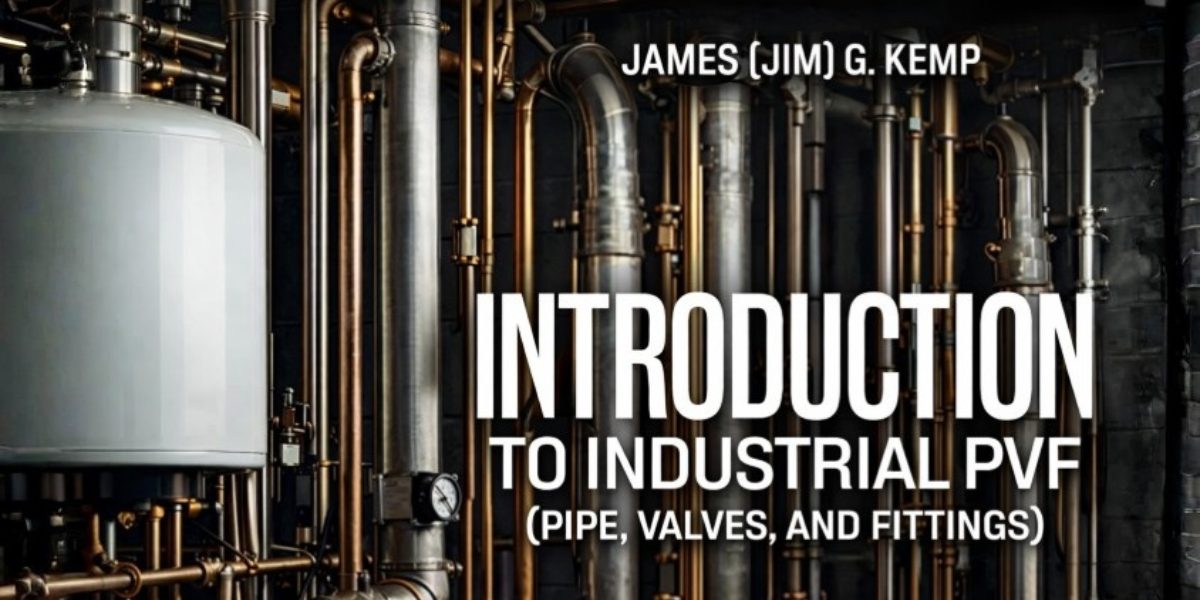

Industries are evolving faster than ever, and access to clear, practical knowledge is no longer optional but essential. Introduction to Industrial PVF (Pipe, Valves, and Fittings) steps in to meet that need, offering a rare combination of experience, clarity, and purpose.
A Story of Resilience Behind the Book
What makes this book particularly compelling is the story behind it. The author’s journey into the industrial PVF world began after a life-altering tornado accident, an event that ultimately led to a 47-year career in one of the most critical sectors of global infrastructure. Today, that lifetime of experience has been distilled into a guide designed to educate and simplify a field many find daunting.
Why PVF Knowledge Matters
The PVF industry, responsible for transporting and controlling gases, liquids, and steam, is foundational to countless sectors, including oil and gas, refining, food production, and pharmaceuticals. Yet for many entering the field, it remains complex and difficult to grasp. This book changes that.
The scope of the PVF industry is often underestimated. Pipes, valves, and fittings are the physical infrastructure that carries the substances modern economies depend on, from natural gas and refined fuels to pharmaceutical-grade water and processed foods. A single misapplied fitting or incorrectly rated valve can have major consequences for safety, output, and cost. Accessible, well-organized reference material holds real value for the people doing this work day to day.
A Practical Approach to Technical Content
Rather than overwhelming readers with technical jargon, Introduction to Industrial PVF focuses on clarity. It explains how pipes, valves, and fittings work together, outlines key materials and standards, and connects theory with real-world application. Each section is structured around the kinds of questions new workers and buyers actually ask on the job. The result is a resource that feels less like a textbook and more like a mentor.
Its appeal is broad. Beginners gain a strong foundation, while experienced professionals can refine their understanding and reinforce best practices. In a competitive and safety-critical industry, that kind of accessible knowledge matters.
A Learning Tool Shaped by Lived Experience
More than just a technical manual, this book represents resilience, dedication, and the power of experience shared. It serves as both a learning tool and a reminder of how personal challenges can shape expertise that benefits an entire industry.
For anyone looking to understand the backbone of industrial systems, or to build a career within them, Introduction to Industrial PVF offers a clear starting point. As industries continue to demand smarter, more informed professionals, resources like this are not just helpful; they are essential.