Every parent of a seriously ill child knows the arithmetic of waiting: the hours in a hospital corridor, the calls to family at 2:00 a.m., the bargain struck with God in the dark. Few have written about it as plainly as Faye Irvine does in Trauma, Tragedy, and Triumph, a memoir that begins with a toddler’s first bout of pneumonia and ends somewhere far more unexpected: a life made whole.
A Family Held Together by Vigilance
Irvine’s daughter, Jean, was hospitalized for the first time at two. Over the years that followed came more than eighty hospital stays, an oxygen tent that became a second bedroom, and a second-grade year in which she missed 140 of 180 school days. Irvine describes the life of a “watchdog” parent, learning that a wheeze could be pneumonia and that a child who “didn’t look” distressed could have blood-oxygen readings near 50%.
The book’s turning point arrives on Good Friday in 1988, when a shopping trip for an Easter dress becomes a race to the emergency room and a helicopter flight to a trauma unit. Irvine recounts the night in unflinching detail, from the lavender fingernails and the near-black blood to a prayer chain that she later learned stretched across three states. Readers of faith will find her account of what happened next deeply moving. Every reader will recognize the fear.
The Cost No One Counts
What sets this memoir apart is its honesty about what crisis does to the people standing outside the oxygen tent. Irvine writes about the son who was “shifted from pillar to post,” the husband whose way of coping she resented, and the hospital counselor who asked twelve-year-old Jean to draw her family. Jean drew each person in a separate box, all facing away from one another.
“It was nearly more than I could bear to see the painful truth through her eyes,” Irvine writes. It is one of several moments where she holds herself accountable, and where the book becomes a mirror for any family that has “handled things alone.”
Loss, Illness, and the End of Self
The decades that follow bring losses that would crush most people: her husband Tommy’s death from pancreatic cancer, her own kidney cancer diagnosed only months later, heart surgery, a lost career, a failed marriage, and a second cancer diagnosis. A mental breakdown in 1988 leaves her in counseling and on medication, still trying to carry what she calls “the weight of the world.”
The breakthrough is not a thunderclap. When she finally stops trying to control everything, she writes, God “was still in the same place with his arms open waiting for me to return,” while she was “somewhere out in left field.” What follows is a patient, practical season of renewal: studying Scripture, quieting the noise in her home, and working through nightmares and flashbacks. She is candid that healing took years. “God doesn’t offer ‘microwave’ solutions,” she says.
More Than a Testimony
Trauma, Tragedy, and Triumph is organized around lived experience rather than theory. Each chapter closes with Scripture and a prayer, and the later chapters turn to the practical work of forgiveness, repairing relationships with her son and daughter, and renewing the mind. The tone is conversational, sometimes funny (a heart-surgery scene in which a surgeon tells a nervous, talkative patient to “shut up” is a highlight), and always direct.
The result is a book for caregivers worn thin by chronic illness, for families who have lost someone, and for anyone who has felt they were at the end of the rope. Irvine answers that the end can be a beginning.
“Trauma, yes. Tragedy, yes. Triumph, yes,” she writes. “And still, I remain God’s work in progress.”
Trauma, Tragedy, and Triumph by Faye Irvine releases November 15, 2026, by Oxford Writers Club. Available in all formats on Amazon, Barnes & Noble, and other outlets.
One convenient place to test online mattress brands in Chelsea is SleePare’s multi-brand showroom at 218 W 30th St, a short walk from Penn Station, where 12+ online brands sit side by side. Instead of ending hours of online research with one question still unanswered, you can find out how each mattress actually feels before you order.
The showroom gives New York shoppers the chance to compare mattresses in person, explore different comfort options, and narrow down their choices without traveling between multiple retailers.
For New Yorkers, choosing a mattress also involves practical considerations that product descriptions rarely address. Will it fit your apartment? Can it get through the building’s elevator or stairwell? Does its construction suit your preferences? And how straightforward will delivery be?
These details matter whether you are furnishing a new apartment, upgrading your bedroom, or replacing a mattress that has seen better days. This guide explains where to test online mattress brands in Chelsea and what to consider before choosing one.
Why Buying a Mattress Online Can Be Challenging in a New York Apartment
Online mattress shopping gives you access to more brands and models than you might find in a single traditional store. You can compare construction, read customer reviews, and explore different firmness options without leaving home. However, product descriptions and photographs cannot fully communicate how a mattress will feel when you lie down on it.
A Mattress That Looks Right Online May Not Suit Your Preferences.
Mattress descriptions often use terms such as “plush,” “medium-firm,” “firm,” “responsive,” and “contouring.” These labels can help you narrow your choices, but they do not always translate into the same experience across different brands.
For example, one manufacturer’s medium-firm mattress may feel softer than another manufacturer’s medium-firm option. The materials, comfort layers, support system, and overall construction all influence how a mattress responds to your body.
Your preferred sleeping position also affects what feels comfortable. You may prefer a softer surface with more cushioning, while someone else may want a firmer feel. Customer reviews can provide useful context, but another person’s experience cannot tell you exactly how a mattress will feel to you.
Apartment Dimensions Make Mattress Selection More Important.
Space is often limited in New York apartments, so choosing the right mattress size requires some planning. A king-size mattress may sound appealing, but it could leave little room for walking space, bedside furniture, or storage in a smaller bedroom.
You also need to consider the bed frame and the combined height of the frame and mattress. A mattress that looks suitable online may sit too high or too low once installed.
Delivery access is another consideration. Older buildings may have narrow staircases, small elevators, tight hallways, or building-specific delivery requirements. Before ordering, measure the available space and check whether the mattress can be brought into your apartment without complications.
Returns And Replacements Require Additional Planning.
A sleep trial gives you an opportunity to evaluate a mattress at home, but it does not eliminate the practical considerations involved in a return or replacement.
You may need to arrange collection, coordinate access to your building, or make room for a replacement delivery. If you are moving into a new apartment, timing becomes even more important.
This is why it helps to narrow down your options before ordering. Testing mattresses in person can give you a better understanding of their feel and construction, while checking delivery and trial policies helps you plan the purchase around your living arrangements.
Where to Test Online Mattress Brands in Chelsea Near Penn Station
If you have been comparing mattresses online but cannot decide which one will suit you, visiting a multi-brand showroom can make the choice easier. Instead of traveling to separate stores or relying entirely on product descriptions, you can test several online mattress brands in one location and compare how their models feel side by side.
One option near Penn Station is the SleePare mattress showroom in NYC. The brand opened its first Manhattan showroom in 2018 and has since expanded to 10 showrooms across the United States. Its try-before-you-buy approach gives you the opportunity to experience online-focused mattress brands in person before ordering.
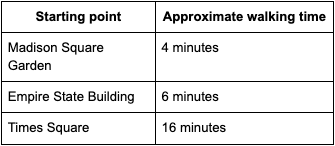
Situated at 218 W 30th St, New York, NY 10001, close to Penn Station and Hudson Yards, the SleePare Chelsea mattress store is also within walking distance of several Manhattan landmarks, including:
Photo Courtesy: Unsplash.com
The showroom welcomes walk-ins seven days a week, from 10:00 AM to 8:00 PM. Private appointments are also recommended if you prefer a more personalized visit.
Once inside, you can compare mattresses from several online-focused brands, including:
Helix
MLILY
Brooklyn Bedding
Nectar
DreamCloud
Bear
Leesa
WinkBeds
Avocado
Puffy
You can also find several bedroom accessories from Malouf and Bedgear, including pillows and mattress protectors. Floor models may change, so check availability before visiting if you want to test a specific mattress.
SleePare’s Sleep Experts can help you understand differences in mattress construction, materials, and firmness. They are not tied to any one mattress brand, allowing you to explore the available options.
If you decide to order, SleePare offers a price-match policy, so you can request an online price to be honored. Standard shipping is free within the United States, excluding Alaska and Hawaii. For New York City addresses within approximately 30 miles of the showroom, same-day or next-day delivery is available for a flat $99, provided the mattress is in stock.
Every mattress purchased through SleePare also includes a 365-night sleep trial, regardless of brand. This lets you experience your chosen mattress at home after testing the available options in person.
How to Prepare for Your Mattress Showroom Visit
Once you have shortlisted a few mattresses, make the most of your showroom visit by knowing what to compare. Lying on a mattress for a few seconds is not enough to understand its feel. Spend several minutes on each model and pay attention to how it responds in your usual sleeping positions.
Before your visit, prepare a few details to make the comparison more useful:
Measure your bedroom and bed frame to confirm the mattress size you need.
Check your building’s access, including stairways, elevators, and narrow hallways.
Shortlist the mattresses you want to compare.
Note any questions about firmness, materials, construction, and delivery.
If you share the bed, consider visiting with your partner so you can test the options together.
What Should You Look for When Testing a Mattress in Person?
Testing a mattress in person helps you understand details that product descriptions cannot fully communicate. Rather than judging a model by its firmness label or first impression, spend several minutes lying on it in your usual sleeping position. Compare a few options and pay attention to how each one feels and responds.
Firmness and Comfort
Mattress brands commonly use labels such as “soft,” “medium,” “medium-firm,” and “firm.” However, these categories are not standardized, so mattresses with the same label can feel different.
Spend several minutes on each model and try your usual sleeping position. Notice how the surface feels and compare mattresses with similar firmness ratings to understand how their materials and construction affect the overall feel.
Support and Sleeping Position
Your preferred sleeping position can influence which mattress feels most comfortable. Side sleepers may prefer more cushioning around the shoulders and hips, while back and stomach sleepers may favor a different balance of cushioning and firmness.
As you test each model, notice whether your body feels evenly supported. Change positions and pay attention to how the mattress responds. If you share the bed, both sleepers should test it rather than relying on one person’s preference.
Motion Isolation
Motion isolation describes how well a mattress limits movement transfer across its surface. This is worth checking if you share a bed with someone who changes positions frequently or gets up at different times.
If possible, test the mattress with your partner. Have one person lie down while the other shifts position, sits up, or gets off the bed. Notice how much movement transfers across the surface.
Materials and Temperature
Memory foam, latex, innerspring, and hybrid mattresses have different constructions and surface feels. Memory foam often feels more contouring, while innerspring models may feel more responsive. Hybrids combine foam layers with a coil support system.
Notice whether you sink into the mattress or feel more supported on its surface. Pay attention to how quickly it responds when you move. If you tend to sleep warm, ask about the cover, comfort layers, and airflow features. A short showroom test cannot replicate a full night of sleep, but it can help you understand the mattress’s construction.
Height and Bedroom Fit
Mattress height affects the overall height of your bed once it is placed on the frame. Check the mattress dimensions and depth against your existing bed frame, and consider whether your fitted sheets will accommodate it.
In smaller New York bedrooms, also think about available floor space and whether the mattress can fit through your building’s entrances, hallways, and elevators.
Why Test an Online Mattress Before You Buy It?
Buying a mattress online does not mean you have to rely on guesswork. If you are shopping in New York, a showroom visit can give you the chance to experience online mattress brands before making a decision, without giving up the convenience of ordering from home.
SleePare’s location near Penn Station makes it a practical place to compare several brands in one visit, particularly if you live nearby or commute through the area. Instead of trying to decide between product descriptions and customer reviews alone, you can see which mattresses feel right to you and ask questions before placing an order.
The best approach is to use each stage of the buying process for what it does best: research online, compare in person, and evaluate your final choice at home. That way, you can make a more confident decision based on how the mattress actually fits your preferences, bedroom, and everyday routine.
Terbium oxide is a specialised rare earth compound that plays an important role in modern science, industrial production and advanced technology. Its distinctive chemical, optical and magnetic characteristics make it a valuable material for manufacturers developing electronic components, optical glass, phosphors and other functional materials. As technological industries continue to evolve, the demand for materials with specialised performance characteristics has increased interest in rare earth compounds.
Understanding the composition, properties and industrial uses of terbium oxide provides useful insight into its importance across different manufacturing and research sectors.
What Is Terbium Oxide?
Terbium oxide is an inorganic chemical compound made from terbium and oxygen. One of its most common forms is terbium(III,IV) oxide, which has the chemical formula Tb₄O₇. It generally occurs as a dark brown or black powder and is widely recognised for its role in rare earth chemistry.
Terbium is a member of the lanthanide group in the periodic table. Elements within this group are known for their specialised optical, electronic and magnetic characteristics. Terbium compounds are particularly useful in applications where controlled light emission and specific magnetic properties are required.
The compound is also used as a starting material in the preparation of other terbium-based substances. This makes it relevant to chemical processing, laboratory experiments and the development of advanced industrial materials.
Chemical and Physical Properties
The characteristics of terbium oxide determine how it performs in different industrial environments. Its chemical structure and ability to participate in oxidation and reduction reactions make it useful in specialised material preparation.
Some of its important properties include:
Chemical formula: Tb₄O₇.
Physical appearance: Dark brown to black powder.
Main elements: Terbium and oxygen.
Classification: Rare earth metal oxide.
Chemical characteristics: Contains terbium in mixed oxidation states.
Industrial suitability: Used in specialised chemical and material-processing applications.
Another important characteristic is its relationship with optical materials. Terbium-based compounds can contribute to specific light-emission properties when incorporated into suitable formulations. Their effectiveness depends on factors such as chemical composition, purity and manufacturing conditions.
These properties make the compound useful for manufacturers seeking materials with consistent and specialised performance.
How Is Terbium Oxide Produced?
The production of terbium oxide involves several stages of mineral processing, chemical separation and purification. The process typically begins with rare earth minerals containing terbium alongside other elements from the lanthanide group.
Separating terbium from these minerals requires specialised techniques because many rare earth elements share similar chemical characteristics. Solvent extraction and ion-exchange methods are commonly employed to separate individual elements and achieve the desired level of purity.
Once terbium has been separated, it undergoes further chemical processing to obtain suitable terbium compounds. Controlled oxidation can then be used to produce terbium oxide in its required form.
Quality control is an essential part of the manufacturing process. Factors such as contamination, moisture levels, particle distribution and chemical purity can influence the final product’s performance. Manufacturers therefore monitor processing conditions to ensure that the material meets the specifications required by its intended application.
Industrial Applications of Terbium Oxide
Terbium oxide has applications across several specialised industries because of its contribution to the development of functional materials. Its importance is particularly noticeable in optical technology, electronics and advanced chemical manufacturing.
1. Phosphors and Display Technologies
Terbium is widely recognised for its ability to produce green light emission in suitable phosphor materials. When terbium ions are incorporated into an appropriate host compound and exposed to an energy source, they can produce characteristic green fluorescence.
This property has made terbium-based materials useful in fluorescent lighting, display systems and specialised optical equipment. Manufacturers carefully control the chemical formulation to achieve the desired brightness, colour characteristics and stability.
2. Specialised Glass Manufacturing
Another application of terbium oxide is its use as an additive in selected glass formulations. Depending on the composition, it can influence optical characteristics such as refractive behaviour and light transmission.
Specialised glass materials are required in scientific instruments, precision optical equipment and advanced engineering systems. The addition of rare earth oxides allows manufacturers to adjust material characteristics according to specific technical requirements.
The final performance depends on the overall glass composition, processing temperature and concentration of the added compound.
3. Electronic and Magnetic Materials
Terbium has distinctive magnetic characteristics that make it valuable in the development of specialised electronic and magnetic materials. Its compounds are used in research and industrial processes involving functional materials with controlled magnetic behaviour.
Terbium oxide can also act as a precursor in the production of other terbium-containing compounds. These materials may be incorporated into research involving sensors, electronic components and advanced magnetic technologies.
As electronic systems become increasingly sophisticated, specialised rare earth materials continue to attract attention from researchers and manufacturers.
4. Scientific Research and Material Development
Research institutions and industrial laboratories use terbium oxide in different experiments involving inorganic chemistry and advanced materials. Its chemical properties make it suitable for investigating oxidation processes, ceramic compositions and interactions between rare earth compounds.
Scientists also study its potential contribution to specialised coatings and other engineered materials. These investigations help improve understanding of how rare earth elements can be incorporated into new products and manufacturing processes.
Factors to Consider When Selecting Terbium Oxide
Choosing the appropriate grade of terbium oxide requires careful consideration of the intended application. Different industries have different technical requirements, meaning that product specifications should be reviewed before purchasing.
Purity is one of the most important factors. Applications involving advanced electronics, optical materials and laboratory research may require higher-purity compounds to minimise unwanted impurities.
Particle size should also be considered because it can influence material dispersion, mixing and reaction performance during manufacturing. Consistency between production batches is equally important for businesses that rely on predictable results.
Additional considerations include packaging quality, storage requirements, technical documentation and supplier reliability. Buyers should examine available product specifications and confirm that the selected material meets their processing requirements.
Working with an established chemical supplier can help businesses obtain relevant product information and identify suitable material grades. LTS Chem is one supplier whose product information can be consulted when evaluating rare earth chemical materials.
Safe Handling and Storage
Appropriate handling procedures are necessary when working with terbium oxide in industrial facilities and research laboratories. Fine chemical powders can become airborne during transferring, weighing or mixing operations, so exposure to dust should be minimised.
Workers should follow established workplace safety procedures and use suitable protective equipment, including gloves, protective clothing and safety glasses. Adequate ventilation and appropriate dust-control systems can further reduce exposure risks.
For storage, the compound should be kept in a sealed and clearly labelled container in a clean, dry environment. Containers should be protected from contamination and handled according to the manufacturer’s recommendations.
Before using the material, workers should review its Safety Data Sheet (SDS). This document provides important guidance about handling precautions, exposure controls, emergency procedures and disposal requirements.
The Future of Terbium Oxide
Developments in electronics, optical engineering, advanced manufacturing and energy-related technologies are creating continued interest in specialised rare earth materials. Manufacturers increasingly require compounds that can support precise optical, electronic and magnetic performance.
Terbium oxide is expected to remain relevant because of its established role in phosphor production, specialised glass and the preparation of other terbium-based materials.
Improvements in rare earth separation, refining technologies and material recycling may also contribute to more efficient resource utilisation. Research into alternative production methods and improved material formulations could further expand the potential applications of terbium compounds.
Why Terbium Oxide Matters Across Industries
Terbium oxide is an important rare earth compound that supports a range of specialised industrial and scientific applications. Its chemical composition and distinctive characteristics make it useful in phosphor manufacturing, optical glass production, electronic materials and laboratory research.
Understanding its production methods, purity requirements, physical properties and safe handling procedures helps manufacturers select and use the material more effectively. As technology continues to advance, terbium oxide will remain a valuable component in the development of specialised materials and modern industrial solutions.
In an operating theatre, every second can matter. For Dr Mmereka Patience Martha Ntshani, affectionately known as Dr Pashy, that responsibility is part of daily life. As a South African specialist anaesthesiologist, she works behind the scenes of complex surgical procedures, helping protect patients at some of their most vulnerable moments. Yet her story extends well beyond the hospital. Through mentorship, philanthropy and advocacy for community wellness, she is pursuing a larger mission: making opportunity and compassionate care accessible to more people.
Her journey began in Botlokwa, a rural village in South Africa’s Limpopo province. Her beginnings offer a lesson in perseverance and purpose. Her path offers a compelling reminder that geography and circumstance need not set the limits of ambition. For young people in similar communities, her achievements offer a vision of what is possible.
A Career Built on Discipline and Dedication
Becoming a specialist anaesthesiologist demands extensive education and clinical training. Dr Pashy earned her Bachelor of Medicine and Bachelor of Surgery (MBChB) at the Medical University of Southern Africa, widely known as MEDUNSA. She went on to obtain a Diploma in Anaesthesiology and a Fellowship in Anaesthesiology through the Colleges of Medicine of South Africa. Her qualifications also include a Master of Medicine in Anaesthesiology and Critical Care from Sefako Makgatho Health Sciences University.
These credentials reflect a commitment to a speciality demanding careful judgement and decisive action under pressure.
Anaesthesiologists play a vital role throughout the surgical process. Their responsibilities begin before an operation, with patient assessment and planning for safe anaesthesia. During surgery, they administer medication, monitor vital functions and respond to complications. Their work often continues into recovery, with pain management and support as patients regain consciousness.
Dr Pashy’s clinical experience includes complex cardiac, thoracic, vascular and neurovascular procedures. In surgeries involving the heart, major blood vessels or the nervous system, patient safety depends on close coordination among highly trained specialists. Anaesthesiologists are essential team members, helping maintain the stability these procedures require.
For Dr Pashy, technical skill and compassion belong together. Behind every operation is a person and family whose future matters. Her profession demands expertise and respect for patient dignity.
Recognition With a Larger Purpose
Photo Courtesy: Dr Pashy
Alongside her medical career, Dr Pashy has received recognition for her professional achievements and public impact. Her distinctions include an International Positivity Award, recognition among the 100 Most Influential Young South Africans in 2019, and a Sefako Makgatho Health Sciences University Alumni Impact Award in 2024.
These acknowledgements reflect her influence beyond medicine. As a woman who pursued a demanding speciality after growing up in rural South Africa, she represents possibilities that may not always be visible to the next generation.
But awards are only one measure of impact. Dr Pashy’s broader message is that personal advancement carries an opportunity to support others. Success, in her view, gains meaning when knowledge, influence and resources are shared rather than kept to oneself.
The Dr Pashy Foundation and the Power of Giving Back
That conviction is reflected in the Dr Pashy Foundation, an initiative focused on education, health, youth empowerment and community upliftment. Through the foundation, she advocates for women, children and young people who can benefit from encouragement, guidance and access to opportunity.
Mentorship is especially meaningful in communities where talent may be abundant but pathways to higher education or specialised careers can seem unclear. Seeing someone from a similar background succeed can make an ambitious goal feel achievable. Dr Pashy’s own journey, from Botlokwa to medicine, provides a powerful example for young girls considering futures in healthcare, science and other demanding professions.
Her vision reflects a wider understanding of wellness. Health extends beyond hospital appointments. Education, prevention, awareness and access to reliable information can help individuals and families make informed choices long before a medical emergency occurs.
By bringing attention to these needs, the foundation connects personal achievement with collective progress. Its underlying message is straightforward: opening a door for another person can be as important as walking through one yourself.
Faith, Service and Community Wellness
A deeply held principle informs Dr Pashy’s approach to both professional and community life: “We serve God best when we serve others.”
It is a message rooted in faith, but its central lesson extends beyond any single setting. Service can take the form of medical care, a conversation with an aspiring student, a gesture of kindness or time devoted to a community initiative. What unites these actions is the decision to use personal abilities in ways that improve other people’s lives.
At community wellness gatherings, this philosophy gives her participation a purpose beyond sharing clinical information. Conversations about health can empower people to ask questions, recognise preventable risks and become more active participants in their wellbeing. They can also reinforce that compassion and respect are essential parts of quality care.
Her work demonstrates how specialised expertise can create value outside the workplace. A doctor can be a healer in the operating theatre, a mentor in the classroom and an advocate in the community, without viewing those responsibilities as separate identities.
A Story That Continues to Inspire
Dr Pashy’s journey is not simply about reaching a prestigious profession. It is about what can happen after that achievement: the chance to guide others, challenge narrow expectations and contribute to healthier, more hopeful communities.
From her roots in rural Limpopo to the demanding field of specialist anaesthesiology, Dr Mmereka Patience Martha Ntshani embodies an approach to leadership grounded in perseverance, excellence and service. Through her medical work and the Dr Pashy Foundation, she offers a clear example of how individual success can become a platform for wider opportunity.
Her story leaves a question worth asking of anyone, regardless of profession or background: What difference can we make with the skills, experiences and opportunities we have been given?