Glilot Capital Appoints Rinat Remler as Partner, Announces $500 Million Raise

By: Jake Smith

Glilot Capital is expanding its leadership team with the appointment of Rinat Remler as its fifth partner, underscoring the firm’s commitment to providing more than just financial support to entrepreneurs. Remler joins as an operating partner, focusing on enhancing portfolio support and assisting in global scaling.

“We are pleased to welcome Rinat Remler as our newest partner,” said Co-Founder & Managing Partner Arik Kleinstein. “Rinat brings significant operational expertise and a solid track record of collaborating with founders to scale their businesses. Her addition enhances our ability to provide hands-on support to entrepreneurs at various stages of their journey.”

For Glilot, which has established its reputation by assisting founders in transforming technical innovations into companies with global potential, Remler’s appointment adds another layer of operational expertise to the already experienced investment team.

Fueling Growth With Fresh Capital

Alongside the leadership announcement, Glilot disclosed a $500 million fundraise backed by financial institutions from the United States, Europe, and Israel. This milestone brings Glilot’s assets under management to over $1 billion, giving the firm increased capacity to invest in early-stage and growth-stage companies through its Glilot Seed and Glilot Plus funds.

“This raise reflects the confidence that global financial institutions have in our investment model and our track record of delivering results,” said Kobi Samboursky, Co-Founder & Managing Partner. “We are excited to partner with investors who share our vision of supporting entrepreneurs building disruptive technologies in the fields of enterprise software and cybersecurity.”

The capital raise comes at a time when venture capital markets are facing challenges, yet Glilot’s focus on cybersecurity, enterprise software, and AI has positioned it as a relatively consistent performer in Israel’s startup ecosystem.

A Strong Record of Performance

Since its founding in 2011, Glilot has gained recognition as a prominent venture capital firm. Its debut fund achieved a notable 8-for-8 exit record, and the firm has now reached a total of 22 exits, reflecting the company’s established presence in the investment community.

The portfolio includes companies like AtBay, a leader in cyber insurance; UpStream, a pioneer in automotive cybersecurity; and ScaleOps, a rising player in financial operations technology. The firm’s successful acquisitions, including Palo Alto Networks acquiring Cider Security and Rapyd7 acquiring IntSights, further demonstrate its ability to identify promising startups. Meanwhile, growth-stage investments like Noma and Appcharge continue to attract significant interest, with recent rounds of $100 million and $58 million, respectively.

“These outcomes showcase Glilot’s capacity to identify promising startups early and provide the necessary resources and strategic connections to support their growth,” the company said in its press release.

Building Beyond Capital

Glilot’s approach goes beyond financial investment. The firm’s Value Creation department, which is the largest within the firm, assists portfolio companies with go-to-market strategies, forming enterprise partnerships, and providing sector-specific expertise. This operational support has often played a key role in helping companies transition from local success to global leadership.

“This new capital not only recognizes our past performance but also empowers us to continue growing our Cyber and AI strategy,” Samboursky added. “We have strong confidence in the Israeli startup ecosystem and remain committed to investing in talented entrepreneurs both locally and globally.”

A Broader Mission

With over $1 billion in assets under management and a leadership team strengthened by Remler’s expertise, Glilot is focusing on helping its portfolio companies navigate global markets. The combined announcement reflects both the firm’s ongoing strategy of backing cybersecurity and AI innovators, and the addition of new leadership to guide companies through new stages of growth with a clear, strategic direction.

For both the firm’s portfolio and the entrepreneurs it plans to support in the future, the combination of capital and seasoned leadership signals that Glilot intends to continue scaling alongside its founders.

The Benefits of Working with a Supplement Contract Manufacturer in USA for Your Nutrition Business

Choosing a supplement contract manufacturer in the USA offers nutrition businesses distinct advantages that can enhance their market presence and operational efficiency.

For nutrition businesses, partnering with a supplement contract manufacturer in the USA can provide numerous benefits that are important for thriving in a competitive industry. These partnerships help ensure high-quality production and offer services specifically tailored to meet the unique needs of each brand. By adhering to stringent FDA standards, U.S.-based manufacturers support businesses in maintaining compliance and enhancing their reputation, which ultimately contributes to growth and success.

Customized Services for Brand-Specific Needs

Nutrition businesses often require specialized solutions to cater to their specific market demands. U.S.-based supplement contract manufacturers offer tailored services, allowing brands to develop unique product formulations that address particular consumer health concerns. This customization extends to packaging options, enabling brands to create distinctive identities that appeal to their target audience. Such flexibility can be crucial for adapting to market trends and consumer preferences, ensuring that brands remain relevant in a competitive market.

Additionally, these manufacturers can provide the agility needed to adjust product lines quickly, responding to shifts in consumer demand or emerging health trends. This adaptability not only supports brand growth but also helps foster customer loyalty by consistently meeting consumer expectations with innovative and relevant products.

Furthermore, working with U.S.-based manufacturers provides access to extensive research and development capabilities. These facilities often employ experienced formulators and scientists who assist brands in developing proprietary blends and innovative formulations. This collaborative approach allows businesses to create unique products that differentiate them from competitors while ensuring optimal efficacy and bioavailability of ingredients. The ability to conduct small-batch testing before full-scale production can reduce risk and allow for precise refinement of formulations.

Flexible Packaging Solutions to Enhance Market Appeal

Packaging plays a vital role in product differentiation and consumer perception. U.S.-based supplement contract manufacturers can offer flexible packaging solutions that assist brands in standing out on retail shelves. These solutions include innovative designs that improve user convenience and align with brand aesthetics. Sustainable packaging options are also available, appealing to environmentally conscious consumers and helping brands in their sustainability efforts.

By providing a range of packaging choices, manufacturers enable brands to achieve both practical and marketing goals. This flexibility ensures that products are not only visually appealing but also compliant with regulatory standards, contributing to a consistent and positive consumer experience.

Maintaining High Product Quality Through Rigorous Standards

The quality of a nutrition business’s products is paramount to its success. U.S.-based supplement contract manufacturers adhere to rigorous quality control processes, ensuring that every product batch meets high standards for safety and efficacy. This commitment to quality is supported by advanced technologies and testing methodologies, safeguarding against potential contaminants and ensuring product consistency.

For businesses, this level of assurance is highly beneficial, as it builds trust with retailers and consumers. By partnering with reputable manufacturers, brands can feel confident that their products meet consumer expectations and comply with industry regulations, reinforcing their market position and credibility.

Reliable Supply Chains for Consistent Product Availability

A stable supply chain is crucial for maintaining uninterrupted operations and meeting customer demand. U.S.-based supplement contract manufacturers offer reliable supply chains that are efficient and resilient, minimizing the risks associated with global disruptions. This reliability is particularly beneficial during times of uncertainty, when domestic production offers advantages over international alternatives.

By choosing local manufacturing partners, nutrition businesses gain assurance of dependable logistics support, ensuring timely product availability without compromising quality. This proactive approach enables brands to maintain a steady market presence and continue growing even in challenging conditions. Moreover, partnering with a supplement contract manufacturer in the USA, such as Nutra Coast, can ensure high-quality, dependable services that cater to the specific needs of nutrition businesses.


Disclaimer: The information provided in this article is for informational purposes only. The article does not constitute professional advice or recommendations. Always consult with a qualified professional or specialist before making any decisions related to the topics discussed. 

A Crash Course on Fact-Checking: How It Works & Why It Matters

How far can a lie travel? In a game of whispers, a small lie may travel between a group of people – harmless fun. Add the potency of the Internet and social media – all of a sudden, a little lie or a piece of false information becomes a flashpoint for conflict, division, and controversy.

We live in a moment where half-truths and fake news are more widespread than ever, and having the ability to critically analyze what you are consuming is a vital element of being on the Internet. After all, when’s the last time you shared something that you were a little bit suspicious about?

Not everything written online is produced by someone with a digital journalism master’s – so understanding what fact-checkers do, and why they’re important, is a vital part of being online. In this article, we’ll be exploring the role of fact-checkers – what they do, and how their work can help us become more informed Internet denizens.

So, What’s a Fact Checker?

When traversing the Internet, information can be presented to us in many different ways, forms, and formats – written articles, discussion videos, recaps, and so on. In traditional print media, it was often quite straightforward to separate fact from opinion – for example, you could see a section labeled Editorial and associate that with an opinion piece.

Unfortunately, the Internet is far murkier. As a result, it can be challenging to distinguish between fact, opinion, or, even more maliciously, misinformation or fake news. There’s a great deal of skepticism online – and as a result, even accurate articles can get caught up in a firestorm of online criticism and debate.

In recent times, the fact-checker has emerged as a role to help readers verify what they’re reading to be true and accurate. This allows readers and other consumers of content to verify that what they’re reading is reasonable and that they are aware of any potential inconsistencies present in the data.

They do so by independently verifying sources and information that may be used in published media and online debates that may be subject to scrutiny. For example, media outlet Reuters has an extensive fact-check section on its website, exploring claims made online.

A Crash Course on Fact-Checking: How It Works & Why It Matters

Photo: Unsplash.com

Why Are Fact-Checkers Important?

Fact-checkers are important for many reasons and can support both writers and audiences in different ways.

Writers and media organizations benefit from the work that fact-checkers do, as it’s typically a validation of the work that they have done, verifying that claims and facts are published from reliable sources, and ensuring that the organization or individual is not attempting to mislead readers.

Fact-checkers can help build trust in what readers see online and can help reduce the spread of misinformation. With fact-checkers working to both validate facts and call out misinformation, they can put a spotlight on misleading sources, instilling confidence in content published online.

The Work of Fact-Checkers

There are two main types of fact-checkers: in-house, and third-party (also known as external). The work that they do can vary slightly, generally based on the information and data that they have available to them.

At the core, a fact-checker has a key responsibility – to verify that statements in a piece of media content are accurate with sources. Depending on the type of source, more than one point of proof may be required.

For example, a news organization might publish a headline with the following statement:

U.S. unemployment rate soars to 41% in June 2025 jobs report. – July 5, 2025

As a starting point, this headline seems somewhat questionable – almost half the population unemployed? A fact-checker may look at this data and see what may need to be validated – in this case, there are a few things to check.

First, we can see that the data being reported on is the unemployment rate in the United States – this is published regularly by the U.S. Bureau of Labor Statistics, a primary source of information. Simply put, this means that the Bureau can see all the relevant data, and they’re a key reporter of this information.

Secondly, we can see that this report was published in relation to the June 2025 figures – data that was published in early July. A fact-checker can jump online, find the relevant press release, and identify that yes, an error was made – and in fact, the true unemployment rate for the June 2025 jobs report was actually 4.1 percent.

If a fact-checking team is internal, this information may be provided to an editor so that a correction can be issued. Alternatively, if an article is already published, a third-party fact-checker may issue a public notice to inform readers of the discrepancy.

Where Can I Find a Fact-Checker?

There are a number of different fact-checking resources available online. With the sheer volume of data being published online daily, many fact-checking organizations choose to focus on a small subset of published material.

For example, one well-known fact-checking site is Snopes. Founded in 1994, it began fact-checking hoaxes and urban legends. More than thirty years on, its contributors remain active, helping to clear the air around what is satire and what is serious content.

In recent years, organizations such as the International Fact-Checking Network have also been established, aiming to create a set of common principles and standards for fact-checkers, while also linking their work to the communities that will most benefit from it.

Ultimately, the work that fact-checkers do is crucial, helping to validate and verify the information that readers consume online. In an increasingly digital world, where it’s more difficult than ever to separate fact from fiction, fact-checkers help us readers verify that what we’re reading makes sense, allowing us to be more confident in the material that we’re consuming.

Maximizing Data Protection for Modern Work Environments

Remote work presents unique challenges to data security, with potential threats lurking at every corner. Companies must strive to ensure that sensitive information remains protected while employees operate from various locations. Implementing effective security measures is crucial in minimizing the risk of unauthorized access and maintaining data integrity.

As businesses expand their remote teams, the challenge of protecting data becomes increasingly important. Employees now access company resources from diverse locations, potentially exposing sensitive information to cyber threats. It is essential for businesses to adopt comprehensive security practices to counter these vulnerabilities. Google Workspace security plays a significant role in this regard, offering various solutions to help maintain the confidentiality and integrity of business data.

The Importance of Data Security in Remote Work

Data security is a fundamental aspect of operating in a remote work environment. With employees scattered across different geographies, ensuring that sensitive information remains protected is crucial. The dispersed nature of remote teams increases the potential attack surface for cybercriminals, making it necessary for businesses to implement appropriate security measures.

Maintaining a secure digital workspace is not just about protecting data; it’s also about preserving the trust and confidence of clients and stakeholders. When customers know their information is secure, they are more likely to engage with a company. Therefore, well-established data protection strategies are essential for sustaining business relationships and reputation.

Adopting a proactive approach to data security can help reduce the risk of breaches and unauthorized access. By regularly updating security protocols and educating employees on best practices, businesses can create a resilient defense against potential threats. This level of preparedness is crucial in today’s digital landscape, where cyber threats are continuously evolving.

Common Threats in Remote Work Settings

Remote work environments expose companies to several cybersecurity risks that can compromise data integrity. Phishing attacks remain one of the most prevalent threats, as cybercriminals frequently target unsuspecting employees through deceptive emails designed to steal credentials. These attacks exploit human vulnerabilities, making employee training an essential component of any security strategy.

Another significant threat comes from unsecured networks often used by remote workers. Public Wi-Fi networks, for instance, can be easily exploited by hackers looking to intercept sensitive data transmissions. Implementing virtual private networks (VPNs) can help protect data traffic and reduce the likelihood of unauthorized access.

Insider threats also pose a serious risk to data security in remote settings. Disgruntled employees or those with malicious intent may deliberately misuse their access privileges to compromise sensitive information. Businesses must adopt measures like role-based access controls and continuous monitoring to mitigate such risks effectively.

Best Practices for Data Protection

To effectively safeguard data in remote work environments, businesses should implement a combination of strategic practices tailored to address specific vulnerabilities. Regularly updating software and systems ensures that known vulnerabilities are patched promptly, minimizing the risk of exploitation by cybercriminals.

Implementing multi-factor authentication (MFA) adds an extra layer of security by requiring additional verification steps beyond just a password. This significantly lowers the likelihood of unauthorized access, even if login credentials are compromised. It’s a simple yet effective tool that strengthens overall security posture.

Data encryption is another critical practice that ensures sensitive information remains unreadable to unauthorized users during transmission or storage. By encrypting files both at rest and in transit, businesses can help protect their data from being intercepted or accessed by malicious actors.

The Role of Google Workspace Security

Google Workspace offers a suite of robust security features designed to enhance data protection for businesses operating remotely. By integrating these features into your workflow, you can leverage advanced tools to safeguard your digital assets effectively.

One key feature is the ability to enforce strict access controls based on user roles and permissions. This ensures that employees only have access to the information necessary for their job functions, limiting the risk of insider threats and accidental data leaks.

The platform also provides real-time threat detection capabilities that help identify suspicious activity quickly. By analyzing patterns and behaviors within your organization’s network, you can respond promptly to potential breaches before they escalate into significant incidents.


Disclaimer: The content provided in this article is for general informational purposes only. It is not intended as professional advice. Readers should conduct their own research and consult with relevant professionals before making any decisions based on the information presented. 

IREV Reviews: Choosing the Right Platform

Affiliate marketing remains one of the precise and ROI-driven approaches in the digital landscape. For brands and publishers, the choice of an affiliate platform defines how well they can track performance, optimize campaigns, and scale revenue. A modern solution does more than handle links and commissions; it organizes insights, automates tasks, and enables long-term growth. This guide, prepared with insights from IREV.com, walks you through the criteria for selecting the right platform and explains why informed decision-making is the foundation of sustainable affiliate success.

 Understanding the Role of the IREV Platform

A high-performing affiliate platform acts as the command center for all partner marketing activities. Whether managing e-commerce campaigns, influencer programs, or the fast-growing iGaming vertical, the right system gives teams actionable visibility into every click, lead, and conversion.

The IREV platform was designed from the ground up to provide unified reporting, fraud protection, multi-currency support, and granular attribution. Features like IREV’s proprietary statistics tools take it a step further by delivering precise statistics, showing more than just bare conversions but also patterns over time. Teams using the IREV affiliate marketing software gain the ability to identify top-performing partners, allocate budgets intelligently, and avoid guesswork in scaling campaigns.

Evaluating Platforms: Criteria That Matter

Before committing to a platform, professionals need to focus on three fundamental areas: tracking and analytics, automation and integrations, and scalability with customization.

  1. Tracking and Analytics
    The platform should capture every step of the customer journey with high accuracy. Essential elements include:
  • Multi-channel tracking to follow leads across web, social, and email touchpoints
  • Conversion insight dashboards for understanding real performance
  • Visual reporting tools that allow cohort and segment-level analysis

A good system makes performance clear at a glance. With features like IREV Performance Report, you can visualize partner efficiency over time and make decisions supported by precise data.

  1. Automation and Integrations
    Efficient platforms reduce manual work by automating repetitive tasks. Core areas to evaluate include:
  • Commission calculation and payout management across multiple regions and currencies
  • Lead distribution and fraud prevention to ensure clean, compliant traffic
  • Integrations with CRMs, BI tools, and marketing APIs for real-time data flow

Brands that select platforms with strong automation avoid operational bottlenecks and free up teams for strategy and growth.

  1. Scalability and Customization
    Every affiliate program is unique, and flexibility is critical. Look for:
  • Support for diverse partner types: influencers, publishers, B2B affiliates, and networks
  • Customizable commission structures and attribution rules
  • White-labeling options for brand consistency in communications

Choosing a platform that scales alongside your business ensures that growth does not require system changes or data migrations.

Learning from IREV Reviews and Market Practice

Industry practitioners consistently highlight that the ideal affiliate platforms are not only technically capable but also intuitive for teams to adopt. Reading IREV reviews across iGaming, e-commerce, and SaaS sectors shows that usability and reporting precision are two of the most valued attributes.

Platforms built with practitioner insights – like those from teams who have run large-scale affiliate programs – tend to anticipate the real-world needs of marketers. From avoiding partner overlap to identifying hidden opportunities in geographic data, the difference is measurable in both campaign stability and revenue lift.

Building Your Strategy Around the Right Tools

When evaluating providers, consider the long-term operational impact. A decision made on pricing alone can create hidden costs in manual labor, inaccurate reporting, or lost opportunities in scaling.

To align your choice with future growth:

  • Map out the data and attribution needs of your campaigns
  • Ensure the platform supports international expansion with multi-currency and compliance features
  • Confirm that your team can quickly access the reports they need to act

Once the foundation is in place, affiliate marketing becomes a compounding engine for revenue rather than a reactive channel.

Conclusion: Growth Through Intelligent Platform Selection

Selecting the right affiliate marketing platform is a decision that influences efficiency, scalability, and profitability for years to come. With solutions like the IREV platform, companies gain not only robust tracking and automation but also the analytical depth needed to manage partner ecosystems at scale.

For brands operating in high-growth sectors like iGaming, e-commerce, and B2B SaaS, these capabilities transform affiliate programs into predictable revenue engines. By following structured evaluation criteria and leveraging practical tools, marketers position themselves to extract maximum value from every partnership.

AI-Enabled Call Summaries: Helping Agents to Focus on Value, Not Data Entry

Agents don’t quit because of customers. They quit because of spreadsheets. Every call that ends with ten minutes of typing gradually chips away at morale and delays the next resolution. It’s a hidden tax, after call work (ACW), that may turn skilled problem solvers into reluctant stenographers.

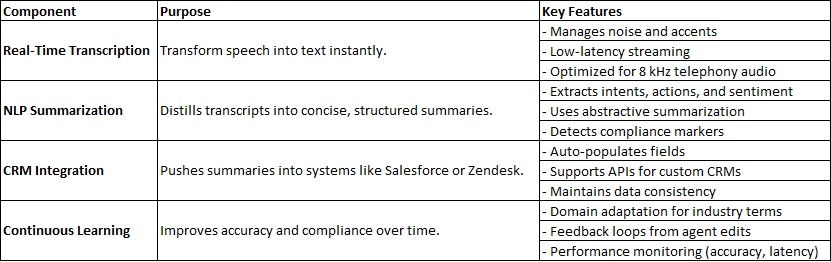
AI-enabled call summaries have the potential to change that equation. This isn’t just automation; it’s a structural shift. Real-time transcription, natural language processing, and CRM integration now work together to capture the essence of a conversation in seconds. The result? Agents can stay focused on empathy and problem-solving. Customers feel heard. Compliance is likely to improve. And the data, clean, structured, actionable, flows where it should. Faster resolutions, stronger insights, and potentially happier teams follow naturally.

Why Call Summaries Are a Hidden Drain on Productivity

On paper, writing a quick summary seems harmless. In reality, it’s a silent productivity killer. Every extra minute spent typing after a call compounds across hundreds of interactions, inflating costs and eroding service levels. What appears to be a small clerical task is actually a structural inefficiency baked into most contact centers. The problem isn’t just time, it’s attention. Agents switch from active listening to mechanical note-taking, breaking their cognitive flow. That context shift can be costly.

And then there’s the data. Inconsistent notes don’t just frustrate managers; they may cripple analytics. Missed details can mean weaker insights, flawed QA, and lost opportunities for coaching. When summaries vary wildly in quality, institutional memory suffers. The organization may pay twice: once in wasted labor, and again in poor decisions driven by incomplete information.

The Average Time Cost of Manual Summaries

For fast-growing start-ups, every moment counts. Yet, after-call work (ACW) quietly consumes hours each week. People spend from 45 to 90 seconds per call typing notes, tagging tickets, and updating CRM fields. Multiply that by 60 calls a day, and you’re looking at 45–90 minutes of pure administrative drag: time that could be spent resolving more issues or upselling services.

For a lean team scaling rapidly, this inefficiency is more than an inconvenience; it’s a growth bottleneck. An AI customer service platform for fast-growing startups may help eliminate this dead time by generating summaries instantly, freeing agents to focus on conversations that matter.

More Than Time Lost—The Cognitive Toll

The actual cost isn’t just in minutes; it’s in mental strain. Switching from active listening to typing notes creates mental friction. This constant context shift:

  • Breaks focus: Agents can lose conversational flow, reducing empathy and rapport.

  • Increases stress: Multitasking may elevate cognitive load.

  • Accelerates burnout: Sustained strain might lead to high attrition rates in support centers.

AI-driven summarization helps reduce this toggle. Drafting accurate summaries in real time allows agents to stay fully engaged, listen deeply, and deliver a more human experience.

Missed Opportunities in the Data

Incomplete and inconsistent summaries can undermine decision-making. The consequences include:

  • Weak analytics: Missing details can obscure trends and root causes.

  • Lost insights: Product and training teams might miss signals that could drive improvements.

  • Compliance risk: Inaccurate data could increase liability risks.

AI-generated summaries address this by producing structured, standardized outputs every time—capturing intents, actions, and sentiment in a CRM-ready format. According to Gartner’s 2025 Customer Service AI Use Case Report, case summarization is now classified as a “likely win” use case, with 85% of customer service leaders planning to pilot or deploy AI-driven summarization this year.

How AI Call Summaries Work Under the Hood

AI call summarization isn’t magic; it’s a carefully engineered pipeline.

AI-Enabled Call Summaries: Helping Agents to Focus on Value, Not Data Entry

From Note-Taker to Value Creator — The Human Shift

AI call summarization isn’t just a technical upgrade; it’s a human liberation. When the burden of typing disappears, agents can reclaim the mental bandwidth to do what machines can’t: connect, empathize, and solve problems creatively. This is more than efficiency; it’s a redefinition of the role itself.

Picture the old reality: one eye on the customer, the other on a blinking cursor. Every pause to type breaks the rhythm, dilutes empathy, and turns conversations into checklists. Now imagine the opposite: full attention, uninterrupted flow, genuine listening. That’s what happens when platforms like CoSupport AI manage the administrative drag in the background.

Meanwhile, every interaction becomes part of a living knowledge base. AI-generated summaries create consistent, searchable records that strengthen institutional memory. Instead of scattered notes, organizations gain structured insights that fuel smarter coaching, better self-service, and continuous improvement. The result? A workplace where humans do human work and thrive.

The ROI of AI-Enabled Summaries (Beyond Time Saved)

Time saved is the obvious win. But the real payoff? It runs deeper—into speed, compliance, insight, and culture. When AI takes the grunt work, the ripple effects can transform the entire service operation.

  • Faster Resolution: No more digging through messy notes. AI-generated summaries may speed up follow-ups and reduce escalations.

  • Lower Compliance Risk: Every disclosure captured. Every commitment logged. Consistency can mean fewer audit headaches.

  • Better Managerial Visibility: Clean, structured data powers dashboards, coaching, and smarter decisions.

  • Higher Agent Retention: Less admin, less burnout. Roles can feel human again—agents stay longer and perform better.

From Call Notes to Customer Value

AI call summaries aren’t about replacing humans—they’re about freeing them. When agents stop acting like stenographers, they have the potential to show up as problem-solvers, listeners, and relationship builders. That shift changes everything.

The real win isn’t faster notes. It’s stronger connections, cleaner data, and a workplace where people focus on what matters: creating value. AI handles the admin grind; humans bring the empathy and judgment no algorithm can match. Together, they deliver service that may feel effortless and unforgettable.

International Tax Planning: Key Strategies for Global Entrepreneurs with Expand CPA

Expanding a business internationally brings new opportunities but also presents significant tax challenges. Entrepreneurs operating across multiple jurisdictions face complexities in tax laws, reporting requirements, and compliance risks. To remain competitive, global leaders may find it beneficial to develop efficient tax strategies that help protect profits and reduce potential risks. For specialized guidance and tailored solutions, you might consider consulting Expand CPA—a trusted partner for entrepreneurs navigating international tax complexities.

Why International Tax Planning Matters

Operating in more than one country means dealing with different tax systems, withholding rules, and compliance standards. Without a proactive strategy, companies could face the risk of paying more tax than necessary, encountering double taxation, or facing penalties for non-compliance. For expert guidance and tailored international solutions, entrepreneurs may choose to rely on Expand CPA to manage these challenges effectively.

International tax planning is not about avoidance—it’s about structuring business activities in a lawful and efficient way. Entrepreneurs who plan thoughtfully can:

  • Potentially reduce overall tax liabilities

  • Ensure compliance with local and international laws

  • Minimize the chances of double taxation through treaty benefits

  • Improve global cash flow management

  • Safeguard intellectual property and assets

A clear strategy gives global businesses the confidence to expand sustainably.

Key Strategies for Global Entrepreneurs

1. Selecting the Right Business Structure

Choosing the appropriate entity structure—such as a subsidiary, branch, or joint venture—has direct tax implications. It affects liability, reporting requirements, and the way profits are taxed. For instance, some jurisdictions offer favorable corporate tax rates or incentives for innovation. A well-advised structure could help reduce tax burdens and provide opportunities for tax deferrals, helping businesses reinvest more in growth.

2. Leveraging Double Tax Treaties

Double taxation is a common challenge for cross-border businesses, but treaties between countries can help minimize this issue. These agreements define which country has taxing rights over income, such as dividends, royalties, or interest. Entrepreneurs should carefully analyze existing treaties before expanding. The proper use of treaties may ensure that income is taxed fairly and reduce unnecessary losses.

3. Transfer Pricing and Compliance

When goods, services, or intellectual property move between related entities in different countries, transfer pricing rules apply. Tax authorities expect prices to reflect market conditions, also known as the “arm’s length principle.” Non-compliance may lead to audits, penalties, and financial adjustments. To avoid these risks, global businesses must ensure they document policies carefully and align with international standards. Guidance from sources such as the OECD transfer pricing guidelines could be helpful in supporting compliance efforts.

4. Maximizing Tax Incentives and Credits

Many governments encourage foreign investment through tax incentives. These include research and development (R&D) credits, special deductions for green investments, or reduced rates in economic development zones. Entrepreneurs should work closely with advisors to identify and potentially claim these benefits. Leveraging incentives could significantly reduce costs and strengthen a company’s financial position in new markets.

5. Withholding Tax Management

Payments like dividends, royalties, and service fees often trigger withholding taxes in the country where the payment originates. Rates can vary, sometimes reaching up to 30%. Through careful planning and the use of treaty provisions, entrepreneurs may be able to lower these rates. Proper structuring may ensure that cross-border transactions remain efficient while meeting legal requirements.

6. Staying Current with Regulatory Changes

International tax laws evolve rapidly. The OECD’s Base Erosion and Profit Shifting (BEPS) initiatives and the introduction of a global minimum tax are reshaping how companies operate. Entrepreneurs must monitor these changes closely. Partnering with professionals such as Expand CPA ensures businesses receive timely advice, adapt quickly, and remain compliant.

Valuable Practices for Effective Tax Planning

  • Consult with experts early on – Global tax planning requires professional insight.

  • Document all activities – Proper records can prove compliance and support strategic decisions.

  • Adopt technology – Digital tax and accounting tools may streamline compliance across multiple jurisdictions.

  • Plan long-term – Align tax strategies with overall business growth rather than prioritizing short-term gains.

Summary

International expansion opens doors to growth but also exposes entrepreneurs to complex tax systems. Without a clear plan, businesses could face higher costs and compliance issues. By focusing on strategic structures, leveraging treaties, ensuring transfer pricing compliance, and staying ahead of global tax reforms, entrepreneurs can thrive across borders.

Partnering with specialists like Expand CPA may help global entrepreneurs navigate these challenges with confidence, ensuring their businesses remain competitive and financially secure worldwide.


Disclaimer: The information provided in this article is for informational purposes only and should not be construed as professional tax advice. For personalized guidance regarding international tax planning, entrepreneurs should consult with a qualified tax professional. The strategies discussed may not apply to all situations, and tax laws can vary by jurisdiction.

Who Should Be Responsible for Blocked Stormwater Drains in Sydney?

When stormwater drains are blocked and cause disruption, many homeowners are left asking the same question: who’s supposed to take care of it? Some people think the council should intervene, while others believe it’s entirely their own responsibility. In reality, the answer is a mix of both.

A blocked stormwater drain can lead to flooding, property damage, and even health risks. Understanding your responsibility and knowing the right time to call a local plumber in Sydney will help you avoid stress, wasted time, and costly repairs.

Why Stormwater Drains Are So Important

The stormwater system plays a crucial role in moving rainwater away from properties and streets to prevent flooding. Without this system, even a quick downpour could cause water to pool and turn roads into streams.

The problem arises when stormwater drainage gets blocked. Water is left with nowhere to escape, leading to issues such as damaged driveways, ruined gardens, and even harm to house foundations. Standing water becomes a serious concern, as it can attract mosquitoes and pests that thrive in damp environments.

When blocked stormwater drains are not dealt with quickly, they can weaken concrete, erode soil around buildings, and create safety risks for pedestrians. 

What Are the Reasons for Blocked Stormwater Pipes?

  • Leaves and Garden Waste: During heavy rain, leaves, dirt, mulch, and grass clippings can easily wash into drains, leading to stubborn blockages.
  • Tree Roots: Roots naturally seek out moisture, and cracked or weakened pipes are the perfect entry point. Once inside, they grow quickly and can completely block the pipe.
  • Heavy Rain and Flooding: Intense downpours can overwhelm drains, especially if they’re already partially blocked, causing backups and overflows.
  • Incorrect Pipe Installation: Poorly installed or misaligned pipes create weak points where debris builds up, making blockages more likely.
  • Broken or Collapsed Pipes: Older pipes or those damaged by ground movement can collapse, stopping water from flowing properly.

Blocked stormwater pipes can remain unnoticed for weeks or months until a storm exposes the problem. By that time, the damage may have spread, affecting not just one household but also neighbouring properties.

Who Is Responsible?

Responsibility for stormwater drains depends on where the blockage occurs, and that can be confusing for many property owners. To make it clearer, here are a few situations that show how the rules apply:

  • Private properties
    If the blockage is inside a property, the responsibility lies with the homeowner or business owner. This includes gutters, downpipes, and the stormwater pipes that connect to the main system. In these cases, the owner is expected to arrange repairs and maintenance. They should call a local plumber in Sydney who will quickly identify the cause and restore proper drainage.

  • Public areas
    When a stormwater pipe becomes blocked in public areas, the local council is responsible for clearing it. Councils manage stormwater pipes, street channels, kerbs, and detention basins in their area. If the blockage is in an asset managed by Sydney Water, then they are responsible for addressing it. If you notice flooding or blocked drains in public areas, please report it through your council’s hotline or website, and they’ll determine who needs to take action.

  • Drain at the property line
    This is where things get tricky. The only way to know for sure is through an inspection. Since delays can cause further damage, many homeowners call an emergency plumber in Sydney straight away. A licensed plumber can quickly assess the situation and explain who’s responsible.

Understanding these scenarios ensures that property owners know what steps to take, whether it means making their own arrangements or contacting the council. Acting early not only prevents more damage but also reduces the stress of dealing with flooding during Sydney’s stormy seasons.

Signs Homeowners Often Miss

Not every blockage comes with obvious flooding. In fact, there are early warning signs of blocked stormwater drains that people often overlook:

  • Gutters are overflowing even during light rain
  • Odd gurgling sounds coming from drains
  • Puddles forming on driveways or lawns that don’t drain away
  • Bad smells are coming from the outdoor grates

Spotting these subtle signs early gives homeowners the chance to fix problems before they grow into major emergencies. If these warning signs are ignored, blocked stormwater pipes will get worse during the next heavy downpour, leaving little time to react before flooding begins.

Prevention Steps to Avoid Blocked Stormwater Drains

Keeping your stormwater system clear is a simple task. Here’s what you can do:

  • Clean gutters and downpipes regularly to stop leaves and debris from building up.
  • Install leaf guards or gutter guards to reduce the amount of debris entering your system.
  • Be mindful of tree placement and avoid planting species with invasive roots near drains.

If water is already backing up, quick action is needed. This is where an emergency plumber in Sydney should inspect, clear the blockage properly, and prevent further damage to your property.

Final Thoughts

So, who should handle blocked stormwater drains in Sydney? The general rule is: property owners are responsible for private drains, while councils look after public ones.

If stormwater drainage blockage is suspected, it should never be left ignored. Preventive measures can help significantly, but emergencies demand immediate response. Hiring a reliable plumber in Sydney makes all the difference in protecting homes and businesses from water damage.

Tommy Tales and Other Life Lessons: Where Faith Meets Fur

Some books are written to entertain. Others are written to instruct. But every so often, a book arrives that manages to do both while also touching the deepest corners of the heart. Lois Moore’s Tommy Tales and Other Life Lessons is such a work. On the surface, it is a collection of tender stories about a dog named Tommy, a rescued mutt with short legs, a smiling face, and a personality that won over everyone he met. Beneath that surface, however, lies a steady current of spiritual insight that turns everyday experiences into lessons about joy, patience, trust, and love.

Moore, a registered nurse and longtime teacher of Certified Nursing Assistants at the College of Western Idaho, is not a stranger to the realities of human struggle and resilience. Yet it is through the simple companionship of animals- Tommy the dog, Bootsie the kitten, and others that she explores themes of faith, loss, renewal, and God’s enduring presence.

What makes this book stand apart from standard devotional writing is the sincerity of its approach. Moore does not preach from a distance. She invites readers into her living room, into her backyard, even into her heart. The chapter “Joyous Greeting,” for instance, begins with Tommy’s exuberant howls of welcome whenever she returns home. From this, she draws a striking parallel: just as Tommy can hardly contain his joy at being reunited with his beloved human, so too should believers long for their time with Christ. In another chapter, Tommy’s patience at mealtime becomes a meditation on waiting quietly and expectantly for God’s provision, even when life feels monotonous or slow.

Heartbreak also has its place in these pages. Moore recounts the short, fragile life of Jimmy, a sickly kitten who died after only a brief time in her care. Her honesty about grief, tempered with hope that God’s love extends even to the smallest of His creatures, gives the book a poignancy that lingers. Yet she does not leave the reader in despair. Each loss, each trial, is reframed as a reminder of the trustworthiness of God’s promises.

But Moore doesn’t leave her readers in the world of animals alone. She widens her lens, showing how God speaks just as clearly through the fabric of daily life. A verse of Scripture read a hundred times before suddenly lands with new force, as though written for that very moment. A conversation with a neighbor or a child becomes a channel of truth, reminding us that wisdom often comes from unexpected places. Nature, too, takes its place as a teacher: the rhythm of seasons offering patience, the breaking of storms revealing endurance, and the beauty of a sunrise arriving right when hope feels fragile. Even interruptions, those inconvenient detours and canceled plans, become, in her telling, divine redirections toward something better than what we first imagined. And in the ordinary work of serving, showing up, and doing what is in front of us, Moore uncovers the quiet holiness of faith lived out in small, consistent steps.

Tommy Tales and Other Life Lessons succeeds because it embodies its own message. It does not dazzle with complexity or overwhelm with theology. Instead, like Tommy’s simple wag of a tail, it communicates love, loyalty, and faith in ways anyone can understand. Readers are left not just warmed by stories of a little white dog, but challenged to see holiness in the mundane, beauty in the routine, and God’s voice in the quiet spaces of daily living.

In a world often defined by noise, hurry, and division, Lois Moore offers something rare: a call to slow down, to notice, and to let the smallest of creatures remind us of the largest truths.

The book is available on Amazon and other leading bookstores, making it easy for anyone to bring Tommy’s lessons into their home and heart

Iuliia Malashenko: Redefining Success in Fashion and Global PR Innovation

By: Ekaterina Kuznetsova

Introducing Iuliia Malashenko, also known as Lady N. A prominent figure in business and fashion, she is a successful model and the owner of the PR agency Art-com Lady N Partners. Her journey is a testament to vision, resilience, and innovation.

From Model to PR Innovator 

Iuliia started her career as a model, signing her first contract in East Asia, more specifically China and South Korea, participating in numerous shows and publications. Unlike many, she embraced diverse opportunities, earning diplomas in construction and a bachelor’s degree in public administration, along with courses in programming and design. This educational background laid the foundation for her transition into public relations and the establishment of Art-com Lady N Partners. 

Significant Experiences Shaping a PR Agency 

Iuliia reflects on her internship at a PR company as a pivotal experience that provided insights into real work processes. Her freelance projects enriched her skills, allowing her to expand her horizons while balancing her modeling career.

Key Projects and Ambitions 

As head of Art-com Lady N Partners, Iuliia has transformed media exposure for brands across over 30 countries, maintaining a database of over 5,000 media outlets, including Forbes, L’Officiel, and Playboy. Her vision is to expand globally while fostering the professional and personal development of her clients.

Navigating Cultural Differences in PR

Iuliia emphasizes the importance of cultural sensitivity in public relations, highlighting how perceptions of information vary across cultures. Key factors for success in global PR include understanding information interpretation, language nuances, visual elements, interaction styles, and cultural values.

  • Information Interpretation: Eastern cultures often value collectivism and respect for elders, while Western cultures focus on individualism and directness.
  • Linguistic Nuances: A phrase can have different meanings across cultures, so professional translations are essential to prevent misunderstandings.
  • Visual Elements: Colors and symbols can convey varied meanings; for instance, white symbolizes purity in the West but may indicate mourning in some Eastern cultures.
  • Interaction Styles: Communication preferences differ, with some cultures favoring formal styles and others preferring informality.

Recognizing cultural values and stereotypes is also crucial, as they shape how brands and messages are received. Neglecting these aspects can lead to misunderstandings and adverse reactions. Thus, it’s vital to remain adaptable and continually adjust PR strategies to align with emerging cultural trends.

The Art of Collaboration: “Miss Dubai” Project

Co-hosting the international “Miss Dubai” project showcased Iuliia’s organizational skills and creativity. The event was a collaborative masterpiece that celebrated beauty and teamwork.

“The success of an event is determined by what happens behind the scenes. The whole process with “Miss Dubai” was like a clockwork mechanism, with everything scheduled minute by minute”, she confides. “The event was treated as a work of art by us all”.

Iuliia Malashenko: Redefining Success in Fashion and Global PR Innovation

Photo Courtesy: Pavel Abramchenkov

The “Top Best Persona Award” 

In 2023, Iuliia won the “Top Best Persona Award,” an acknowledgment of her outstanding success, facilitated by the People of the World Alliance, which promotes unity among peoples. In December 2024, she was selected as an ambassador for the organization, further highlighting her influence.

“To be chosen as one of the many thousands means to be trusted and recognized. I’m over the moon – it’s a huge success”, Iuliia expresses.

Strategic Collaborations with Media Outlets 

Iuliia’s agency has successfully collaborated with top media outlets, tailoring approaches to each outlet’s unique audience and editorial style. Navigating sensitive topics requires a balance of professionalism and creativity, one that focuses on maintaining traditional values while pushing boundaries. She believes, to successfully collaborate with media through PR strategies, it is recommended that you:

  • Develop a customized strategy for each media outlet. Take into account that each media channel has its own audience, editorial team, and communication style.
  • Analyze before creating informational materials. Press releases, articles, interviews, and other materials should be interesting and relevant, and meet the requirements of each specific media outlet.
  • Sharp corners must be handled professionally. In a challenging political and economic environment, restrictions apply to topics that were previously safe and even trending. Advertising now has a new challenge: the fear of violating “traditional values”. This is why creative agencies are increasingly using the services of lawyers, as every advertising campaign now has to undergo a thorough review. However, analysis at all stages does not guarantee immunity from negativity.

The Significance of Creativity in Public Relations 

Iuliia believes creativity is the cornerstone of effective PR. In a crowded marketplace, brands must offer compelling narratives. Unique stories generate buzz and resonate with audiences, capturing media attention.

“If the brand is boring, there will be no results. It’s worthwhile pondering the creative aspect. If a brand creates great content and tells unique stories, it will generate hype”, she notes. 

Tips for Aspiring Models 

Iuliia’s modeling career flourishes with her recent collaboration with the organic cosmetics brand Pérle De Clair, featuring billboards in Times Square. This partnership reflects her commitment to sustainability and innovation, and she is even considering a co-product, marking a new venture.

Iuliia shares insights for aspiring models on balancing a modeling career, business commitments, and personal life:

  • Be punctual: Timeliness is crucial in the industry.
  • Choose agencies wisely: Select reputable modeling agencies.
  • Take initiative: Participate in events, even without agency representation.
  • Build experience: Create a standout portfolio.
  • Show respect: Treat everyone in the industry with kindness.
  • Embrace rejection: Learn from every “no” to get closer to a “yes.”
  • Believe in yourself: Confidence and perseverance are key to success. Work out your psychological issues, if there are any.
  • Develop constantly: Engage in reading and the arts in your free time to maintain balance. 

Iuliia Malashenko embodies the powerful synergy of fashion and business acumen. Her remarkable achievements in both public relations and modeling highlight the critical importance of adaptability, creativity, and cultural awareness in today’s ever-evolving landscape. By seamlessly integrating style with commercial insight, Iuliia not only sets trends but also paves the way for future generations in the industry. Her journey serves as a testament to the necessity of flexibility and imagination, proving that success in this vibrant environment requires a deep understanding of cultural nuances and the ability to innovate continuously. Iuliia’s story inspires aspiring professionals to embrace these qualities as they navigate their paths in the dynamic world of fashion and public relations.