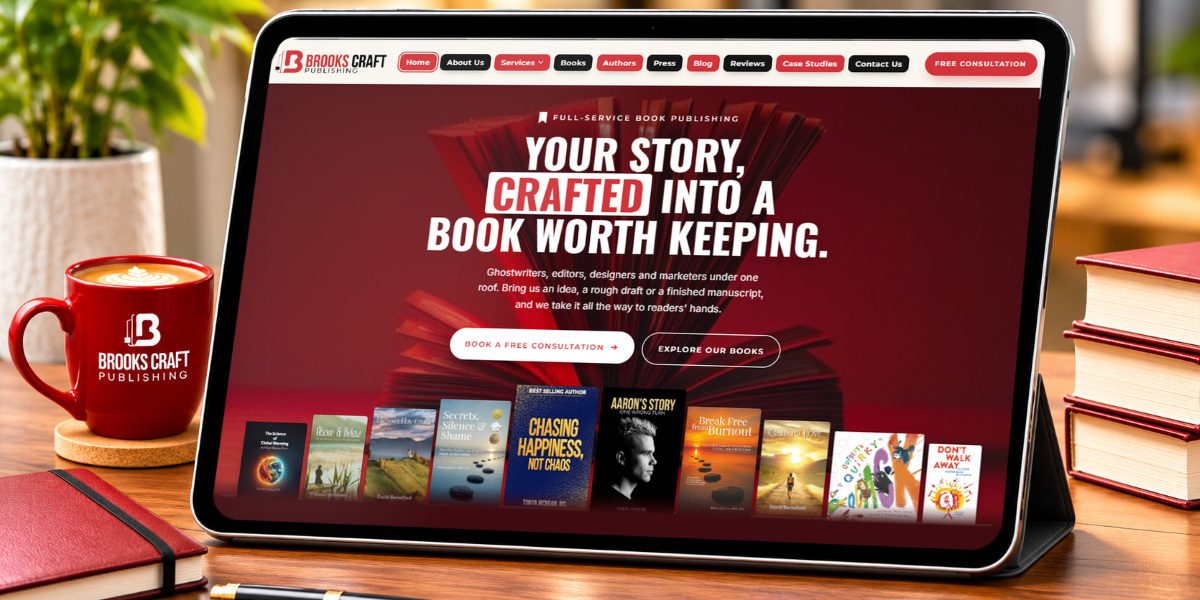

Exploring book design, author identity, publishing formats, discoverability, and reader engagement through the services of Brooks Craft Publishing.
The Changing Relationship Between Books and Their Audiences
A book’s relationship with its readers extends beyond the completed manuscript. Before and after publication, its cover, description, format, and surrounding author information influence how the work is introduced. Brooks Craft Publishing describes itself as a full-service publishing company providing writing, editing, design, publication, and marketing support. This service framework offers a useful way to examine the practical activities that shape a book’s presentation and public identity.
Why a Book’s Identity Matters
Before readers encounter the opening page, they may first see a title, cover, author biography, or book description. These elements communicate genre, subject, and tone. Brooks Craft Publishing lists cover design among its services, alongside editorial and publishing support. A clearly developed book identity can help readers understand what a work offers without requiring exaggerated claims. Design decisions are therefore relevant not only to appearance but also to the expectations created around a published title.
The Role of Presentation in Modern Publishing
Cover design, typography, layout, and interior formatting serve different purposes. A cover provides a visual introduction, while interior design supports the reading experience through consistent text treatment and page organization. Brooks Craft Publishing identifies cover design and formatting as parts of its full-service publishing work. These activities can help authors consider how a manuscript will be presented in its intended edition. Their relevance depends on the content, readership, and production requirements of the individual book.
Author Identity Beyond the Printed Page
An author may choose to communicate with readers through a biography, website, social profile, or other public-facing materials. Such information can establish context for a writer’s interests and body of work. Brooks Craft Publishing lists author branding among its publishing-related offerings. That service relates to the decisions authors make about how their names, books, and professional profiles appear together. A consistent public identity can support clarity without suggesting that any particular promotional outcome is assured.
Discoverability in an Expanding Literary Marketplace
Readers discover books in several ways, including recommendations, online catalogues, genre searches, book-related discussions, and marketing materials. Brooks Craft Publishing offers book marketing services, making discoverability an identifiable part of its service portfolio rather than a general publishing topic. Marketing activities may help introduce a title to relevant audiences and provide information about its subject and availability. The suitability of any approach depends on the work, intended readership, and chosen publication channels.
Digital Platforms and the Broader Reading Experience
Print editions, e-books, and audiobooks offer different ways to experience literary content. Readers may favor a physical copy, a portable digital edition, or audio narration depending on their circumstances. Brooks Craft Publishing describes support for print and e-book publishing, and its website also lists audiobook services. These distinct formats involve their own presentation and production considerations. For authors, the format decision affects how a book is prepared and how readers may access it.
Books as Part of a Larger Cultural Conversation
Books also have a life beyond their immediate publication. Fiction can invite discussion of imagined experiences, while history, memoir, and nonfiction may encourage reflection on events, ideas, and individual perspectives. That cultural role is different from the production services needed to release a title, but the two can intersect when authors consider audience, positioning, and communication. This broader perspective helps explain why book presentation and outreach remain relevant after manuscript development.
Connecting Publishing Services Across Stages
Writing, editing, design, publication, and marketing are distinct activities, yet the choices made at one stage can affect another. Brooks Craft Publishing presents these disciplines within its full-service offering, including writing support, editorial review, cover design, formatting, publishing options, book marketing, and audiobooks. Explaining the specific services provides readers with a clearer view of what the company offers. It also moves the discussion beyond general statements about the industry toward practical considerations authors may encounter.
The Next Chapter for Literary Engagement
Publishing continues to evolve as readers use different formats and ways of discovering books. This view invites exploration of how design, author identity, distribution choices, and promotional communication can influence the presentation of a literary work. Brooks Craft Publishing operates within those areas through its published services. For authors, the next stage is not simply about completing a manuscript; it may also involve deciding how the book will appear, where it will be available, and how it will be introduced to readers.
Availability
For more information about Brooks Craft Publishing’s cover design, author branding, book marketing, and publication options, visit its official website. Additional company updates can be found through Facebook and Instagram.