
By: Natalie Johnson
On a Labor Day morning during her years as a hospice nurse, Kim Vesey was on call when one of her own patients, the father of two young daughters, died. After his wife had some time with him, Vesey brought the girls, ages 4 and 6, into the room and explained in simple terms that their father’s lungs were no longer breathing and that he was not feeling any pain or sickness.
The 6-year-old, a dancer who was supposed to be in a parade that day, stomped her feet when she realized she would miss it. Her mother could not believe that the parade was what her daughter was focused on.
Vesey saw something different: a 6-year-old who did not yet understand that death is permanent and who expected her father to be right where she left him when she came home from the parade. Rather than let the day her father died also become the day she missed the parade, Vesey suggested finding someone to take her and record it.
That instinct to protect a child’s experience of loss, rather than protect the child from it, runs through Vesey’s work. A grief specialist and the founder of My Hope Path, she has spent more than 40 years in hospice and end-of-life care and holds a certification in Thanatology, the study of death and grief.
Children’s Grief Awareness Day is observed on the third Thursday of November, which falls on November 19 this year, and is intentionally placed just before a holiday season that can be especially difficult and isolating for grieving children and their families. According to the 2024 national report from the Childhood Bereavement Estimation Model by Judi’s House/JAG Institute, 1 in 12 children in the United States will experience the death of a parent or sibling by age 18.
Protection Can Leave Children Out
Most adults around a grieving child mean well. “The thing they most often get wrong is wanting to protect their child from the loss and grief,” she says.
That protection can look like not telling a child there will be a service, not asking whether they want to attend, or hiding adult tears. As grief educator Dr. Alan Wolfelt, whose work Vesey draws on, puts it, a child old enough to love is old enough to grieve.
Very young children may not grasp that death is permanent, but they understand that the people around them are sad and that something has changed. When a child is facing a visitation or funeral, Vesey suggests a few practical steps:
- Ask first. Children as young as 3 can be asked whether they want to attend. A private goodbye before the public visitation is another option.
- Describe what they will see, hear, and smell. People may be crying or laughing at funny stories, and the room may be full of flowers. Vesey explains that death is different from sleeping, because children who think death is like sleep can become afraid to go to sleep, or to let their parents sleep.
- Prepare them for touch. The person’s body will feel firm and cool, because their blood is no longer keeping their skin warm. “Every child at a visitation is going to reach up and want to touch the person,” she says.
- Assign each child a trusted adult. A close friend or family member whom both the child and the parent trust can step outside, go to a park or take the child home if needed, so the grieving parent can be present for their own loss.
“What you don’t want is this to become a bad first experience,” Vesey says. And if a child does not want to go, whether that child is 3, 5, or 17, her advice is direct: “do not force them.”
Grief That Comes in Spurts
Young children, Vesey explains, have few filters. A child under 10 may say they are sad or angry because a parent is gone, then head to the playground minutes later. “They grieve in spurts,” she says.
Around ages 9 to 12, children begin to understand that the person is not coming back, and with that comes more sadness. Teenagers often want to fit in, so they may keep grief to themselves, especially away from home. Vesey encourages parents to watch for changes in school performance, anger, or risky behavior. Some regression, such as trouble sleeping, can be normal, but significant changes, such as aggression or changes in school behavior, mean a child should be seen by a doctor or referred to a counselor.
“It’s okay to let your kids see you cry,” Vesey says. Children take cues from how the adults around them grieve, and a parent who never cries is teaching a child something, too. She also reminds families that laughter and joy are part of grief, even when people feel guilty for them.
At the Holiday Table
For relatives and family friends sitting beside a grieving child during this holiday season, Vesey suggests skipping a statement like “I bet you’re missing your mom today.” It leaves a child with little to say. A story works better: remembering how much their mom loved turkey, or noticing that the potatoes are lumpier than when she mashed them. The conversation is still about her, but the child can join it naturally.
She also cautions against clichés such as “it’ll get easier,” “God never gives you more than you can handle,” or pretending the person is simply away on a trip, which she says do not help anyone process grief.
Holidays are full of roles a loved one used to fill, and Vesey sees them as a chance to include children. If grandma always said grace, the children might help pray. If dad carved the turkey, the adult who takes over can ask a child to come sample a piece and say whether it was done right.
“It’s kind of like the ceremonial passing of the baton,” she says. The gesture acknowledges the loss while showing children a new way to carry on a tradition in the person’s honor.
Making Grief Part of the Conversation
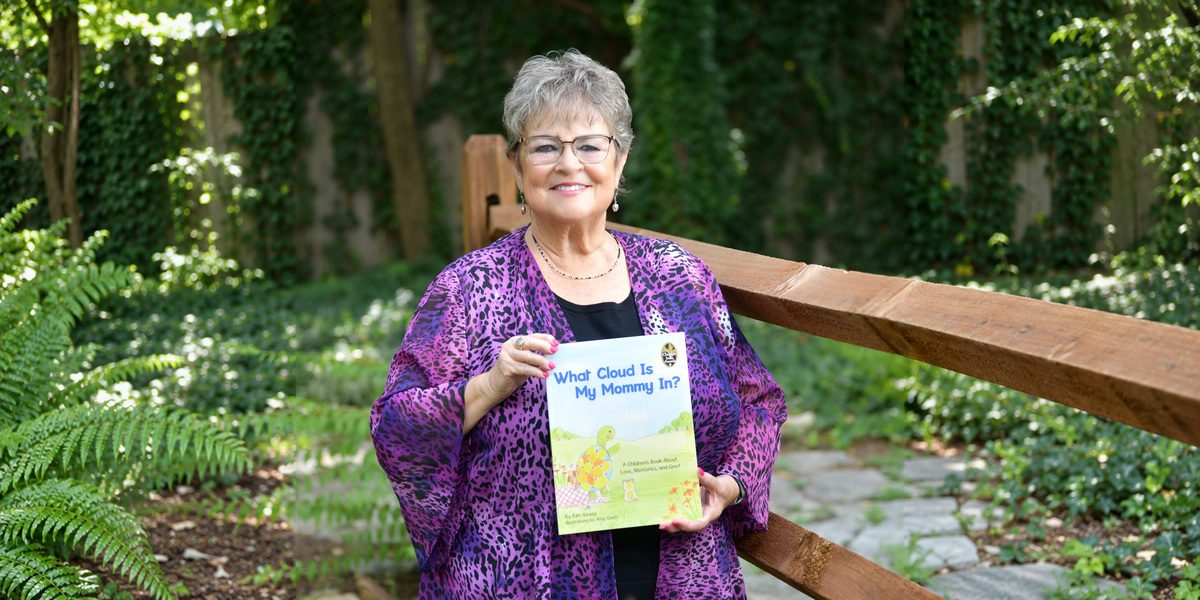
Vesey’s What Cloud Is… children’s book series grew out of her own family’s loss. The first four books, What Cloud Is My Mommy In?, What Cloud Is My Daddy In?, What Cloud Is My Grandma In? and What Cloud Is My Grandpa In?, take children through the entire first year of grief, with ideas for honoring a loved one on holidays. What Cloud Is My Brother In? and What Cloud Is My Sister In? include a reflection question on every two-page spread. In these books on sibling loss, three turtles go through grief camp together. Two have memories of their sibling, and one does not, as their sibling died at birth. There are reflection questions throughout the story. In one of them, a turtle at camp gets a tummy ache whenever she thinks about her sibling, and the question invites children to talk about a time their own tummy or head hurt when they thought about the person they lost. A parent can answer that sometimes their tummy hurts, too. The newest book in the series, What Cloud Is My Pet In?, came out in June 2026.
“It normalizes grief,” she says.
“Most kids figure out how to navigate grief reasonably well as long as we don’t stifle them, are open with them about the loss and provide opportunities for them to explore their feelings,” Vesey says. In her view, adults can learn from the way children grieve: openly, in the moment and without worrying about what others think.
On November 19, people can wear blue, take part in virtual butterfly tributes or light blue lights. The blue butterfly is the observance’s symbol. Groups such as the National Alliance for Children’s Grief and The Dougy Center offer resources for families and the adults who work with grieving children.
The What Cloud Is… series is available on Amazon, and more information about Vesey’s speaking topics is available at My Hope Path.