

What if the family dog were capable of more than simply offering companionship? Imagine a dog that could fly, communicate with humans, and hear trouble from an entire mile away. More importantly, imagine a dog that used these extraordinary abilities not for fame or personal gain, but to protect children, challenge bullies, and make the world a kinder place.
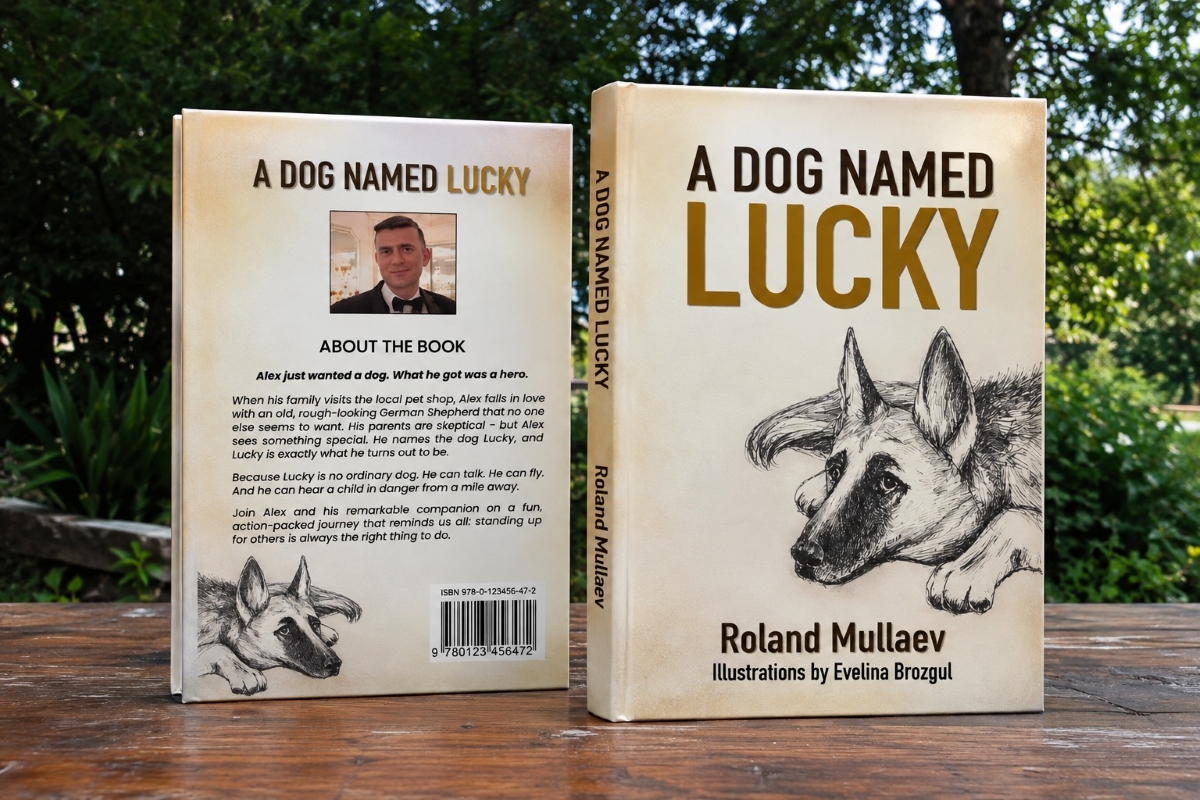
This imaginative concept lies at the heart of A Dog Named Lucky, a children’s book by author Roland Mullaev. Blending adventure, humor, friendship, and meaningful life lessons, the story introduces readers to an extraordinary German Shepherd whose unusual abilities make him an unlikely hero.
Designed for children between the ages of six and ten, the book follows a young boy named Alex and his remarkable companion, Lucky. What begins as a familiar childhood wish for a family pet gradually develops into an imaginative adventure exploring responsibility, loyalty, compassion, and the importance of standing up for others.
An Unexpected Friendship That Changes Everything
The story begins in Chicago, where Alex lives with his parents, Peter and Alice. Like many children, Alex has always wanted a dog of his own. When his parents finally agree to bring a pet into the family, the excitement is difficult to contain.
At a local pet shop, Alex encounters dogs of different sizes and appearances. After spending more than two hours considering his options, he makes an unexpected choice: a large German Shepherd that looks older and somewhat unkempt.
His parents are surprised. They question whether the dog is the right choice, but Alex sees something special in him. Determined to bring the German Shepherd home, he promises to take responsibility for his new companion and gives him a name: Lucky.
Neither Alex nor his parents realizes just how extraordinary their new family member really is.
Lucky possesses three remarkable abilities. He can fly, talk, and hear events taking place from approximately one mile away. While these abilities initially seem like the ingredients of an entertaining fantasy, they soon become central to a much bigger purpose.
Lucky is not simply an unusual family pet. He is a protector.
A Different Kind of Hero: Standing Up Against Bullying
One of the central themes of A Dog Named Lucky is bullying, an experience that can affect children’s confidence, friendships, and sense of security.
Alex encounters this problem himself when he is teased and intimidated by other children during a morning walk. Although he has recently welcomed an exciting new companion into his life, he still faces the everyday difficulties that many young readers may recognize.
Lucky, however, refuses to ignore what has happened.
After Alex returns home, Lucky secretly sets out to find the children responsible for upsetting his young owner. Using his extraordinary abilities, he tracks them down and makes his presence known, ensuring that they understand they should not mistreat Alex.
This incident marks the beginning of a series of adventures in which Lucky discovers other children facing similar difficulties.
Whether a child is being threatened by older children or someone is being bullied by a group of boys their own age, Lucky appears when help is needed.
Through these encounters, the story introduces an important message: intimidating others is never a demonstration of strength. True courage involves showing respect, protecting those who need support, and recognizing when someone is being treated unfairly.
For parents and educators, this theme also creates an opportunity to discuss bullying with children. The story can encourage conversations about supporting classmates, seeking help from trusted adults, and refusing to participate in behavior that hurts others.
More Than a Magical Dog: Lessons in Responsibility and Compassion
Although Lucky’s extraordinary abilities provide much of the book’s excitement, the relationship between Alex and his dog gives the story its emotional foundation.
Alex does not choose Lucky because he is the most attractive dog in the pet shop. He chooses him because he feels a connection with him, even when his parents question his decision.
That choice introduces another valuable subject: responsible pet ownership.
Animals depend on their owners for food, shelter, attention, exercise, and affection. Bringing a pet into a home is not simply about enjoying the excitement of having an animal around. It involves making a commitment to care for another living creature.
Alex’s promise to look after Lucky helps introduce this responsibility to young readers in a natural and relatable way.
The story also explores the deeper bond that can develop between children and their pets. A dog can become much more than an animal living in the family home. It can become a trusted companion, a source of comfort, and an important part of a child’s everyday life.
Lucky’s character reinforces this idea through his loyalty to Alex and his willingness to help others. His abilities may be extraordinary, but what makes him special is the way he chooses to use them.
Children do not need magical powers to make a difference. Helping a classmate, including someone who feels left out, or standing beside a friend during a difficult moment can be equally meaningful.
From Chicago to Pennsylvania: An Adventure Beyond the Ordinary
As the story develops, Lucky’s unusual behavior becomes increasingly difficult for Alex to explain.
After several mysterious disappearances, Alex’s parents begin to question whether he is properly looking after his new dog. They initially believe that Lucky has been lost or that Alex has been irresponsible.
Eventually, the truth comes out.
Lucky speaks directly to Peter and explains that he has been leaving the house to protect children who are being bullied. He also reveals his remarkable abilities, leaving both Alex and his father astonished.
To demonstrate what he can do, Lucky shows the family his extraordinary speed, ability to fly, and enhanced hearing.
Peter recognizes that their new German Shepherd is much more than an ordinary family companion, even describing him as a lifetime bodyguard.
The adventure continues when the family travels to Knoebels Amusement Park in Elysburg, Pennsylvania. What begins as a family outing soon becomes another opportunity for Lucky to demonstrate his protective nature.
Near the Ferris wheel, Lucky discovers two children being bullied by a group of boys. Without hesitation, he rushes to help, using his unusual abilities to surprise the bullies and encourage them to leave the children alone.
The episode brings together several of the book’s central ideas: family, adventure, courage, and compassion. It also demonstrates that kindness and the willingness to help others are important wherever life takes us.
Why Stories Like This Matter to Young Readers
Children between the ages of six and ten are developing their understanding of friendships, emotions, responsibility, and the relationships they build with others.
Stories that introduce these subjects through recognizable characters and imaginative situations can give children an enjoyable way to explore important values.
A Dog Named Lucky combines familiar childhood experiences with elements of fantasy. Alex wants a pet, experiences difficulties with other children, spends time with his family, and develops a special relationship with his dog. These familiar experiences make the story approachable, while Lucky’s extraordinary abilities add excitement and imagination.
For parents, the book offers an opportunity to discuss kindness, animal care, loyalty, and how children should respond when they witness bullying.
For teachers, it provides a starting point for conversations about respect, friendship, courage, and responsibility.
The story also encourages children to consider a simple question: What would you do if you saw someone being treated unfairly?
It is a valuable idea, particularly because the book presents heroism as something that does not always require extraordinary abilities. Sometimes, being a hero simply means choosing to do the right thing.
An Imaginative Story With a Meaningful Message
At its heart, A Dog Named Lucky is a story about the values that make relationships meaningful.
Its talking, flying German Shepherd provides the adventure, humor, and imaginative appeal that young readers enjoy. However, beneath the fantasy lies a straightforward message about treating others with kindness, accepting responsibility, protecting those who need support, and appreciating the friendships that make life special.
Through Alex and Lucky, Roland Mullaev presents a story that brings together the excitement of childhood imagination and lessons that extend beyond the pages of a book.
For children who love dogs, enjoy adventure stories, or are discovering the importance of friendship and compassion, the book offers an engaging reading experience. It can also be an enjoyable opportunity for parents and children to read together and discuss the ideas introduced throughout the story.
Now published and available to readers, A Dog Named Lucky invites families to discover the adventures of a German Shepherd whose greatest qualities are not simply his remarkable abilities, but his loyalty, courage, and willingness to help others.
After all, heroes do not always wear capes. Sometimes, they have four paws, a wagging tail, and a heart full of loyalty. And sometimes, an extraordinary adventure begins with bringing home a dog named Lucky.
About the Author
Roland Mullaev is the author of A Dog Named Lucky, a children’s story that combines imaginative adventure with meaningful lessons about friendship, kindness, courage, and responsible pet ownership.