
By: Yuting Zhou
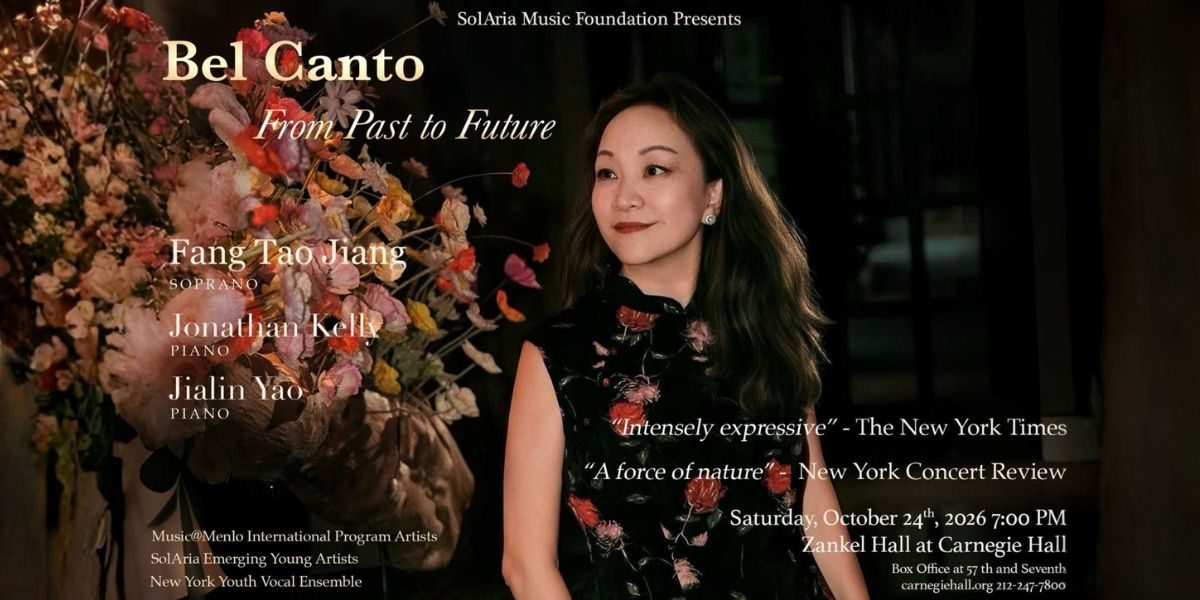
NEW YORK, NY, October 28, 2026. Following her sold-out recital at Carnegie Hall’s Weill Recital Hall in 2025, soprano Fang Tao Jiang, praised by The New York Times, returned to Carnegie Hall on October 24, 2026, for another sold-out performance with Bel Canto: From the Past to the Future at Zankel Hall. Bringing together distinguished instrumentalists, emerging vocal talents, and young singers, the evening celebrated the enduring power of the human voice, the richness of cross-cultural musical expression, and the vital importance of passing artistic traditions to future generations. Further information about the soprano is available on her official website.
Connecting the bel canto tradition with diverse musical voices and contemporary expression, Jiang’s ambitious program was brought to life alongside pianist Jonathan C. Kelly of the Metropolitan Opera, award-winning pianist Jialin Yao, and instrumentalists Hanna Park, Tianyou Ma, Andy Park, and Shengyu Meng, associated with the prestigious Music@Menlo International Artists Program. Featuring music by Bellini, Schubert, Debussy, Mozart, Lehár, Bernstein, Huang Ruo, and other composers, the program brought together European art song, opera, chamber music, contemporary works, and Chinese songs in a celebration of music across languages, cultures, and generations.
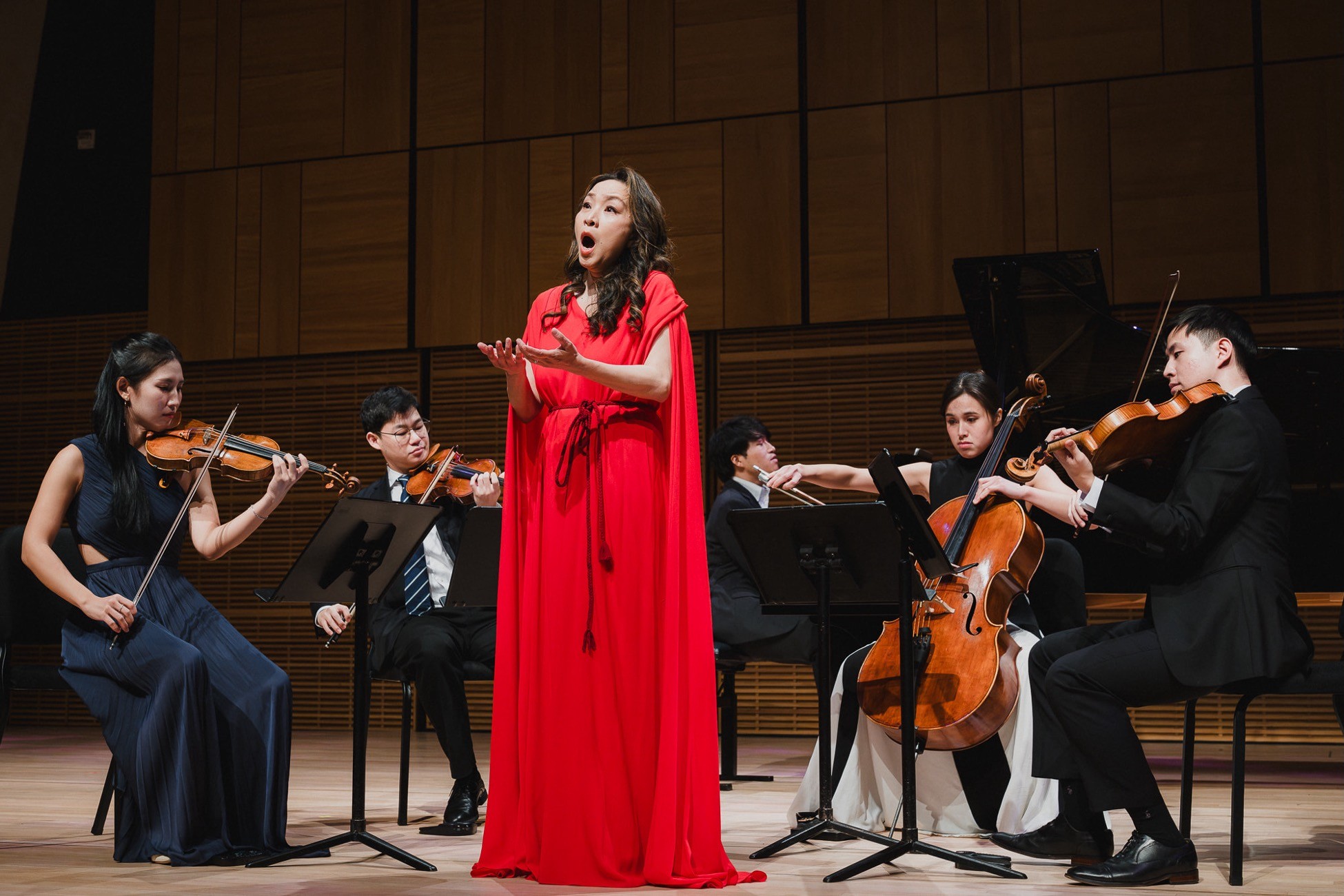
At the heart of the concert was Jiang’s belief that bel canto is more than a vocal technique. It is a living tradition rooted in the profound connection between human expression and music. Her singing is distinguished by refined legato, precise breath control, and a resonant, flexible tone that allows her to move easily between intimate lyricism and dramatic intensity. With expressive phrasing, clear diction, and a deeply personal interpretive style, Jiang brings technical command and emotional immediacy to her performances.
Critic Jeffrey Williams from New York Concert Review praised Jiang’s interpretation of the repertoire, observing that she “demonstrated her versatility with almost an off-handed ease,” while describing her rendering of Bellini as capturing “the shimmering bel canto beauty” characteristic of the composer. The review recognized her ability to move effortlessly across musical periods and styles, reflecting both her artistic maturity and the breadth of her musical expression.
The critic hailed Jiang as an outstanding singer and teacher and as “an exceptional organizer,” concluding, “She is a true dynamo!” The review also highlighted her approach to mentoring young artists, pointing out that she creates opportunities for them to shine, “never overpowering them with her experience and fully-developed artistry.”
Recognizing the exceptional promise of the young performers, the critic reflected, “We may have heard some stars of the future this evening.” The review also singled out the remarkable potential of the SolAria Emerging Young Artists: Zhongjiancheng Deng, Xinran Du, Miaoyan Hou, Yuyao Chen, Yushan Guo, Junyue Gong, Rondy Liu, Jiayin Wang, Melissa Wang, Alan Huang, Andrew Hansong, and Ruochen Yang, affirming the importance of providing emerging artists with meaningful opportunities to develop their artistry and experience the professional stage.
In a moving moment of shared musical connection, Jiang invited the entire audience to join in singing the beloved Chinese song May We Share the Moon Forever (但愿人长久). The experience affirmed that music transcends language, allowing love, hope, and shared humanity to resonate across cultures.
Another defining highlight of the evening was the participation of the New York Youth Vocal Ensemble, which is formed by vocal students from Fang Tao Jiang’s vocal studio. Its soloists (Sophie Edelman, Camila Ho-Alvarez, Isla Wu, May Gong, Kia Rogers, Elkan Zhang, Alan Huang, Melissa Wang, Andrew Hansong, and Lirong Liu) stood out with confident and expressive performances.
At a time when artificial intelligence and technology are rapidly transforming the creative world, Bel Canto: From the Past to the Future offered a reminder of what makes live music uniquely human. The beauty of a living voice, the emotion carried through a musical phrase, and the shared experience between performers and audiences create a connection that technology alone cannot fully replicate.
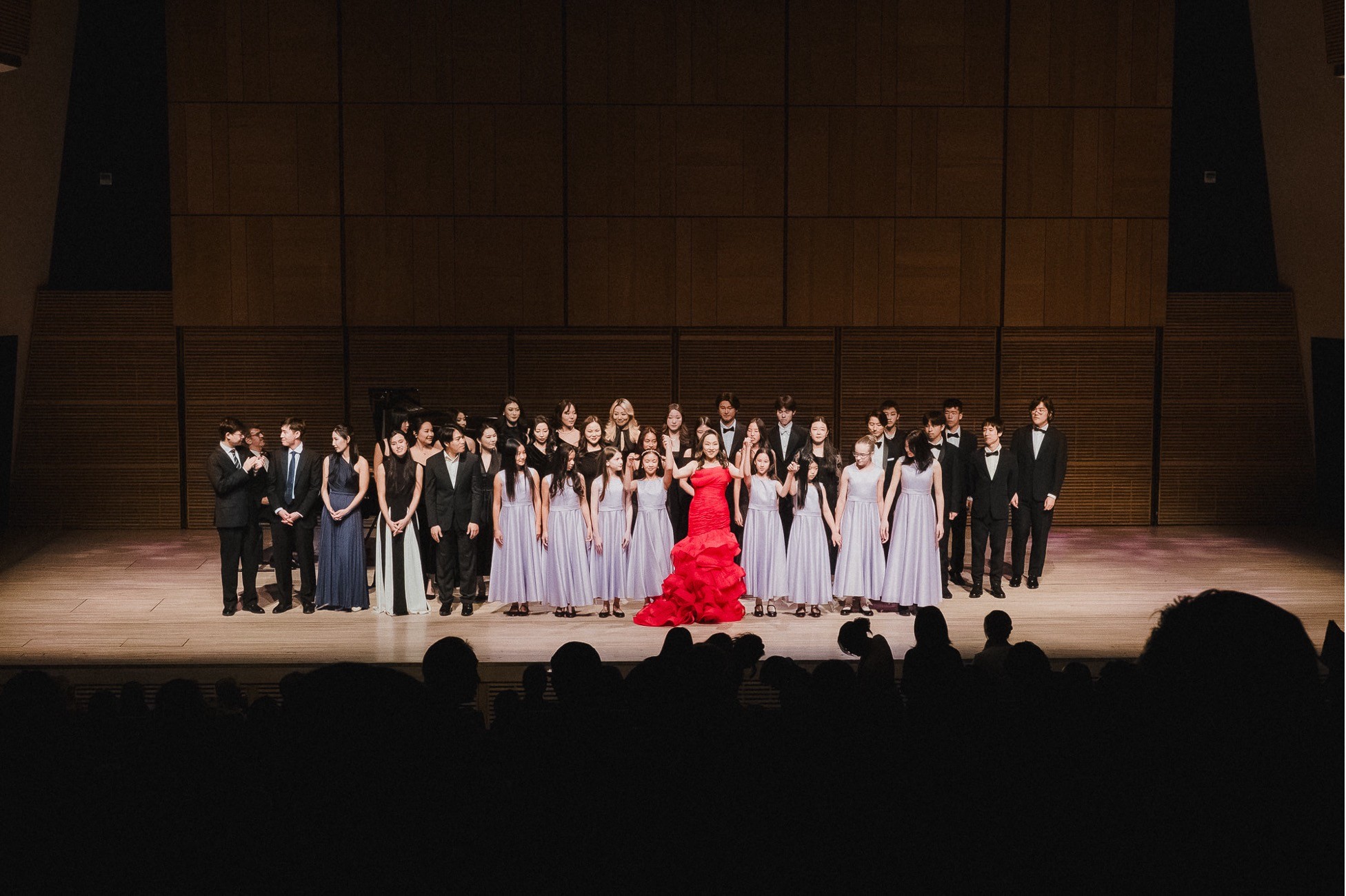
As an internationally active soprano and dedicated vocal educator, Jiang balances her performing career with her work helping singers develop vocal freedom, technical confidence, and individual artistry. Founded by Jiang and her husband, Hal Edelman, the SolAria Music Foundation is a 501(c)(3) nonprofit organization dedicated to supporting young artists through scholarships, education, mentorship, financial assistance, and performance opportunities.
For Jiang, nurturing young talent and cultivating young audiences are inseparable. SolAria Music Foundation has also established a Young Leaders Board to encourage young people to develop leadership skills and make a meaningful impact through music and community engagement.
Among its members are Miaoyan Hou, a fourth-year student at Harvard University, and Tiffany Qianxun Zhao, a high school student at Phillips Academy Andover. Inspired by their passion for music, leadership, and community service, Hou took on production management, while Zhao served as public relations director for the Carnegie Hall concert, helping with fundraising, promoting the event, and extending its reach to a broader audience. Their involvement exemplifies the foundation’s commitment to encouraging young people not only as artists but also as cultural advocates and community leaders.
Through SolAria, Jiang hopes to build a lasting artistic community in which every voice has the opportunity to be heard, every young talent has the opportunity to flourish, and the love of music continues from one generation to the next.
The foundation’s motto holds that every voice can find a song, and every song has a voice.
Authored by Dr. Yuting Zhou
Dr. Yuting Zhou is a pianist, scholar, translator, and music critic whose writing explores musical performance, interpretation, and artistic expression.