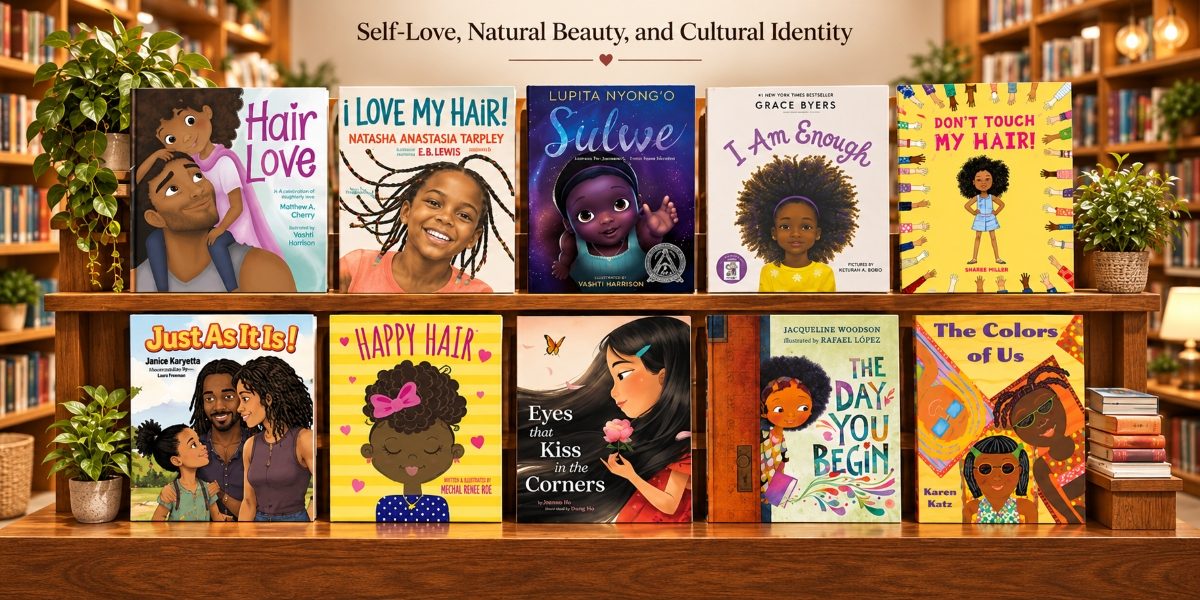

My favorite children’s books about embracing individuality, celebrating natural hair, discovering self-worth, and appreciating the beauty of our differences.
By: Elowen Gray
Children begin developing their understanding of beauty, identity, and belonging long before they can fully explain these ideas. Their experiences at home, interactions with classmates, and exposure to different cultures influence how they see themselves and others. Literature plays an important role in this process, offering stories that encourage confidence, challenge narrow beauty standards, and introduce young readers to different perspectives. Among the many children’s books exploring these subjects, certain titles stand out for their thoughtful storytelling and meaningful representation. These ten personal favorites approach self-acceptance through family relationships, natural hair, cultural heritage, and the everyday experiences that shape a child’s sense of identity.
In Hair Love, Matthew A. Cherry explores the relationship between a young girl named Zuri and her father as he attempts to style her natural hair for a special occasion. What begins as a simple parenting challenge becomes an affectionate story about patience, encouragement, and family connection. Illustrated by Vashti Harrison, the book celebrates natural Black hair while recognizing the importance of parental support in building confidence. A similar relationship between hair and cultural identity appears in I Love My Hair! by Natasha Anastasia Tarpley. Through Keyana’s nightly hair-care routine with her mother, the story introduces the beauty and versatility of African American hairstyles. Both books demonstrate how ordinary family moments can become meaningful opportunities to nurture pride in one’s appearance and heritage.
While these stories emphasize acceptance within the family, Sulwe by Lupita Nyong’o examines the emotional difficulties that arise when children compare themselves with others. The young protagonist struggles with her dark complexion and wishes her skin were lighter. Through an imaginative journey, she begins to reconsider her understanding of beauty and recognize the importance of accepting herself. Nyong’o draws upon themes connected to her own experiences with colorism, giving the story emotional depth. In contrast, I Am Enough by Grace Byers approaches self-worth through rhythmic language and encouraging reflections. Rather than concentrating on physical appearance alone, it celebrates kindness, individuality, and inner strength. Together, these books address both the insecurities children may experience and the importance of developing confidence that does not depend on comparison or approval.
Self-respect also involves understanding personal boundaries, a subject explored with humor in Don’t Touch My Hair! by Sharee Miller. The story follows Aria, a young girl who loves her natural hair but becomes frustrated when people repeatedly attempt to touch it without permission. Her imaginative efforts to escape unwanted attention create an entertaining narrative while introducing children to consent and bodily autonomy. This emphasis on respect connects naturally with Just As It Is! by Janice Kenyatta, which follows a young African American girl whose parents encourage her to appreciate her natural features, including her hair. Beyond developing a positive self-image, the story emphasizes accepting differences among people from various ethnic and cultural backgrounds. Both books recognize that appreciating individuality requires more than personal confidence; it also involves respecting the identities and boundaries of others.
The celebration of natural beauty takes a particularly joyful form in Happy Hair by Mechal Renee Roe. Through colorful illustrations and playful language, the book introduces a variety of natural Black hairstyles while encouraging children to appreciate their distinctive appearance. Unlike stories built around overcoming insecurity, Happy Hair presents self-confidence as something children can experience openly and enthusiastically. Its emphasis on celebration complements the family-centered messages of Hair Love and I Love My Hair!, creating a broader understanding of how positive representation influences young readers. These books acknowledge that natural hair carries personal and cultural meaning while allowing children to enjoy the freedom of expressing themselves through their appearance.
The relationship between physical features and family heritage receives a more reflective treatment in Eyes That Kiss in the Corners by Joanna Ho. Its young Asian protagonist notices that her eyes differ from those of her classmates, but she gradually discovers how those same features connect her to her mother, grandmother, and younger sister. Through poetic storytelling and expressive illustrations by Dung Ho, the book transforms a physical characteristic into a symbol of cultural identity and generational connection. Like Sulwe, it challenges conventional assumptions about beauty, although its approach centers on family resemblance rather than personal insecurity. Both stories encourage children to reconsider how they evaluate their appearance and to recognize the significance of the characteristics that make them unique.
Questions of identity become especially meaningful when children enter unfamiliar environments. In The Day You Begin, Jacqueline Woodson explores the uncertainty of feeling different from the people around us. Through children who encounter differences in language, family background, and personal experiences, the story examines the vulnerability of entering spaces where belonging does not come easily. Illustrated by Rafael López, the book captures how sharing individual experiences can help establish unexpected friendships. Its message connects with Eyes That Kiss in the Corners, where family heritage becomes a foundation for confidence. While one story emphasizes understanding personal identity through family connections, the other explores how that identity can help children form relationships beyond their familiar surroundings.
A similarly thoughtful perspective on diversity appears in The Colors of Us by Karen Katz. The story follows seven-year-old Lena, who discovers the remarkable variety of skin tones in her neighborhood while preparing to paint a self-portrait. Guided by her mother, Lena begins to understand that the color brown exists in many different shades, each deserving recognition and appreciation. Through accessible storytelling and colorful illustrations, Katz encourages young readers to observe differences without assigning greater value to one appearance over another. The book offers an interesting comparison with Sulwe, which addresses the painful consequences of color-based beauty standards. Where Sulwe explores the emotional impact of these judgments, The Colors of Us encourages children to approach differences with curiosity, understanding, and respect.
What makes these ten books particularly meaningful is how differently they approach the shared themes of self-acceptance, identity, and belonging. Through family relationships, cultural traditions, personal challenges, and everyday discoveries, they show children that confidence develops through experience and encouragement. Their varied storytelling styles also introduce young readers to perspectives beyond their own, creating opportunities for empathy and understanding.
These books remain among my personal favorites because they combine engaging storytelling with thoughtful representations of individuality. Beyond celebrating natural beauty and cultural heritage, they encourage children to recognize their own worth while respecting the differences that make others unique. Together, they offer a lasting reminder that accepting ourselves and appreciating others are essential parts of growing up with confidence, kindness, and a sense of belonging.