
Key Takeaways
- A school cleaning plan should reflect how each space is actually used.
- High-touch and high-traffic areas need more frequent attention than low-use rooms.
- Cleaning, sanitizing, and disinfecting are different tasks with different purposes.
- Clear procedures, safer product choices, and moisture checks support healthier learning spaces.
- Checklists and regular reviews help custodial teams stay consistent without overlooking urgent needs.
A reliable campus cleaning plan is more than a list of chores completed at the end of the day. It is a practical system for protecting learning time, responding to busy areas, and keeping classrooms, cafeterias, restrooms, and shared spaces ready for students and staff.
Schools that need added capacity can also evaluate cleaning for educational institutions from Big League Clean as a practical example of customized support for schools, daycare centers, and universities. The company offers cleaning plans tailored to classrooms, cafeterias, gyms, common areas, schedules, and facility priorities, with service in Denver, Boulder, and San Diego.
Why a Daily Checklist Is Not Enough
Every campus has a different rhythm. A kindergarten hallway may require repeated spot cleaning after recess, while a rarely used conference room may only require routine service. Cafeterias face food residue and spills, gyms handle sweat and shared equipment, and offices often require quieter cleaning around work schedules. A useful plan accounts for foot traffic, shared surfaces, seasonal illness, special events, and the need to avoid disrupting instruction.
Start With a Space-by-Space Walkthrough
Before assigning tasks, walk the full campus with custodial staff, administrators, and maintenance personnel when possible. Record conditions instead of relying on assumptions.
- List every major area, including classrooms, restrooms, hallways, entrances, kitchens, athletic spaces, offices, storage rooms, and dorms if applicable.
- Note how often each area is used and when traffic is heaviest.
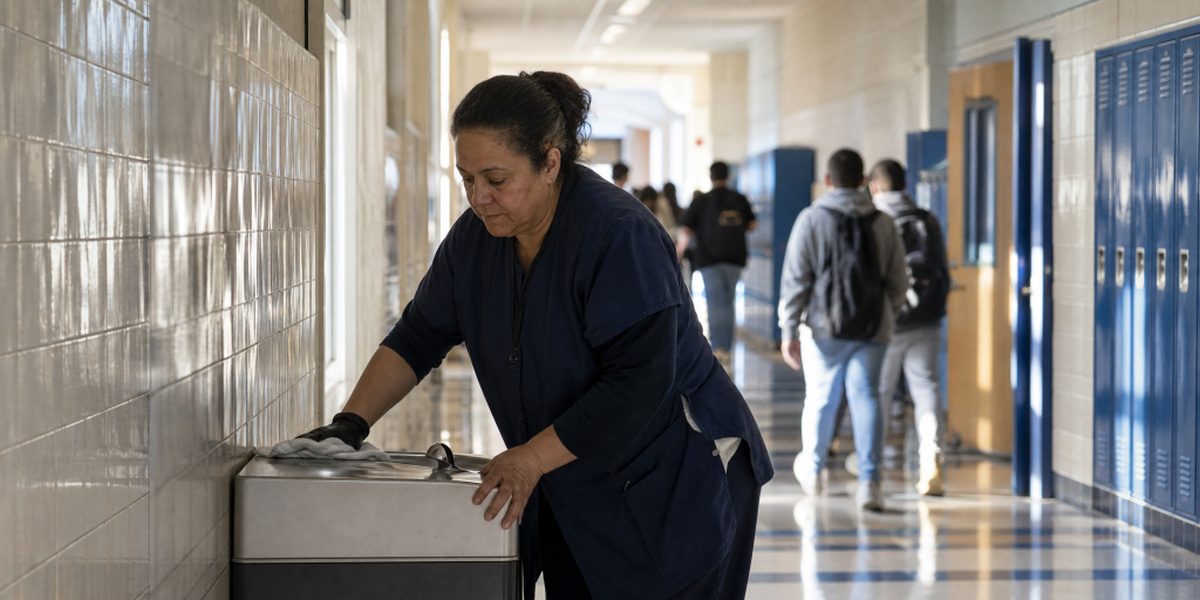
- Identify high-touch points such as door hardware, railings, faucets, desks, keyboards, and shared learning materials.
- Flag concerns such as food debris, dampness, odors, dust, clutter, worn flooring, or overflowing waste.
- Ask teachers and staff where problems recur, especially after lunch, during recess, after practices, or at community events.
Divide Work by Frequency
Daily Tasks
- Remove trash and food waste, clean restrooms, and restock soap, paper products, and other essentials.
- Spot clean floors, walls, desks, and entry glass.
- Address spills immediately and wipe frequently touched surfaces as needed and per school policy.
- Check cafeterias, main entrances, and busy hallways between major transitions.
Weekly Tasks
- Dust vents, ledges, shelving, blinds, and hard-to-reach surfaces.
- Detail classroom corners, lockers, stairwells, storage areas, and shared equipment.
- Inspect supplies, floor equipment, dispensers, and carts for damage or shortages.
Seasonal or Periodic Tasks
- Deep clean carpets and hard floors during breaks or low-occupancy periods.
- Wash interior windows and glass doors, and clean behind movable furniture.
- Review moisture-prone spaces after storms, renovations, schedule changes, or campus expansion.
Know When to Clean, Sanitize, or Disinfect
Cleaning removes dirt, dust, debris, and many germs. Sanitizing reduces germs to a safer level. Disinfecting kills specific germs with an appropriate product. Routine cleaning is essential; disinfecting should be used when needed, such as after bodily fluids or during illness. Staff must follow product labels, including dilution, contact time, ventilation, and PPE. The EPA advises careful handling, especially for children more sensitive to these products.
Choose Products and Procedures Carefully
Select products based on the task, surface, and occupants of the space. Store chemicals in secure locations away from students, never mix products, and keep original labels intact. When suitable for the job, consider products that meet recognized safer-ingredient standards. Train staff to use measured dilution systems rather than estimating amounts, which can reduce waste and help avoid residue or strong odors.
Build Cleaning Around the School Day
Schedule loud equipment, detailed classroom work, and floor care after classes or during planned breaks. Daytime attendants can handle spills, restroom checks, entrance mats, and cafeteria resets without waiting until evening. Coordinate gym, locker room, and athletic-area cleaning with practices and games. Build extra time into the schedule before and after concerts, testing days, parent nights, and community events.
Give High-Traffic Areas Extra Attention
Entries collect moisture and outdoor dirt. Restrooms require recurring checks for cleanliness, supplies, and slip hazards. Cafeterias need fast food-waste removal and floor attention between meal periods. Libraries and computer labs require careful cleaning to protect books and electronics. Use traffic patterns to decide where to place supplies, floor mats, attendants, and the most frequent inspection points.
Include Indoor Air and Moisture Checks
Dust, persistent odors, condensation, water stains, visible mold, and musty smells may indicate a building issue rather than a simple cleaning problem. Custodial staff should promptly document and report leaks, standing water, blocked vents, and damaged surfaces, rather than attempting repairs outside their training. The CDC’s everyday infection-prevention actions for schools also reinforce the value of routine cleaning for frequently touched objects and immediate cleanup of visibly soiled surfaces.
Train Staff and Use Checklists Wisely
Training should cover cleaning methods, chemical labels, contact times, PPE, equipment operation, spill response, pest sightings, injuries, and maintenance reporting. Repeat it whenever products, equipment, building layouts, or procedures change.
Create separate checklists for classrooms, restrooms, cafeterias, offices, and athletic spaces. Include room for missed tasks and urgent issues, then use supervisor spot checks to confirm results. Checklists create consistency, but staff should still use judgment when a spill, an illness concern, a supply shortage, or a crowded event changes priorities.
When to Consider Outside Cleaning Support
Outside help may make sense when staffing gaps, a growing campus, one-time deep cleaning, summer work, or special events exceed internal capacity. Before hiring a provider, ask whether it can work around class hours, train and supervise employees, document inspections, handle urgent requests, cover multiple buildings, and clearly define the scope of work, supplies, schedule, and pricing.
A Simple 30-Day Starting Plan
- Week one: Walk the campus and map spaces, traffic patterns, and recurring problems.
- Week two: Assign daily, weekly, and periodic responsibilities by area.
- Week three: Train staff and test the schedule during a normal school week.
- Week four: Review feedback, inspect results, and adjust staffing, timing, or supplies where needed.
Keeping School Campuses Clean and Ready for Learning
A strong school cleaning plan does not need to be complicated. It needs to fit the building, the school day, and the people using each space. Clear priorities, trained staff, thoughtful product choices, and regular review can help campuses maintain cleaner, more dependable learning environments.