
By Nathaniel Cross
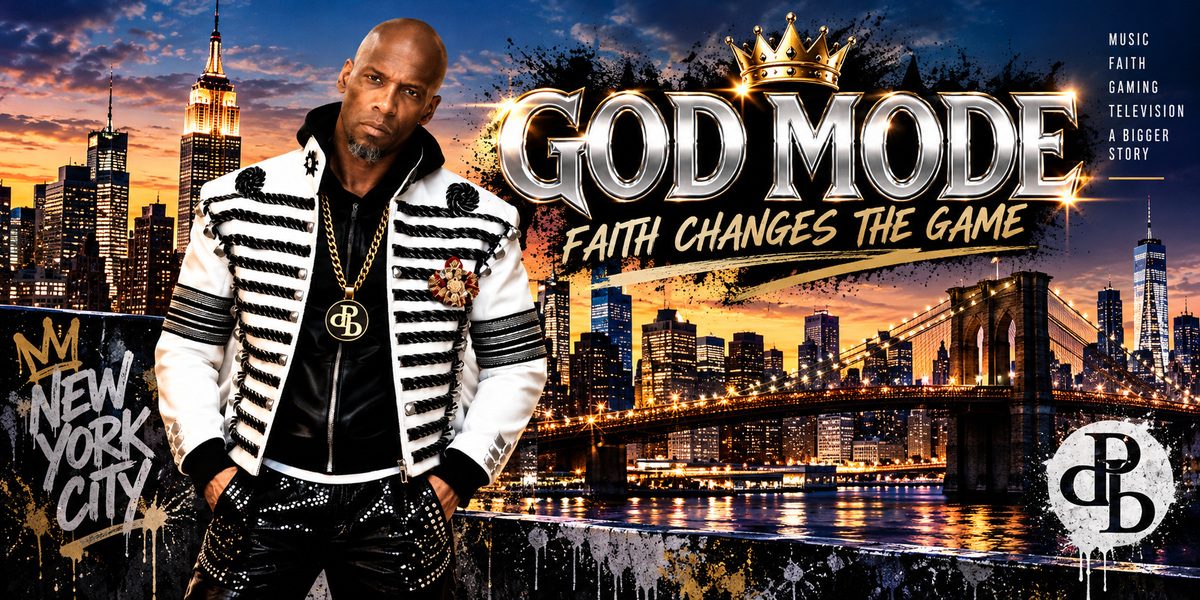
There is something inherently fascinating about a Christian rapper taking the phrase “God Mode”, a video game cheat code that essentially makes your character invincible, and transforming it into a full-blown declaration of spiritual empowerment. It’s a concept that sounds simultaneously brilliant, ridiculous, inspirational, and potentially disastrous.
And somehow, DPB manages to make it work.
Mostly.
“God Mode,” featured on the veteran Christian hip-hop artist’s 2026 album Undefeated, is an exercise in absolute conviction. Originally released in 2022 and receiving renewed attention through DPB’s latest album campaign, the track is loud in its messaging, unapologetic in its religious imagery, and almost aggressively uninterested in subtlety.
Which, depending on your tolerance for motivational Christian rap, could be either its greatest strength or its most exhausting quality.
Let’s talk about the concept first, because it’s easily the most interesting thing happening here.
In gaming, God Mode means you’re essentially unstoppable. Your health bar doesn’t matter. Enemies can’t touch you. You’re operating outside the ordinary limitations of the game’s universe.
DPB takes that concept and applies it to Christian theology, suggesting that believers already possess extraordinary spiritual authority through their relationship with Jesus Christ.
And then he drops the line that essentially defines the entire record:
“Jesus Christ is the God Code.”
Now, look.
That is an absolutely outrageous lyric.
It’s the kind of phrase that could easily appear on a youth-group T-shirt next to a pixelated cross and a badly Photoshopped game controller.
But here’s the thing: within the context of the song, it actually works.
The phrase is memorable, conceptually consistent, and immediately communicates what DPB is trying to accomplish. It’s a little corny, sure, but corniness isn’t automatically a musical failure. Sometimes an artist commits so completely to an idea that its inherent absurdity becomes part of the appeal.
And DPB commits.
Completely.
The song operates at the intersection of hip-hop braggadocio and evangelical worship. Where a conventional rapper might boast about money, status, physical dominance, or lyrical superiority, DPB redirects that confidence toward spiritual authority.
He’s not claiming that he personally possesses unlimited power.
He’s claiming that his faith connects him to something greater.
That distinction gives “God Mode” an interesting philosophical foundation, even when the songwriting occasionally becomes repetitive.
And yes, we need to talk about that repetition.
Because there is a lot of it.
DPB leans heavily into the central hook and its surrounding declarations, emphasizing healing, deliverance, freedom, and revival. The repeated phrases create an almost congregational atmosphere, as though the track is designed to function equally well at a hip-hop concert and a particularly enthusiastic church service.
There’s a legitimate musical tradition behind that approach.
Gospel music has always relied on repetition to build emotional intensity. Hip-hop similarly uses recurring hooks and rhythmic phrases to establish momentum and audience participation.
DPB clearly understands both traditions.
The problem is that repetition needs development to remain compelling. When a track continues reinforcing the same idea without introducing enough lyrical contrast, the listener can begin feeling as though the song is circling its destination rather than advancing toward it.
“God Mode” occasionally runs into that problem.
The production supports the song’s anthem-like intentions, giving DPB a rhythmic foundation for his forceful delivery. Its hip-hop framework and emphatic vocal approach favor direct impact over intricate musical experimentation.
That approach makes sense for the message, but it also limits the track’s unpredictability.
There are moments when a more adventurous arrangement, sharper lyrical imagery, or a few unexpected rhythmic shifts might have elevated the material considerably.
Because DPB has an interesting story to tell.
This is an artist with more than three decades of experience, a background in the Christian rap group D.O.C. (Disciples of Christ), and a career that has survived multiple generations of musical trends.
His longevity gives him credibility.
His conviction gives him personality.
But neither automatically guarantees compelling songwriting.
What makes “God Mode” worth hearing is the tension between those qualities. DPB’s sincerity is unmistakable, and even when his lyrics become overly declarative, there’s something refreshing about hearing an artist who isn’t desperately attempting to disguise his identity for broader commercial appeal.
He’s Christian.
He’s a rapper.
He’s proud of both.
Deal with it.
Interestingly, the song’s central metaphor may eventually extend beyond music. DPB has explored the possibility of developing “God Mode” into a video game and potentially a television project.
And while neither concept should be treated as a confirmed release, the idea makes a surprising amount of sense.
The track already establishes a recognizable universe built around spiritual empowerment, overcoming adversity, and discovering hidden abilities.
In fact, a video game might provide an opportunity to explore those ideas with more nuance than the song itself manages.
Imagine a game where spiritual strength isn’t measured by destroying enemies but by making difficult moral decisions, helping others, and resisting destructive impulses.
That could be genuinely interesting.
And it might give DPB’s central concept the narrative complexity that the record occasionally lacks.
Ultimately, “God Mode” is a song whose ambition is more compelling than its execution is consistently refined.
Its hook is memorable. Its message is clear. Its delivery is passionate. Its fusion of gaming terminology and Christian theology is surprisingly effective.
But the repetitive structure and relatively straightforward musical approach prevent it from reaching the level of artistic sophistication that its concept might support.
Still, there’s something undeniably appealing about DPB’s refusal to compromise.
In a musical landscape overflowing with carefully calculated authenticity, he sounds like someone who actually believes every word coming out of his mouth.
And that counts for something.
“God Mode” isn’t a masterpiece. It isn’t particularly subtle, and it certainly isn’t reinventing hip-hop.
But it is distinctive, energetic, and powered by a genuinely interesting idea.
Sometimes that’s enough to earn another listen.