The Quiet Revolution and How Jay Castle Turns Boundaries Into Identity

A Book That Redefines What It Means to Protect Your Peace

Many books about boundaries tell you to say no. Jay Castle’s Politely Declining the Drama teaches you how to say no without losing yourself or your compassion. Castle approaches the subject as a strategist. He does not just validate the exhaustion of the chronic rescuer. He maps it, names it, and gives it a way out. The result is a field manual for emotional self-governance, built around a five-step method designed to turn vague intentions into repeatable behavior.

This book is not about becoming selfish. It is about becoming healthy. That distinction matters. Castle argues that many people confuse love with unlimited availability. They mistake being needed for being valued. They wear exhaustion like a badge of honor. Then one day they ask a question they were afraid to say out loud. When do I get to live my life?

Politely Declining the Drama answers that question with clarity and discipline.

The Diagnosis: Drama Arrives Disguised as Loyalty

Castle begins with a sharp observation. Drama rarely announces itself with a warning siren. It arrives dressed as kindness. It disguises itself as loyalty, compassion, responsibility, or simply being there for people. It convinces you that saying yes makes you a good friend, a supportive partner, a dependable coworker, or the family member everyone can count on.

But somewhere along the way, generosity becomes an open door policy. People stop knocking. They walk in.

Castle diagnoses the problem with precision. He shows how some people survive by manufacturing chaos. Some relationships exist only because one person keeps sacrificing themselves to maintain them. And some doors should remain firmly closed, not because you hate the people outside, but because you finally respect the peace inside.

The author also distinguishes between caring and carrying. Listening to someone after a difficult day is kindness. Helping them brainstorm solutions is generosity. But repeatedly carrying responsibilities they refuse to manage themselves is something else entirely. It becomes emotional labor that slowly drains your capacity to live.

Castle equips readers to see the difference. He does not shame anyone for past choices. Instead, he explains why people-pleasing develops as a survival strategy. If approval came only after being helpful, agreeable, or responsible, the brain learns that love must be earned. As an adult, this shows up as apologizing for things that are not your fault, saying yes before checking your calendar, and feeling responsible for emotions that belong to other people.

The Framework: P.D.D.A.M. as a Repeatable Decision Protocol

The heart of the book is the P.D.D.A.M. Method. This five-step system gives readers a practical tool for nearly every relationship, conversation, and difficult decision.

The first step is Pause. Drama feeds on speed. The phone rings. The text says Call me right away. Someone walks into your office saying they need a favor. Before you have time to think, you have already agreed. Castle argues that urgency bypasses wisdom. One of the simplest changes you can make is refusing to answer immediately. Take a breath. Tell the person you will get back to them. That tiny delay gives your rational mind time to catch up with your emotional one.

The second step is Discern. Not every problem belongs to you. This sentence sounds obvious, but living it is another story. Discernment means learning to separate compassion from responsibility. A helpful question is this. If I do nothing, who naturally owns the consequences? The answer usually reveals who owns the problem.

The third step is Decide. Castle urges readers to choose according to values, not pressure or guilt. Emotions are important, but they change. Values provide direction even when emotions are loud.

The fourth step is Act. Boundaries sound better than excuses. Castle warns against overexplaining. A respectful answer does not require a lengthy defense. Simple phrases work best. I appreciate you thinking of me, but I will not be able to help this time. Confidence does not require a speech.

The fifth step is Move On. This is the step most people forget. You have said no. The conversation ended. But your mind keeps replaying it. Castle teaches readers to stop carrying the conversation home. When you have acted with honesty and respect, your job is finished. You are not responsible for managing another adult’s emotional reaction.

Castle demonstrates how this method works through case studies. Lisa receives a late-night call from her cousin. Old Lisa would answer immediately. New Lisa pauses, discerns, decides, acts, and moves on. The next morning, her cousin texts that everything worked out. No catastrophe. No damaged relationship. Just another reminder that not every emergency requires your participation.

The Deeper Shift: Acceptance, Small Habits, and Identity

Politely Declining the Drama does not stop at practical techniques. Castle goes deeper. He asks readers to stop negotiating with reality.

One of the hardest truths in the book is this. You cannot change people who do not want to change. Castle invites readers to accept what is true today instead of arguing with it. Acceptance is not approval. It simply means acknowledging reality so you can respond wisely.

He introduces the circle of control. In the center are things you control: your attitude, your words, your choices, your schedule, your boundaries, your reactions. In the outer circle are things you cannot control: other people’s opinions, effort, honesty, the past, the economy, the weather, whether someone likes you. Castle argues that peace grows when your energy stays in the center.

The author also addresses grief. Sometimes what you need to let go of is not a person. It is the fantasy. The fantasy that they will finally become reliable. The fantasy that one more conversation will erase years of unhealthy behavior. Castle writes that potential is inspiring, but patterns are informative. Believe the pattern.

Then comes the quiet revolution. Castle argues that small habits can add up to lasting change. Real transformation usually looks unexciting. It looks like going to bed thirty minutes earlier. It looks like letting a phone call go to voicemail. It looks like saying I will get back to you instead of immediately saying yes. Repeated consistently, these small actions can become the foundation of a different way of living.

Castle also shifts the focus from behavior to identity. Many people try to change what they do without changing who they are. They say things like I need to stop people-pleasing. Castle suggests a different approach. Say instead: I am someone who values peace. I am someone who speaks honestly. I am someone who helps without rescuing. Identity creates consistency. When you know who you are, decisions become clearer.

The Payoff: Peace Is Practiced, Not Found

The final sections of the book focus on what happens when boundaries become part of who you are. Castle argues that peace is not passive. It is practiced. It is not found. It is protected.

He prepares readers for resistance. When you change, relationships change. Some people will celebrate your growth. Some will quietly adjust. Others will push back. Castle writes that people become comfortable with the version of you they have always known. When that version changes, they need time to adapt. Give them grace, but do not confuse grace with surrender.

The author also offers a 90-day peace plan. The first thirty days focus on awareness. The next thirty days focus on strengthening boundaries. The final thirty days focus on living your new identity. This structure shows that Castle understands habit formation. He does not promise overnight transformation. He emphasizes progress through repetition.

The book ends with a Peace Manifesto. It reads like a commitment. I choose peace over performance. I choose honesty over approval. I choose boundaries over burnout. I choose rest without apology. These statements turn abstract ideas into personal vows.

A Field Manual for Emotional Self-Governance

Castle’s authority does not rest on a celebrity platform or a clinical title. It rests on the clarity of his system. He gives readers a vocabulary, a method, and a 90-day plan. Politely Declining the Drama is not just a book about saying no. It is a blueprint for becoming someone who no longer needs to apologize for having a life of their own.

Castle’s emphasis falls on a plan rather than permission, and on a framework rather than comfort. That approach makes Politely Declining the Drama read less like a pep talk and more like a field manual for readers who are tired of living inside other people’s emergencies and want to build a life of intention, honesty, and protected peace.

The Lawyer Behind the Legacy of Arthur Aidala

By: Jeremy Murphy

Arthur Aidala has spent more than three decades in criminal law, representing clients in federal and state courts across the country. He is an attorney, a managing partner, a legal analyst, a radio host, a former prosecutor, a husband, and a father. But when asked what his main focus is right now, Aidala does not start with a celebrity case or a television appearance.

“The big thing that I’m working on right now, honestly, is managing the law firm,” he says.

That law firm is Aidala, Bertuna & Kamins, PC, known for high-profile defendants, complicated cases, and a willingness to step into storms that other lawyers might avoid. As the manager of criminal cases, civil litigation, appeals, and corporate matters, Aidala believes the firm’s strength is not simply its fearlessness, but its range, its honesty, and its culture.

Long before he began defending high-profile clients in New York, Aidala was a prosecutor. As a senior assistant district attorney in Kings County, he tried dozens of felony cases, from murder and rape to burglary and gun cases, during one of the most crime-ridden periods in New York City history.

That experience continues to shape his approach to criminal defense. He understands how prosecutors think because he once stood in their shoes.

“There are prosecutors who wield that power responsibly,” he says. “And then there are those who you have to fight as hard as you can because they are abusing it.”

One case of Aidala’s remains especially personal: a New York City crane collapse. Seven people died, and prosecutors were under enormous pressure to find someone criminally responsible. Aidala represented crane operator William Rapetti, who was offered a plea deal that would have resulted in roughly a year behind bars. Convinced his client was innocent, Aidala immersed himself in the technical details of crane operation. The pressure leading up to the verdict was overwhelming. “The day before was the first time I ever had stomach distress,” he recalls.

When the verdict was finally reached, the courtroom was packed with family members, crane workers, prosecutors, reporters, and spectators. Rapetti was found not guilty, and that acquittal changed his life. “I opened up a door and it was a broom closet,” Aidala recalls. “And I just fell on my knees and I was hysterically crying.”

Years later, Aidala attended two of Rapetti’s daughters’ weddings. Every July 22, the anniversary of the verdict, he still receives a text message from his former client.

Despite the intensity of this work, Aidala rejects the stereotype of the cold, corporate law office. At the firm, there are birthday celebrations, lunch gatherings, and spontaneous legal debates. Lawyers routinely seek each other’s opinions on cases. The firm’s radio studio often becomes an impromptu gathering place whenever a major legal story breaks. Aidala hosts The Arthur Aidala Power Hour every weekday evening on AM970 The Answer. During broadcasts, colleagues regularly join him to discuss important legal developments.

“I try to create an environment that encourages camaraderie and collaboration because I think it’s in the best interests of the clients,” he says.

That culture is how Aidala ensures the firm will thrive long after he steps away. He actively pushes younger attorneys into leadership roles, giving them courtroom opportunities, media exposure, and responsibility. Recently, a federal judge asked why Aidala sat quietly in the back of a courtroom during an important proceeding. The answer was simple. The hearing belonged to one of his younger lawyers. “I don’t want them to have to need me,” he says. “I’m trying to create a little bit of a legacy.” In his view, the ultimate measure of success would be seeing the practice continue decades after his retirement. Attorneys such as Imran Ansari, Michael Jaccarino, and Lino De Masi are examples of the next generation he hopes will lead the firm.

Away from work, Aidala’s greatest joys are remarkably simple: family, friends, and community. He remains close with friends from kindergarten. He speaks passionately about his wife, longtime law partner, and soulmate, Marianne Bertuna, and their children.

Recently, he hosted 50 people at his home for Father’s Day. His father, who is approaching 88, sat surrounded by friends. Across the yard, Aidala’s young daughter splashed into the water. “You pinch yourself about how lucky I am,” he says.

Arthur Aidala has spent decades handling some of the most difficult cases in America. He has represented controversial clients, won appeals in high-profile cases, and secured life-changing acquittals. Yet perhaps his most enduring achievement will not be a verdict or a headline. It may be the culture, community, and legacy he is building at Aidala, Bertuna & Kamins, a place where lawyers care deeply, clients feel heard, and the next generation is already preparing to carry the torch.

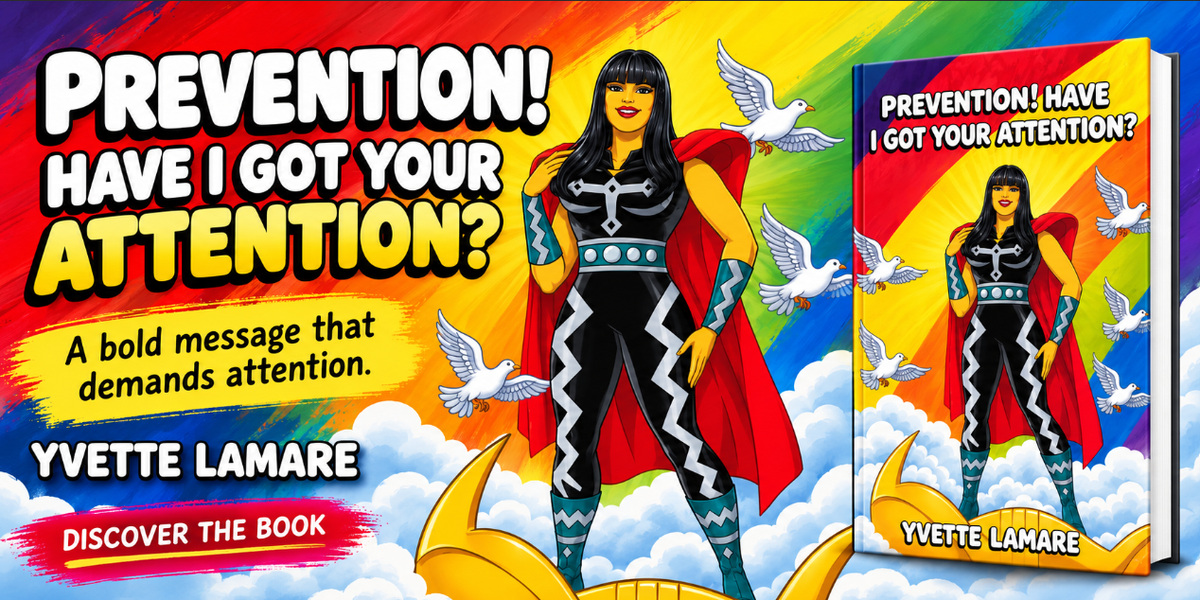
Words That Warn, Comfort, and Call for Change Through Yvette Lamare’s Words To The Rescue

Some poems begin with a loss that refuses to remain private. In Words To The Rescue, Yvette Lamare uses poetry as a public appeal. A way to warn young people about dangerous choices, speak plainly about grief, and ask communities to treat one another with greater care.

The collection ranges across addiction, road safety, bullying, family life, war, prejudice, technology, and peace, with a recurring concern for the human cost of decisions made without thought for others.

Personal Loss Becomes a Purpose

The collection’s emotional centre lies in Lamare’s account of her younger sister, Bronwyn, who died in a drink-driving accident in 1992. Yvette had survived a similar accident in 1982. The contrast between survival and bereavement gave her a reason to speak openly about alcohol and the consequences that can follow a single reckless moment.

Her poem Alcohol emerged in 1994, carrying sorrow and a plea for change. In the preface, Lamare explains how reciting the piece to her daughter’s primary-school teacher encouraged her to write more. What began as an outlet for grief grew into an effort to reach readers, especially young people, before preventable harm enters their lives.

Plain Language, Urgent Subjects

Yvette does not treat poetry as something reserved for private reflection. Her verses address drink-driving, vaping, drug use, addiction, cyberbullying, domestic violence, depression, suicide, and peer pressure with the directness of a speaker who wants the message understood.

Rhyme, repetition, wordplay, and conversational phrasing give many poems the sound of spoken advice rather than distant commentary.

That direct approach is part of the book’s character. Yvette names everyday situations, messages sent online, pressure from friends, a driver reaching for a phone, and asks readers to consider the consequences. Her concern is not limited to individual conduct.

Poems about poverty, children, food, money, politicians, and war widen the frame to include the social conditions that shape people’s lives and the responsibilities shared by families, institutions, and leaders.

Memory, Heritage, and Peace

The book also makes room for tenderness and reflection. Poems about babies, childhood, funerals, grief, and forgiveness sit beside sharper warnings, reminding readers that life holds ordinary joys and losses that can change a family forever. For Bronwyn remembers a beloved sister as a daughter, mother, and lively presence, keeping her more than the circumstances of her death.

Yvette’s Māori whakapapa adds another strand to the collection. In her preface, she writes of her descent from Ngā Puhi and Eruera Maihi Patuone, a Māori leader known for advocating peace and coexistence. The closing piece on Patuone connects family history with the hope that people can choose diplomacy over conflict. This emphasis gives the collection a sense of responsibility that extends to future generations.

Words With a Purpose

Words To The Rescue is a varied, outspoken collection shaped by the belief that language can prompt reflection before a crisis arrives. Its poems do not hide their intentions: they seek to inform, caution, remember, and encourage. At their most personal, they preserve the memory of a sister. At their broadest, they ask readers to consider what kind of world their choices help create.

What Readers Take From the Collection

For readers who value poetry with a clear social purpose, Yvette Lamare’s collection offers a candid invitation to pause, think, and act with greater care. Its verses return to the idea that a single decision can carry lasting consequences for families and communities.

How Sheryl Leysner Turns Forgotten Materials into Spaces That Feel Alive

Before Sheryl Leysner designed interiors, she experienced how deeply a room could affect her mood. As a teenager undergoing knee operations, she spent time in hospitals and rehabilitation centers learning to walk again. She remembers those environments as cold, gray, and depressing. Then she entered a physiotherapy practice with a colorful interior and warm lighting. The difference stayed with her.

That experience gave her a direction. She wanted to become an interior architect and create spaces that could offer others the sense of comfort and optimism she had felt there. Today, that intention informs both her studio and Ruwe Bolster, her custom lighting and furniture label.

Her philosophy, “Designs that light you up,” describes the response she hopes to inspire: people feeling happier and more energized when they enter a space, wanting to stay, and becoming curious about the stories around them.

The decision to establish her own studio in 2011 grew out of another experience: regular visits to Barcelona. Leysner was drawn to interiors that reused vintage furniture and upcycled materials. They felt alive to her, with a character she increasingly missed in her own work.

Starting independently gave her room to change course. She could develop an approach in which existing objects and a building’s past helped determine what came next.

“I never start with a blank page,” she says. “I always study the history of the building and I make an inventory of materials that can be re-used before I start to design.”

This makes discovery part of the design process. Before deciding what to introduce, she considers what is already there and what deserves another use. She describes each building and object as having its own story and energy. Her task is to respond to that character, creating an interior that feels natural while retaining a distinct identity.

Ruwe Bolster became an important outlet for this experimentation. When Leysner launched her studio, the economic climate meant working with limited budgets. Lighting remained a priority, so she began turning ordinary objects into art lights that could give clients something distinctive within their means.

What began as a practical response also expanded her creative freedom. Under the Ruwe Bolster name, she felt able to pursue more expressive forms of upcycling and allow the materials themselves to become a visible part of the work.

OLD NEWS illustrates that approach. For a building that had once been a paper factory, Leysner and her team created large art lights from pink financial newspapers. The choice connected the installation directly to the building’s history. Paper also offered a link to the trees from which it originates, complementing an interior of warm, natural colors and abundant plants.

For Leysner, the work carries a personal message as well. Financial news becomes the material for an object she intends as a reminder of love’s importance. The installation gives visitors several ways to engage: through its appearance, its previous use, and the meaning its designer has placed within it.

Her wider portfolio includes Wonders of Work in Utrecht, CITYSIDE in Amsterdam, W70 in Rotterdam, Pharos in Hoofddorp, and Kiem in Barendrecht, alongside VIA HOTEL and ZOJAZZ STAGE in Amsterdam. Asked to choose the project that best represents her vision, she resists selecting just one.

She sees their differences as essential. Each space needs to fit its client and the people who use it. In her account, that fit is the measure of success, supported by the attention contributed by her team and the client throughout the project.

Her sensitivity to atmosphere also shapes her material and color preferences. She is wary of interiors dominated by artificial finishes, sharp corners, and black or gray, which she feels can make spaces less uplifting. Warmth and lighting are central considerations in how she wants people to experience her work.

Leysner is candid about the demands of running the business behind it. Curating and leading a team remain challenges, and she acknowledges that sales is not her strongest area. She is considering how to strengthen those capabilities, including the possibility of outsourcing client acquisition. Creative confidence, in her telling, coexists with the ongoing work of learning to lead a company.

Her next ambition is international expansion. Alongside bringing Ruwe Bolster’s art lights to more markets, she wants to travel abroad to transform interiors on location. Her proposed approach involves working with local building teams and adapting existing materials on site, allowing each place to contribute to the finished design.

A recently launched project, HEART BEAT, extends her interest in atmosphere into participatory art. Leysner describes the traveling installation as an invitation to experience love, hope, and connection through sound, touch, smell, and sight.

The thread connecting these ambitions reaches back to that physiotherapy practice. Leysner remembers how it felt to enter a room that offered warmth at a difficult time. Through her interiors and art lights, she is working to give others a reason to pause, feel welcome, and stay a little longer.

White Label Link Building: How Agencies Scale SEO Without Scaling Headcount

By Shawn Mars

Ask any SEO agency owner what keeps them up at night, and link building comes up fast. Clients want rankings, rankings still depend on quality backlinks, and earning those links takes time, relationships and steady effort.

That is why more agencies now use white label link building as a quiet but important part of how they deliver. Done well, it lets an agency offer full SEO under its own brand while a specialist handles outreach and placements in the background.

Done badly, it can put client websites at risk. Here is what agency owners should know before choosing a partner.

What white label link building actually means

White label link building is an arrangement where a specialist provider builds links for an agency’s clients, and the agency presents the work as its own. The client never deals with the provider directly.

Reports carry the agency’s branding, communication runs through the agency, and the agency keeps the relationship. The provider handles the slowest parts: prospecting, outreach, content, negotiation and follow-up.

The work usually covers editorial guest posts, link insertions into existing articles, sponsored content and digital PR placements.

Why agencies outsource instead of hiring

Building links in-house sounds simple until an agency tries to scale it. Outreach needs a steady pipeline of publishers, careful vetting, writers editors will accept, and someone to chase placements that go quiet.

Each of those roles costs money, and the workload rises and falls with client demand. A white label partner turns that fixed cost into a variable one.

Agencies pay per placement or package, take on more clients without hiring, and skip the long learning curve of building publisher relationships from scratch. For smaller agencies, that can be the difference between accepting a new retainer and turning it away.

The risk nobody mentions in the sales pitch

Not every provider deserves trust. Some sell links from private blog networks, link farms or sites built purely to sell links. These placements can look fine on a metrics dashboard and still do nothing for rankings.

Google has kept tightening its approach. It ran four spam updates in 2026 alone, the latest finishing in early October, and its spam policies are clear that links built mainly to manipulate rankings can be ignored or penalized.

Because the agency’s name is on the work, any damage lands on the agency, not the provider. One bad batch of links can cost a client relationship that took years to build.

Five questions to ask before you sign

1. Where do the links come from? Ask for sample placements. Check that the sites publish real content, attract genuine readers and cover topics relevant to the client.

2. Is pricing transparent? A good partner explains what each placement costs and why. Prices should vary with a site’s quality and audience; one flat rate for every link is a warning sign.

3. Can reports be fully white labelled? Reports should carry the agency’s branding and include live URLs, anchor text and publication dates.

4. How are anchors chosen? Repeating the same exact-match keyword is a common cause of trouble. A good partner recommends a natural mix of branded, descriptive and plain-URL anchors.

5. What happens if a link disappears? Ask about replacement policies for links removed within an agreed period.

Quality signals that matter more than metrics

Third-party authority scores are useful shortcuts, but they are easy to inflate and are not Google metrics. Better agencies look at what search engines actually care about.

Does the site rank for real keywords and receive organic traffic? Is the content written for readers rather than for links? Does it link out selectively, or to anyone who pays?

Relevance matters too. A link from a respected publication in the client’s industry often outperforms a higher-authority site with no topical connection.

Making it part of the service, not a bolt-on

The agencies that get the most from outsourcing treat it as part of their SEO strategy. They plan link targets around the pages that matter most to each client, such as service pages, category pages and key guides.

They pace placements so growth looks natural, and they review results monthly against rankings and traffic, not just link counts.

Specialist providers such as Linkuild work this way, scoring every prospect site for relevance and real readership before a placement goes live. Whichever partner an agency picks, the principle holds: the provider does the heavy lifting, but the agency stays in control of strategy and quality.

The bottom line

Link building is still one of the hardest parts of SEO to do well at scale. White label link building offers agencies a practical way to grow, as long as the partner is transparent, selective about publishers and focused on links that hold up over time.

Agencies that choose carefully can deliver stronger results, protect their reputation and spend their own time where it adds the most value: strategy and client relationships.

Zenon Olbrys, CEO of Microf, Makes the Case for “Good Friction” in Consumer Financing

By: Eva Keller

In an industry racing toward instant approvals and one-click financing, Zenon Olbrys makes the case for taking a few extra minutes.

As CEO of Microf, an Atlanta, Georgia-based company providing lease-to-own options for HVAC and water heater replacements, Olbrys sees value in a step that much of the industry is trying to eliminate: a conversation with the customer.

He calls it “good, or necessary, friction.”

The idea is straightforward. A credit approval means little if the customer does not understand the product, is uncomfortable with the terms, or leaves with unanswered questions. A few minutes on the phone can turn uncertainty into understanding, and understanding into a decision.

“That friction is what turns into nurturing,” Olbrys said.

For Microf’s customers, that distinction matters. The company serves homeowners who have been declined by traditional lenders, a group Olbrys estimates represents roughly 40 percent of applicants in the credit environment he described. These homeowners still need heating, cooling, and hot water. A financing decline does not make the need disappear.

Microf looks beyond a conventional credit score, evaluating factors such as cash flow, debt-to-income ratios, and the cost of the equipment relative to household income. Historically, Olbrys said, that approach has allowed the company to approve approximately 70 to 75 percent of applicants, although approval rates have moderated as credit conditions have tightened.

The lease-to-own structure helps make that possible. Microf retains ownership of the equipment during the lease, with ownership transferring to the customer once the applicable purchase requirements are met. That structure allows the company to serve homeowners who may not qualify for a traditional loan.

But it also introduces a product many customers have never used.

“People know what loans are. People don’t know what leases or LTOs are,” Olbrys said.

A homeowner who expected a loan may hesitate when offered a lease-to-own option. That hesitation is not necessarily a rejection of the payment or the terms. Sometimes, it is simply a request for an explanation.

Automation can deliver a decision in seconds. A conversation can explain what that decision means.

For Olbrys, the same interaction also supports better risk decisions. Asking questions, verifying information, and understanding the customer’s circumstances can help the company assess whether the arrangement makes sense for both sides.

“The better you know your customer, the more comfortable you will be that you’re taking a good credit risk,” he said.

Olbrys is not arguing against automation. He recognizes the value of fast decisions and the familiar industry principle that the second-best thing to a quick yes is a quick no. His point is that speed should serve the customer and the business. It should not become the only measure of success.

Microf’s approach leaves room for technology and personal attention. The company is willing to spend time helping homeowners understand the product and helping contractors guide customers through the process.

That conversation has become more important as HVAC replacement costs have risen. Since entering the industry in 2020, Olbrys said, he has seen average system costs increase by more than 50 percent, outpacing income growth for the customers Microf serves.

For contractors, his advice is direct: lead with the monthly payment.

“The question is, is it easier to have a conversation about a $10,000 unit or a $290 a month payment?” he said.

Auto dealers have long understood the importance of the monthly payment. Olbrys believes HVAC contractors should give it the same attention, while clearly explaining the full terms and total cost. A homeowner needs to understand both the commitment and how it fits into the household budget.

In his experience, keeping payments below roughly $300 a month can make the conversation more workable for many customers. The payment is not the whole decision, but it is often where the decision begins.

His broader message to contractors is to keep adapting. In a slower market, homeowners may postpone discretionary remodeling while still needing repairs, maintenance, and essential replacements. Contractors who respond to those priorities and offer a practical payment option give themselves more opportunities to win the work.

“Have the fortitude to keep going,” he said.

“Good friction” is ultimately a business judgment: knowing when an extra step adds value. For Microf, a short conversation can help a homeowner understand an unfamiliar product, help a contractor complete a sale, and help the company make a better risk decision.

Sometimes, taking a few extra minutes is what moves the transaction forward.

Disclaimer: This article is for informational purposes only and does not constitute financial or professional advice. Readers are encouraged to conduct their own research and consult a qualified professional before making any financial decisions.

Marianne Bertuna, A Lawyer Guided by Integrity, Trust, and a Passion for Helping Others

By: Jeremy Murphy

For more than two decades, Marianne Bertuna has built a career defined by versatility, credibility, and an unwavering commitment to serving others. As Executive Partner at Aidala, Bertuna & Kamins, she helps lead one of New York City’s busiest boutique law firms while maintaining a diverse practice that spans Surrogate Court matters, criminal defense, real estate, and wills and estates.

Whether she is protecting an estate from fraud, guiding families through difficult legal issues, or advising colleagues on a challenging criminal matter, Bertuna approaches every case with the same philosophy. “I am fueled by helping others,” she has said. “I appreciate the trust a client places in me, and I will use all of my ability and energy as an attorney to ensure that my client’s trust is well placed.” That commitment has earned her respect throughout New York’s legal community and established her as one of the firm’s driving forces.

A Career That Continues to Evolve

Photo Courtesy: Udo Spreitzenbarth (Marianne Bertuna)

Bertuna devotes much of her practice to serving as Counsel to the Kings County Public Administrator in Brooklyn’s Surrogate’s Court, a prestigious appointment that reflects years of earned credibility. The position centers her in complicated estate matters, involving someone who has died without known next of kin or without family members willing to administer their estate. “My practice primarily became focused on Surrogate’s Court work, as well as real estate,” Bertuna said. “It’s a multifaceted position that keeps me busy every day.”

Bertuna oversees litigation and frequently responds to emergencies involving estate properties. One day may involve multiple real estate closings, while the next day could require immediate action against squatters illegally occupying a property awaiting distribution.

Her office also investigates suspected real estate fraud, ensuring that properties ultimately pass to their rightful heirs rather than individuals exploiting vulnerable situations. “We’re often dealing with situations where someone has tried to improperly take property,” she said. “We’re converting deeds back to the proper owner and making sure everything is done fairly.”

Built on Criminal Defense

Although her practice has evolved, Bertuna says criminal defense will always hold a special place in her heart. “My passion started with criminal defense,” she said. “It was exciting. I loved being in the courtroom every day.”

Representing clients during some of the most difficult moments of their lives taught her to think critically and remain calm under pressure. That courtroom experience serves her well in Surrogate Court, where unexpected emergencies regularly arise. “Being a litigator first prepared me to move quickly and make important decisions,” she explained. “Those skills carry over every single day.”

Her criminal law background also proves valuable when investigating fraudulent transactions involving estates. Earlier in her career, Bertuna handled one of New York’s largest real estate fraud cases during the mortgage crisis, an experience that now helps protect estates from similar schemes.

Beyond the courtroom and the writing desk, Bertuna is equally devoted to giving back. She was a long-time president of the Columbian Lawyers Association, 1st Judicial Department, an association she has remained close with, serving as Chairperson for the Department’s annual Charles A. Rapallo and Justice Antonin Scalia Awards Luncheon. In addition to these vital roles, Bertuna is a Trustee and Member on the boards of the Brooklyn Bar Association and the Kings County Criminal Bar Association, and a former member of the Attorney Grievance Committee of the Appellate Division, 2nd Department. To top it all off, she serves as a board member of the Christian J. Santo Legacy Foundation.

Many Disciplines, One Mission

Along with heading the firm’s Wills, Trusts, and Estates Department, Bertuna continues handling sophisticated real estate matters and remains highly regarded in DWI defense. Recognized among the nation’s top 100 DUI attorneys by the National Advocacy of DUI Defense, she became known throughout New York as an authority on the area of law, teaching legal education courses and advising fellow attorneys.

Her knowledge of real estate began long before law school. “My family has always been in the real estate world,” she said. “I knew how to do a closing before I even became a lawyer.” Today, those skills naturally complement her estate practice, where many matters involve selling property as part of administering an estate. “It really became all of my worlds coming together,” she said.

A Family Firm with Shared Values

Working alongside her husband, renowned defense attorney Arthur Aidala, Bertuna helps lead a firm known for taking on difficult, high-profile cases. She believes their willingness to represent controversial clients stems from a deep respect for the Constitution. “Every American is entitled to a defense,” she said. The firm’s attorneys often accept cases others decline, confident that every story has more than one side. “I’ve always said the minute I become jaded in this profession is when I’ll change careers,” Bertuna said. “That has yet to happen.”

She credits the firm’s collaborative culture as one of its greatest strengths. “We’re a family,” she said. “Our clients know they matter. It’s not just a wheelhouse of rotating cases coming in and out.”

Looking ahead, Bertuna expects Aidala, Bertuna & Kamins to continue expanding its presence, particularly in federal litigation, while maintaining the scholarly, client-centered approach that has defined the firm.

For Bertuna, however, success is found in protecting families, preserving trust, and honoring the responsibility that comes with practicing law. “A lawyer is part of a profession,” she said. “It’s not just a job.”

aidalalaw.com

Disclaimer: This article is for general informational purposes only and does not constitute professional or legal advice. The views and information presented are intended to inform readers and should not be considered a substitute for guidance from a qualified professional.

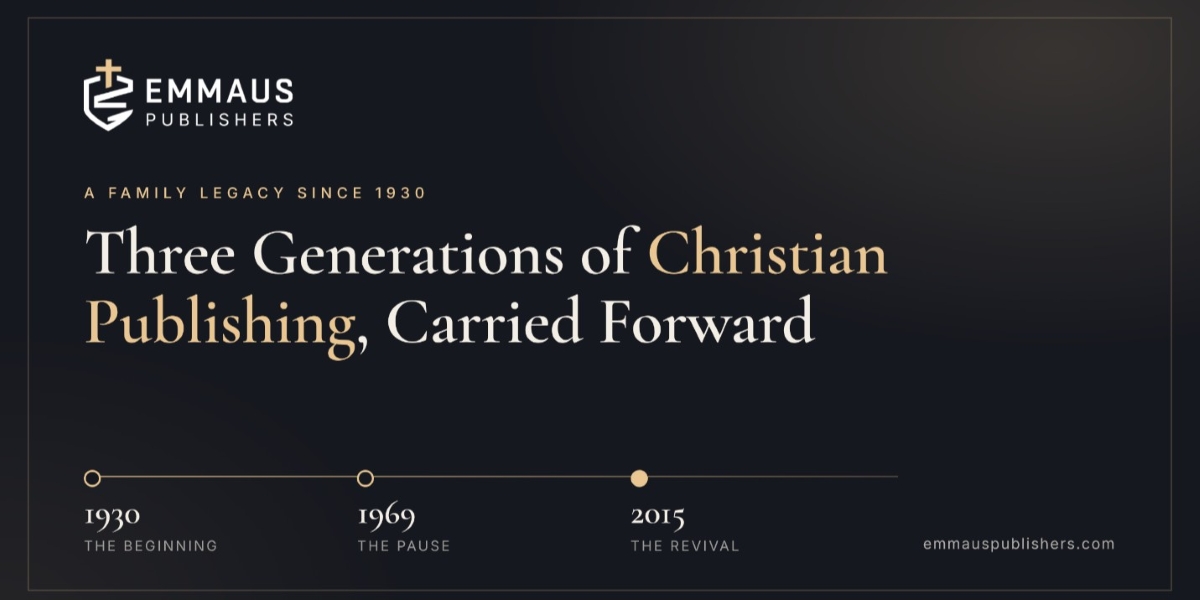
Emmaus Publishers Preserves a Three-Generation Christian Publishing Legacy Dating Back to 1930

Founded by the beloved grandparents, the historic publishing name continues its journey of faith, family heritage, and Christian storytelling following its revival in 2015.

UNITED STATES, October 12, 2026. Emmaus Publishers, a Christian-focused book publishing company with a family history dating back to 1930, is carrying forward a publishing legacy that began nearly a century ago.

Originally established by the grandparents of its present-day founder, Emmaus Publishers began its journey with a commitment to literature and the written word. The company’s publishing activities were paused in 1969, bringing its original chapter to a close.

In 2015, the publishing name was revived by the family’s next generation, reconnecting its historical roots with the opportunities of modern publishing.

Today, Emmaus Publishers supports Christian authors through professional publishing services designed to help transform manuscripts into books ready for readers.

A Legacy Passed Through Generations

Few publishing stories begin with a family legacy stretching back to the early twentieth century.

For Emmaus Publishers, the year 1930 represents more than a founding date. It marks the beginning of a family connection to publishing that would eventually inspire a new generation.

Although the company’s operations were suspended in 1969, its publishing history remained part of the family’s heritage.

The revival in 2015 represented a renewed commitment to the publishing name and an opportunity to serve a new generation of writers.

Honoring the Past While Serving Today’s Christian Authors

Emmaus Publishers now focuses on helping authors share messages rooted in Christianity, spiritual growth, personal testimony, and inspirational storytelling.

The company provides assistance with book cover design, proofreading, print and eBook formatting, ISBN guidance, and Amazon Kindle Direct Publishing setup.

Its publishing services are intended to simplify the process for both first-time and experienced authors while respecting the individuality of each manuscript.

Emmaus Publishers also guides authors through copyright registration with the U.S. Copyright Office, helping protect each manuscript before publication. Authors retain full ownership and copyright of their work, keeping control of their message and the rights to their book.

Publishing Services for Christian Authors

Emmaus Publishers offers a full range of services to take a manuscript from first draft to finished book:

Book Cover Design, Audiobook Covers & Religious Book Illustration: Covers that make a meaningful first impression in print and on audiobook storefronts, with purposeful artwork that brings stories and teachings to life on the page.

Manuscript Editing, Proofreading & Book Formatting: Careful editing for clarity, consistency, and the author’s voice, followed by carefully composed interiors for print and clean eBook layouts that work across common e-readers.

Paperback & Hardcover Preparation and Publishing Guidance: Production-ready files for each chosen print format, plus clear support on next steps, including ISBN assistance and Amazon KDP setup, so authors can publish with confidence.

Author Branding, Book Promotion & Book Listing Pages: A cohesive author presence and promotional materials, plus optimized book listing pages with A+ Content and editorial review sections that help readers discover the book.

Photo Courtesy: Emmaus Publishers

Making Publishing More Accessible

As part of its current services, Emmaus Publishers offers a Basic Publishing Package priced at $199, providing authors with an accessible starting point for professional book preparation.

The company seeks to help Christian writers work through publishing requirements without losing sight of the personal meaning behind their work.

Photo Courtesy: Emmaus Publishers

A New Chapter of a Family Story

The story of Emmaus Publishers is one of beginnings, interruption, and renewal.

From its original establishment in 1930 to its return in 2015, the company represents a connection between generations and a continued interest in the power of written stories.

As Emmaus Publishers looks toward the future, it aims to honor that history by helping today’s Christian authors bring their stories, experiences, and messages of faith to readers.

About Emmaus Publishers

Emmaus Publishers is a Christian-focused book publishing company with a family legacy that spans nearly a century.

1930: The Beginning

Emmaus Publishers was founded by the grandparents of its present-day founder, beginning a family commitment to Christian publishing.

1969: The Pause

Operations were suspended, but the Emmaus name and the family’s publishing legacy were preserved.

2015: The Revival

The publishing name was revived to serve contemporary authors, renewing the family legacy for a new generation.

Today, Emmaus Publishers provides book publishing assistance, manuscript preparation, cover design, formatting, proofreading, and publishing guidance for Christian and faith-inspired authors.

Get In Touch With:

Emmaus Publishers
Website: www.emmauspublishers.com
Email: Info@emmauspublishers.com
Address: 3750 Gunn Hwy, Tampa, FL 33618
Number: (656) 258 0507

Roberto Henriques Ernesto Webba and the Development of Education, Communication, and Institutional Leadership in Angola

Christian missions played an important role in Angola’s education and social history from the late nineteenth century. Methodist missionaries arrived in Angola in March 1885, establishing schools, hospitals, and churches while also training local leaders. The Methodist University of Angola traces its educational history to this period. It identifies Quéssua among the mission stations established during the early expansion. Its historical account also names João Leão Webba among the Angolan leaders shaped by this mission system. The resulting network became more than a religious structure. It created schools, training programs, publications, and other institutions that connected education with community life.

Roberto Henriques Ernesto Webba developed his professional career within this wider Methodist setting. Born on 1 January 1938 in Xá Muteba, in the Malanje region, he was the fourth of six children. His early education took place at the Quéssua Methodist Evangelical Mission before he moved to Luanda in 1957. There, he completed secondary education at Casa das Beiras College. His later career brought together religious administration, journalism, communication, education, and cultural work. This combination was shaped partly by further training outside Angola. His background therefore reflected the changing role of mission-educated Angolans, who increasingly moved into professional positions beyond the classroom and church.

The family connection to Methodist education extended back to his grandfather, João Leão Webba. Historical material from the Methodist University of Angola identifies João Leão Webba among the early Angolan leaders produced by the Methodist mission system. The family tradition also included Webba’s father, Reverend Teodoro Ernesto Webba, who served within the Methodist Church. This setting placed education at the center of the family’s institutional life. Quéssua was not simply a place where Webba received his first schooling. It was part of a wider Methodist network where schools trained teachers, church workers, and other community leaders. His later work continued through several of those institutional channels.

Webba pursued specialist training after completing his secondary education. During the period from 1974 to 1976, he pursued general journalism education at the Center for Higher Studies in African Literature in Zambia. Between 1977 and 1980, he took part in courses on integrated sociology, psychology, and cybernetics of communication theory at the University of Cambridge in the United Kingdom. The knowledge acquired provided him with formal education in journalism and communication at a time when radio and print were important means of reaching the masses. It was also a period when the country underwent significant political changes. He used his knowledge in the area of communication and administration in Methodist institutions.

He was involved in church communication activities that included information systems and the development of institutional documents. The conferences of the Methodist Church created the need for documentation in order to establish connections between local communities and larger church structures. Webba was responsible for developing communications associated with Annual, Central, and General Conferences of the United Methodist Church in Angola. Thus, his activity was not restricted to religious preaching but to administration in church life. It also presupposed knowledge about the flow of information within churches.

His involvement with media extended to radio and print. Between 1976 and 1977, he produced and coordinated “Echoes of Methodism” on Rádio Ecclesia. The program included a segment known as “Us and the Little Children,” described in the supplied record as the first Christian children’s radio program in Angola. His print work included involvement with O Estandarte, the Methodist Church’s official publication. Research on Methodist education in Angola describes O Estandarte as a communication organ that carried official information and documents to local churches and conferences. The publication also provided space for discussion, religious education, and reports about church activities.

Webba’s work therefore covered more than conventional reporting. He was also involved in producing the annual Methodist Calendar and in preparing other church communications. These publications helped organize information around religious observances, institutional events, and activities. His experience in journalism and communication gave him a role in a system that served both internal church administration and public outreach. The distinction mattered because Methodist institutions had long used education and publishing together. O Estandarte itself had a much older history, having been established in 1933, decades before Webba became associated with the publication. Research on the newspaper also records its role in documenting aspects of Angola’s intellectual and religious life.

Education and social programs were another area of his institutional work. Webba was associated with initiatives involving children, young people, and women. These included Vacation Bible School, a typing school linked to the Evangelical Mission Administration in Luanda, and women’s vocational training. His responsibilities also extended to a clinical center intended to support healthcare assistance and promote sport among Methodist youth. Such programs fit within the wider Methodist pattern of combining religious work with education and social services. The Methodist University of Angola’s institutional history likewise describes the early mission system as one that established schools, hospitals, and churches.

Music formed a related part of Webba’s cultural work. He worked as a choir conductor and was involved in the development of Methodist sacred music. He helped in the compilation of the hymn book “Povo Cantai” and even composed songs such as “Eu Quero Saber.” The music he did was linked to the general function of church publications and performances in preserving religious teachings and cultural identity. In 1985, the Methodist Church of Angola celebrated one hundred years of its mission work in Angola. There is historical information about the Methodist Church noting the 1985 centenary as a significant event in the history of the institution. Webba was involved in organizing musical and promotional elements connected with the celebration.

His institutional activities also extended beyond the Methodist Church. He served as Director of the Documentation and Information Centre of the Council of Christian Churches in Angola, known as CICA. The council was established on 24 February 1977 and brought together Christian organizations around cooperation in areas such as evangelism, pastoral formation, and theological education. His work there placed him within an ecumenical structure rather than a single denomination. The role also continued the pattern seen throughout his career, combining documentation, communication, administration, and religious institutions. His death on 15 July 2015 ended a career that had crossed several areas of Angola’s religious and professional life.

A later state recognition added another date to the public record surrounding his career. During Angola’s 50th anniversary of independence in 2025, the government published a list of people receiving national decorations. Webba appears as number 117 on the official list of honorees. Presidential Decree No. 196/25, dated 23 October 2025, also lists “Roberto Henriques Ernesto Webba, Título Póstumo” among those receiving a decoration. It came ten years after his death, making his name part of the nation’s formal remembrances of the independence era.

The career of Roberto Henriques Ernesto Webba can be seen to extend through various institutional roles. His education brought him into contact with the institutions of the Methodist mission movement, whereas his subsequent journalistic activities and training in communications helped prepare him for his work in radio broadcasting, publishing, and church administration. The addition of education, women’s training, youth work, sacred music, and ecumenical communication made for still more varied institutional activities on his part. His career did not belong solely to one profession but was shaped by the intersections of the institutions of religious education, communications, and administration in twentieth-century Angola.

From Student Editor to Publisher: The Public-Service Thread in Joe Ferullo’s Career

Long careers often reveal their pattern early. For Joe Ferullo, the pattern appears to be a steady pull toward newsrooms, storytelling, and institutions that serve a public purpose, from a student daily in Manhattan to the boards of organizations devoted to media, faith, and community.

The Student Editor

Ferullo is a graduate of Fordham Preparatory School and earned a Bachelor of Arts in political science from Columbia University in 1979. At Columbia, he served as editor-in-chief of the Columbia Daily Spectator, the university’s independent daily student newspaper.

Running a daily paper is an unusually demanding apprenticeship. It requires assigning stories, making editorial decisions on deadline, and leading a team of peers, skills that anticipate the managerial side of his later career.

Writing for a Public Audience

His early professional work was in print. He wrote and reported for Rolling Stone and Hearst newspapers, contributed essays to the New York Times opinion pages on the circumstances of New York’s working class, and wrote for the San Francisco Chronicle on women and politics.

He also shared an Education Writers Association award with Maria Shriver for a report on inner-city schools. And his Village Voice essay on group-home care for adults with special needs, which drew on his brother’s experience, received a national award from the One to One Foundation. Across these projects, the subject is often how institutions shape ordinary lives.

Advising the Next Generation of Media Makers

Ferullo’s service roles extend that interest beyond his own bylines. He has served on the advisory board of the Lawrence Herbert School of Communications at Hofstra University, an academic setting where future journalists and media professionals are trained.

He has also served on the board of advisors for Paulist Productions, a link between media production and faith-based storytelling that foreshadowed his later leadership at the National Catholic Reporter.

Community Commitments

Not all of his board service has been tied to the media. Ferullo has served on the governing board of MEND, an advocacy organization for low-income families in the San Fernando Valley of California. The role reflects a thread present in his writing as well: attention to families and communities who are often absent from headlines.

From Board Member to Publisher

The pattern culminated in his work with the National Catholic Reporter. He joined its board of directors in 2018 and served as a vice chair. In November 2022, he was named publisher and chief executive officer, the unanimous choice of the board following a national search that drew fifty applicants. He led the organization until September 2026.

The path from board member to chief executive illustrates how his service roles and professional career reinforced one another. He understood the organization as a governor before he led it as an executive.

Takeaway

A career in media is usually described by its job titles. Joe Ferullo’s record suggests a second way to read it: through the commitments that persisted between the titles. Student editor, essayist, producer, advisor, board member, and publisher all describe a person who kept returning to the same question: how can media serve the communities that depend on it?