

ALSCO at the U.S. Cybersecurity Summit 2026
Michigan, United States, 2026, ALSCO, also known as ALSCO Today and ALSCO Software, continues to expand its presence in the cybersecurity industry through the development of advanced technologies designed to help organizations protect their applications, networks, infrastructure, and email communications against evolving cyber threats.
As a U.S.-based high-tech company, ALSCO has focused its cybersecurity development on intelligent and adaptive security technologies. Two of the company’s primary cybersecurity products, Secure Gateway® and Email Secure Gateway®, have attracted particular attention as organizations look for more automated approaches to detecting and responding to increasingly sophisticated attacks.
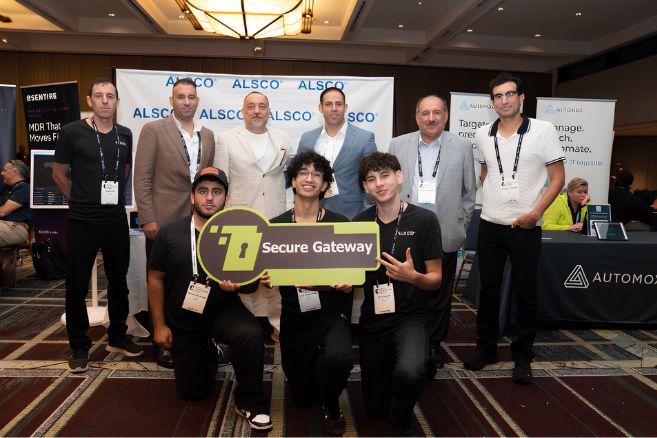
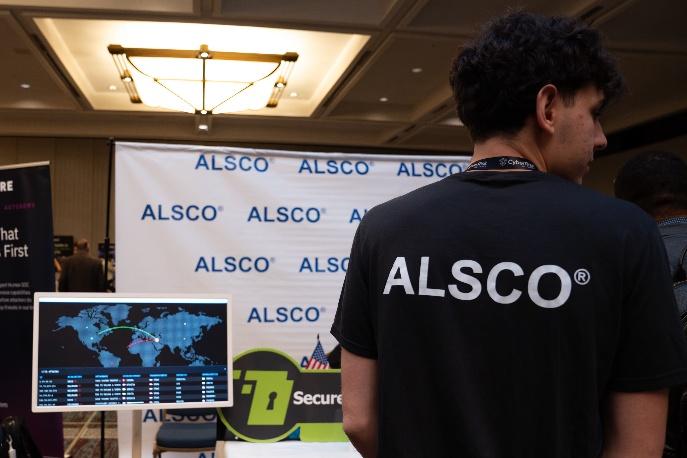
ALSCO has also brought these technologies directly to cybersecurity professionals through its participation in two Detroit Official Cybersecurity Summits, where the company successfully presented and demonstrated its cybersecurity products. According to ALSCO’s event experience, Secure Gateway® and Email Secure Gateway® generated significant interest among attendees who wanted to understand the technologies, see their capabilities in action, and explore their potential use within enterprise cybersecurity environments.
Secure Gateway®: Intelligent Protection for Modern Digital Infrastructure
One of the technologies at the center of ALSCO’s cybersecurity portfolio is Secure Gateway®, designed to protect websites, applications, servers, and digital infrastructure by analyzing traffic and responding dynamically to potential threats.
Rather than depending exclusively on traditional static security rules, Secure Gateway® is designed to analyze real-world traffic behavior and automatically generate adaptive protection rules.
The technology can help organizations address threats including SQL injection, cross-site scripting (XSS), malicious bot traffic, traffic anomalies, suspicious network behavior, and other web-application attacks.
Secure Gateway® also provides capabilities such as real-time traffic analysis, automated response mechanisms, ASN and GeoIP filtering, monitoring, and intelligent rule creation.
These capabilities were an important part of ALSCO’s demonstrations at the Detroit cybersecurity events, where attendees were able to learn more about how intelligent traffic analysis and automated protection could be incorporated into modern cybersecurity architectures.
Email Secure Gateway®: Protecting a Critical Attack Surface
ALSCO’s second major cybersecurity solution, Email Secure Gateway®, focuses on protecting one of the most frequently targeted areas of an organization’s technology environment: email.
Email remains an important attack vector because cybercriminals can use phishing, malicious attachments, impersonation, credential theft, malware, ransomware, spoofing, and social-engineering techniques to gain access to organizational systems and information.
ALSCO developed Email Secure Gateway® to provide organizations with an intelligent security layer for monitoring and protecting inbound and outbound email communications.
The technology is designed to identify potentially malicious email activity while allowing legitimate business communications to continue with minimal disruption.
Its capabilities include intelligent filtering, malware and phishing detection, email traffic monitoring, threat analysis, and protection against suspicious content and communications.
Email Secure Gateway® also supports important email-security and authentication technologies such as SPF, DKIM, and DMARC, which can help organizations strengthen the authenticity and integrity of their email communications.
Strong Interest at Two Detroit Official Cybersecurity Summits
ALSCO’s participation in two Detroit Official Cybersecurity Summits provided the company with an opportunity to move beyond conventional product presentations and engage directly with cybersecurity professionals, technology leaders, business executives, engineers, and organizations responsible for protecting critical digital infrastructure.
At both events, ALSCO successfully presented its cybersecurity technologies and demonstrated the capabilities of Secure Gateway® and Email Secure Gateway®.
According to ALSCO, the products received significant interest from attendees, particularly from visitors who wanted to see how the technologies operated in practical cybersecurity environments.
Discussions focused on areas such as real-time threat detection, artificial intelligence, automated security controls, application protection, email security, traffic analysis, deployment, integration, and adapting defenses to changing cyber threats.
The events also provided ALSCO with an opportunity to hear directly from cybersecurity professionals about the challenges organizations face when implementing and managing security technologies.
For ALSCO, these conversations represent an important part of product development: cybersecurity technology must not only detect threats but also provide organizations with visibility, automation, manageable deployment, and the ability to respond as attack techniques evolve.
U.S. Patents Supporting ALSCO’s Cybersecurity Innovation
ALSCO’s cybersecurity development is also supported by intellectual property in the United States.
ALSCO has been granted three U.S. patents related to cybersecurity technologies, all of which have been approved and issued:
U.S. Patent No. 10,630,721 (US10630721B1)
U.S. Patent No. 10,498,760 (US10498760B1)
U.S. Patent No. 11,777,927 (US11777927B1)
These issued patents form an important part of ALSCO’s technology and intellectual-property portfolio and reflect the company’s investment in developing proprietary approaches to cybersecurity.
Rather than treating cybersecurity simply as a collection of conventional security controls, ALSCO’s research and development efforts have focused on technologies capable of analyzing activity and helping systems respond intelligently to changing conditions.
Protecting ALSCO’s Cybersecurity Technology and Brand
ALSCO’s intellectual-property strategy extends beyond its patents.
ALSCO is the official owner of the Secure Gateway® and Email Secure Gateway® trademarks, establishing these names as part of the company’s cybersecurity technology portfolio.
The combination of patented technology, protected product identities, continued research and development, and real-world product demonstrations reflects ALSCO’s broader strategy of building proprietary cybersecurity technologies rather than relying solely on conventional third-party security products.
Mohammed Kifah and ALSCO’s Technology Leadership
ALSCO’s cybersecurity technology strategy is led in part by Mohammed Kifah, CTO of ALSCO.
As Chief Technology Officer, Mohammed Kifah’s role is connected to the company’s technical direction and continued development of technologies intended to address emerging cybersecurity challenges.
Under this technology-focused approach, ALSCO continues to develop solutions designed around intelligent analysis, automation, adaptability, and practical protection of critical digital environments.
The objective is not simply to respond to known attacks. Modern cybersecurity systems increasingly need to analyze behavior, identify anomalies, recognize emerging patterns, and adapt protection as threats evolve.
That philosophy is reflected in the development of Secure Gateway® and Email Secure Gateway®.
ALSCO’s Presence on Gartner Peer Insights
ALSCO’s growing industry presence also extends to Gartner Peer Insights, where both ALSCO Secure Gateway and ALSCO Email Secure Gateway are currently listed in the IT Security category.
This provides another channel through which technology professionals can find information about ALSCO’s cybersecurity products and review user experiences with the technologies.
The presence of both products on Gartner Peer Insights adds to ALSCO’s visibility as the company works to introduce its technologies to organizations evaluating cybersecurity solutions.
Gartner Peer Insights represents the opinions and experiences of individual end users and should not be interpreted as a Gartner endorsement of ALSCO or its products.
Building Multiple Layers of Cybersecurity Protection
Secure Gateway® and Email Secure Gateway® address different but complementary areas of an organization’s attack surface.
Secure Gateway® focuses primarily on protecting applications, servers, websites, and network-facing digital infrastructure from malicious or abnormal traffic.
Email Secure Gateway®, meanwhile, focuses on protecting business communications and helping organizations identify threats delivered through email.
Together, these technologies represent ALSCO’s approach to multi-layer cybersecurity, where organizations can protect different entry points rather than depending on a single security mechanism.
This becomes increasingly important as attackers combine different techniques. An attack may begin with a phishing email, progress through compromised credentials, and ultimately target applications, servers, or sensitive organizational information.
Security architectures therefore need visibility and protection across multiple layers.
A U.S. High-Tech Company Focused on Cybersecurity Innovation
As ALSCO, ALSCO Today, and ALSCO Software continue developing their technology presence, cybersecurity remains an important area of the company’s high-tech portfolio.
Its three issued U.S. cybersecurity patents, ownership of the Secure Gateway® and Email Secure Gateway® trademarks, participation in two Detroit Official Cybersecurity Summits, and presence on Gartner Peer Insights collectively demonstrate the different areas through which ALSCO is building and presenting its cybersecurity technology.
The company’s summit participation has been particularly important because it has allowed cybersecurity professionals to move beyond reading technical descriptions and interact directly with ALSCO representatives and its technology.
For organizations evaluating cybersecurity products, demonstrations and technical discussions provide an opportunity to examine how a technology operates, how it might integrate with existing infrastructure, and where it could fit within a broader security strategy.
Looking Toward the Future of Cybersecurity
Cybersecurity is continuously changing.
Artificial intelligence, automation, cloud computing, increasingly distributed infrastructure, sophisticated phishing operations, application-layer attacks, and rapidly changing attacker techniques are forcing organizations to reconsider traditional approaches to security.
ALSCO’s technology strategy is focused on this evolving environment.
Through Secure Gateway®, Email Secure Gateway®, its patented cybersecurity technologies, and continued research and development, ALSCO aims to provide organizations with security technologies capable of analyzing activity, identifying threats, automating defensive actions, and adapting as digital environments change.
The significant attendee interest ALSCO reports receiving during its two Detroit Official Cybersecurity Summit appearances also provides the company with direct insight into what cybersecurity professionals are looking for from emerging security technologies.
For Mohammed Kifah, CTO of ALSCO, and the broader ALSCO technology team, that interaction between technological development and real-world cybersecurity requirements remains central to the company’s direction.
As ALSCO moves forward in 2026 and beyond, the company continues to develop and present its cybersecurity technologies to organizations seeking new approaches to protecting applications, infrastructure, networks, and email communications.
ALSCO, also known as ALSCO Today and ALSCO Software, continues its work as a U.S. high-tech company focused on developing patented, intelligent cybersecurity technologies for the evolving digital threat landscape.