
Engaging with Religious Leaders from Around the World and Advancing Taoist Participation in Global Interfaith Dialogue
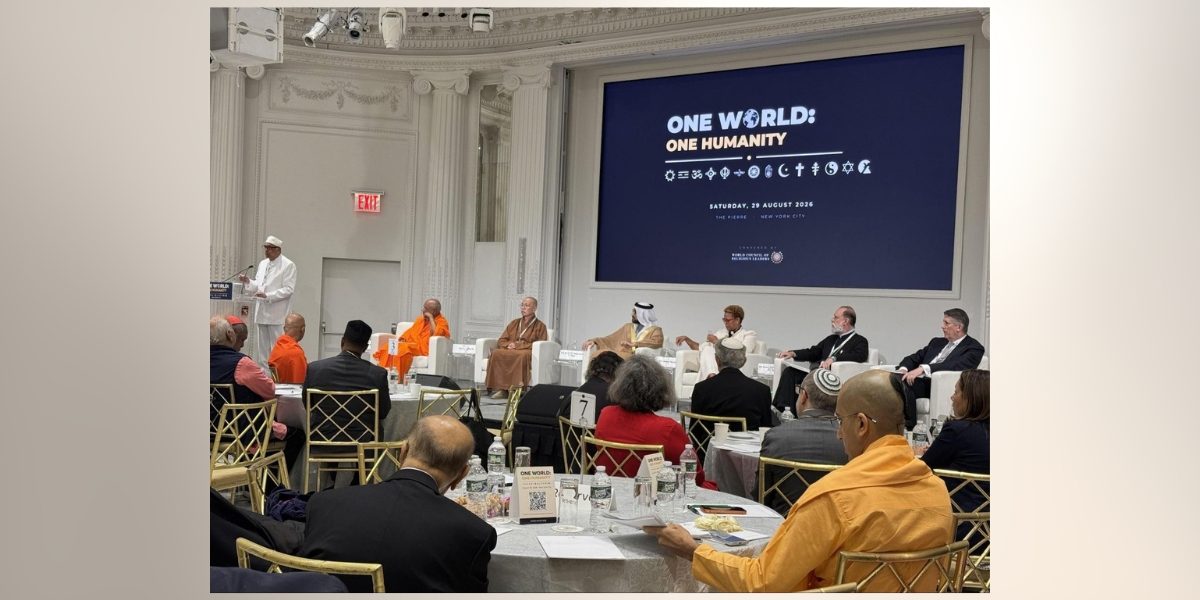
On August 29, 2026, Chengze Wu, President of the Taoist Association of New York (TANY), was invited to attend a gathering organized by the World Council of Religious Leaders in New York City. The event brought together religious leaders and representatives from different countries, faith traditions, academic institutions, and civil society organizations for discussions on contemporary issues including peacebuilding, interfaith cooperation, social responsibility, and the ethical challenges arising from technological development.
The gathering continued the World Council of Religious Leaders’ longstanding commitment to fostering global religious cooperation. In 2000, religious and spiritual leaders from around the world convened at the United Nations for the Millennium World Peace Summit of Religious and Spiritual Leaders. The World Council of Religious Leaders, established in the years that followed, has continued to bring together the spiritual and moral resources of diverse religious traditions to address global concerns including peace, justice, and the protection of human dignity.
From Dialogue to Action: How Religious Communities Can Respond to Contemporary Challenges
A central theme of the gathering was the importance of moving “from reflection to action,” expressed through the principle of “Action, Not Symbolism.”
Participants emphasized that gathering together, taking photographs, and affirming shared values should be viewed only as the beginning of interfaith cooperation. The greater challenge is to translate interfaith dialogue into meaningful action that reaches communities, responds to real-world concerns, and creates lasting impact.
Within this framework, participating religious leaders focused on four particularly urgent areas: peacebuilding and the healing of conflict; collective opposition to hatred and violence directed against religious communities; the role of faith communities in supporting human well-being, public health, and responses to addiction and despair; and the relationship among human dignity, ethics, and technology in an era of rapidly advancing artificial intelligence.
Participants were also encouraged to bring a specific commitment to action back to their own communities and to maintain communication and provide periodic updates, helping transform a single gathering of religious leaders into an ongoing process of social engagement.
Exchange with H.E. Bawa Jain, Secretary-General of the World Council of Religious Leaders
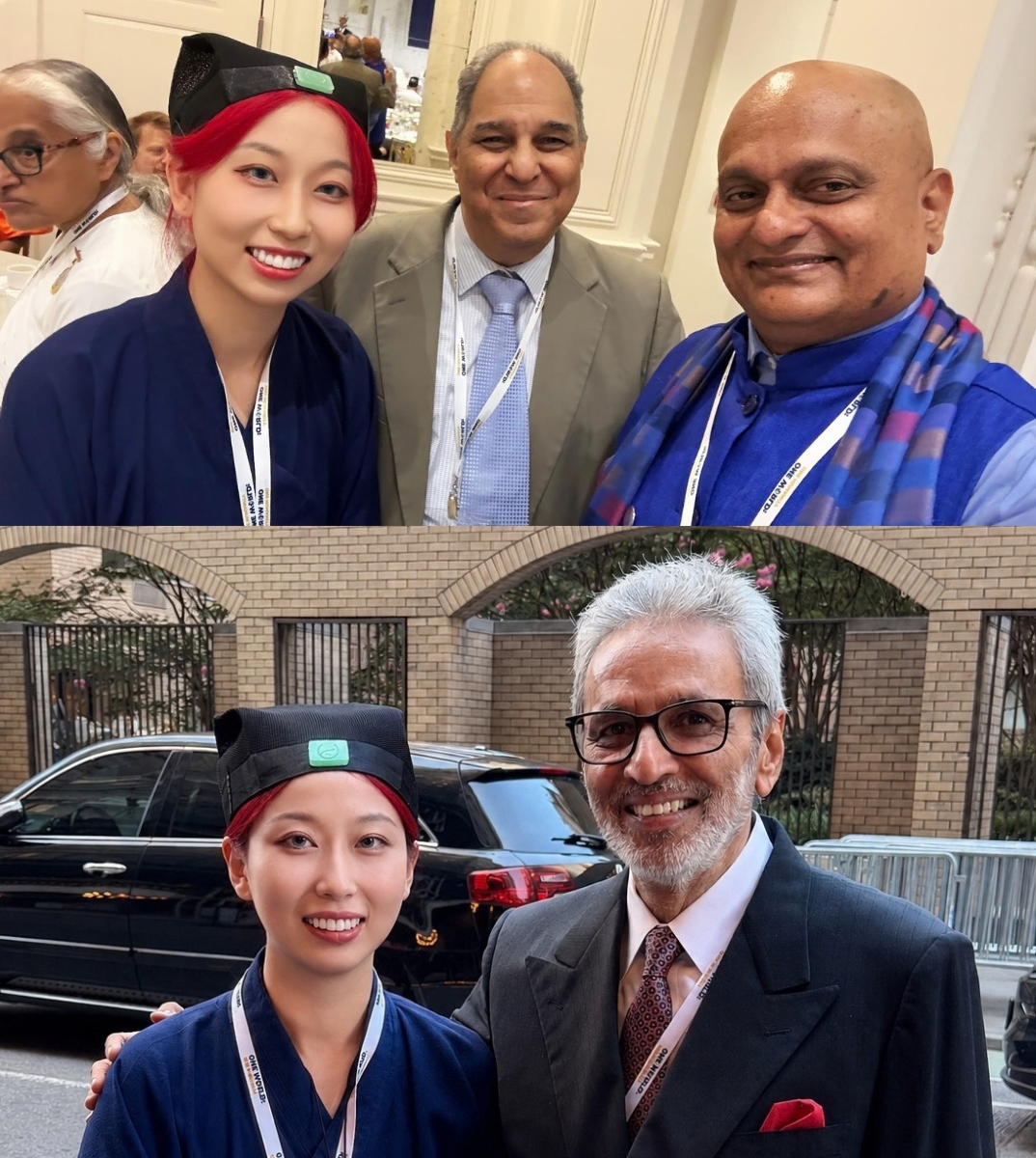
During the event, Chengze Wu, President of the Taoist Association of New York, had a friendly exchange with H.E. Bawa Jain, Secretary-General of the World Council of Religious Leaders.
Bawa Jain has long been active in international interfaith dialogue, peace initiatives, and religious diplomacy. He served as Secretary-General of the 2000 Millennium World Peace Summit of Religious and Spiritual Leaders and has continued over the years to foster dialogue and cooperation among religious leaders from diverse faith traditions around issues of peace, human dignity, and shared social responsibility.
The exchange also provided the Taoist Association of New York with an opportunity to strengthen its connections with the international interfaith community and to introduce participants from different religious traditions to Taoism and the Association’s work in New York.
In-Depth Exchanges with Interfaith Leaders and Scholars of Religion
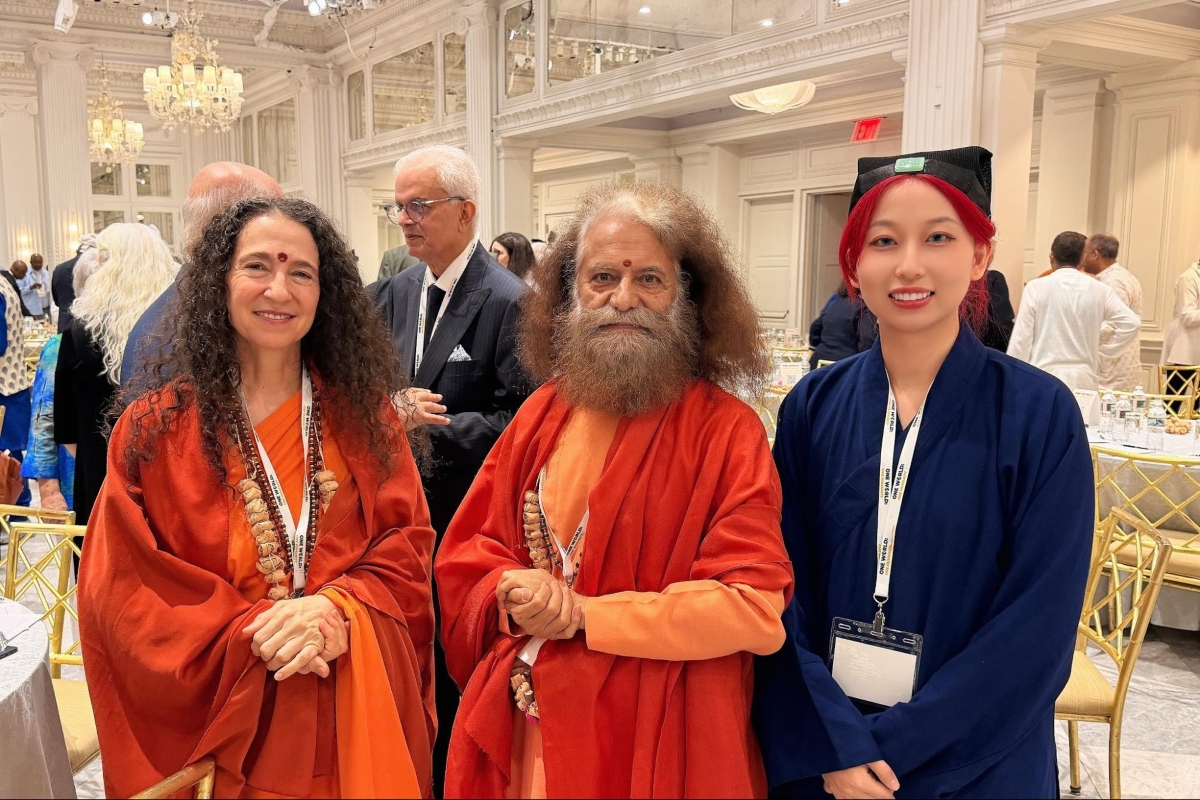
During the gathering, Chengze Wu also engaged in warm and substantive conversations with Guruji His Holiness Dileepkumar Thankappan (Guru Dileepji) and American scholar of religion and interfaith peacebuilder Dr. Frank Kaufmann.
Guru Dileepji is a spiritual leader, Interfaith Minister, humanitarian, and yoga teacher who has long been active in the fields of interfaith engagement, humanitarian work, peace advocacy, and yoga. He has participated extensively in international interfaith initiatives and activities connected with the United Nations. He also holds roles in a number of religious, humanitarian, and nongovernmental organizations and has participated in international exchanges within the United Nations system as an NGO representative, promoting understanding among religious traditions, world peace, humanitarian care, and physical and spiritual well-being.
Over the years, Guru Dileepji has sought to integrate spiritual practice with social action. Through interfaith events, peace initiatives, humanitarian projects, and international exchanges, he has worked to encourage communication and cooperation among people of different cultural and religious backgrounds. His work reflects the idea that religious and spiritual traditions can serve not only as paths of personal cultivation, but also as resources for peacebuilding, social service, and cross-cultural understanding.
Dr. Frank Kaufmann holds a Ph.D. in Religion from Vanderbilt University. He runs several not-for-profit organizations dedicated to religion and peace, integrity in education, social and cultural renewal in America, and responsible US foreign policy. His work in the arena of religion, interfaith relations, peacebuilding, and conflict mediation spans decades.
Dr. Kaufmann combines the academic study of religion with practical peacebuilding efforts. His work has taken him to more than 65 countries and regions and has included engagement in areas affected by conflict and displacement, including Israel and Palestine, India and Kashmir, Croatian refugee camps, the Eritrea–Ethiopia border, the southern Philippines, Sri Lanka and elsewhere.
Throughout his work, Dr. Kaufmann explores how religions can preserve their distinct faith and cultural identities while engaging constructively with one another through dialogue, mediation, and cooperation. This approach closely resonates with this Saturday’s conference emphasis on “Action, Not Symbolism.”
While sitting with Ms. Wu, Guru Dileepji and Dr. Kaufmann expressed a warm and open interest in the Taoist Association of New York and the Taoist tradition. Wu explained some of the beauty of Taoism, and exchanged views with them on mutual understanding among religious traditions, interfaith dialogue, and the role that religious communities can play in contemporary society.
The exchange deepened mutual understanding and laid a positive foundation for the Taoist Association of New York to strengthen its connections with international interfaith leaders, scholars of religion, and related organizations, while bringing Taoist perspectives into a broader landscape of interfaith and cross-cultural dialogue.
Bringing Taoist Voices into New York’s Diverse Interfaith Community
In addition to the guests mentioned above, Chengze Wu engaged in extensive exchanges with religious leaders and representatives from different countries, faith traditions, religious institutions, and sectors of society throughout the gathering.
As a Taoist religious organization rooted in New York, the Taoist Association of New York has continued in recent years to provide Taoist religious services, traditional cultural education, community programs, and cross-cultural exchanges. Participation in the World Council of Religious Leaders gathering provided the Association with an opportunity to introduce the Chinese Taoist tradition within a broader international and interfaith context, while also learning from the experiences of other religious communities in community service, peacebuilding, and public engagement.
Wu noted that different religions have their own distinct histories, teachings, rituals, and cultural traditions. Interfaith dialogue does not mean eliminating these differences. Rather, it is about building understanding on the basis of respect for different traditions and identifying areas where religious communities can work together to serve society, promote peace, and care for life.
For the Taoist Association of New York, participation in this gathering represented not only an opportunity for international interfaith exchange, but also a meaningful step toward building stronger connections for Taoism within New York’s diverse religious community.
Looking ahead, the Taoist Association of New York will continue to remain rooted in the Taoist tradition while preserving its religious lineage and cultural identity. The Association will strengthen exchanges with different religious communities, academic institutions, and civil society organizations; actively participate in the development of New York’s diverse religious community; and bring Taoist wisdom concerning harmony, care for life, and the relationships between human beings and society, and between humanity and nature, into a broader contemporary public dialogue.