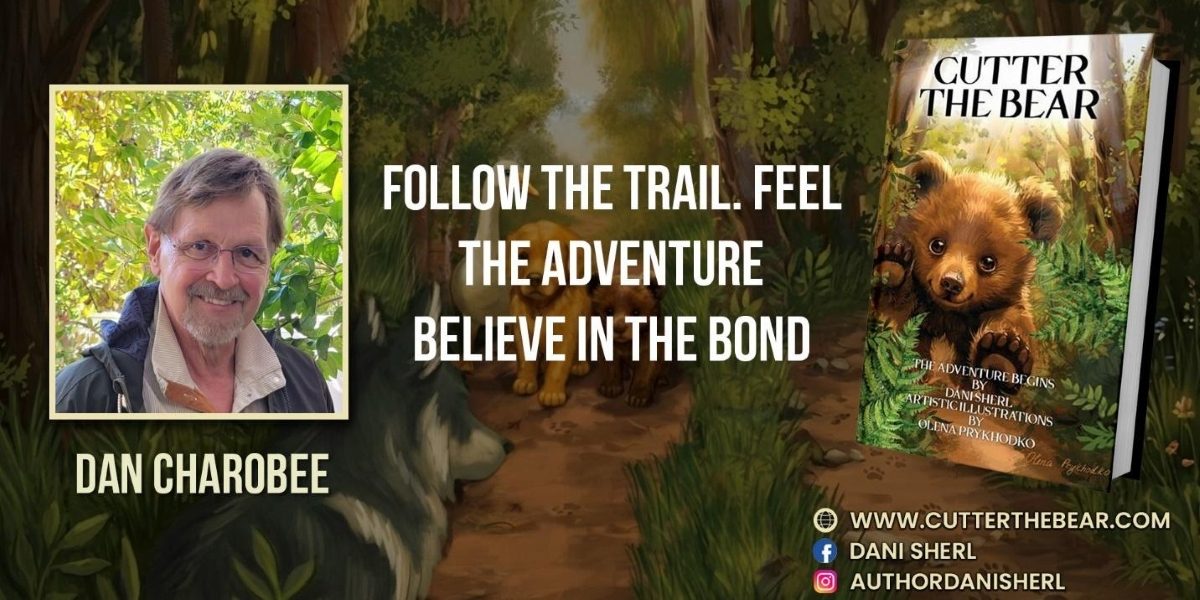

Some stories are written to entertain. Others are written to endure. And then there are stories like Cutter the Bear: The Adventure Begins, born not from ambition, but from love. What started as a simple bedtime connection between a father and his young son has now grown into a meaningful, multi-generational narrative, one that carries warmth, wisdom, and a quiet understanding of the world around us. In an open and heartfelt interview, the author shares how this story began decades ago, not in a publishing house or a structured writing process, but in the quiet absence of home. Back in 1990, while traveling frequently for work, he found himself missing the simple act of reading to his young son. That absence became the seed of something unexpected. Instead of just missing those moments, he created them, writing a story that he could later share, chapter by chapter, with his child. That story was Cutter the Bear.
Years passed. Life moved forward. But stories, when rooted firmly enough, wait. When his grandson reached the same tender age, curious, imaginative, drawn to pictures and animals, the author returned to that unfinished idea and completed it, transforming it into the book we see today. What was once written for a son became a gift for a grandson. And in that quiet continuity, the story found its true purpose. One of the most striking aspects of the interview is how naturally the author connects childhood curiosity to the book’s themes. His inspiration does not come from abstract ideas, but from lived experience, watching children interact with the world. He observes his grandson fascinated by small details: bugs in the ground, squirrels in the yard, geese by the lake. That sense of wonder isn’t taught. It is instinctive. And it is precisely this instinct that shapes the world of Cutter.
In the opening pages, we see this same innocence expressed. Cutter wakes up to a simple moment, a drop of morning dew landing on his nose, yet it feels like the beginning of something grand. He stretches, listens to birds, and thinks to himself, “What a wonderful day to be alive!” It is a small line, but it carries the book’s entire philosophy: adventure does not begin with danger or drama. It begins with awareness. Unlike many children’s stories that turn animals into exaggerated heroes or caricatures, the author takes a different path. He presents animals as they are, intelligent, emotional, and deeply connected to their environment. This approach comes directly from his own upbringing in rural Pennsylvania, where forests, farms, and creeks were part of everyday life. He didn’t imagine these animals. He observed them. And more importantly, he learned from them.
One story he shares in the interview reveals a powerful lesson. As a child, he once kicked at a snake out of fear, only to realize later that the snake reacted defensively, not aggressively. That moment shaped one of the book’s core messages. Fear often comes from misunderstanding. This idea echoes throughout the narrative. The story gently reminds readers, especially young ones, not to judge based on appearance or instinct. Whether it’s a goose, a snake, or another unfamiliar creature, there is always more beneath the surface. Cutter’s world is not limited to his own kind. His friendships cross natural boundaries. A bear befriends a goose, interacts with a dog, and connects with animals from both forest and farm. The author explains that this choice is intentional. It shows a broader truth. Difference does not mean division. In the book, Cutter’s relationship with Sophie the goose is particularly meaningful. Sophie is observant, intelligent, and protective. She notices things others miss, hears what others ignore, and often guides Cutter without overpowering him.
Through these interactions, the story subtly teaches cooperation, not as an idea, but as a necessity. Each character brings something unique. Each has strengths and limitations. As the author puts it in the interview, everyone has strengths and weaknesses, and the focus should stay on the strengths. Before Cutter ever sets out on an adventure, he is grounded in something deeper: family. The story begins not with conflict, but with connection. Cutter wakes his parents, plays with them, and learns from them. His father guides him toward the stream, setting the tone for exploration, while his mother teaches him about their home, the den, and what it means to belong. This is not accidental. The author emphasizes that family relationships are central to the story and will become even more significant in future books. These relationships are not just background. They shape how Cutter sees the world. And that is perhaps one of the most honest elements of the narrative. Before any journey outward, there is always a foundation inward.
Ultimately, The Adventure Begins is not about a single event. It is about a mindset. Cutter is always looking for what comes next. He steps out of his den not because he must, but because he wants to. Curiosity drives him. That curiosity leads to the story’s central conflict: the search for a missing animal. This plotline, as the author reveals, draws on real-life animal behavior, particularly the protective nature of geese. In one memorable real-world incident, a goose defended smaller animals so fiercely that it chased away a human child. That instinct (to protect, to respond, to act) is woven directly into the story. But beyond the immediate adventure lies a deeper layer. The book also touches on changing environments, paths turning into roads, forests being altered, animals adapting to human presence. These are not heavy-handed messages, but quiet realities. The author frames them as part of life’s ongoing adventure. Change can be frightening, but it can also be understood, met, and even embraced.
No discussion of the book is complete without acknowledging its visual depth. The illustrations, created by Olena Prykhodko, are not simply decorative. They are immersive. The author describes discovering her work and being struck by its realism and movement. Her ability to make scenes feel alive adds a powerful dimension to the story. In many ways, the illustrations mirror the author’s vision: grounded, expressive, and deeply attentive to detail. Perhaps the most telling moment in the interview is when the author reflects on the future. This is not a one-time story. It is a series. Each upcoming book will explore different characters more deeply, expanding the world while keeping Cutter at its heart. The adventures will continue, but so will the lessons. And that may be the true strength of Cutter the Bear. It does not try to overwhelm the reader. It does not rush toward a grand conclusion. Instead, it opens a door and invites readers to step through it, one moment at a time.
In the end, what makes Cutter the Bear special is not just its story, but its origin. It is a book written across time, connecting a father, a son, and a grandson. It is a story shaped by real experiences, quiet observations, and a deep respect for the natural world. Most importantly, it reminds us that adventure does not begin somewhere far away. Sometimes, it begins with a single thought: What a wonderful day to be alive.