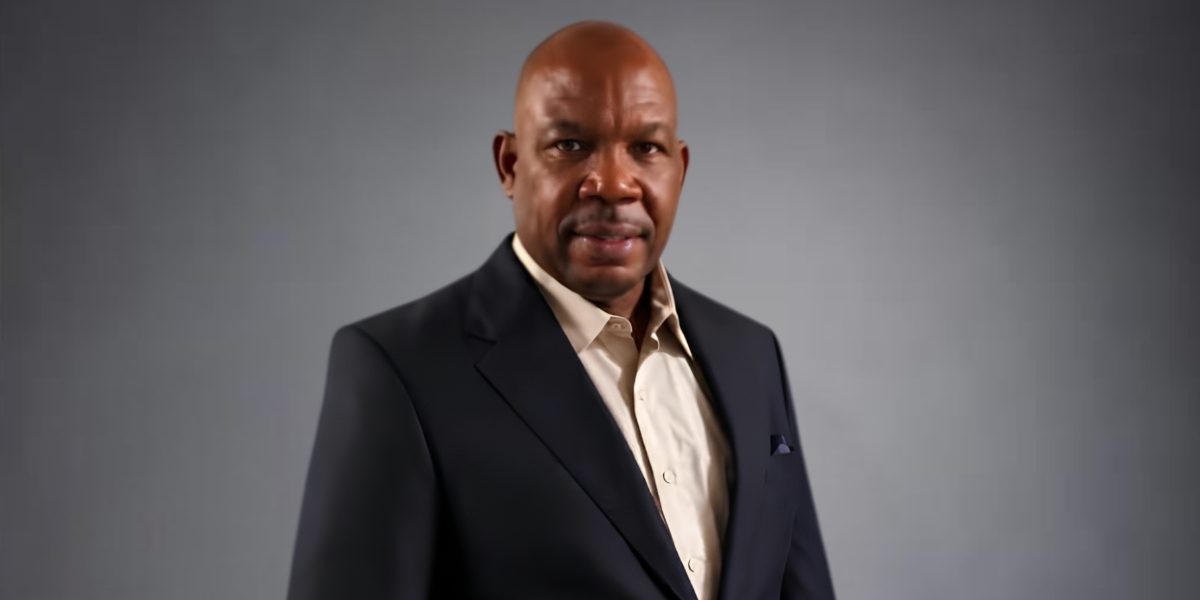

Some authors write about young people from the outside, working from research and interviews. Others write from the room, having sat across from the child who will not answer the question.
David E. Thompson belongs firmly in the second group.
A veteran track and field coach, certified personal trainer, mental health professional, and working therapeutic mentor, he has spent more than thirty-three years with children, adolescents, young adults, and families. His formal training runs through Sports Administration, Personal Training, and Social and Criminal Justice, which is an unusual combination for someone writing about emotional development, and it shows on the page.
He has now published five books. Two of them are training material for mentors, parents, therapists, and providers. Three of them are journals with blank lines, meant for the young person to fill in. Thompson has kept those audiences deliberately separate, and that decision is the most revealing thing about how he works.
The Coach Who Kept Showing Up
The through line in Thompson’s career is repetition rather than breakthrough. Coaching, personal training, and mentoring all run on the same principle: Someone shows up regularly, watches closely, and adjusts.
That background explains the shape of his writing. He does not deal in single insights. He deals in stages, sessions, checklists, and returns. His books are built to be worked through more than once, by different people, at different points, which is closer to how a season is coached than how a self-help book is usually written.
The need for that kind of work is not in dispute. The CDC’s 2023 Youth Risk Behavior Survey found that 39.7 percent of high school students experienced persistent feelings of sadness and hopelessness, and 28.5 percent reported poor mental health.1
The Two Books He Wrote for the Adults
Therapeutics Mentor: Supporting Children and Family, published in two parts by Kinetic Digital Publishers, is aimed at mentors, parents, therapists, providers, and school staff. Its opening position is stated early and returned to often: children should not be viewed as problems to be fixed.
The first principle follows from that. “A child cannot build emotional and social skills if they do not feel safe,” Thompson writes. He is precise about what he means. Safety does not mean the child will never feel uncomfortable. It means the child knows they will not be mocked, embarrassed, pressured, or rejected during the process.
Part 1 covers the beginning of the work: mentor intake, parent intake, the first mentor-parent-child connection, therapeutic alignment, and early signs of social anxiety. Part 2 moves into application, working through public confidence, healthy friendships, self-care, emotional resilience, diagnosis awareness, and graduation readiness.
What separates the two volumes from most books in the category is how much room Thompson gives to documentation. He specifies what a progress note should show: what happened in the session, what skill was practiced, how the child responded, what goal was addressed, what progress was observed, what challenges remain, and what next step is recommended. His reasoning is practical. Notes like these demonstrate that the service “is not random conversation or casual activity,” which matters when a provider agency or an insurance reviewer needs to understand what a mentor actually did. It is the kind of detail that only comes from someone who has filled out the forms.
The child’s own pages read differently. Explaining trauma responses, the text speaks directly to the young reader: “That does not mean something is wrong with you. It means your body learned to protect you.” A grounding worksheet asks for one thing that feels unsafe, one thing that helps, one safe person, one place to calm down, and one sentence to say to yourself. Six short lines. A child who fills in two has still filled in two.
The Three Books He Wrote for the Young Person
The High School Journal: The Journey to the Path to Success, to a Quality of Life takes a structure the title does not prepare you for. Instead of starting at fourteen, it runs in five levels beginning at ages zero to one, then two to three, four to twelve, thirteen to nineteen, and twenty to twenty-seven. Teenagers are asked to look back at stages they cannot remember and consider what got built there, including what their parents carried into the house.
Level four covers the practical skills that often go untaught, from cooking and cleaning to emotional intelligence, and it says plainly that some families never passed them on. Level five deals with the twenties, and offers advice that cuts against the usual script, describing living with your parents while you get on your feet as a smart move rather than a step back.
1 CDC, Youth Risk Behavior Survey, United States, 2023, MMWR Supplement: https://www.cdc.gov/mmwr/volumes/73/su/pdfs/su7304a9-H.pdf
The two companion diaries are split by audience, and Thompson’s voice changes noticeably between them.
The Young Men’s Diaryruns in six segments from twelve to thirty and is written the way a coach talks, opening by telling late-developing boys that they are not behind; they are just getting started.
“Confidence comes from skills, not just vibes.” “Reframe failure: it is not identity, it is data.”
The Young Girl’s Diarycovers a similar span in five segments, moving from study and curiosity into self-worth, communication, and protecting your own energy, and its instructions include a line that sits well next to his clinical work: “Be kind to yourself: You are doing your best, and that is enough.”
The One Thing He Will Not Sell
For a writer working in personal development, Thompson is notably unwilling to trade in easy optimism. Writing about self-talk in the closing chapter of Therapeutics Mentor Part 2, he notes that the goal is not fake positivity, but honest and supportive language that helps the child pause, think, and choose.
Read across all five books, that is the argument. The adults need a structure before the young person can use a page. The young person needs their own language, not a softened version of the adult one. And nobody involved is asked to pretend the work is finished.
About David E. Thompson
David E. Thompson is a mental health professional, therapeutic mentor, veteran track and field coach, certified personal trainer, and author with more than thirty-three years of experience working with children, adolescents, young adults, and families. His training covers Sports Administration, Personal Training, and Social and Criminal Justice. Through mentorship, coaching, youth development programs, and family support services, he works with young people on confidence, emotional awareness, resilience, and purpose.