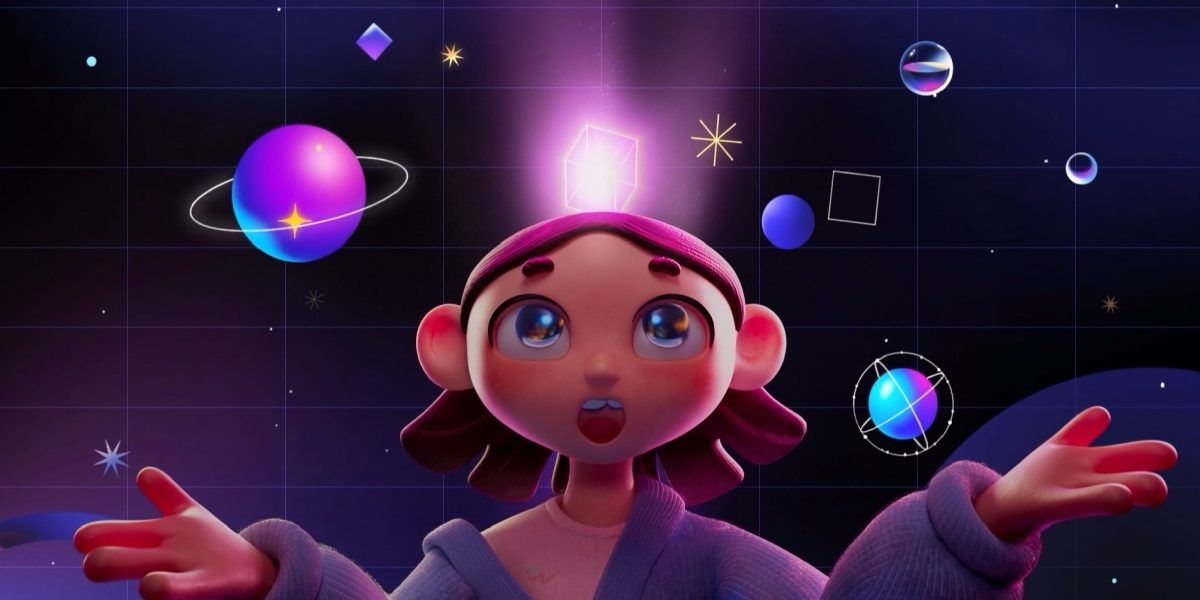

Behind every polished digital image is a process the audience rarely sees. Revisions accumulate, expectations shift, technical problems interrupt creative decisions, and hours of work are compressed into a final result that appears effortless.
In the award-winning motion design work Deadline, motion designer and digital artist Kathy Yu brings that hidden process to the screen. Developed and completed in New York in 2024, the short-form animated project transforms the pressures of contemporary creative production into a surreal visual world shaped by time, repetition, and mounting tension.
Rather than presenting a literal image of a designer working at a computer, Deadline turns psychological pressure into a physical environment. Spaces contract, movements become increasingly strained, and ordinary production demands take on emotional weight. Through animation and motion design, the work gives visual form to an experience familiar to many professionals working in digital creative industries.
“People usually see the final image, but they do not see the many decisions, revisions, and hours behind it,” Yu says. “I wanted to create a project about what that invisible process feels like.”
A Motion Design Practice Shaped by New York
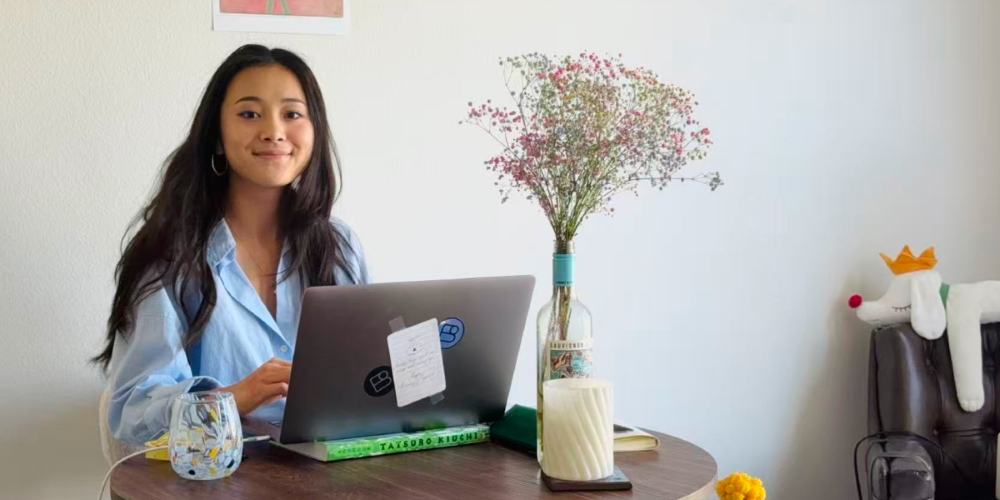
Yu is a Los Angeles–based motion designer and digital artist whose practice spans animation, 3D design, art direction, and moving image. Before relocating to California, she earned an MFA in Computer Arts from the School of Visual Arts in New York. She also holds a BFA in Design from Tongji University in Shanghai.
Her professional practice moves between commercial motion design and independently developed visual work. Across both areas, she is interested in the ways technology, labor, time, and visual systems shape contemporary experience.
Deadline emerged from that intersection. The technical discipline Yu developed through motion design production became part of the project’s artistic language. Instead of rejecting the polished visual tools associated with commercial imagery, she used them to examine the demanding conditions under which digital images are often produced.
The work’s carefully controlled surfaces gradually reveal an unstable world underneath. Its visual precision does not conceal the subject of labor. Instead, that precision becomes a way of exposing it.
Through composition, lighting, scale, color, and movement, Yu created a visual system in which design decisions communicate emotional pressure. The result demonstrates how motion design can function not only as a commercial communication tool, but also as a medium for personal and cultural reflection.
Turning Time Into a Motion Design System
Deadline follows a creative worker attempting to complete an increasingly overwhelming assignment, but the experience is not presented through conventional workplace realism.
In the animated world of Deadline, time behaves less like a number on a clock and more like an atmosphere. Pressure changes the scale and structure of the environment. Characters move through spaces governed by emotional rather than physical logic, while repetition and acceleration reflect the protagonist’s growing anxiety and exhaustion.
The environment gradually becomes an extension of the character’s mental state.
Yu led the project’s narrative and visual development while working across design, modeling, shading, lighting, and compositing. She co-directed the work with Yazhi Zheng, who also contributed 2D motion design. CG artist Xiaoxiang Long developed character rigging and animation, while composer Joe Basile created the original score.
The collaboration allowed character movement, visual pacing, design, and sound to build tension together. The finished piece sits between experimental animation, narrative visual design, and contemporary motion design.
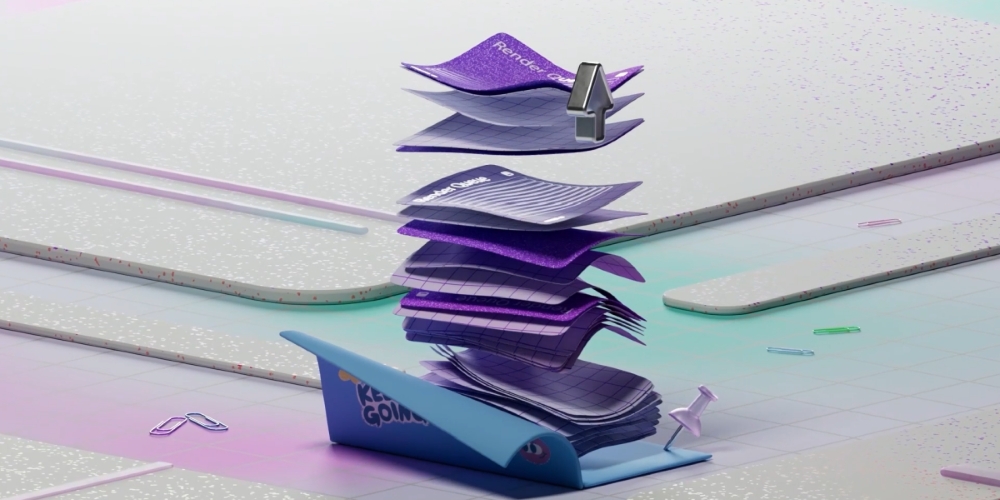
Its visual system is not merely decorative. Composition, scale, lighting, and movement are used to translate psychological pressure into an animated environment. The escalating rhythm allows the audience to experience the deadline not simply as a narrative device, but as a force that reorganizes the character’s entire world.
This approach reflects Yu’s broader interest in system-driven motion design. Rather than treating individual scenes as isolated images, she develops relationships between movement, space, timing, and visual hierarchy. Each element contributes to the emotional direction of the work.
Recognition for Motion Design and Art Direction
Deadline has received recognition from creative and cultural organizations for its motion design, art direction, animation, and visual storytelling.
The work received Gold in Craft: Motion Design at the Collision Awards and Silver in Craft: Art Direction at the Telly Awards. It was also selected by the Girona Film Festival and presented at Reel Ladies Night in Los Angeles on July 30, 2026.
Recognition in both motion design and art direction reflects the range of Yu’s contribution to the project. The work’s impact depends not on a single technical element, but on the coordination of design, lighting, composition, animation, sound, and narrative pacing.
These distinctions position Deadline within professional contexts that recognize excellence in motion design and visual communication. They also reflect the project’s ability to connect technical execution with a broader examination of contemporary creative labor.
The subject of Deadline extends beyond motion designers. Animators, illustrators, editors, designers, visual artists, and other creative professionals increasingly work within systems shaped by rapid revision, continuous communication, and expectations of constant output.
Digital tools have made creative production faster and more accessible. At the same time, they have accelerated the structures surrounding creative work. Projects can be revised immediately, feedback can arrive continuously, and designers are often expected to produce more material in less time.
Deadline asks what happens when technologies intended to support creativity also intensify the pace at which creativity is expected to happen.
Authorship in Contemporary Motion Design
The questions raised by Deadline have become more visible as artificial intelligence and automated production tools enter motion design and other creative fields.
Yu does not approach technology as either a complete solution or an unavoidable threat. Instead, she focuses on the judgment required to transform technical possibilities into intentional visual communication.
In her broader practice, emerging tools may contribute to experimentation or early visual development, but the final result still depends on selection, redesign, composition, lighting, animation, timing, and revision. For Yu, authorship is located in this accumulation of decisions.
“Technology can generate possibilities, but it cannot decide what an image should mean,” she says. “The artist is still responsible for the rhythm, atmosphere, judgment, and emotional direction of the work.”
As software becomes capable of generating more visual material at greater speed, the role of the motion designer may increasingly depend on determining which possibilities deserve attention and how they can be shaped into coherent visual experiences.
This distinction is central to Deadline. The project is technically precise, but its meaning does not come from software alone. It comes from the design choices that shape its visual world, control its rhythm, and determine how pressure is communicated to the audience.
Looking Beyond the Finished Image
Although Deadline emerged from Yu’s experience in motion design, it is not simply a story about being overworked. It examines how contemporary production systems affect attention, memory, imagination, and personal identity.
Every animation, title sequence, advertisement, interface, and digital campaign contains an unseen history of choices, revisions, technical challenges, and collaboration. Audiences typically encounter only the final result, separated from the labor and uncertainty that produced it.
By transforming that process into a fictional animated world, Yu makes an ordinarily invisible structure visible.
The work suggests that the real subject is not the clock itself, but the form of creative life that the clock controls. Through Deadline, Yu asks viewers to look beyond the seamless final image and consider the human decisions, pressure, and labor that made it possible.