

By: Janella Rose
Artificial intelligence is no longer a concept confined to Silicon Valley or research laboratories. It has become a transformative force influencing classrooms, boardrooms, healthcare systems, nonprofit organizations, government agencies, and nearly every sector of the global economy. As technology accelerates at an unprecedented pace, educational institutions face a defining question. How do they prepare students for careers, industries, and leadership opportunities that may not yet exist?
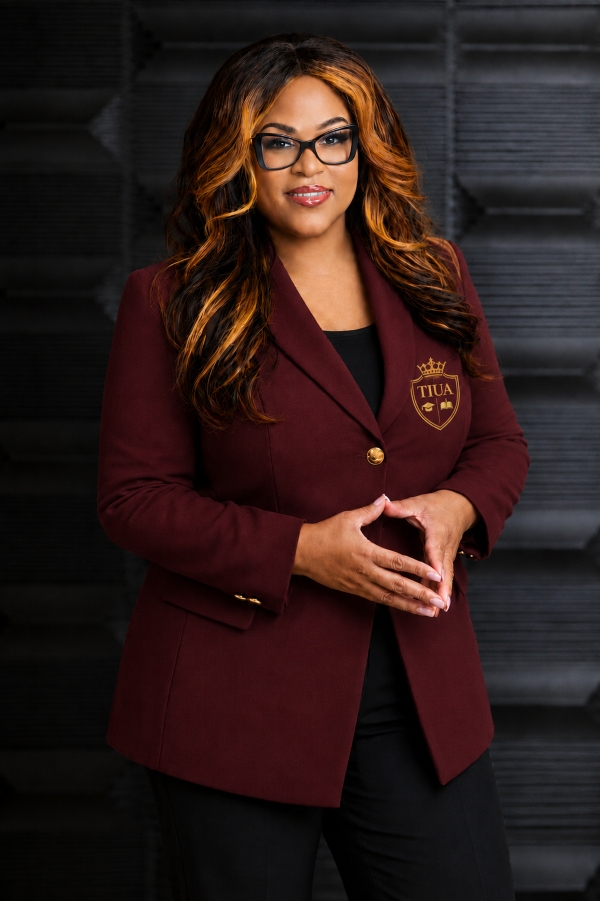
For Dr. Jacqueline Mohair, Chancellor and Founder of Trinity International University of Ambassadors, the answer begins with a fundamental shift in how higher education views its purpose.
“Education has always been about preparing people for the future,” Mohair says. “The difference today is that the future is changing faster than traditional education has been designed to respond.”
That conviction has shaped TIUA’s approach to leadership development, entrepreneurship, artificial intelligence, and workforce innovation. Rather than focusing solely on academic achievement, the university is building an educational ecosystem where students develop practical experience alongside their credentials by publishing books, launching businesses, producing media, creating nonprofit organizations, and learning to integrate artificial intelligence into real world leadership.
Mohair believes universities must move beyond simply awarding degrees. They must become engines of innovation.
Preparing Leaders for an AI Economy
The rapid emergence of generative artificial intelligence has intensified conversations across higher education. Universities are reevaluating curricula, employers are redefining workforce expectations, and students increasingly recognize that lifelong learning will become essential to professional success.
According to Mohair, these changes present an opportunity rather than a threat.
“Artificial intelligence should never replace human leadership,” she explains. “It should expand what leaders are capable of accomplishing.”
That philosophy forms the foundation of the Influence Authority™ Ecosystem, an artificial intelligence powered platform scheduled to enter beta in September 2026. Designed for educators, entrepreneurs, nonprofit executives, corporate leaders, authors, speakers, and coaches, the platform integrates artificial intelligence with leadership development, strategic visibility, publishing, business growth, and organizational capacity building.
Instead of viewing artificial intelligence as a replacement for expertise, Mohair describes it as a catalyst for accelerating human potential.
“When technology handles routine tasks, leaders gain more time to think strategically, mentor others, solve complex problems, and create lasting impact,” she says.
Beyond Traditional Higher Education
While many universities continue to focus primarily on classroom instruction, TIUA has embraced a broader vision that reflects the changing realities of today’s marketplace.
Students are encouraged to graduate with more than academic transcripts. They are expected to develop professional portfolios that demonstrate measurable accomplishments. That may include launching a podcast, publishing a book, creating a nonprofit organization, securing grant funding, developing intellectual property, or building an artificial intelligence powered business.
“The future belongs to builders,” Mohair says. “Degrees remain valuable, but education should also equip students to create opportunities, not simply pursue them.”
That philosophy aligns with the growing demand from employers for graduates who possess creativity, adaptability, communication skills, and technological fluency in addition to academic knowledge.
Human Influence in an Artificial Intelligence World
Despite rapid advances in automation, Mohair believes one competitive advantage will remain uniquely human.
“People still choose to follow people they trust,” she says. “Technology cannot replace integrity, empathy, vision, or purpose.”
As artificial intelligence becomes more integrated into everyday life, she argues that authentic leadership will become even more valuable.
“Innovation creates possibilities,” Mohair explains. “Human influence determines whether those possibilities improve lives.”
That belief has become central to her educational philosophy and informs initiatives that connect leadership development with entrepreneurship, media, and global engagement.
Looking Beyond the Classroom
September 2026 represents a significant milestone for Mohair and her organizations. Alongside the beta launch of the Influence Authority™ Ecosystem, she will participate in leadership conversations during the United Nations General Assembly in New York while continuing to expand the Crown and Confidence Purple Brunch™, an initiative recognizing women who are leading in business, education, government, nonprofit service, and community development.
Although each initiative serves a different audience, Mohair views them as part of one unified mission.
“We are building ecosystems where education, innovation, technology, and leadership work together,” she says. “The goal is not simply to prepare people for employment. It is to prepare them to solve problems, strengthen communities, and lead with purpose.”
A New Definition of Educational Success
For Mohair, the next chapter of higher education will not be measured solely by graduation rates or enrollment numbers. It will be measured by the leaders institutions develop, the communities they strengthen, and the innovations their graduates bring into the world.
“The next era of education has already begun,” she says. “The institutions that embrace innovation while remaining committed to people will define the future.”
As artificial intelligence continues to reshape the global economy, Mohair believes universities have an opportunity to become more than centers of instruction. They can become launchpads for leadership, innovation, and meaningful change.
“Education is no longer just about earning a degree,” Mohair says. “It is about developing leaders who can think critically, innovate responsibly, embrace technology with wisdom, and create solutions that improve lives. Our responsibility is not simply to educate students for today’s workforce. It is to prepare them to lead tomorrow’s world.”
In an age increasingly defined by technology, Mohair remains convinced that the greatest investment any institution can make is still in people. As higher education enters a new era, she believes the institutions that combine innovation, artificial intelligence, and human influence will be the ones that shape the future of education and, ultimately, the future of society itself. Learn more by clicking here https://youtu.be/bvlonWI0Ui4?si=p7CCF6KxffWsqsAV