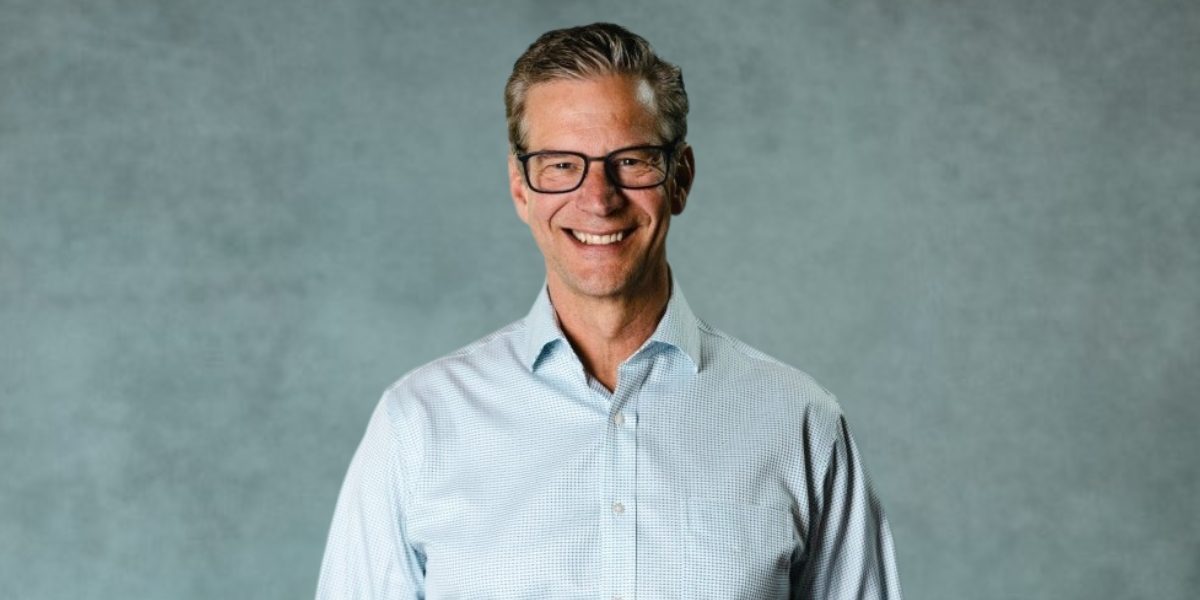

By Natalie Johnson
For experienced executives weighing their next move, the idea of transitioning into mission-driven work often feels like a trade-off: do more good, earn less. Joe Mozden Jr, CEO of Global Learning Exchange and a growth leader with a career spanning healthcare, education, SaaS, and data analytics, argues that framing is wrong. The real opportunity, he says, is a double win. A high-impact role that pays well and changes how you think about work entirely.
“Don’t underestimate how much happier it’ll make you in your job. And don’t think that doing that type of work means you have to take a pay cut,” Mozden says. “You can still have good pay, good growth, and good personal growth opportunities in such a role.” For Mozden, that shift came after years of leading growth in traditional corporate settings. Working across developing countries in Africa and South America, and in US healthcare focused on underserved communities, he found that the roles with the clearest human impact were also the ones that demanded the sharpest business discipline.
Without Margin, There Is No Mission
One of the most common failure points Mozden has observed in mission-driven organizations is the breakdown between passion and financial sustainability. Teams that are deeply committed to a cause can lose sight of the business fundamentals that make that cause viable long-term. “Mission still has to be tempered with the reality that you’re running a business,” he says. “Without margin, there is no mission. Your goal is to change the world through your mission, and the business itself is your funding machine.”
Mozden describes two distinct internal audiences that leaders in this space must actively manage. The first is the mission-passionate team members who are willing to pursue goals at any financial cost. The second is the operationally focused individuals who track every dollar but can lose sight of the organization’s broader purpose. Neither group is wrong, he says, but both need each other. “You need to spend time with the people who are mindful of the mission, reminding them of financial realities. And you need to spend time with your operators, reminding them why you’re doing this in the first place,” Mozden explains. “It’s not that one side is right, and one side is wrong. It’s about making sure each group has an appreciation and awareness for what the other does.”
The Mindset That Separates Growth from Plateau
Across the five industries he has worked in, Mozden has identified that what separates organizations achieving real growth from those that stagnate is a cultural commitment to change, iteration, and honest reckoning with failure. “You have to know where you want to be, where you are today, and what has to change to bridge that gap,” he says. “Once you create that path forward, it is unequivocally going to change. So you have to be open to that, and open to failure. The question is never whether something will go wrong. It’s whether your business model is flawed or your approach was off, and how you iterate to get back on track.”
Mozden also points to the underrated advantage of entering a new industry without deep institutional assumptions. Rather than projecting certainty he doesn’t yet have, he leads with transparency, telling teams openly that he is new to their world and actively looking to learn. In his experience, that approach builds trust faster than false authority. “I think it’d be disrespectful to come in and say I know the exact answer,” he says. “But I will tell you I’m comfortable, I’m going to get ramped up. And I think there’s a way of leveraging your newness to the industry to bring new energy and let people know you’re open to being educated.”
In his current work in South Africa, this approach has opened doors that a conventional business development strategy would not have. His organization’s data and analytics training program aligns directly with South Africa’s government initiative, the Fourth Industrial Revolution, creating partnerships that reach from corporate partners to the President’s office. “Think about who else benefits from the work you’re doing,” Mozden advises. “Not just who your customer is, but who in the broader arena stands to gain. Politicians, foundations, government agencies. That’s where the partnerships in this space often come from.”
A Different Kind of Opportunity
Mozden is candid about the trade-offs. Capital is harder to raise in mission-driven contexts, particularly when work involves developing countries or US government-adjacent healthcare programs. Investor concerns around unfamiliar legal frameworks, government instability, or public agency involvement are real, and timelines for partnerships move significantly slower than in traditional corporate environments.
However, for executives who have spent careers optimizing for profit alone, the shift offers something harder to measure, and, in Mozden’s view, far more valuable. “There are roles that don’t just improve lives in the general sense, they can literally change the trajectory of a person’s life, their family, their village,” he says. “Smarts, motivation, dedication, those are spread evenly across the globe. What’s not spread evenly is opportunity. If you can bring that opportunity to someone who’s never had it, that to me is the ultimate win-win. A great job. And work that is truly impacting the lives of others.”
Follow Joe Mozden Jr on LinkedIn for more insights.