
There is a problem in modern aviation fiction. The cockpits look real. The uniforms shine. But the pilots talk like action heroes, not professionals. The procedures are nonsense. The emergencies are Hollywood magic. And space travel? Most authors skip the engineering entirely. They give you warp drives and artificial gravity. They forget the actual challenge of keeping humans alive on a lunar base or a Mars mission.
Readers know something is missing. Aviation enthusiasts put the book down, frustrated. Space fans feel cheated. Where is the real thing? Where is the author who has actually flown fighters, tested experimental aircraft, captained jumbo jets across oceans, and then sat down to write fiction?
That author exists. His name is Dr. Samuel Don Smith, a man whose real logbook reads like a century of aviation history compressed into one career. And he has written the books that the industry has been waiting for.
The Man Behind the Words
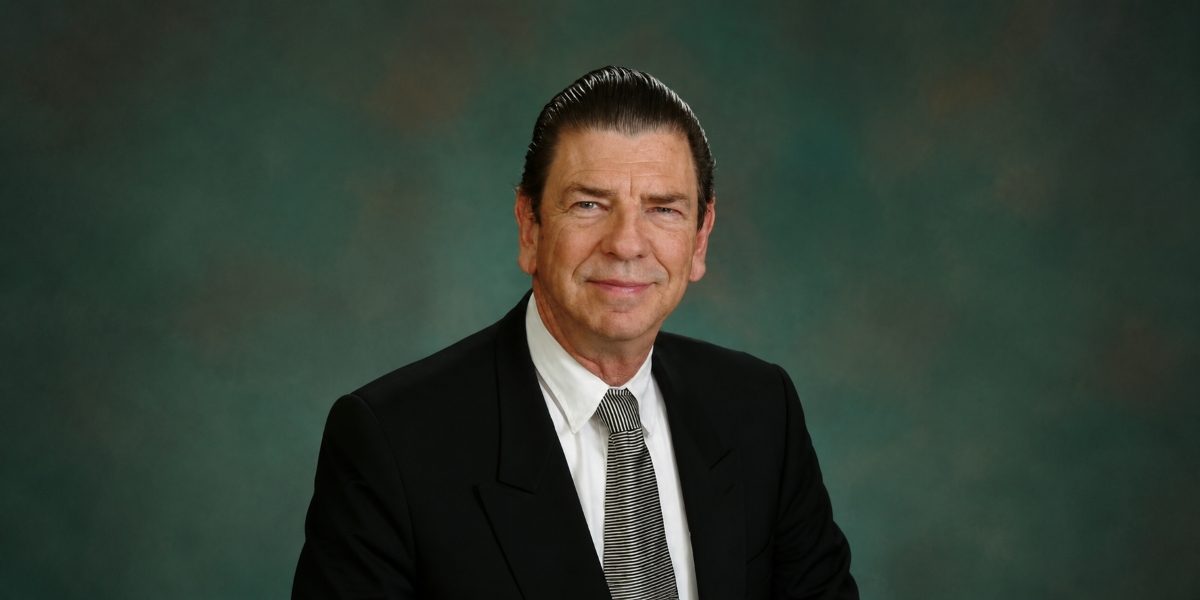
Before we talk about the Volant Legacy series or the memoir Aeromorphosis, we need to understand the person writing them. Dr. Smith did not learn about flying from Wikipedia or YouTube. He learned it from the only seat in an F-102 over Iceland during the Cold War. He learned it from test missions at Tyndall AFB. He learned it from thirty years on Delta Air Lines, commanding Boeing 777s and MD-11s to every corner of the planet.
His aviation journey began in 1963. He served as a Pilot and Aircraft Commander for the Texas Air National Guard. He worked as a Test Pilot at Tyndall Air Force Base. His commercial career at Delta spanned 1977 to 2005, where he served as a Captain and Line Check Airman on the Boeing 737, 757, 767, 777, and the MD-11. That is not a résumé. That is a service record.
But Dr. Smith is not just a pilot. He holds a Ph.D. in Finance and Systems from the University of Houston. He earned a Master of Science in Systems Science and Engineering. His Bachelor of Science in Aerospace Engineering comes from Texas A&M University. This academic background means he understands the mathematics, the systems thinking, and the economics behind aviation and space exploration. He is not guessing. He is calculating.
And then there is his safety leadership. Dr. Smith served as Chairman of the IFALPA Human Performance Committee, where he wrote international policies on cockpit resource management. He chaired the NASA Aviation Safety and Reporting System Advisory Subcommittee. For over fifteen years, he worked as an accredited accident investigator. He has received the FAA Orville Wright Master Pilot Award, three FAI World Speed Records, the USAF Commander’s Trophy, and the FAI Diamond Soaring Badge for gliding.
This is the man who now writes fiction. And that is why his fiction reads like truth.
The Problem with Most Aviation Fiction
The average aviation thriller treats the cockpit as a backdrop for drama. The author does not know the difference between a flameout and a compressor stall. The hero pulls maneuvers that would snap a real airframe in half. The radio calls are wrong. The emergency checklists are pure invention.
For a general reader, these errors might slip by. For a pilot, a flight engineer, or even an enthusiastic amateur, they ruin the experience. The suspension of disbelief shatters on the first page. And the reader walks away feeling disrespected.
Dr. Smith solves this problem completely. He does not write about flying. He writes from inside flying. Every instrument reading, every control input, every decision tree comes from his own muscle memory. When Kevin Connor, the protagonist of the Volant Legacy series, recovers from a spin or executes a flame-out landing, the reader feels the sweat on the pilot’s neck. That is not talent. That is experience.
Aeromorphosis: The Real Story
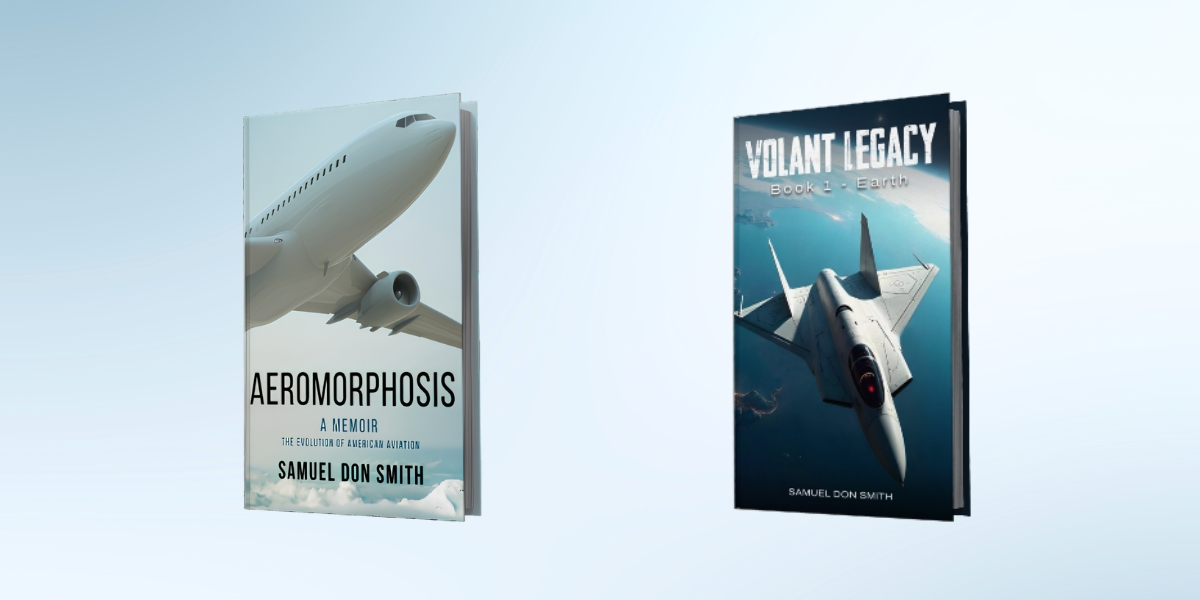
Before exploring the fiction, readers should know about Aeromorphosis. This is Dr. Smith’s memoir, subtitled The Evolution of American Aviation from 1951 to 2021. The book runs nearly five hundred pages. It covers everything from his childhood in Texas, building model airplanes and watching the Ground Observer Corps, to his final flights as a retired captain flying his personal aircraft to Oshkosh.
The memoir is not a dry recitation of dates and duty stations. It is a warm, self-deprecating, and deeply honest account of a life spent in the air. Dr. Smith talks about his failures as openly as his successes. He describes the close calls that taught him respect for the weather, the maintenance errors that nearly cost lives, and the bureaucratic battles that frustrated him for decades.
For anyone who wants to understand the soul behind fiction, Aeromorphosis is essential reading. It also serves as a promise. The author has lived what he writes. He has earned the right to imagine what comes next.

Volant Legacy: Where Realism Meets the Frontier
The Volant Legacy series follows Kevin Connor, a young pilot who inherits his father’s memories and flying skills after a traumatic loss. The premise sounds like fantasy. But Dr. Smith grounds it in such authentic detail that the reader forgets the supernatural element entirely.
Book I: Earth introduces Kevin as he rockets through the Air Force Academy, pilot training, and the legendary Test Pilot School. He flies F-35s, works on black programs, and encounters a secretive organization called the Club, which possesses recovered exotic materials from unidentified sources. The book ends with Kevin poised for astronaut selection.
What makes Earth work is the training sequences. Dr. Smith does not skip the grind. He shows the classroom briefings, the simulator sessions, the checkrides, and the debriefs where mistakes are dissected. The reader earns every promotion alongside Kevin. And when the action comes, it hits hard because the foundation is so solid.
Book II: Luna moves the story to the Moon. Kevin commands Valhalla, the first permanent American lunar base in Drygalski Crater. He oversees habitat construction, ice mining for water and fuel, agricultural experiments, and medical operations. Chinese landers compete for territory. Moonquakes threaten the infrastructure. And the Club’s presence deepens, suggesting that someone is watching humanity’s first steps off the planet.
The lunar sequences are so detailed that they read like NASA planning documents converted into narrative. Dr. Smith has clearly studied every aspect of the Artemis program, in-situ resource utilization, small modular reactors, and closed-loop life support. Yet he never loses the human story. Kevin’s relationship with Janice, a surgeon on the base, develops naturally against the backdrop of isolation and danger.
Book III: Mars, the forthcoming finale, sends Kevin on the first crewed mission to the Red Planet. The Phoenix Mission lands in Hellas Planitia for a two-year baseline stay. Advanced alloys from the Club enable faster transit. Small nuclear reactors provide power. And a partnership with an energy company aims to drill deep into the Martian crust to unlock massive water reserves, potentially enabling terraforming.
The Mars book tackles the biggest questions of space colonization. Is a one-way mission ethical? Who owns the resources of another planet? How much risk should humanity accept in the name of progress? Dr. Smith does not offer easy answers. He presents the tradeoffs with the same clear-eyed judgment that he used as a test pilot.
Why This Matters for Aviation and Space Enthusiasts
The genre of hard science fiction has been shrinking. Too many authors rely on magical technology to solve problems. They skip the hard parts. They ignore the politics, the budgets, the human factors, and the sheer difficulty of keeping people alive in hostile environments.
Dr. Smith does the opposite. He leans into difficulty. His books celebrate human ingenuity precisely because the obstacles are real. When Kevin Connor solves a problem using a modified procedure or a clever workaround, the reader feels genuine satisfaction. That is the pleasure of authentic technical fiction. It respects the intelligence of the audience.
Dr. Smith’s work also serves as a bridge between the aviation community and the space community. Pilots will recognize the discipline, the checklists, and the culture of safety. Space enthusiasts will appreciate the rigorous mission planning and the realistic projections of near-future technology. Both groups will find common ground in the character of Kevin Connor, a professional who loves flying but fears nothing more than complacency.
A Final Word for Readers
The books are available now through the author’s official website and major retailers, including Volant Legacy: Book II, Luna on Amazon. Readers interested in speaking engagements, event appearances, or signed copies can reach the author through his contact page.
FOR PRESS INQUIRIES, REVIEW COPIES, OR INTERVIEWS
Contact: United Book Publishing
Email: info@unitedbookpublishing.com
Phone: +1 (855) 605-5210